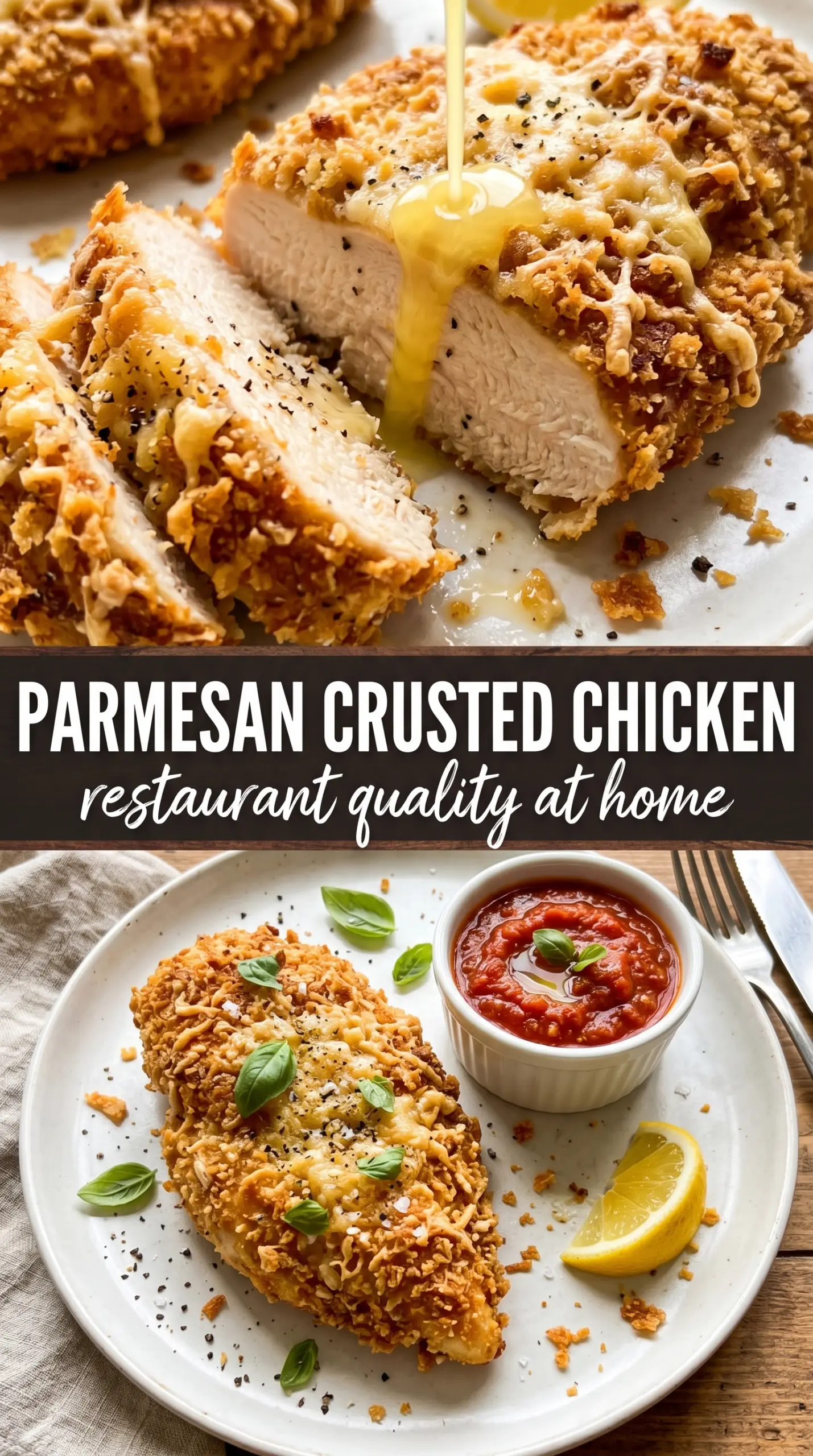
Parmesan crusted chicken earns its keep by giving you a shatteringly crisp coating without the frying pan mess. The crust bakes up deeply golden, the Parmesan turns nutty and savory, and the panko keeps the outside light instead of heavy or pasty. Cut into it and you get juicy chicken under a crust that actually stays on the meat.
The trick is in the breading order and the even thickness of the chicken. Flour gives the egg something to cling to, the egg helps the Parmesan-panko mixture grab, and pressing the crumbs on firmly keeps those crispy bits from falling off in the oven. A little oil on top finishes the crust and helps it color instead of drying out. Fresh Parmesan matters here because pre-grated cheese often bakes up sandy instead of melting into that crackly shell.
Below, I’ve included the small details that make this recipe reliable on a weeknight, plus a few swaps that still keep the crust crisp.
The crust turned out super crisp in the oven and didn’t slide off when I sliced the chicken. I loved that the Parmesan got golden without burning, and the lemon at the end made it taste fresh instead of heavy.
Like this Parmesan crusted chicken? Save it for the nights when you want a crunchy baked chicken dinner with almost no cleanup.
The Part That Keeps the Crust Crisp Instead of Soggy
Parmesan crusted chicken falls apart for one of two reasons: the coating never bonded well, or the chicken dumped too much moisture into the crust before it had a chance to set. Pounding the breasts to an even thickness solves the second problem by helping them cook at the same rate. The wire rack matters just as much as the coating itself, because it lets hot air move underneath instead of trapping steam on the bottom.
The other key move is pressing the crumbs on firmly and then baking with a little oil on top. That oil doesn’t make the chicken greasy; it helps the panko toast and gives the Parmesan a deeper color. If your crust usually peels away when you slice into breaded chicken, it’s often because the coating was dusted on instead of packed on.
What Each Ingredient Is Actually Doing in This Chicken
- Chicken breasts — Thick breasts work best here because they stay juicy while the crust gets crisp. If one side is much thicker than the other, pound it gently to an even thickness so the thinner end doesn’t dry out.
- Panko breadcrumbs — Panko gives the crust its airy crunch. Regular breadcrumbs work in a pinch, but they make a denser coating that won’t shatter the same way.
- Freshly grated Parmesan — This is the ingredient that makes the crust taste savory and toasty. The shelf-stable stuff often has anti-caking agents that keep it from melting into the crumbs properly.
- Flour and egg — This is the glue system. Skip either one and the coating won’t grip the chicken as well, especially after it starts releasing steam in the oven.
- Olive oil — A light drizzle or spray helps the top brown evenly. Too much will soften the crust, so use just enough to coat the crumbs.
- Italian seasoning, garlic powder, and smoked paprika — These season the coating itself, which is the only way to get flavor all the way through the crust. Paprika adds a little color and a subtle warmth without turning the chicken spicy.
The 20 Minutes That Actually Matter
Setting Up the Breading Line
Put the flour, beaten eggs, and Parmesan-panko mixture in separate shallow dishes before you touch the chicken. That keeps the coating process clean and fast, which matters because wet breading gets gummy if it sits around. Season the chicken before it goes into the flour so the meat itself doesn’t taste blank under the crust. If the chicken is damp, pat it dry first or the flour layer will clump instead of forming a thin base.
Pressing on the Crust
Dredge each piece in flour, then egg, then the Parmesan-panko mixture, pressing the crumbs onto every surface with your hands. Don’t just lay the coating on top; the pressure is what helps it survive the trip from tray to plate. Once the chicken is coated, let it sit for a minute or two while the oven finishes heating so the breading starts to hydrate and cling. That small pause helps the crust stay put.
Baking to a Deep Golden Finish
Set the chicken on a wire rack over the baking sheet and drizzle or spray the tops with olive oil. Bake at 425°F until the crust is deep golden and the thickest part reaches 165°F, usually 20 to 22 minutes. If the chicken is browning too slowly, the rack may be too low in the oven; if it’s browning too fast, move it one level down. Let it rest for 3 minutes before slicing so the juices settle and the crust doesn’t crack off the meat.
How to Adjust This Without Losing the Crunch
Gluten-Free Version
Swap the all-purpose flour for a gluten-free flour blend and use certified gluten-free panko. The texture stays crisp if you keep the coating thin and bake on a rack, but rice-based crumbs can brown a little faster, so watch the last few minutes closely.
Dairy-Free Adaptation
Use a dairy-free Parmesan-style substitute that grates finely and melts well enough to cling to the crumbs. You’ll lose some of the nutty sharpness of real Parmesan, so add an extra pinch of salt and a little more garlic powder to keep the coating punchy.
Chicken Cutlet Shortcut
If you want faster cook time, slice the breasts into cutlets before breading. They’ll bake in less time and get more crust per bite, but they can dry out if you leave them in too long, so start checking early.
Storage and Reheating
- Refrigerator: Store leftovers in an airtight container for up to 3 days. The crust softens a bit, but the flavor holds up well.
- Freezer: It freezes best after baking. Cool completely, wrap tightly, and freeze for up to 2 months. The crust won’t stay as crisp after thawing, but it still reheats better than raw breaded chicken.
- Reheating: Reheat on a wire rack in a 375°F oven or toaster oven until hot. Skip the microwave if you want to keep the coating crisp, because it turns the crust soft and steamy fast.
Questions I Get Asked About This Recipe
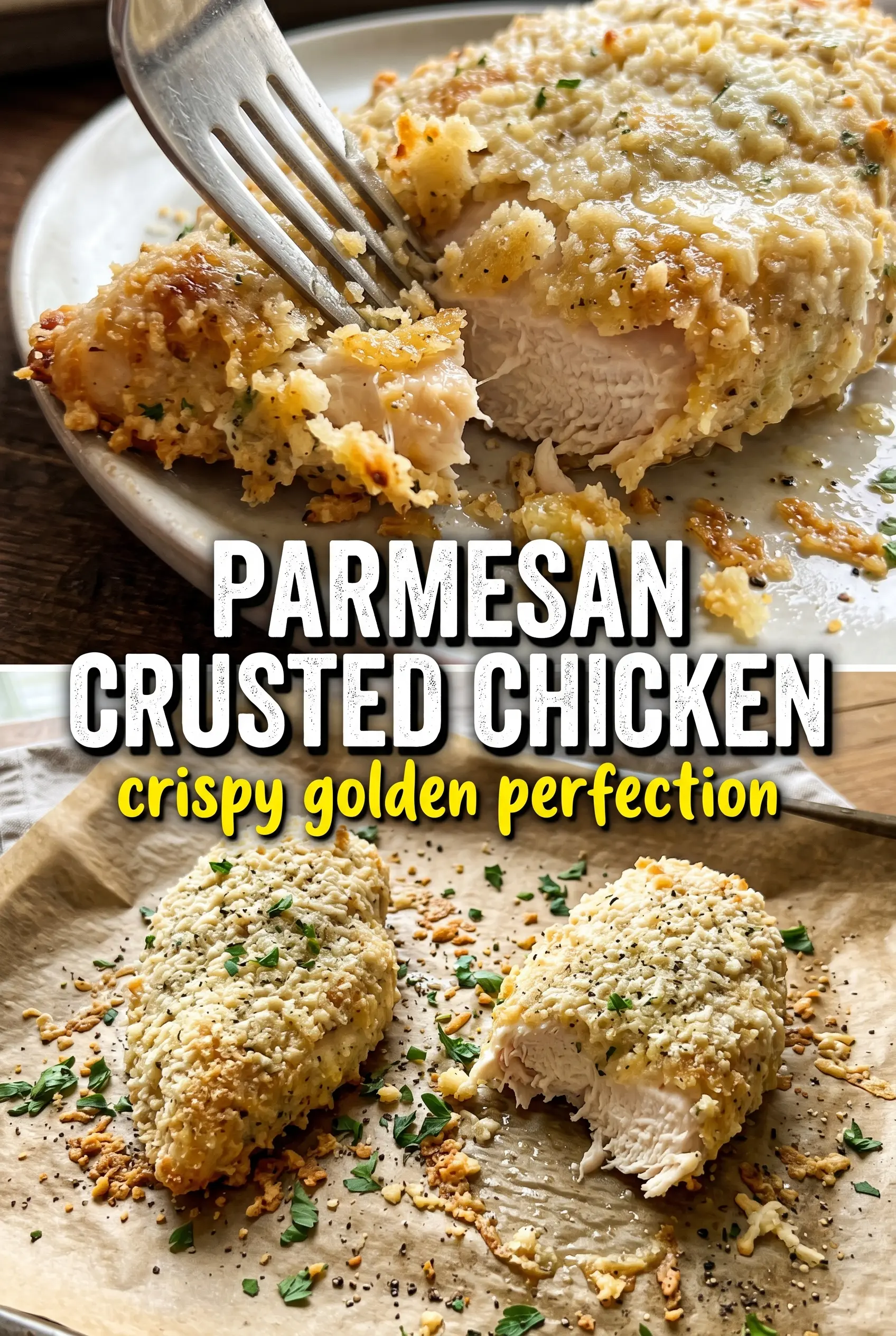
Parmesan Crusted Chicken
Ingredients
Equipment
Method
- Preheat the oven to 425°F and line a baking sheet with a wire rack; spray the rack with cooking spray for easy release and crisp airflow.
- Season the chicken with salt, pepper, and garlic powder to taste, then set up a three-station breading line for an even crust.
- Add the all-purpose flour to the first station, the beaten eggs to the second station, and mix the panko breadcrumbs, Parmesan, Italian seasoning, garlic powder, and smoked paprika in the third station.
- Dredge the chicken in flour, shaking off excess so the egg layer adheres cleanly.
- Dip the floured chicken into the beaten eggs, coating all sides for better panko adhesion.
- Press the chicken firmly into the Parmesan panko mixture to coat all sides, using gentle pressure so the crust stays intact while baking.
- Drizzle or spray the olive oil over the breaded chicken, then place it on the prepared rack so heat circulates for a crisp finish.
- Bake for 20-22 minutes at 425°F until the crust is deep golden and the internal temperature reaches 165°F; look for a crisp, shatterable texture.
- Rest the chicken for 3 minutes to let the crust set and the juices redistribute.
- Garnish with fresh parsley and serve with lemon wedges for a bright, tangy finish.