Crispy garlic steak bites and potatoes land on the plate with the kind of contrast that keeps people coming back for one more forkful: deeply browned edges, tender centers, and a glossy garlic herb butter clinging to every piece. The potatoes get a head start so they can take on a proper crust in the skillet instead of turning soft and pale, and the steak goes in only after the pan is hot enough to sear fast without steaming.
That order matters. If the potatoes are raw, they’ll need too much time in the pan and the steak will overcook before everything else is ready. If the garlic goes in too early, it burns before the butter has a chance to pick up all those browned bits. This version keeps the heat where it belongs and gives you the best texture from both main ingredients.
Below, I’ve included the small details that make this skillet dinner work consistently, plus a few swaps and fixes for the times when you need to work with what’s in the kitchen.
The potatoes got those crisp edges I never seem to get at home, and the garlic butter coated everything without making the steak soggy. I cooked the steak in two batches like you said and it came out browned instead of gray.
Crispy garlic steak bites and potatoes are perfect for pinning when you need a fast skillet dinner with browned edges and garlicky butter.
The Reason the Potatoes Go in Before the Steak
The most common mistake with steak and potatoes in one skillet is expecting both ingredients to cook on the same timeline. Potatoes need a little extra time to dry out on the surface and build a crust; steak bites need a very hot pan and a short sear so the inside stays juicy. If you crowd them together from the start, the potatoes steam and the steak overcooks before the pan ever gets a chance to brown properly.
Parboiling the potatoes first changes everything. It softens the centers just enough so the skillet can focus on browning the outside, which is how you get that crisp, almost crackly edge on each cube. The steak follows in batches so the pan stays hot and the meat actually sears instead of releasing liquid and turning gray.
What Each Ingredient Is Doing in This Skillet
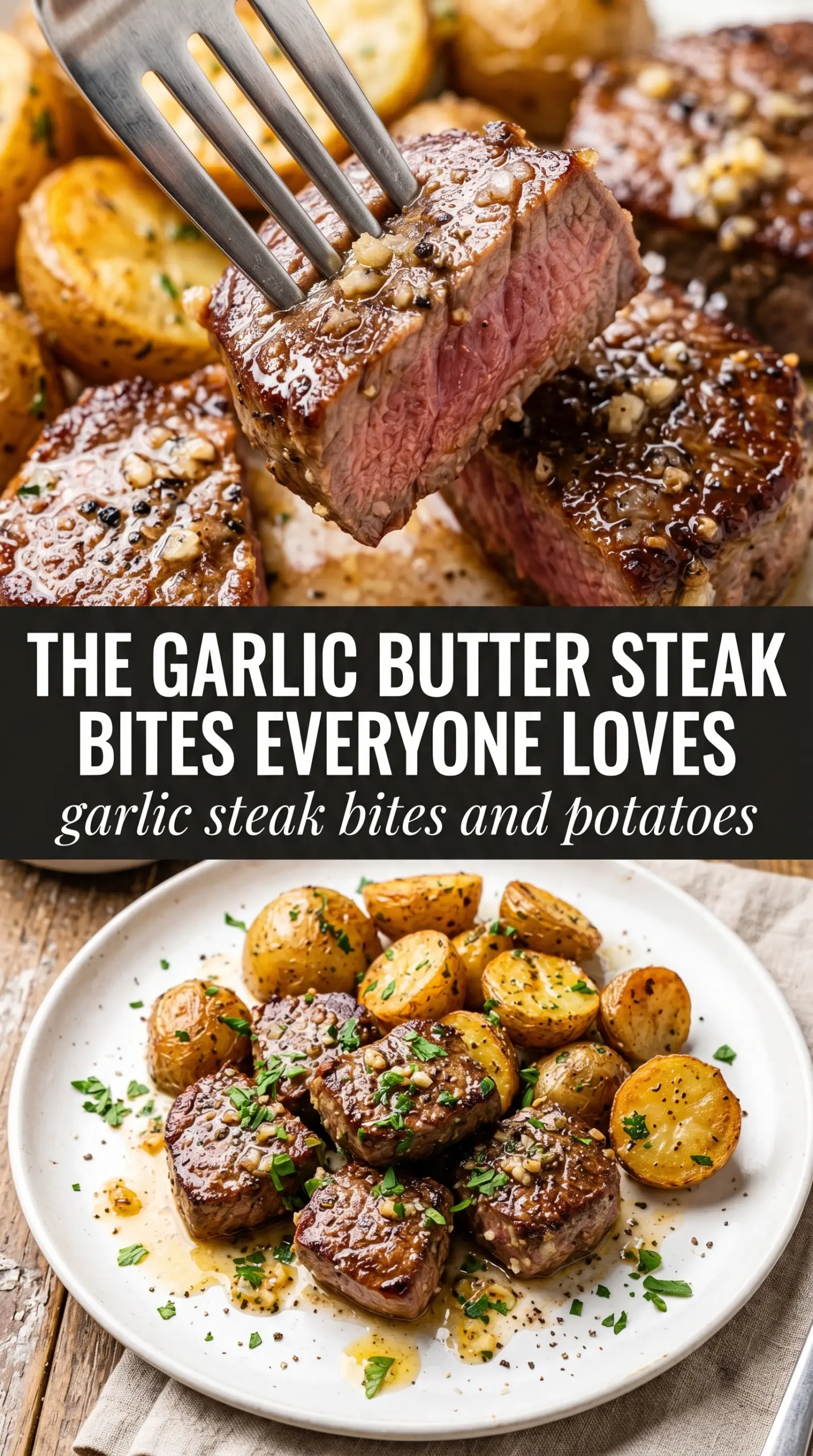
- Sirloin steak — Sirloin stays tender with a quick sear and holds its shape well in cubes. Cut it into even pieces so the whole batch cooks at the same pace. Ribeye works too if you want a richer finish, but it’s more expensive and a little more forgiving than this recipe needs.
- Baby potatoes — These give you creamy centers and crisp edges without a lot of prep. Halving them keeps the cut sides flat enough to brown in the skillet. Yukon Golds are the best swap if that’s what you have; russets work, but they’re drier and more likely to break down.
- Butter and oil — The oil gives you the high-heat sear, and the butter brings the sauce at the end. Don’t start with butter alone or it’ll brown too fast before the potatoes and steak have color. Saving most of the butter for the finish keeps the garlic aromatic instead of bitter.
- Garlic, rosemary, and thyme — These are the backbone of the finish. Fresh herbs taste cleaner here than dried ones because they’re tossed in briefly and never simmered for long. If you need to use dried rosemary or thyme, cut the amount to about one-third and crush it between your fingers first.
Building the Crust, Then Bringing It All Together
Parboiling the Potatoes Just Enough
Boil the halved potatoes in salted water until they’re barely fork-tender, not soft. You want the knife to slide in with a little resistance, because they’ll finish cooking in the skillet and need some structure left to hold their shape. Drain them well and let the surface steam off for a minute; wet potatoes are the fastest way to lose that crisp crust.
Getting the Potatoes Deeply Golden
Heat the skillet until the oil shimmers, then add the potatoes cut-side down and don’t move them right away. That first still minute or two is what builds the crust. If you keep stirring too soon, they’ll pick up color in spots but never get that even, browned surface that makes this dish feel like more than boiled potatoes with steak on top.
Searing the Steak in Batches
Season the steak generously right before it hits the pan, then sear it in a single layer. Batches matter here because the pan needs space to stay hot; too much meat at once drops the temperature and the steak starts to steam. Two minutes per side is usually enough for a strong brown crust with a medium-rare center, but go by color and feel, not just the clock.
Finishing in Garlic Herb Butter
Lower the heat before adding the butter, garlic, rosemary, and thyme. Garlic burns fast over high heat, and once it turns bitter there’s no fixing it. As soon as the garlic smells fragrant and the butter foams, toss everything together and spoon the butter over the steak bites until every surface looks glossy.
Three Ways to Make This Skillet Dinner Fit Your Night
Use Yukon Golds for a creamier center
Yukon Gold potatoes brown beautifully and stay a little silkier inside than baby reds. They won’t get quite as crisp as a drier potato, but the payoff is a softer middle that still holds up under the garlic butter.
Make it dairy-free without losing the skillet finish
Swap the butter for a plant-based butter that browns well, or use all oil if that’s what you have. You’ll lose a little of the rounded richness that butter gives at the end, but the garlic, herbs, and steak drippings still carry the dish.
Turn it into a lower-carb skillet
Swap the potatoes for cauliflower florets cut into similar-sized pieces. They’ll need less boiling time and a gentler hand in the skillet because they break down faster, but you’ll still get the same garlic herb butter finish with a lighter result.
Storage and Reheating
- Refrigerator: Store leftovers in an airtight container for up to 3 days. The potatoes will soften a little, but the flavor stays strong.
- Freezer: This dish freezes, but the potatoes lose some of their texture after thawing. If you do freeze it, cool it completely first and use within 1 month for the best result.
- Reheating: Warm it in a skillet over medium heat with a small splash of water or broth and cover it briefly so the potatoes heat through. The biggest mistake is blasting it in the microwave until the steak turns tough and the butter separates.
Questions I Get Asked About This Recipe
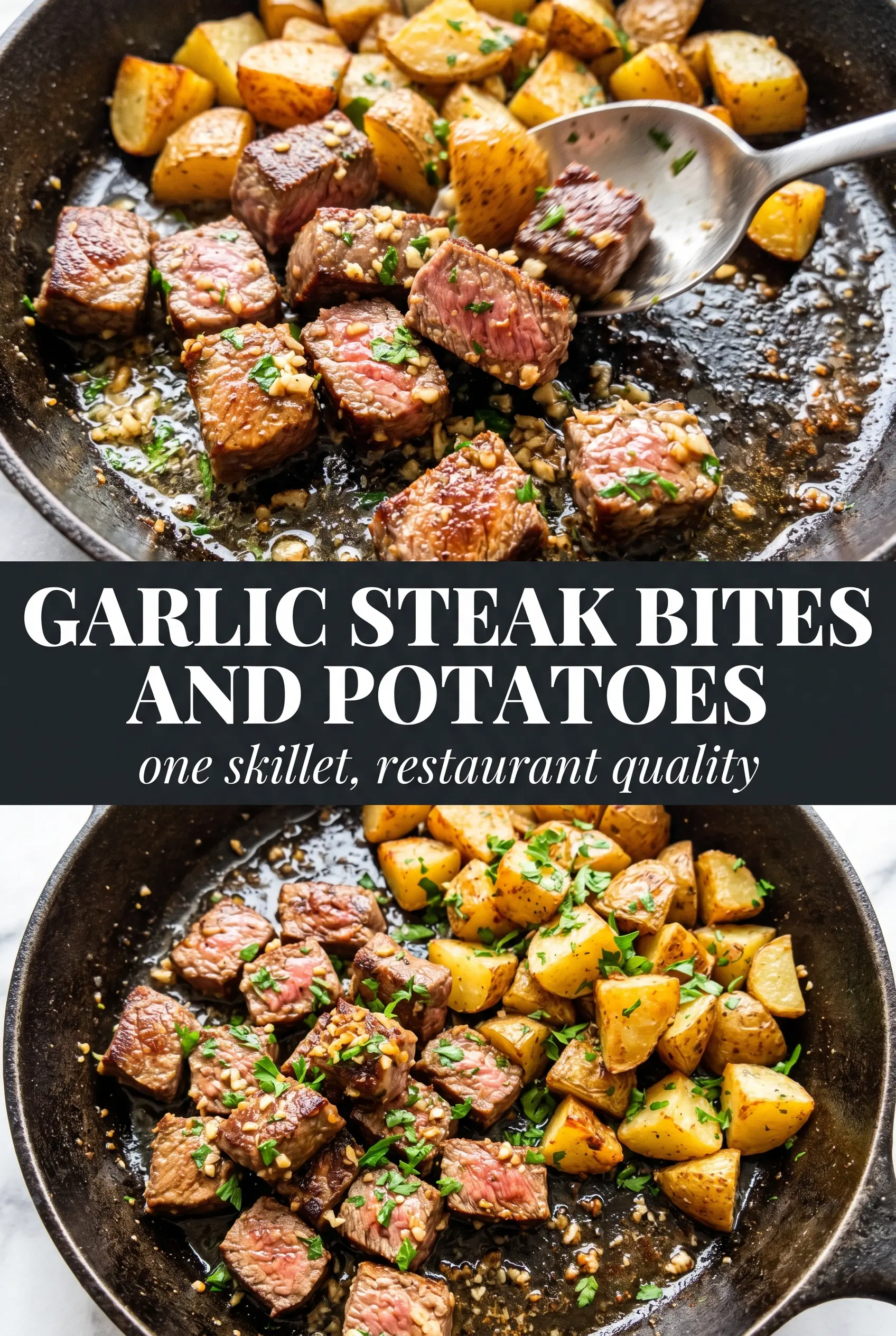
Garlic Steak Bites and Potatoes
Ingredients
Equipment
Method
- Boil the halved baby potatoes in salted water for 8 minutes until just barely fork-tender, then drain.
- Heat 2 tablespoons vegetable oil in a large cast iron skillet over high heat.
- Add the potatoes and sear until golden and crispy on each side, seasoning with salt and cracked black pepper, then remove.
- Season the sirloin steak bites generously with salt and cracked black pepper.
- Add the remaining vegetable oil to the skillet, then sear steak bites in batches for 2 minutes per side until deeply browned.
- Reduce heat to medium, add butter, garlic, rosemary, and thyme, and cook for 1 minute while basting the steak bites with the butter.
- Return the crispy potatoes to the skillet and toss everything together in the garlic herb butter until coated.
- Garnish with fresh parsley and serve immediately.