Golden, juicy baked Greek lemon chicken lands on the table with crisped edges, fragrant garlic, and a bright pan sauce that tastes like it cooked itself into something special. The skin turns deeply browned in the oven while the lemon slices soften and caramelize underneath, giving the whole dish that sharp, savory-sweet finish that keeps people reaching back in for one more piece.
What makes this version work is the balance in the pan. Enough olive oil keeps the chicken from drying out, enough lemon juice cuts through the richness, and a little chicken broth prevents the drippings from burning before the bird is done. Roasting the chicken skin-side up at a high temperature helps the skin render and brown instead of going soft, and tucking the lemon slices around the pieces gives the dish its signature Greek roast flavor without making the chicken sour.
Below, you’ll find the small details that matter most: how to keep the garlic from turning bitter, why the marinade doesn’t need to be long, and what to watch for when the chicken starts to take on that deep golden color.
The chicken came out juicy and the lemon slices turned almost jammy in the pan. I basted it once like you said and the skin was crisp, not soggy, with just the right amount of garlic in the drippings.
Pin this baked Greek lemon chicken for the nights when you want crisp skin, lemony pan juices, and almost no cleanup.
Why the Chicken Stays Juicy While the Skin Browns
The trap with baked chicken is that people chase browning and end up drying out the meat. This recipe avoids that by roasting hot enough to color the skin quickly while keeping a little broth in the pan so the juices stay active instead of scorching. The broth doesn’t steam the chicken if you keep the pieces elevated on the pan and leave the skin exposed; it just gives the drippings enough body to turn into a spoonable sauce.
Marinating helps, but not because the lemon is going to deeply penetrate the meat in 30 minutes. The real job of the marinade is to season the surface, perfume the chicken with garlic and oregano, and start that bright Greek-style flavor right away. If you let it sit too long, the lemon can start to cure the outside, so a short marinate is the sweet spot here.
- Bone-in chicken pieces — These hold up best in a hot oven and give you juicier meat than boneless cuts. A whole chicken cut into parts works beautifully, but if you buy pre-cut thighs, drumsticks, and breasts, keep the pieces similar in size so they finish together.
- Fresh lemon juice and zest — The juice brings acidity, while the zest carries the fragrant lemon oil that makes this taste bright instead of sharp. Bottled juice won’t give the same perfume, so use fresh lemons here.
- Olive oil — This helps the seasoning cling to the chicken and encourages browning. You don’t need the most expensive bottle, but use one that tastes clean and fruity because it’s part of the sauce.
- Chicken broth — This keeps the pan drippings from burning and gives you a deeper finish when you spoon them over the chicken. Water works in a pinch, but it leaves the sauce thinner and less savory.
- Dried oregano and thyme — Oregano is the signature note, and thyme fills in the herbal backbone. Fresh oregano is lovely for garnish, but the dried herbs do the real work in the marinade.
What Each Ingredient Is Actually Doing in This Recipe

- Primary ingredient (the star) — Quality matters most. Choose the best you can find.
- Cooking medium (oil, butter, or broth) — This carries flavors and prevents dryness.
- Seasonings (salt, pepper, spices, herbs) — Layer flavors so nothing overpowers. Build depth gradually.
- Aromatics (garlic, onion, herbs) — Cook with fat to bloom flavors. Become the foundation.
- Supporting ingredients — Complement the main ingredient without overpowering it.
- Sauce or liquid (if applicable) — Brings flavors together. Balance richness with acid.
- Acid (lemon, vinegar, wine, or other) — Brightens and prevents flat-tasting results.
- Final finish (garnish, glaze, or sauce) — Prevents one-dimensional taste and adds visual appeal.
How to Roast It So the Lemon Turns Sweet, Not Bitter
Building the Marinade
Whisk the olive oil, lemon juice, zest, garlic, oregano, thyme, smoked paprika, salt, and pepper until the mixture looks slightly emulsified and speckled with herbs. Coat the chicken well and let it sit for at least 30 minutes, which is enough time for the surface to take on flavor without softening the texture. If the chicken goes in the oven dripping wet, it can steam before the skin begins to brown, so let the excess marinade stay in the bowl and use it sparingly when you transfer the pieces.
Arranging the Pan
Set the chicken skin-side up in a roasting pan or baking dish with a little space between the pieces. Tuck the lemon slices around and under the chicken so they brown in the drippings instead of sitting directly on top and scorching. Pour the broth around the chicken, not over the skin, because wet skin is the fastest way to lose that crisp finish.
Roasting and Basting
Roast at 425°F until the skin is deeply golden and the thickest part of the chicken reaches 165°F. Halfway through, spoon some of the pan juices over the top, but don’t keep opening the oven door every few minutes or the temperature will drop and the skin won’t brown properly. If the lemon slices darken early, that’s fine; they’re supposed to collapse and caramelize, not stay pretty and pale.
Finishing with the Pan Drippings
Let the chicken rest for a few minutes, then spoon the caramelized drippings over the top before serving. This is where the flavor lands: the garlic softens, the lemon mellows, and the broth picks up all the roasted bits from the pan. If the drippings seem thin, give them a minute to settle and spoon from the darkest parts at the bottom where the flavor concentrates.
What to Change When You Need a Different Version
Make It Dairy-Free and Gluten-Free
This recipe is naturally both, so you don’t need to change a thing for either diet. Serve it with rice, potatoes, or roasted vegetables and the whole dish stays just as bright and satisfying.
Use Boneless Chicken Thighs Instead
Boneless thighs cook faster and stay tender, but they won’t give you quite the same crisp skin or rich pan drippings. Start checking them early, usually around 25 to 30 minutes, and pull them when they hit 165°F so they don’t tighten up.
Add Potatoes or Onions to the Pan
Wedges of potato or thick slices of onion can roast under and around the chicken and soak up the drippings. Cut them large enough that they don’t collapse before the chicken is done, and toss them lightly with olive oil and salt so they brown instead of drying out.
Storage and Reheating
- Refrigerator: Store leftovers in an airtight container for up to 4 days. The skin softens, but the flavor gets even better after a night in the fridge.
- Freezer: Freeze the chicken without the lemon slices for up to 2 months. Thaw overnight in the fridge so the texture stays as close to the original as possible.
- Reheating: Warm in a 350°F oven, covered loosely with foil, until heated through. The common mistake is blasting it in the microwave, which turns the skin rubbery and makes the meat taste flat.
Questions I Get Asked About This Recipe
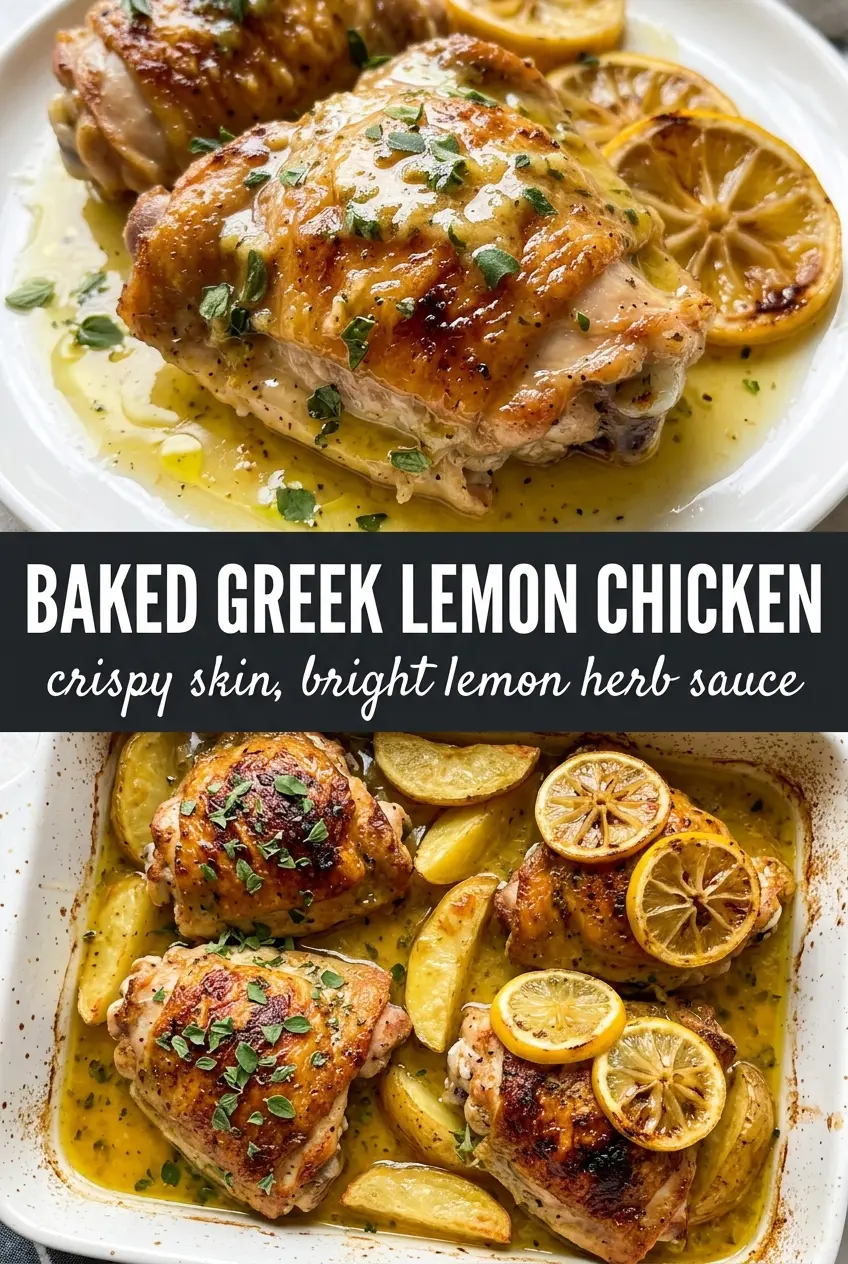
Baked Greek Lemon Chicken
Ingredients
Equipment
Method
- Whisk together olive oil, lemon juice, lemon zest, garlic, dried oregano, dried thyme, smoked paprika, salt, and cracked black pepper until combined.
- Marinate the chicken for at least 30 minutes to let the flavors soak in.
- Preheat the oven to 425°F and arrange the marinated chicken skin-side up in a large roasting pan or baking dish.
- Pour the chicken broth around the chicken and tuck the thinly sliced lemon slices around and under the pieces so they roast in the drippings.
- Roast for 40-45 minutes, basting with the pan juices once halfway through, until the skin is deeply golden and the internal temperature reaches 165°F.
- Spoon the caramelized pan drippings over the chicken before serving.
- Garnish with fresh oregano for an herb-flecked finish.