Penne coated in a smoky Cajun cream sauce has a way of disappearing faster than almost anything else in a skillet dinner rotation. The sausage brings that deep, savory bite, the peppers keep it from feeling heavy, and the sauce clings to every ridge of the pasta instead of pooling at the bottom of the bowl. It eats like something you ordered out, but it comes together in the time it takes to boil pasta.
What makes this version work is the order. The sausage browns first, which leaves those seasoned bits in the pan for the onions, peppers, and cream to pick up later. The sauce also stays stable because the parmesan goes in after the simmer has done its work, not before. That keeps it smooth instead of grainy.
Below you’ll find the small details that matter here: how to keep the cream sauce from turning flat, why the pasta water is worth reserving, and the easiest swaps if you want to stretch this into a bigger dinner or dial the heat up or down.
The sauce turned out silky and held onto the penne perfectly, and the browned sausage gave it a smoky kick without making it greasy. I added a splash of pasta water at the end and it came together exactly right.
Creamy Cajun sausage pasta with browned sausage and a silky brick-red sauce is the kind of dinner worth keeping close.
Save this Cajun sausage pasta for a fast, smoky skillet dinner
Why the Sauce Stays Creamy Instead of Turning Grainy
The main thing that goes wrong in Cajun cream pasta is heat. If the pan is too hot when the cream goes in, the sauce can separate before it ever has a chance to thicken. This recipe avoids that by using the browned sausage drippings, then dropping the heat once the broth and cream go in. The sauce should move from thin and glossy to lightly nappéd enough to coat a spoon.
Another key detail is the parmesan. Add it after the simmer has reduced the liquid a bit, and stir until it melts fully. If you dump it into a boiling sauce, the cheese can seize and turn sandy. The last little insurance policy is the reserved pasta water, which loosens the sauce without watering it down.
What Each Ingredient Is Actually Doing in This Pasta
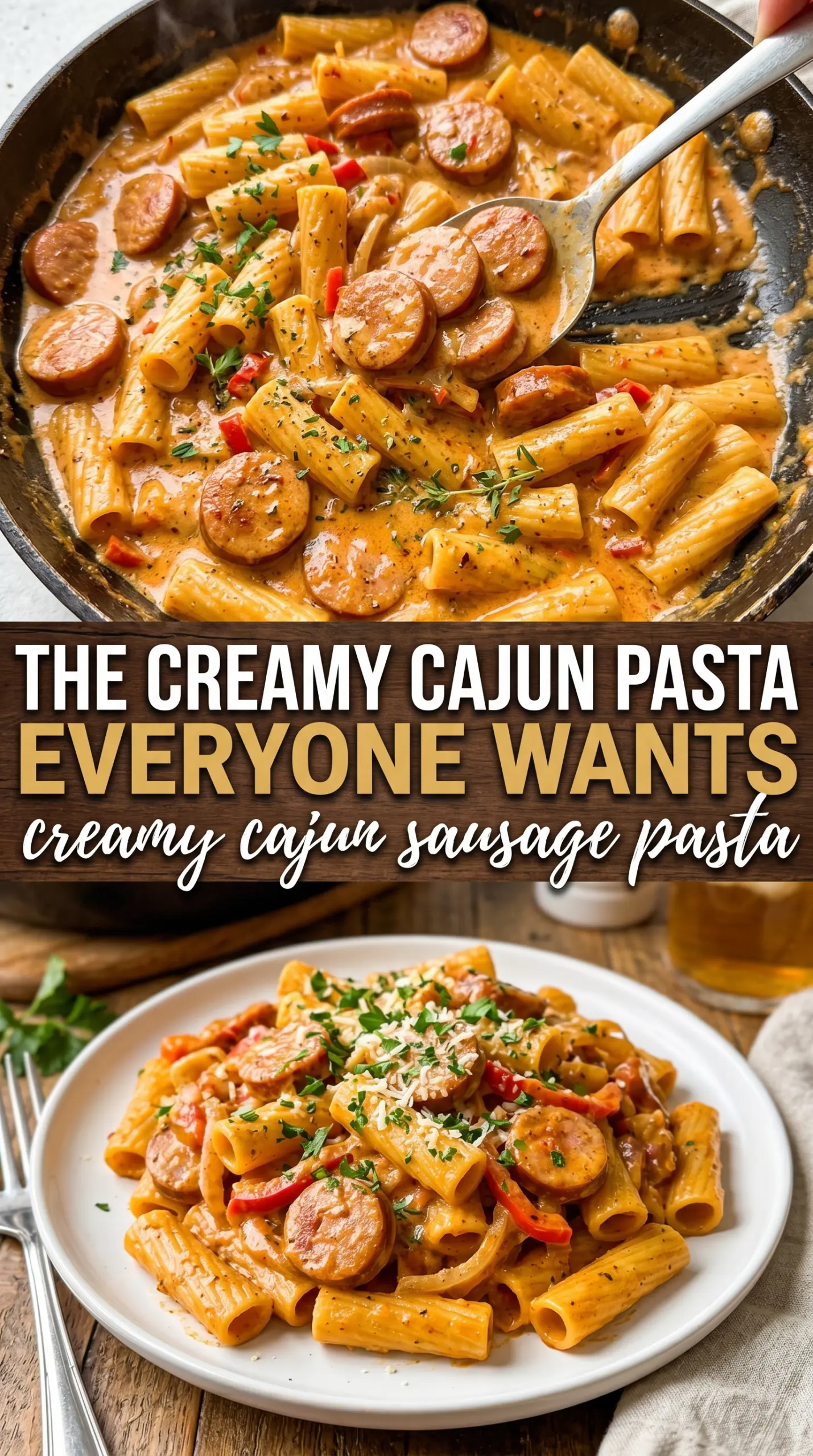
- Andouille or smoked sausage — This is the backbone of the dish. Andouille gives the most Cajun-style heat and smoke, while smoked sausage is milder and still brings plenty of savory flavor. Slice it into even rounds so it browns instead of steaming.
- Cajun seasoning — This is where the sauce gets its signature color and kick. Brands vary a lot in salt, so taste before adding extra salt at the end. If yours runs very salty, cut back slightly and build heat with a pinch of cayenne instead.
- Heavy cream — There’s no clean substitute if you want the same body and silkiness. Half-and-half will work in a pinch, but the sauce will be thinner and less stable. Keep the simmer gentle so the cream stays smooth.
- Parmesan cheese — Freshly grated parmesan melts in more cleanly than the pre-shredded kind. The bagged stuff often has anti-caking agents that can make the sauce feel gritty. Grate it fine and stir it in off the hardest heat.
- Penne — The tubes catch the sauce inside and out, which is exactly what you want here. Any sturdy short pasta will work, but penne holds onto the cream sauce especially well.
- Bell pepper and onion — They soften the richness and give the dish a little sweetness underneath the spice. Dice them evenly so they cook at the same rate and melt into the sauce instead of staying crunchy.
Building the Sauce in the Right Order
Brown the Sausage First
Start with a hot skillet and let the sausage sit long enough to take on color before you stir it around. Those browned edges are where the smoky flavor comes from. If the pan is crowded, the sausage will steam and turn pale, so use a wide skillet and remove it once it’s browned well on both sides.
Soften the Vegetables in the Fond
The butter goes into the same pan, not a clean one. Onion and bell pepper should soften and pick up the browned bits stuck to the bottom, which is where a lot of the flavor lives. Once the garlic and Cajun seasoning go in, keep them moving so the garlic doesn’t scorch and turn bitter.
Reduce the Cream Gently
Pour in the broth and cream, then let the sauce simmer at a low bubble until it looks slightly thicker and a little glossy. You’re not trying to boil it hard. If it boils aggressively, the dairy can split and the sauce can take on a greasy look. A slow simmer gives the liquid time to tighten up naturally.
Finish with Cheese and Pasta Water
When the parmesan goes in, the sauce should already have some body. Stir until it melts, then add the cooked pasta and sausage. If the sauce looks tight or clings too heavily, splash in pasta water a little at a time. The starch helps everything emulsify and gives the sauce that restaurant-style cling.
How to Adapt This for a Lighter or Bigger Batch Dinner
Make it gluten-free
Use a gluten-free penne that holds up to boiling, then stop cooking it while it still has a little bite. The sauce itself is naturally gluten-free as long as your sausage and Cajun seasoning are certified gluten-free. Stir more gently when combining, since some GF pastas break faster than wheat pasta.
Use chicken sausage for a lighter version
Chicken sausage keeps the smoky, seasoned feel but trims some of the richness. You’ll lose a little of the deep rendered flavor that regular andouille brings, so let it brown well and don’t skip the first sear. A pinch of extra smoked paprika helps fill in that gap.
Add more vegetables without thinning the sauce
Mushrooms, zucchini, or spinach all work, but cook watery vegetables first so they release moisture before the cream goes in. Spinach should go in at the very end, just until wilted. If you add too much raw veg at once, the sauce gets loose and loses its cling.
Stretch it for six hungry people and leftovers
Add an extra 4 to 6 ounces of pasta and another splash of broth if you want to feed a bigger table. The sauce may look a little loose at first, but it tightens as the pasta sits and absorbs liquid. That’s another reason to keep some pasta water back so you can bring it back to a silky consistency.
Storage and Reheating
- Refrigerator: Store in an airtight container for up to 4 days. The sauce will thicken as it chills.
- Freezer: It freezes, but the cream sauce may lose some of its silky texture after thawing. Freeze in portions for up to 2 months if needed.
- Reheating: Reheat gently on the stove or in the microwave with a splash of broth, milk, or water. The common mistake is blasting it with high heat, which can make the sauce separate and dry out the pasta.
Answers to the Questions Worth Asking
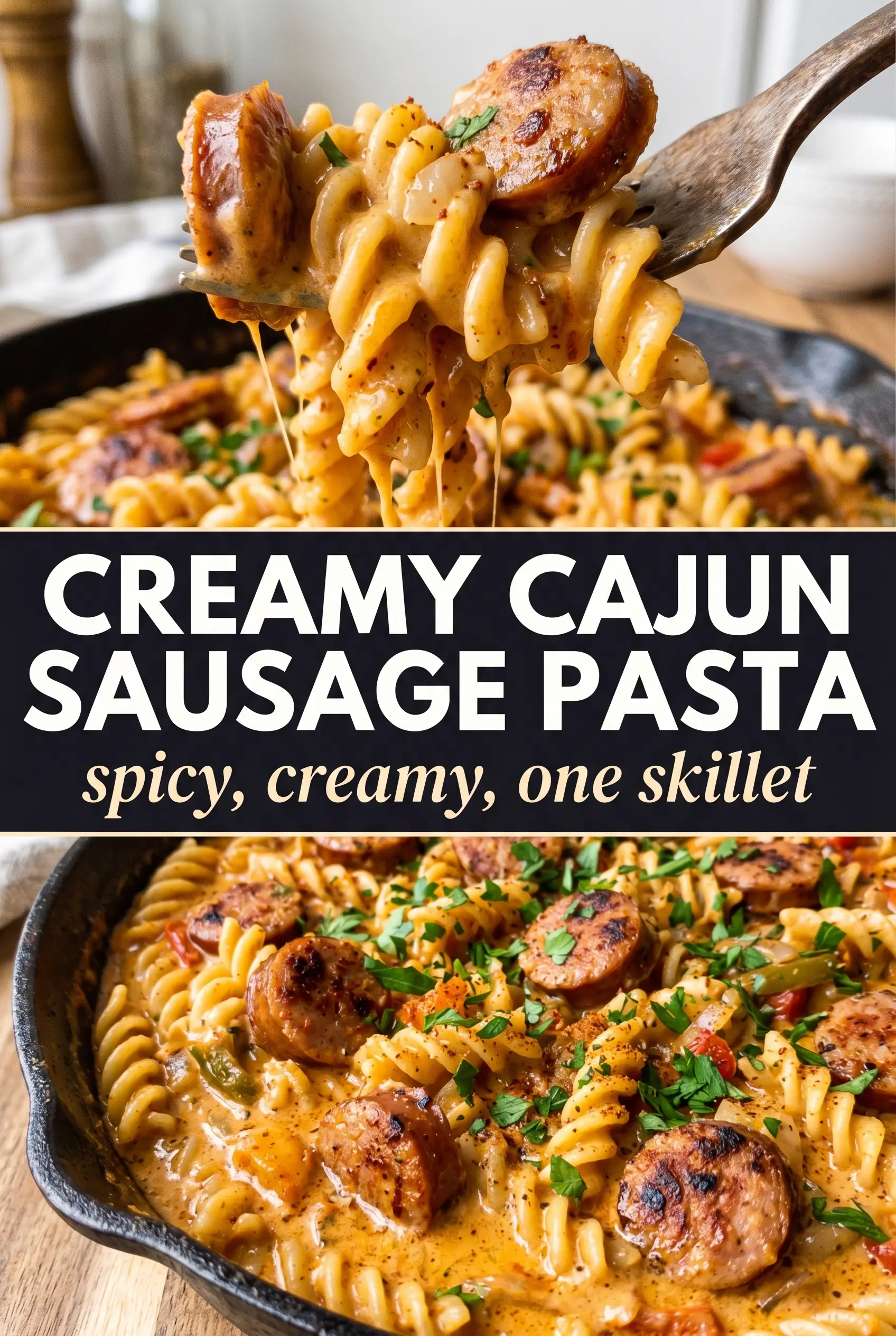
Creamy Cajun Sausage Pasta
Ingredients
Equipment
Method
- Bring a large pot of salted water to a boil, then cook the penne until al dente. Reserve 1/2 cup pasta water, then drain the pasta.
- Heat a large skillet over medium-high heat and cook the sliced andouille sausage until browned on both sides. Remove the sausage and set it aside.
- Melt the butter in the same pan, then cook the onion and red bell pepper for 4 minutes. Add the garlic and Cajun seasoning and cook for 1 more minute.
- Pour in the chicken broth and heavy cream, then simmer for 4–5 minutes until slightly thickened. Stir until smooth.
- Stir in the parmesan until melted, then toss in the penne and browned sausage. Add pasta water as needed to loosen into a creamy coating.
- Serve immediately, topped with fresh parsley and cracked pepper if desired. Keep the sauce glossy by serving right after tossing.