Golden parmesan on top, tender potatoes underneath, and creamy sausage-and-kale filling in every spoonful make this casserole the kind of dinner that disappears fast. It has the familiar comfort of zuppa toscana, but baked into one deep, sliceable dish that feeds a crowd without hovering over a pot on the stove.
The key here is getting the potatoes thin enough to soften in the bake time and keeping the cream mixture hot when it goes into the dish. That little bit of heat helps the broth and cream settle around the layers instead of sitting on top and leaving the potatoes dry in the middle. Browning the sausage first matters too, because the browned bits in the pan give the onion and garlic a head start on flavor.
Below, I’ll show you how to keep the casserole creamy instead of watery, when to cover it, and what to swap if you want to make it a little lighter or stretch it farther.
The potatoes cooked through perfectly and the parmesan top got crisp without drying out the cream. I followed the layering exactly and the sausage stayed in every bite.
Save this creamy Italian Zuppa Toscana Casserole for nights when you want sausage, potatoes, and kale baked under a crisp parmesan crust.
The Trick to Keeping the Potatoes Tender, Not Chalky
Potatoes in a casserole can go one of two ways: tender and silky, or stubborn in the center while the top overbrowns. Thin slicing is what fixes that here. Russets work because they absorb the cream mixture and soften into the bake, but they need to be cut evenly so every layer finishes at the same pace.
The other detail that matters is the way the liquid goes in. Pour it evenly over the layers and press the potatoes down gently so the cream reaches the gaps. If the top is dry before baking, it usually means the liquid never made it all the way through, and the middle ends up undercooked even after a full bake.
What the Sausage, Kale, and Parmesan Are Each Doing Here
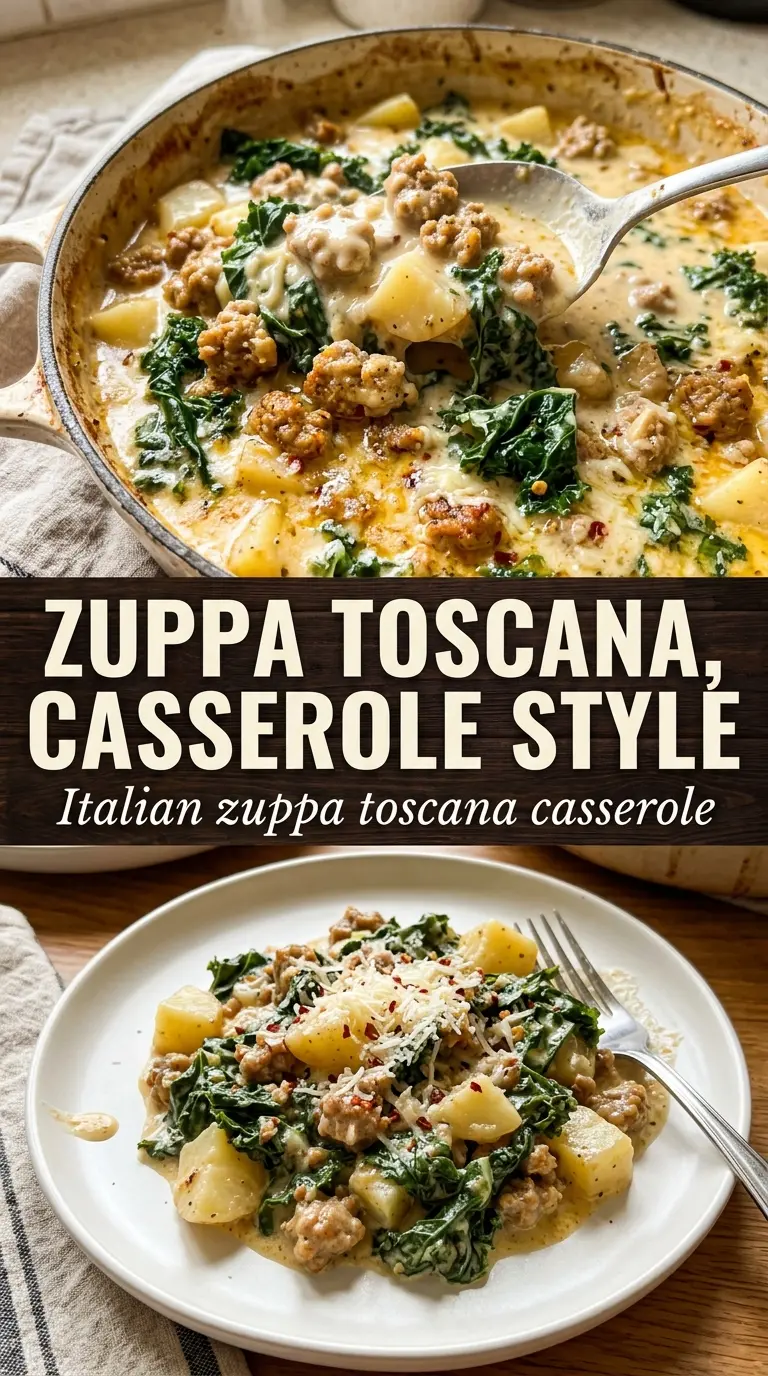
- Italian sausage — This is the main seasoning for the whole casserole. Browning it first gives you fat and caramelized bits that season the onion and garlic, and those browned edges matter more than any extra spice blend. Mild sausage works fine, but if you use hot sausage, cut back on the red pepper flakes.
- Russet potatoes — They break down a little as they bake, which is what gives the casserole that comforting, creamy texture. Yukon Golds will hold their shape more, so the dish will slice a little cleaner but feel less lush. Slice them thin enough that a fork slides in without resistance after the final uncovered bake.
- Heavy cream — This is what gives the casserole its rich, spoonable sauce. Half-and-half can work in a pinch, but the sauce will be thinner and less stable. If you use a lighter dairy option, keep the bake covered a little longer so the potatoes have time to soften before the top dries out.
- Kale — It holds up better than spinach here and keeps its texture after baking. Chop it fairly small so you don’t end up with long chewy ribbons in the finished dish. If your kale is thick-stemmed, strip out the center rib first or it will stay fibrous.
- Parmesan — It gives you the salty crust on top and helps the surface turn golden instead of just pale and soft. Grated parmesan melts and browns better than a very fine powder, so use the real stuff if you can. Pre-shredded cheese works, but it won’t give quite the same crust.
How to Build the Bake So the Sauce Stays Creamy
Browning the Sausage First
Cook the sausage over medium-high heat until it’s deeply browned and no pink remains, then drain off the excess fat. You want little caramelized bits stuck to the pan, because that’s where the onion gets its best flavor. If the sausage steams instead of browns, the pan is crowded or the heat is too low, and the casserole will taste flatter.
Starting the Cream Base in the Skillet
Sauté the onion in the same pan until it turns soft and translucent, then cook the garlic just long enough to smell fragrant. Add the cream, broth, and red pepper flakes after that, and stir well so the browned bits lift off the pan. Keep the mixture warm, not boiling, or the cream can separate before it even reaches the casserole dish.
Layering for Even Cooking
Spread half the potatoes in an even layer, then add half the sausage and half the kale before repeating. This keeps the filling distributed all the way through instead of sinking to one side. If the potato slices are stacked in clumps, the center will stay hard while the edges overcook, so take the extra minute to fan them out.
Finishing Under Foil, Then Letting the Top Brown
Cover the dish for the first part of the bake so the potatoes steam and soften in the cream mixture. Once they’re nearly tender, remove the foil and let the parmesan turn golden on top. If you skip the covered bake, the top dries out before the potatoes finish; if you leave the foil on too long, you lose that crust.
Three Ways to Make This Casserole Fit Your Table
Dairy-Free Version
Use full-fat canned coconut milk or an unsweetened dairy-free cooking cream instead of heavy cream, and skip the parmesan or use a dairy-free hard cheese substitute. The casserole will still be rich, but the sauce will taste a little different and brown less on top. A splash of extra broth helps keep the texture loose enough to bake through.
Make It a Little Lighter
Swap half the cream for more broth and use a little less parmesan on top. The dish will still be comforting, but the sauce won’t cling as thickly to the potatoes. This works best if you keep the bake covered until the potatoes are almost fully tender.
Spicier, More Traditional Heat
Use hot Italian sausage and keep the red pepper flakes as written for a sharper kick. If you like a gentler finish, cut the flakes in half and let the sausage carry the heat instead. That gives you more control without changing the structure of the casserole.
Storage and Reheating
- Refrigerator: Store covered for up to 4 days. The potatoes will absorb more of the sauce as it sits, so the casserole gets thicker and a little softer by day two.
- Freezer: It freezes, but the cream sauce can separate a bit after thawing. For the best texture, freeze in portions and thaw overnight in the fridge before reheating.
- Reheating: Warm covered in a 325°F oven until hot through, or use the microwave in short bursts with a splash of broth or cream. High heat is what turns the sauce oily and leaves the potatoes tough at the edges.
Answers to the Questions Worth Asking
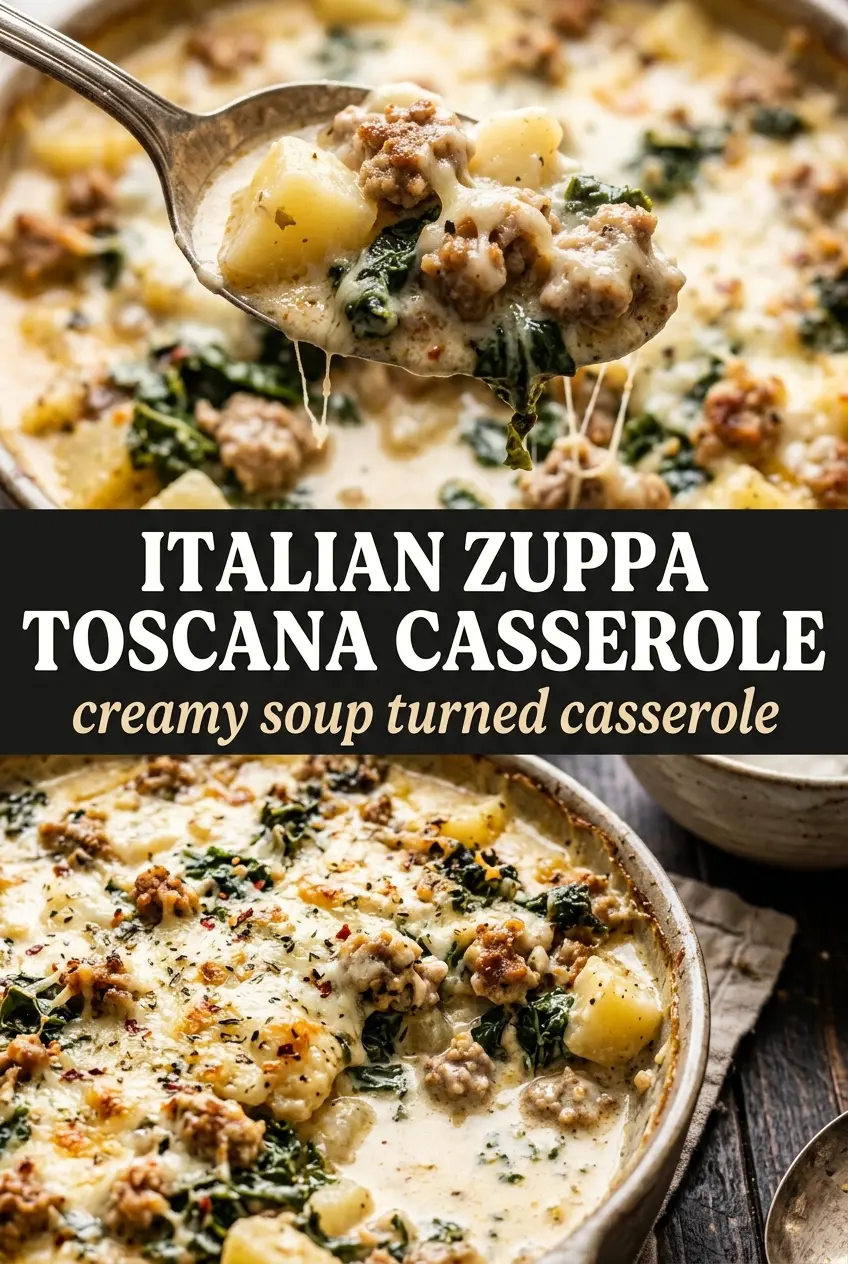
Italian Zuppa Toscana Casserole
Ingredients
Equipment
Method
- Preheat the oven to 375°F and grease a 9x13 dish with a light coating so the casserole releases cleanly.
- Brown Italian sausage in a skillet over medium-high heat, breaking it apart, until no longer pink, then drain the fat and remove.
- Sauté onion for 3 minutes in the same pan, until softened, then add garlic and cook 1 minute to soften and turn fragrant.
- Add heavy cream, chicken broth, and red pepper flakes, stirring to combine and warm the mixture until cohesive.
- Layer half the russet potatoes in the greased dish in an even spread.
- Scatter half the Italian sausage and half the kale over the potatoes.
- Repeat with the remaining russet potatoes, then top with the remaining Italian sausage and kale.
- Pour the cream mixture evenly over everything, pressing down gently so the potatoes are moistened.
- Top with parmesan cheese, then cover tightly with foil.
- Bake for 25 minutes at 375°F, then remove the foil.
- Bake 15 more minutes at 375°F, until potatoes are tender and the top is golden.