Golden-seared chicken breasts tucked into a bright tomato basil skillet are the kind of dinner that earns repeat status fast. The chicken stays juicy, the tomatoes collapse into a glossy sauce, and the basil lands at the end with enough freshness to keep the whole pan tasting lively instead of heavy. It looks like a simple weeknight skillet, but it eats like something you’d happily serve to company.
What makes this version work is the way the sauce builds in the same pan as the chicken. The browned bits left behind after searing give the tomatoes and wine a deeper, more savory base, and the balsamic adds just enough edge to make the sauce taste rounded instead of flat. Cherry tomatoes are the right choice here because they soften quickly and give you both juices and little bursts of texture.
Below, I’ll walk through the sear, the tomato stage, and the small finishing details that keep the sauce bright. There’s also a useful note on what to change if you want to make it dairy-free or if you only have broth instead of wine.
The chicken browned beautifully and the tomatoes turned into the kind of sauce that actually clings to the meat. I loved that the basil stayed fresh at the end instead of getting cooked to nothing.
Save these tomato basil chicken breasts for the night when you want juicy chicken and a bright cherry tomato pan sauce in one skillet.
The Sear Is What Keeps the Chicken Juicy Here
The biggest mistake with chicken breasts is rushing the pan and moving them too soon. Let the first side develop a deep golden crust before you flip it; if it sticks, it’s not ready yet. That crust is doing more than adding color. It gives the chicken better flavor and protects the meat from drying out while the sauce comes together.
Another thing that matters here is thickness. If one end of a breast is much thicker than the other, pound it lightly so it cooks evenly. Uneven chicken is how you end up with one dry side and one underdone side, even when the center hits temperature.
What Each Ingredient Is Doing in the Skillet
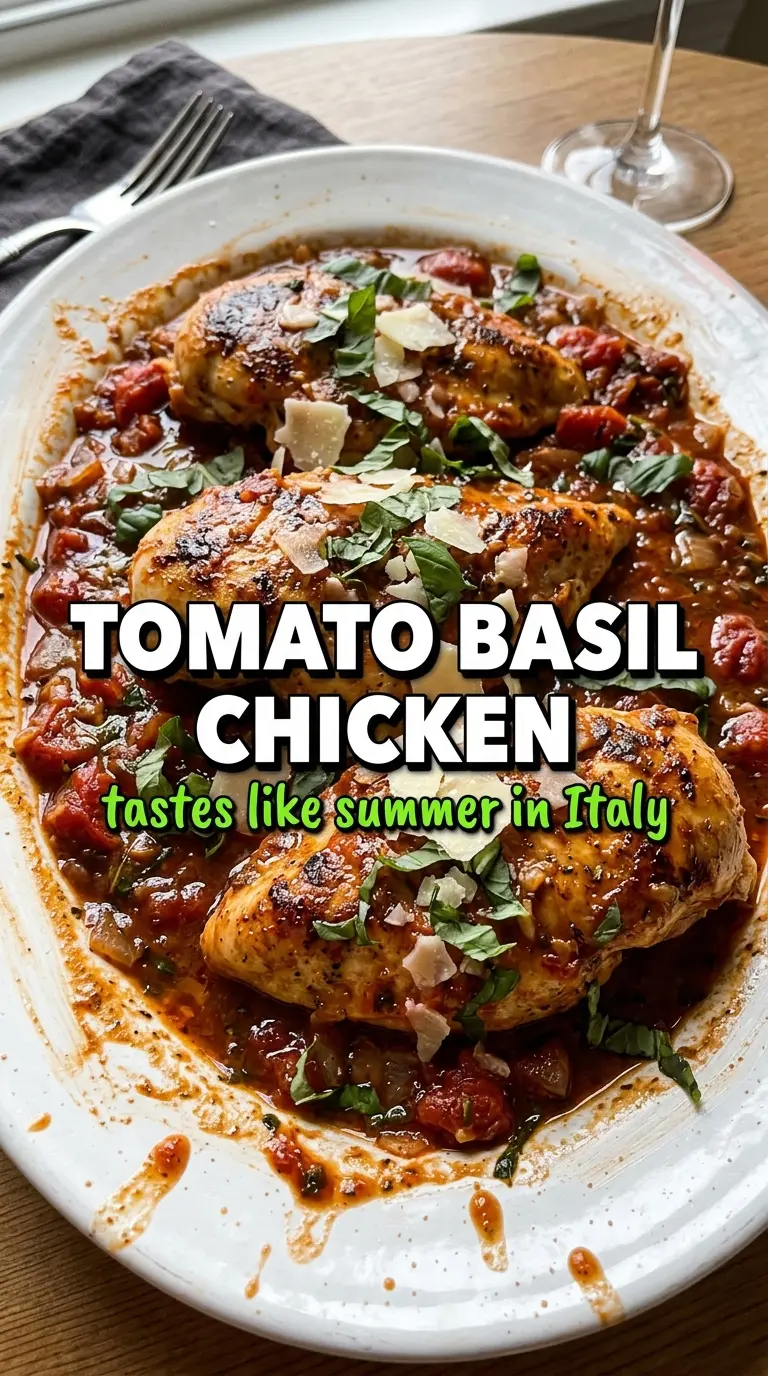
- Chicken breasts — Boneless, skinless breasts cook fast and slice neatly, but they dry out if the heat is too high for too long. If yours are especially large, split them horizontally or pound them to an even thickness so they finish at the same time.
- Cherry tomatoes — These are worth using instead of diced canned tomatoes here because they burst into a sauce with both texture and juice. Halve them so they collapse quickly instead of staying firm in the pan.
- Dry white wine or chicken broth — Wine gives the sauce a cleaner, sharper finish, while broth keeps it gentle and pantry-friendly. If you use broth, the balsamic matters even more because it helps bring back some brightness.
- Balsamic vinegar — This is the ingredient that keeps the sauce from tasting one-note. Stir it in near the end so it stays lively instead of cooking away.
- Fresh basil — Add it after the heat is off or right at the end of simmering. If it cooks too long, it turns dark and loses the fresh aroma that makes this dish taste finished.
- Shaved Parmesan — The cheese adds salt and a little nutty finish without turning the sauce heavy. Shave it over the top instead of melting it in for the best texture and the cleanest presentation.
Building the Tomato Basil Sauce Without Losing the Brightness
Start with a real sear
Season the chicken well, then lay it into a hot skillet with olive oil and leave it alone until the underside is deeply golden. Moving it early tears the crust and leaves you with pale chicken and less flavor in the pan. Pull the chicken once it reaches 165°F, then let it rest on a plate while you build the sauce.
Wake up the tomatoes in the same pan
Garlic only needs about 30 seconds before the tomatoes go in. Once the tomatoes hit the pan, let them sit long enough to blister and split, then stir just enough to help them release their juices. If the pan looks dry, the heat is too low or the tomatoes were crowded; give them space and they’ll do the work.
Finish with acid, basil, and cheese
After the wine bubbles down for a minute, the balsamic and Italian seasoning go in to round out the sauce. Return the chicken to the skillet and spoon the sauce over the top so the meat picks up all that flavor without overcooking. Add basil and Parmesan at the end, when the pan is off the heat or just barely simmering, so the basil stays fragrant and the cheese stays clean and light.
How to Adapt This Skillet for Different Nights
Make it dairy-free
Skip the Parmesan and finish with a drizzle of olive oil instead. You’ll lose the salty, nutty edge from the cheese, but the sauce still tastes full because the tomatoes, wine, and basil do the heavy lifting.
Use broth instead of wine
Chicken broth works well if you don’t keep wine around. The sauce will be softer and less sharp, so the balsamic becomes the ingredient that keeps the flavor from feeling flat.
Turn it into a saucier version for pasta
Add a splash more broth at the end and simmer the tomatoes a little longer so they break down further. That gives you more spoonable sauce for pasta, rice, or crusty bread.
Use chicken cutlets for a faster dinner
Thin cutlets cook in less time and give you more surface area for browning. Watch them closely, though, because they can overcook in a minute or two once the pan gets hot.
Storage and Reheating
- Refrigerator: Store leftovers in an airtight container for up to 3 days. The chicken stays tender, though the tomatoes soften more as they sit.
- Freezer: This freezes, but the tomato sauce turns a little looser after thawing. Freeze in a sealed container for up to 2 months for best texture.
- Reheating: Warm gently in a covered skillet over low heat with a splash of broth or water. High heat dries out the chicken and can make the sauce taste dull.
Answers to the Questions Worth Asking
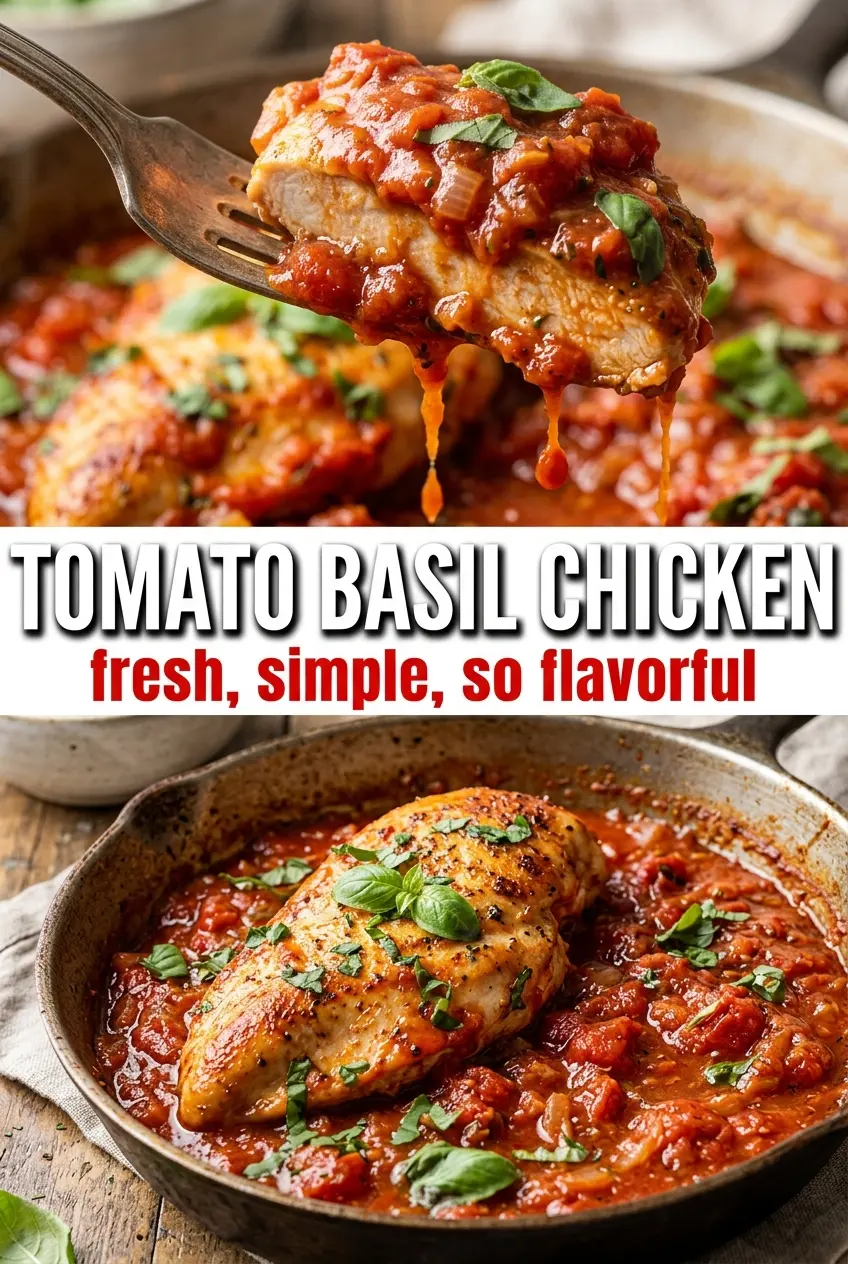
Tomato Basil Chicken Breasts
Ingredients
Equipment
Method
- Pat the boneless skinless chicken breasts dry and season all over with salt, pepper, garlic powder, and Italian seasoning. Heat 1 tbsp olive oil in a large cast iron skillet over medium-high heat until shimmering.
- Place chicken in the skillet and sear for 5-6 minutes per side until deep golden and a meat thermometer reads 165°F in the thickest part. Transfer the chicken to a plate and tent loosely.
- Add the remaining 1 tbsp olive oil to the pan if needed, then add minced garlic and cook for 30 seconds until fragrant. Stir so it doesn’t brown.
- Add halved cherry tomatoes and cook for 3-4 minutes until they burst and release their juices. Scrape up browned bits from the bottom of the pan.
- Pour in the dry white wine and let it bubble for 1 minute. Stir in dried Italian seasoning, red pepper flakes, and balsamic vinegar.
- Return the chicken to the pan and spoon the tomato sauce over each breast. Simmer for 2 minutes until the chicken is hot and coated.
- Scatter fresh basil ribbons over the top. Finish with shaved Parmesan and extra olive oil before serving.