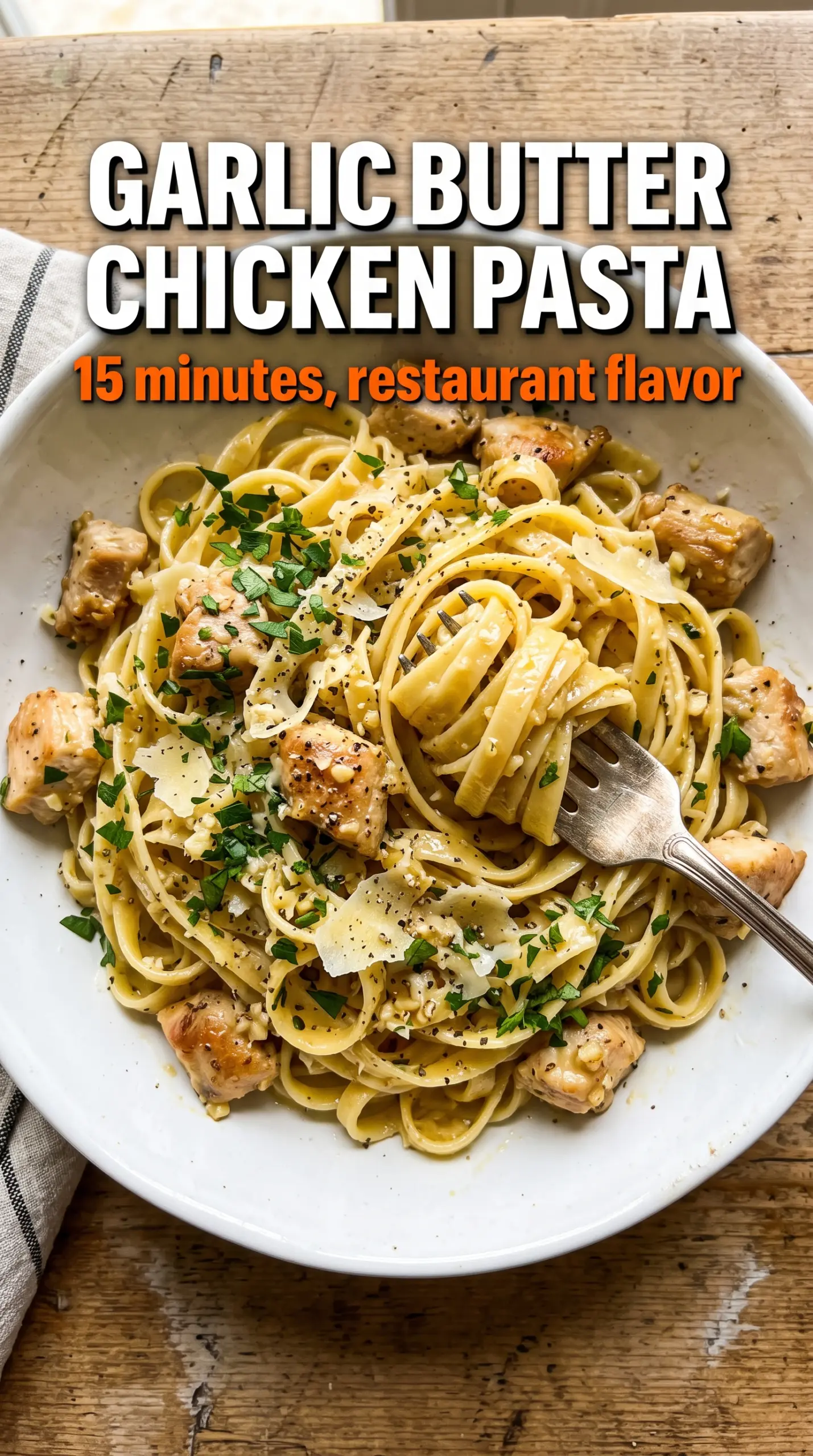
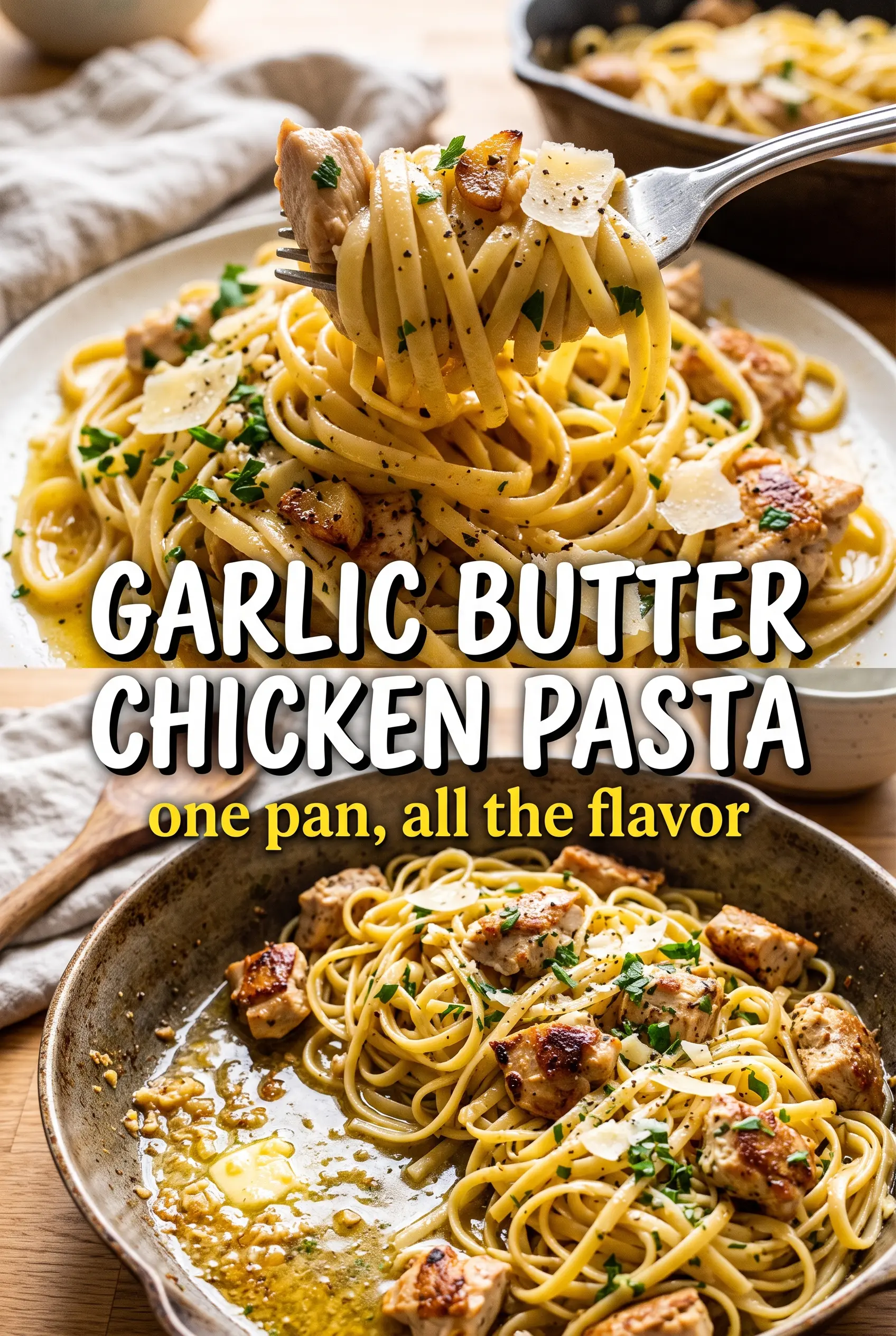
Garlic butter chicken pasta lands on the plate with the kind of glossy, savory comfort that makes people pause for the first bite. The spaghetti gets coated in a buttery garlic sauce that clings instead of pooling, and the chicken stays juicy enough to slice with a fork while still carrying a proper golden edge. A handful of Parmesan and parsley at the end keeps it from tasting flat, and the little hit of lemon sharpens everything just enough to keep the sauce lively.
What makes this version work is the order. The chicken gets cooked first, then the same skillet becomes the sauce pan, which means every browned bit left behind gets folded into the pasta instead of washed away. The garlic only needs a short stint in the butter; let it go too far and it turns bitter fast, which is why the pasta water and lemon go in right after to cool and loosen the sauce before the spaghetti hits the pan.
Below, I’ve included the one timing detail that keeps the sauce silky, plus a few smart swaps for when you want to adjust the heat, the pasta, or the chicken without losing what makes the dish work.
The sauce coated the spaghetti beautifully and didn’t turn greasy at all. I added the pasta water slowly like you suggested, and the chicken stayed tender while the garlic stayed mellow instead of burning.
Save this garlic butter chicken pasta for the night you want glossy spaghetti, seared chicken, and a fast Parmesan finish.
The Trick to Keeping the Garlic Butter Sauce Silky, Not Greasy
The biggest mistake in a dish like this is treating the butter like a heavy cream sauce. Butter alone can turn slick and separate if the heat stays too high or if the pasta goes in before the sauce has something to cling to. The fix is simple: build the sauce in the skillet after the chicken comes out, keep the heat at medium, and use the starchy pasta water as the bridge between fat and noodles.
Lemon juice does more than add brightness here. It loosens the richness just enough that the garlic butter tastes round instead of blunt, and it helps the Parmesan melt into the strands instead of sitting in clumps. If the sauce looks too loose at first, keep tossing for another minute; spaghetti absorbs and tightens the coating as it sits.
What Each Ingredient Is Actually Doing in This Dish
- Chicken breasts — Cutting them into strips gives you faster, more even browning than leaving the breasts whole. Thin strips also stay tender because they’re out of the pan before they dry out. Chicken thighs work too if you want a richer bite, but they’ll bring more fat into the skillet.
- Spaghetti — Long pasta is the right shape for this sauce because the garlic butter can wrap around it instead of sliding off. Linguine or fettuccine also work. Short pasta will taste fine, but you lose some of the silky coating that makes the dish feel finished.
- Butter and olive oil — Olive oil helps the chicken brown without the butter scorching, then butter brings the flavor you’re here for. Don’t swap all the fat for one or the other if you can help it; the combination gives you better browning and a smoother sauce.
- Fresh garlic — This is one place where jarred garlic won’t quite match the result. Fresh garlic softens into the butter and turns sweet and fragrant; jarred garlic can taste sharper and sometimes goes bitter faster. Mince it finely so it cooks evenly in that short window.
- Pasta water — This is what turns melted butter into a sauce that coats. The starch emulsifies the fat and keeps the pasta from looking oily. Reserve more than you think you need, then add it in splashes until the spaghetti glistens and moves easily in the pan.
The Fastest Way to Turn This into Dinner Without Losing the Sauce
Searing the Chicken First
Heat the olive oil in a large skillet until it shimmers, then add the seasoned chicken in a single layer. You want a golden edge and cooked-through centers, which usually takes 4 to 5 minutes per side depending on thickness. If the pan looks crowded, the chicken will steam instead of sear, so work in batches if needed. Pull it out as soon as it’s done so it stays juicy while you build the sauce.
Building the Garlic Butter Base
Lower the heat before the garlic goes in. Butter burns faster than most people expect, and garlic goes from fragrant to bitter in a flash once the pan is too hot. Stir just until the garlic turns pale gold at the edges and the red pepper flakes wake up in the fat. That’s the moment to add the lemon juice, which stops the garlic from overcooking and gives the sauce its lift.
Tossing the Pasta Until It Coats
Add the cooked spaghetti directly to the skillet and toss constantly, adding pasta water a little at a time. The noodles should go from dry-looking to glossy and evenly coated, not soupy. If the sauce looks broken, it usually means too much heat or too little pasta water, so pull the pan off the burner and toss in another splash until it comes back together. Parmesan goes in near the end so it melts into the sauce instead of clumping on top.
Finishing with Chicken, Cheese, and Herbs
Slide the chicken back over the pasta, then shower everything with Parmesan and parsley. The cheese should land on the hot noodles and soften immediately, and the parsley should stay bright green rather than collapsing. Serve it right away while the sauce is glossy and loose; this dish tightens fast as it sits, which is great for leftovers but not for the first plate.
How to Adapt This for a Lighter Pan, More Heat, or No Dairy
Make it dairy-free
Swap the butter for a good dairy-free butter alternative and skip the Parmesan or finish with a dairy-free hard cheese. The sauce will still coat the pasta if you use enough starchy pasta water, but it’ll taste a little less rich and less nutty. Add an extra pinch of salt and a touch more lemon to keep the flavor balanced.
Use gluten-free pasta
Gluten-free spaghetti works well here, but it can turn gummy if it sits too long in the pot or in the skillet. Cook it just until tender, then move it straight into the sauce with a little reserved water. Toss gently so the strands stay intact and don’t break down.
Add more heat
Increase the red pepper flakes or add a pinch of cayenne with the garlic. That gives the heat time to bloom in the butter instead of sitting harshly on top. Don’t overdo it if you’re also using a sharper Parmesan, since both can push the dish toward aggressive instead of savory.
Swap in chicken thighs
Thighs give you a juicier, richer result and forgive a little extra time in the pan. Cut them into even strips so they cook at the same pace as breasts. Because thighs release more fat, you may not need quite as much olive oil to start.
Storage and Reheating
- Refrigerator: Store in an airtight container for up to 3 days. The pasta will absorb some of the sauce, so it gets a little tighter after chilling.
- Freezer: It freezes, but the texture of the pasta softens after thawing. If you plan to freeze it, undercook the spaghetti slightly and cool it quickly before packing it up.
- Reheating: Warm it gently in a skillet with a splash of water or chicken broth over low heat, tossing until the sauce loosens again. The common mistake is blasting it in the microwave until the butter separates and the chicken dries out.
Answers to the Questions Worth Asking
Garlic Butter Chicken Pasta
Ingredients
Equipment
Method
- Season the chicken strips with salt, pepper, garlic powder, and Italian seasoning. Heat 3 tbsp olive oil in a large skillet over medium-high heat and cook the chicken for 4-5 minutes per side until golden and cooked through, then remove and set aside.
- Melt the butter in the same skillet over medium heat. Add the minced garlic and red pepper flakes and cook for 1-2 minutes until fragrant and golden at the edges.
- Stir in the fresh lemon juice, then toss the cooked spaghetti in the garlic butter sauce. Add the reserved pasta water a splash at a time, tossing until the sauce coats all the pasta and looks glossy.
- Top the pasta with the seared chicken strips. Sprinkle Parmesan and fresh parsley generously over the top for a bright finish.
- Serve immediately while the sauce is glistening. The pasta should be well-coated and the chicken should stay golden on top.