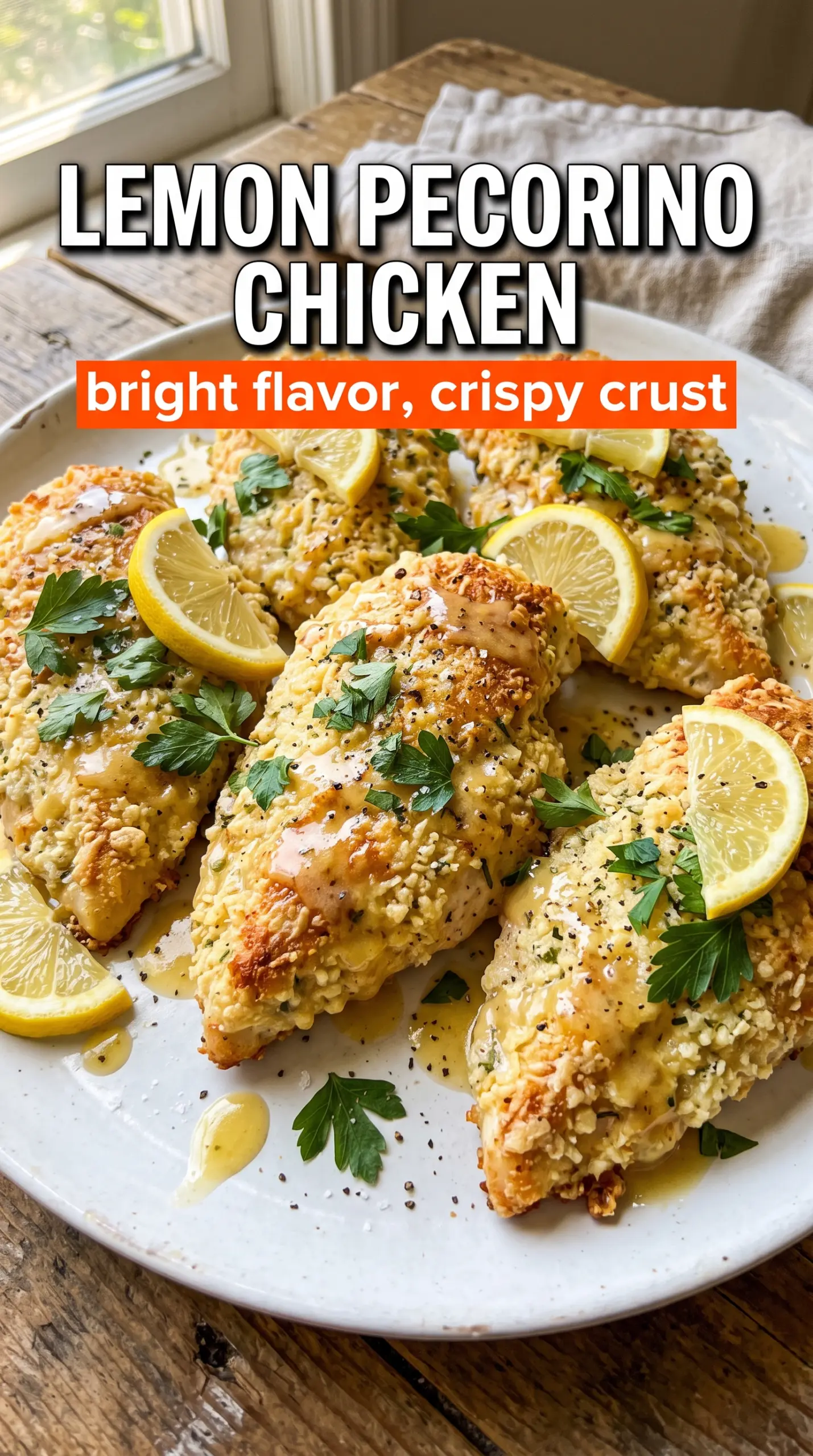
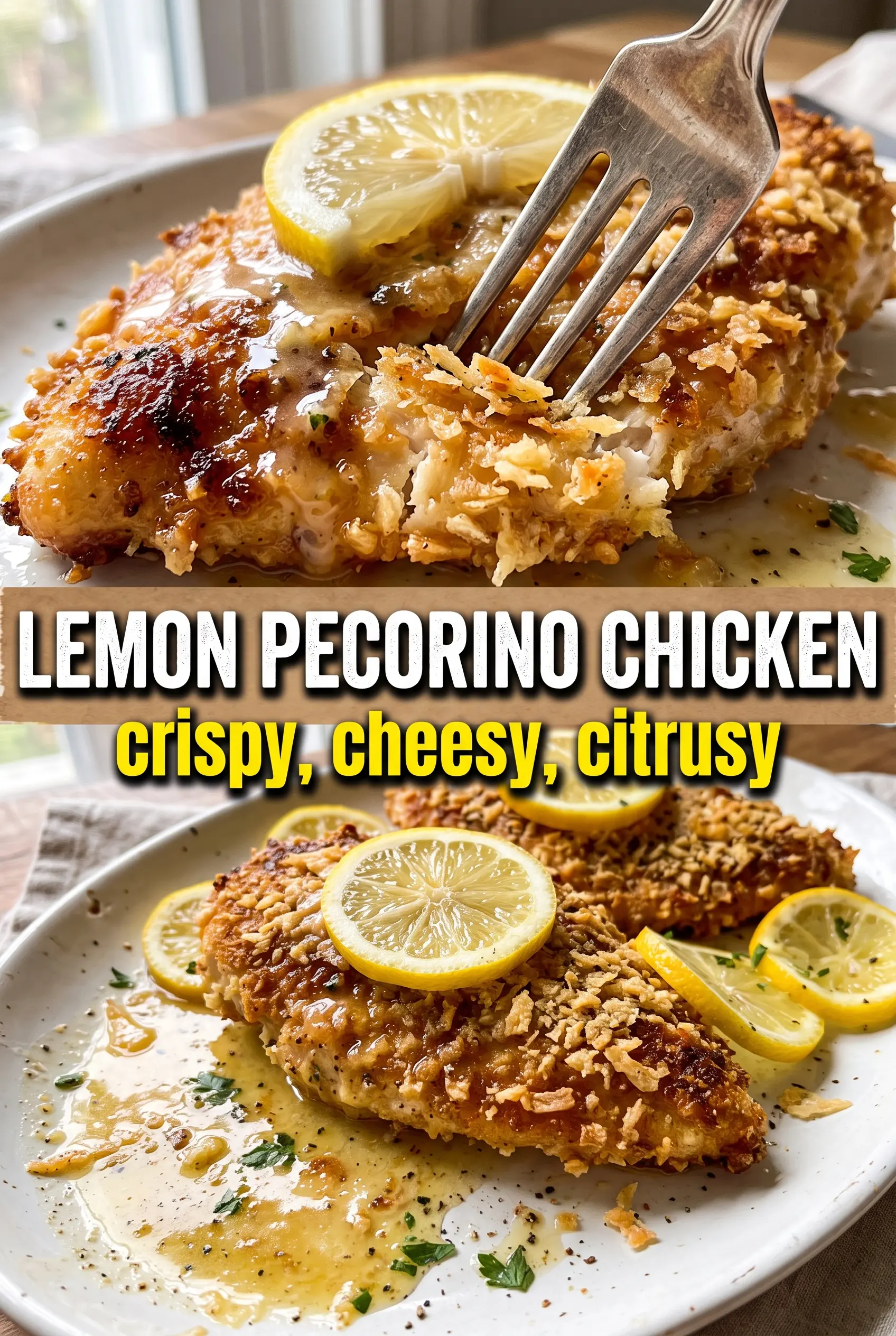
Baked chicken breasts get a lot more interesting when the topping turns into a sharp, salty crust that crackles under the knife. This lemon Pecorino crusted chicken bakes up with a deep golden top, bright citrus aroma, and juicy meat underneath, so you get contrast in every bite instead of another plain chicken dinner.
The trick is starting with evenly pounded chicken and a thin layer of Dijon mixed with olive oil. That gives the coating something to cling to without turning heavy or greasy. Pecorino Romano brings the savory punch, panko keeps the crust light, and lemon zest perfumes the whole dish without making it wet.
Below, I’ve included the small details that keep the crust crisp and the chicken tender, plus a few smart swaps if you need them. The difference between a crust that slides off and one that stays put is smaller than you’d think, and it mostly comes down to how firmly you press it on and how you bake it.
The crust browned evenly and stayed on the chicken instead of falling off when I sliced it. The lemon zest keeps it bright, and the chicken was still juicy at 22 minutes.
Save this lemon Pecorino crusted chicken for the nights when you want a crisp, citrusy chicken dinner with almost no cleanup.
The Reason the Crust Stays Crisp Instead of Slumping
The biggest mistake with breaded chicken is letting moisture win before the pan or oven gets a chance to set the coating. Here, the chicken is pounded to an even thickness, which helps it cook at the same rate and keeps the crust from overbaking while the thickest part catches up. The Dijon and olive oil mixture acts like a thin adhesive layer, so the Pecorino and panko can grip the surface instead of sliding around in dry patches.
Baking on a wire rack matters too. Air circulation underneath keeps the bottom from steaming, which is what turns a promising crust soft and patchy. If you skip the rack, the underside will still cook, but you lose that clean, shattery texture that makes this recipe worth repeating.
What Each Ingredient Is Actually Doing in This Chicken
- Chicken breasts — Pounding them to an even thickness is what keeps the thinner ends from drying out before the center is done. If yours are very large, slice them horizontally after pounding for more manageable portions, but don’t leave them uneven.
- Pecorino Romano — This is the sharp, salty backbone of the crust. Parmesan can work in a pinch, but it’s milder and less assertive, so the finished chicken won’t taste quite as punchy.
- Panko breadcrumbs — Panko keeps the crust lighter and crisper than fine breadcrumbs. If you need gluten-free, use gluten-free panko; regular breadcrumbs tend to pack down and bake up denser.
- Lemon zest — This gives you bright citrus oil without watering down the coating. Use a fine grater and stop at the yellow skin; the white pith underneath turns bitter fast.
- Dijon mustard — It adds tang and helps the crust stick. Yellow mustard is a weaker substitute, and it won’t give the same depth, so Dijon is worth using here.
- Olive oil — Just enough to loosen the mustard so it brushes on thinly. Too much oil makes the coating slide and prevents the top from browning properly.
Pressing and Baking the Chicken So the Coating Never Falls Off
Building the Base Coat
Season the chicken first, then brush on the Dijon and olive oil mixture in a thin, even layer. You don’t want puddles; too much moisture at this stage makes the crust clump instead of adhere. Once the chicken is coated, the surface should look lightly glossy, not wet.
Making the Crust Stick
Mix the Pecorino, panko, lemon zest, parsley, garlic powder, and pepper in a shallow bowl, then press the chicken firmly into the mixture. Use your hand to pack it on so it clings across the full surface, especially around the edges where crust tends to break away first. If the coating looks sparse, add more and press again rather than shaking it loose.
Baking to the Right Finish
Place the chicken on a rack set over a lined baking sheet and bake at 425°F until the crust is deep golden and the thickest part reaches 165°F, usually 20 to 22 minutes. If the top browns before the center is done, your chicken is probably too thick or your oven runs hot; next time, pound it more evenly or check earlier. Let it rest for 3 minutes so the juices settle before you cut in.
How to Adapt This for Different Tables and Different Pantries
Gluten-Free Version With the Same Crunch
Swap in gluten-free panko and keep the rest of the method the same. The crust stays light and crisp as long as you still press it on firmly and bake on a rack. Skip fine gluten-free crumbs here; they compact too much and lose that crackly edge.
Parmesan Instead of Pecorino
Parmesan gives you a similar baked-cheese crust, but the flavor lands softer and less salty. If that’s what you have, it works fine; add a small pinch more salt to the chicken itself so the final dish doesn’t taste flat.
Chicken Cutlets for Faster Cooking
Thin cutlets cut the bake time down a few minutes and give you even more crust per bite. They’re a smart choice when you want dinner on the table fast, but watch them closely because they can overcook in a hurry once they start browning.
Storage and Reheating
- Refrigerator: Store leftovers in an airtight container for up to 3 days. The crust will soften a bit, but the chicken stays flavorful.
- Freezer: It freezes reasonably well, though the crust won’t stay as crisp. Freeze cooked chicken on a tray first, then transfer to a bag or container for up to 2 months.
- Reheating: Reheat in a 375°F oven or air fryer until warmed through. The microwave makes the coating rubbery and steams the crust, which is the fastest way to lose the texture that makes this dish stand out.
Answers to the Questions Worth Asking
Lemon Pecorino Crusted Chicken
Ingredients
Equipment
Method
- Preheat oven to 425°F and line a baking sheet with a wire rack.
- Pound the chicken breasts to an even thickness so they cook uniformly.
- Season chicken on both sides with salt, pepper, and garlic powder to taste.
- Mix Dijon mustard with olive oil, then brush over both sides of each chicken breast.
- Combine Pecorino Romano cheese, panko breadcrumbs, lemon zest, fresh parsley, garlic powder, and pepper.
- Press the crust mixture firmly onto the mustard-coated chicken so it adheres all over.
- Place chicken on the prepared rack and bake for 20-22 minutes until the crust is golden and crackles, and the internal temperature reaches 165°F.
- Rest the chicken for 3 minutes to set the crust.
- Garnish with fresh basil and serve with lemon wedges.