Chicken Marsala lands on the plate with that deep, glossy sauce that makes the whole dish feel restaurant-made, but it’s the pan-fried cutlets and the mushroom base that give it real staying power at home. The chicken stays tender because it’s sliced thin, coated lightly in flour, and cooked just long enough to pick up a golden crust before it finishes in the sauce. That balance matters. Too much flour or too much heat, and you get a heavy coating instead of a silky pan sauce.
What makes this version worth keeping is the way the Marsala wine reduces before the broth and cream go in. That first simmer concentrates the flavor instead of leaving the sauce thin or flat, and the mushrooms get time to brown before the liquid changes the temperature in the pan. A final swirl of cold butter pulls everything together and gives the sauce that sheen you usually only get in a good dining room kitchen.
Below, I’m walking through the small choices that keep the sauce smooth, how to get the chicken browned without drying it out, and the substitutions that still keep the dish grounded in the same rich, savory style.
The sauce thickened right up and the mushrooms got this deep browned edge that made the whole skillet taste like a restaurant dinner. I served it with egg noodles and there wasn’t a drop left.
Save this Chicken Marsala for nights when you want a silky Marsala-mushroom sauce and golden cutlets without a complicated pan sauce.
The Thin Cutlet Trick That Keeps Chicken Marsala Tender
Chicken Marsala goes wrong most often when the chicken is too thick. A full breast takes longer to cook, which means the outside has to over-brown before the center is done. Halving the breasts horizontally gives you thin cutlets that cook fast, stay juicy, and leave room for the sauce to cling to every surface.
The other thing that matters is the flour coating. You want a light, even dusting, not a thick layer. That flour helps the chicken brown and later helps the sauce take on just enough body in the pan, but too much of it turns the skillet gravy pasty instead of glossy.
What Each Ingredient Is Actually Doing in This Marsala Sauce
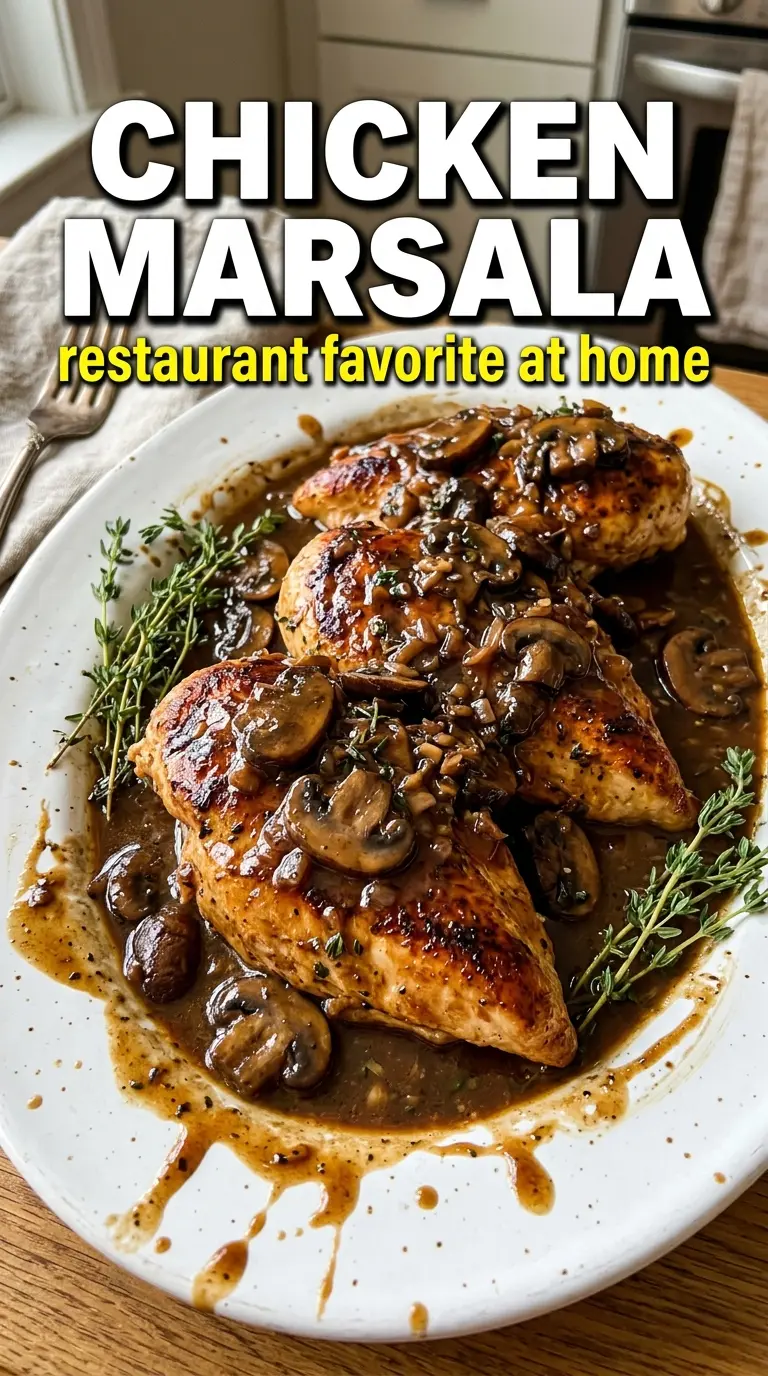
- Chicken breasts — Slicing them into thin cutlets is what keeps the meat tender and gives you enough browned surface for the sauce to grab onto. If you start with cutlets that are uneven in thickness, pound the thicker spots lightly so they cook at the same pace.
- Marsala wine — This is the backbone of the dish, so use dry Marsala, not a sweet dessert-style bottle. The wine needs those few minutes of bubbling time to lose its sharp edge and concentrate into something deep and savory.
- Cremini mushrooms — They bring the earthy, meaty flavor that makes the sauce feel full-bodied. White buttons work in a pinch, but cremini give you better color and a deeper taste once they’ve had time to brown.
- Heavy cream — Just a quarter cup softens the wine and rounds out the sauce without turning it into a cream sauce. If you skip it, the pan sauce will taste thinner and sharper.
- Cold butter — Swirled in at the end, it gives the sauce that restaurant gloss. Add it off the heat or over very low heat; high heat can make the sauce look broken instead of silky.
Build the Sauce First, Then Bring the Chicken Back
Season and Dredge the Cutlets
Season the chicken before it hits the flour so the seasoning actually reaches the meat instead of sitting only on the outside. Shake off the excess flour with purpose; if the coating is too heavy, it will soak up oil in the pan and come off as gummy instead of crisp. A thin dusting is enough to help the chicken brown and give the sauce a little structure later.
Brown the Chicken Without Crowding the Pan
Cook the cutlets in olive oil and butter over medium-high heat until they’re deeply golden on both sides, usually 3 to 4 minutes per side. If the pan feels crowded, the chicken will steam and turn pale, so work in batches if you need to. Pull it out as soon as it’s browned; it finishes later in the sauce, and that second cook is what keeps it from drying out.
Let the Mushrooms Take on Color
Cook the mushrooms and shallots in the same pan so they pick up the browned bits left behind by the chicken. Don’t rush this stage. The mushrooms need time to release their moisture and then brown again, or the sauce will taste flat. When the pan looks dry and the edges of the mushrooms start to caramelize, add the garlic for just a minute so it stays fragrant instead of bitter.
Reduce the Wine Before Adding the Cream
Once the Marsala goes in, let it bubble for a couple of minutes before adding the broth and cream. That first reduction is what turns the wine from sharp and boozy into something concentrated and round. If you add the liquid too fast, the sauce can taste thin and the wine never quite blends into the mushrooms the way it should.
Finish With Butter and Return the Chicken
Stir in the cold butter at the end and watch the sauce turn glossy. If it looks oily or grainy, the heat is too high; pull the pan off the burner and swirl gently until it comes back together. Return the chicken to the skillet and spoon the sauce over the top for the last minute or two, just long enough to warm it through and coat every cutlet.
How to Adapt This Chicken Marsala Without Losing the Point of the Dish
Gluten-Free Chicken Marsala
Swap the all-purpose flour for a gluten-free flour blend that browns well, or use a light dusting of cornstarch if that’s what you have on hand. Cornstarch gives a slightly silkier finish, while a blend behaves more like classic flour and creates a more familiar crust on the chicken.
Dairy-Free Version
Use all olive oil for the chicken and finish the sauce with a dairy-free butter substitute instead of the final butter swirl. The sauce won’t have quite the same roundness, but the Marsala and mushrooms still carry the dish. Skip the cream or replace it with an unsweetened dairy-free cooking cream if you want a softer sauce.
Make It Richer and More Mushroom-Forward
Add a few more ounces of mushrooms and let them brown in batches instead of crowding them in the pan. That gives you deeper flavor and a thicker, more luxurious sauce. If you like the mushroom side of Chicken Marsala best, this is the change that pushes the dish in that direction without losing balance.
Storage and Reheating
- Refrigerator: Store leftovers in an airtight container for up to 3 days. The sauce may thicken as it chills, and the chicken will absorb some of it.
- Freezer: This freezes, but the cream sauce can separate a little after thawing. Freeze in a tight container for up to 2 months if needed, then reheat gently and whisk well.
- Reheating: Warm it slowly in a skillet over low heat with a splash of chicken broth. High heat can make the sauce break and dry out the cutlets before the center is hot.
Questions I Get Asked About This Recipe
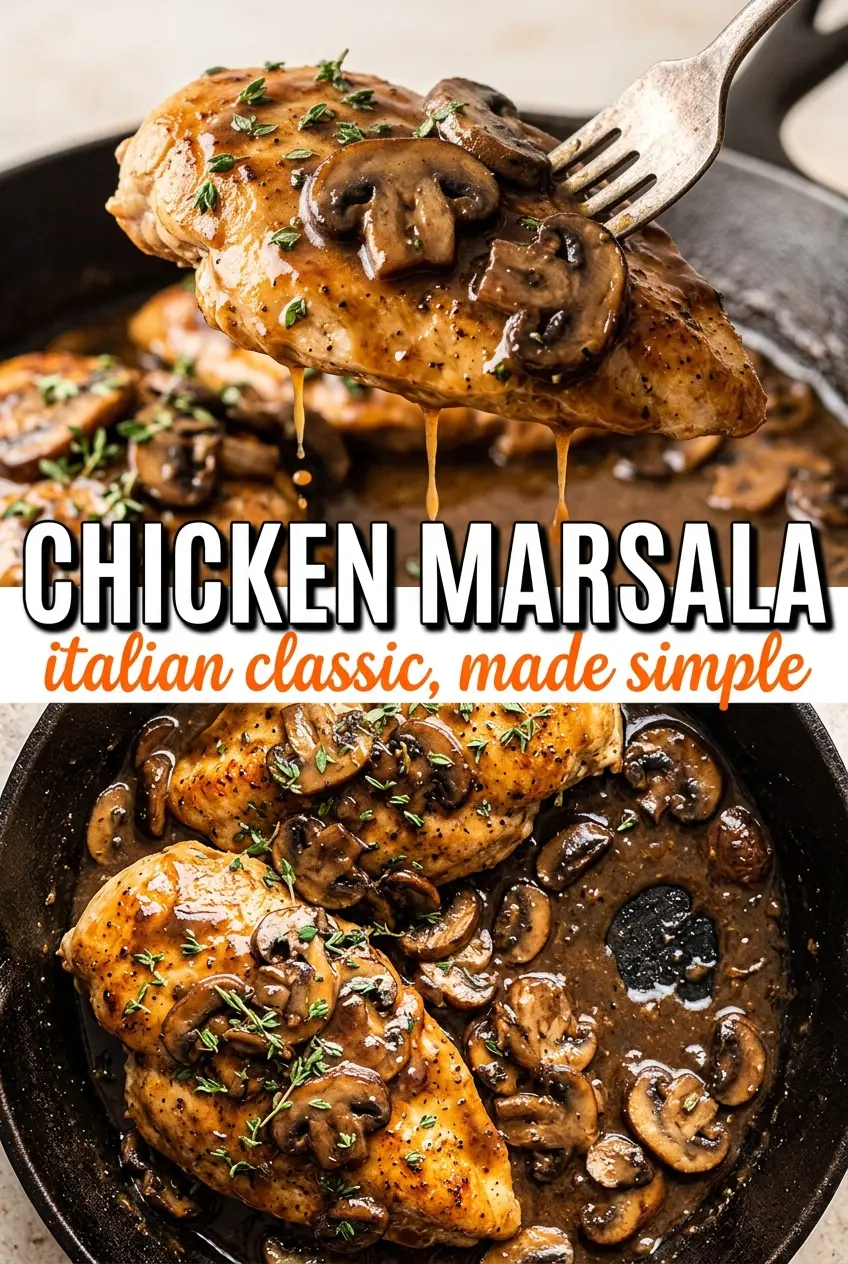
Chicken Marsala
Ingredients
Equipment
Method
- Season the chicken cutlets with salt and pepper. Lay them out so each cutlet is evenly coated before dredging.
- Dredge each cutlet in all-purpose flour, shaking off excess. You want a thin, dry coating that browns instead of clumps.
- Heat a cast iron skillet over medium-high heat with olive oil and 2 tablespoons butter until shimmering. Add the cutlets and cook 3-4 minutes per side until golden, then remove to a plate.
- Add cremini mushrooms and shallots to the same skillet and cook 5-6 minutes until golden. Stir occasionally so the mushrooms brown rather than steam.
- Add minced garlic and cook for 1 minute. Stop when fragrant to avoid burning.
- Pour in dry Marsala wine and let it bubble for 2-3 minutes. Scrape the browned bits from the pan as the liquid reduces.
- Add chicken broth and heavy cream, then simmer for 5 minutes. The sauce should thicken slightly and taste fully infused.
- Turn off the heat and swirl in the remaining 2 tablespoons cold butter until the sauce is glossy. Stir in fresh thyme leaves for a fragrant finish.
- Return the chicken cutlets to the pan and spoon the sauce over them. Let them warm in the sauce just until coated and hot.
- Garnish with fresh parsley and serve immediately. Spoon sauce from the pan so every bite gets mushrooms and gloss.