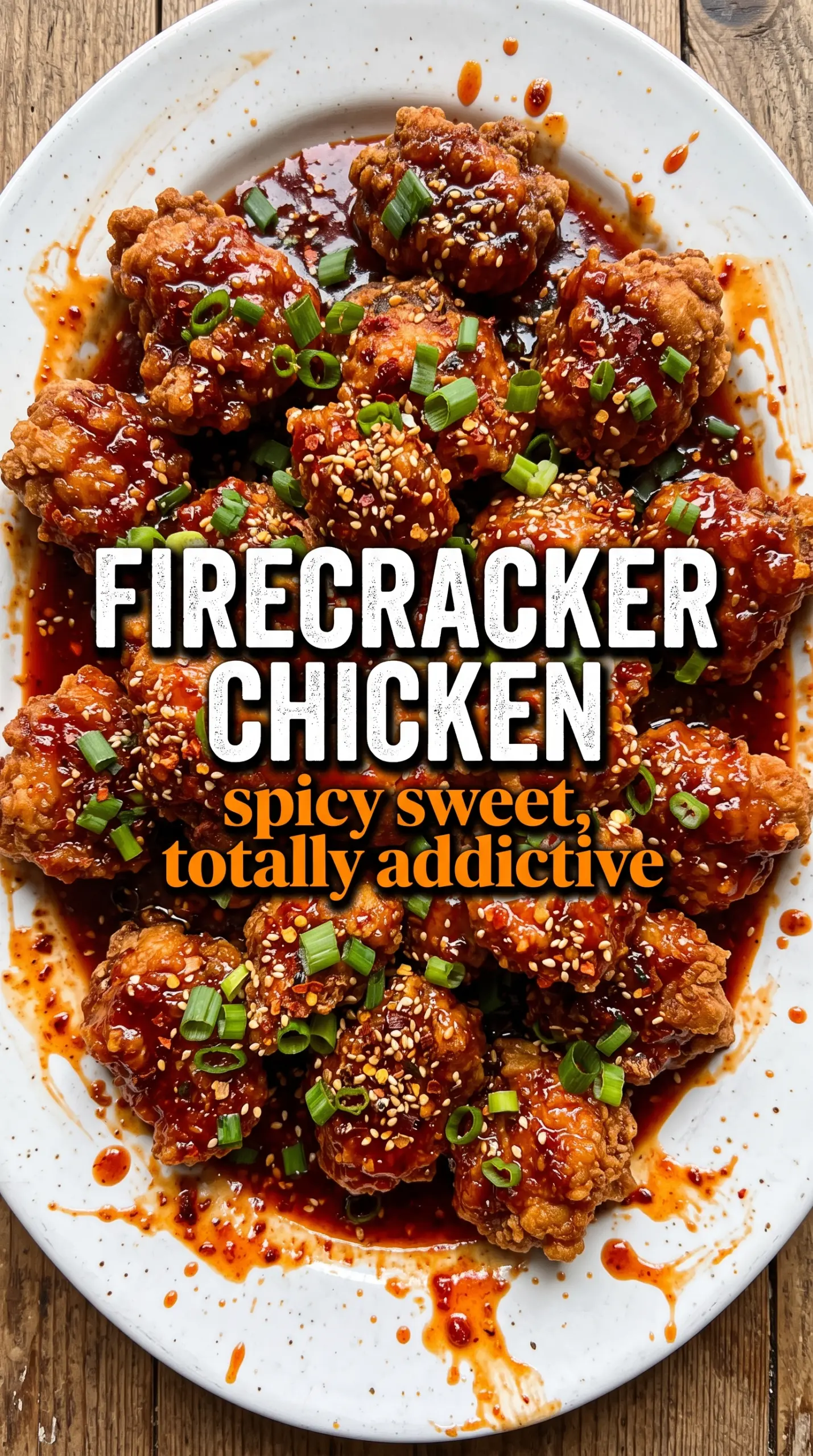
Crispy Firecracker Chicken hits that sweet spot between takeout comfort and stovetop cooking you can pull off on a weeknight. The chicken stays light and crunchy under a glossy red-orange sauce that clings instead of sliding off, and every bite brings heat, tang, and a little brown sugar caramelization at the edges. It’s the kind of dish that disappears fast, especially once it lands over a bowl of hot rice.
The texture works because the chicken gets coated in a mix of cornstarch and flour before frying, which gives you a craggy crust that holds up under sauce better than flour alone. The sauce itself is balanced on purpose: hot sauce for heat, brown sugar for stickiness, vinegar for brightness, and butter to round everything out. That combination keeps the glaze bold without turning sharp or one-note.
Below, I’m breaking down the one part that matters most for keeping the chicken crisp, plus a few swaps that help if you want to dial the heat up or down. I also included storage notes, since the leftovers still taste great if you reheat them the right way.
The coating stayed crisp even after tossing in the sauce, and the balance of sweet heat was spot on. I served it with rice and the pan was basically scraped clean.
Sticky Firecracker Chicken deserves a Pinterest spot for the crispy coating, glossy sweet-heat sauce, and that red-pepper-flecked finish.
The Part That Keeps Firecracker Chicken Crisp Instead of Soggy
The biggest mistake with sauced fried chicken is tossing it into the glaze too early and letting the coating steam itself soft. This version solves that by frying the chicken until the crust is already set, then returning it to the pan with the sauce just long enough for the edges to caramelize. That final minute matters. It gives you sticky coating on the outside and actual crunch underneath.
Two things help a lot here: a hot enough oil temperature and a sauce that’s cooked separately before the chicken goes in. If the oil is too cool, the breading absorbs grease instead of crisping. If the sauce is left thin and undercooked, it won’t cling, and you’ll lose that lacquered finish that makes the dish work.
What Each Ingredient Is Actually Doing in the Sauce
- Chicken breasts — Boneless skinless breasts cook quickly and stay tender if you cut them into even bite-sized pieces. Thighs work too if you want a richer result, but they’ll take a touch longer and won’t have quite the same clean bite.
- Cornstarch and flour — This mix is what gives the coating its crunch. Cornstarch adds crispness, while flour gives the breading enough structure to cling in the fryer. Using only flour makes the crust heavier; using only cornstarch can turn fragile.
- Hot sauce and brown sugar — These two do the heavy lifting in the firecracker sauce. The hot sauce brings the heat and tang, while brown sugar melts into a sticky glaze. If you reduce the sugar, the sauce gets thinner and less glossy.
- Butter, vinegar, and soy sauce — Butter smooths out the heat and helps the sauce coat the chicken. Vinegar cuts the sweetness so it doesn’t taste flat, and soy sauce adds savory depth. Don’t skip the soy sauce; even a small amount keeps the sauce from tasting like hot-sugar syrup.
- Red pepper flakes — These give the sauce visible heat and that signature firecracker look. Start with less if you’re sensitive to spice, then add more after tasting the finished sauce. The heat builds a little as it sits.
Building the Sauce and Frying the Chicken in the Right Order
Coating the Chicken Evenly
Mix the chicken with cornstarch, flour, salt, pepper, and garlic powder until every piece looks lightly dusted, not caked. You want a thin, even coating so it fries into a crisp shell instead of a bready layer. If the bowl starts looking gummy, stop tossing and shake off the excess. Too much dry coating falls off in the oil and muddies the pan.
Frying Until the Outside Sets
Fry the chicken in about half an inch of oil at 375°F, working in batches so the temperature doesn’t crash. The pieces should bubble actively as soon as they hit the pan and turn deep golden in 3 to 4 minutes per side. If the crust is browning too fast, the oil is too hot; if it looks pale and greasy, the oil is too cool. Drain the chicken on a rack or paper towels before saucing.
Cooking the Glaze
Stir the sauce ingredients together in a saucepan over medium heat until the butter melts and everything turns smooth and glossy. The sugar needs a minute or two to dissolve fully, and the sauce should thicken slightly as it heats. If it starts to boil hard, pull it back a bit; aggressive heat can make the sauce separate or taste burnt around the edges.
Tossing and Caramelizing
Add the fried chicken to the sauce and turn it until every piece is coated. Then give it one to two minutes back in the pan so the sauce tightens around the crust and turns shiny instead of watery. Don’t walk away here. That last little bit of heat is what turns the coating from sauced to properly sticky.
Make it less spicy without losing the firecracker character
Use the lower end of the red pepper flakes and choose a milder hot sauce, then lean on the brown sugar and vinegar for balance. You’ll still get the sticky sweet-heat glaze, just with a softer burn that works better for kids or spice-shy eaters.
Swap in chicken thighs for a juicier bite
Boneless skinless thighs give you richer flavor and stay forgiving if you cook them a minute longer. The coating and sauce work the same way, but the finished dish will feel a little more substantial and less lean than the breast version.
Gluten-free version
Use a gluten-free all-purpose blend in place of the flour and swap in tamari for the soy sauce. The crust stays crisp as long as the blend includes a starch component, and the sauce keeps the same savory backbone.
Bake or air-fry instead of deep-frying
For a lighter version, bake the coated chicken on a rack or air-fry until crisp and cooked through, then toss with the sauce right before serving. You won’t get the same shattering crust as frying, but you’ll still get a good bite and the full sweet-spicy glaze.
Storage and Reheating
- Refrigerator: Store leftovers in an airtight container for up to 3 days. The coating softens, but the flavor stays strong.
- Freezer: You can freeze the cooked chicken, but the crust loses a lot of its crunch after thawing. If you want the best texture, freeze the fried chicken and sauce separately, then combine after reheating.
- Reheating: Warm the chicken in a 375°F oven or air fryer until hot and crisp, then reheat the sauce separately and toss everything together at the end. Microwaving turns the coating soft fast, which is the one mistake that really flattens this dish.
Questions I Get Asked About This Recipe
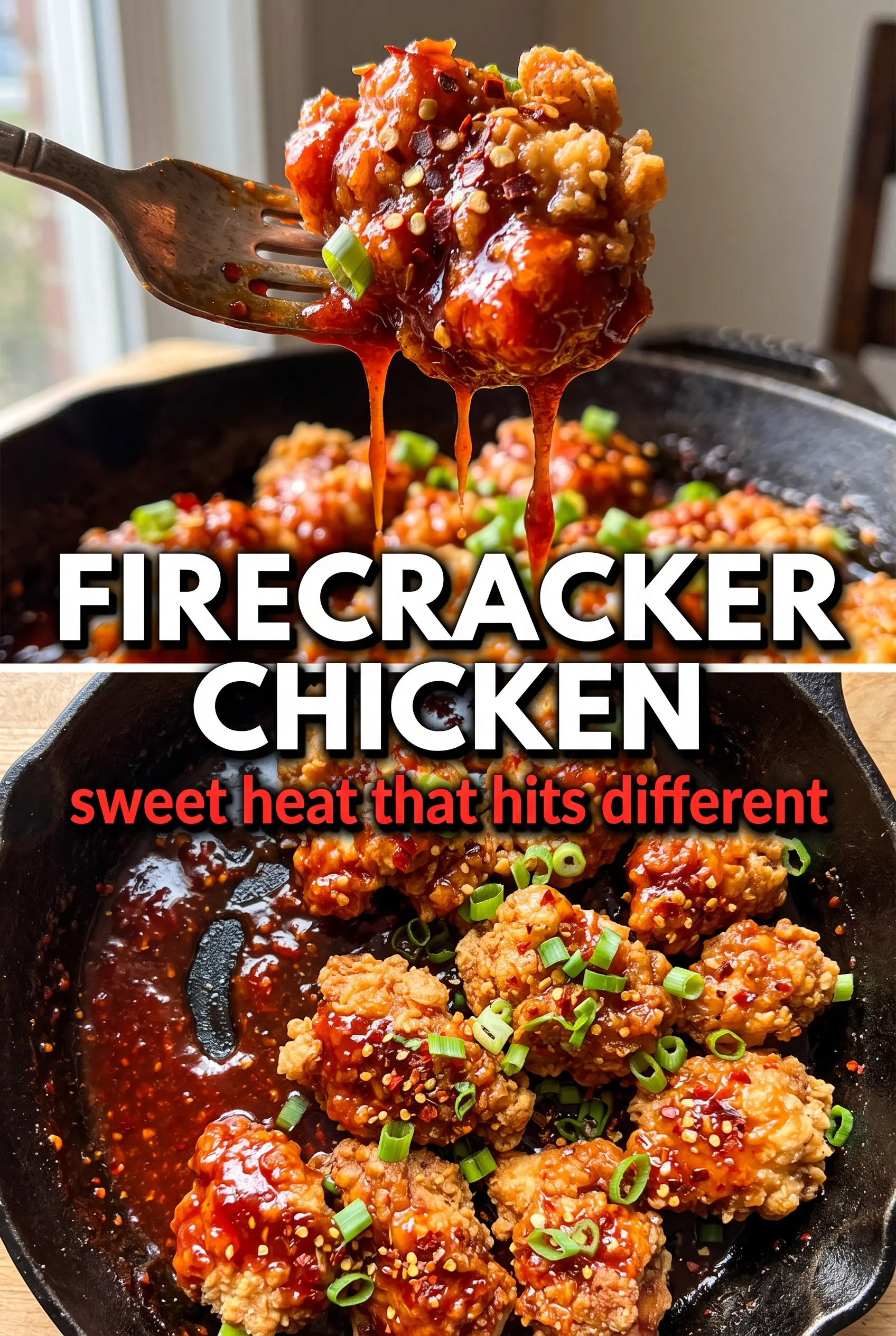
Firecracker Chicken
Ingredients
Equipment
Method
- Toss the chicken with cornstarch, all-purpose flour, salt, pepper, and garlic powder until every piece is fully coated and dusted.
- Heat vegetable oil in a cast iron skillet to 375°F (about 1/2 inch deep). Fry the chicken for 3-4 minutes per side until golden and cooked through, then drain.
- In a saucepan over medium heat, combine hot sauce, brown sugar, butter, apple cider vinegar, soy sauce, garlic powder, and red pepper flakes.
- Stir until the butter melts and the sauce becomes smooth and glossy, about 2-3 minutes, then remove from heat.
- Toss the crispy chicken in the glossy firecracker sauce until every piece is fully coated, with visible red pepper flakes clinging to the surface.
- Return the sauced chicken to the pan for 1-2 minutes to caramelize, until it looks vivid red-orange and stickier.
- Serve the firecracker chicken over steamed rice and top with sesame seeds and sliced green onions for a fresh finish.