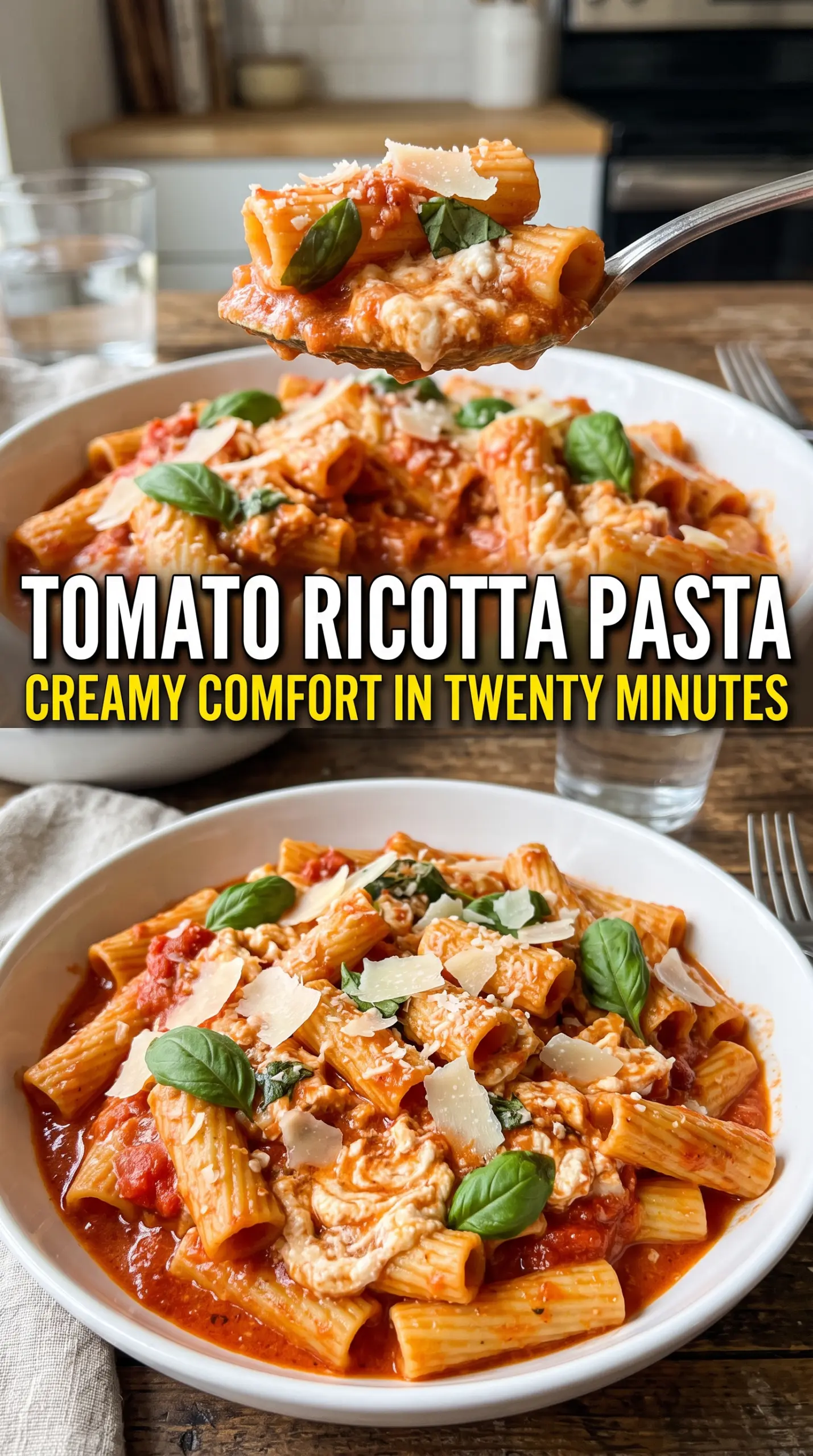
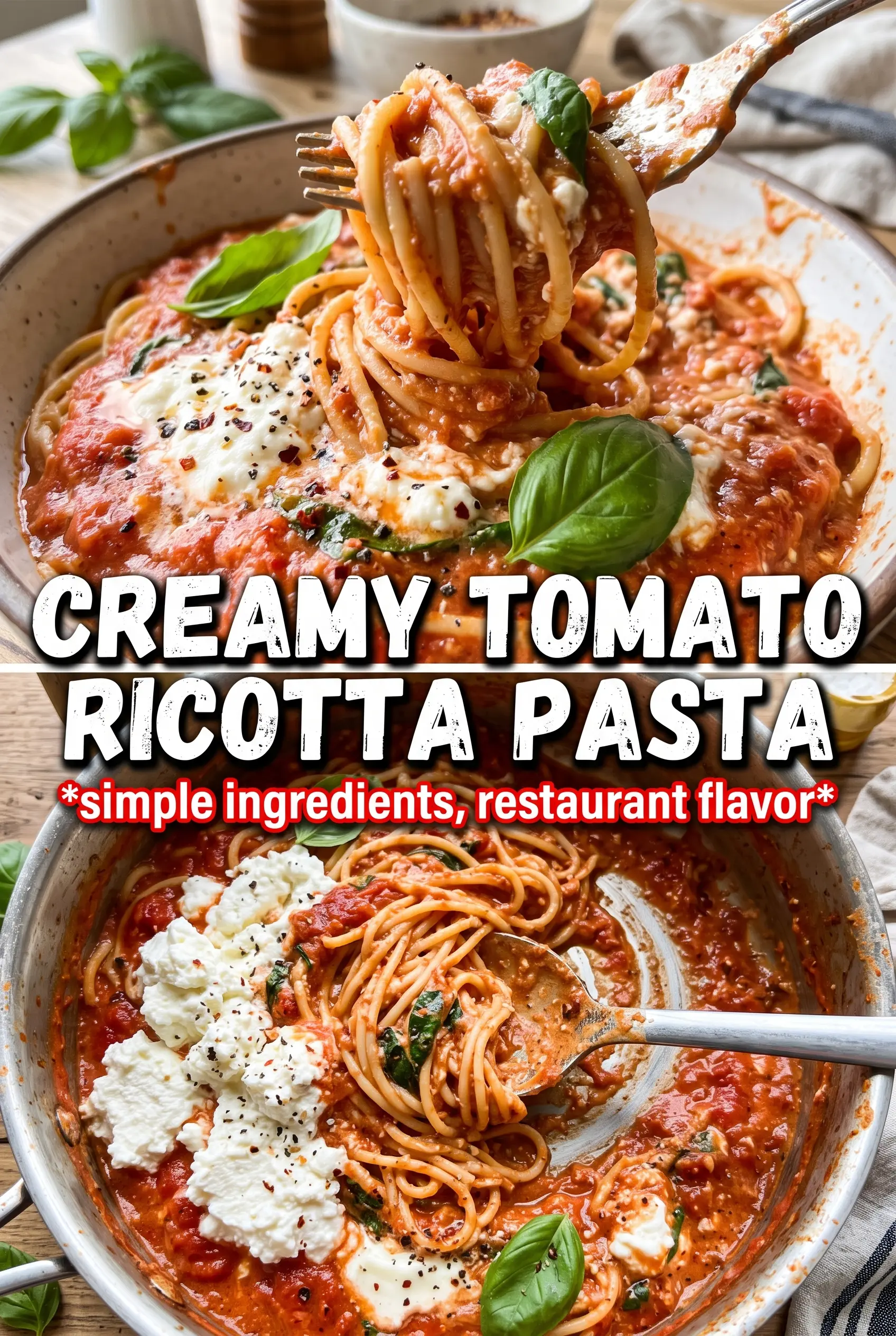
Silky tomato ricotta sauce clings to rigatoni in the best possible way, turning a short pantry ingredient list into a bowl that tastes far more composed than the effort suggests. The sauce lands somewhere between marinara and a light cream sauce: bright, a little tangy, and soft enough to coat every tube without feeling heavy.
The trick is keeping the tomato base at a steady simmer before the dairy goes in, then pulling the heat down once the ricotta, cream, and parmesan join the pan. That keeps the sauce smooth instead of grainy and gives the cheese a chance to melt into the tomatoes instead of seizing up. Rigatoni helps here too, because those ridges and hollow centers catch the sauce better than a long, slick pasta ever could.
Below, I’ve laid out the one step that keeps the sauce creamy, the ingredient choices that matter most, and the small adjustments that help this pasta work on a busy night without losing its texture.
The sauce turned out so smooth and glossy, and the ricotta melted right into the tomatoes instead of staying lumpy. I tossed in a splash of pasta water at the end and it coated the rigatoni perfectly.
Creamy Tomato Ricotta Pasta is the kind of rigatoni dinner you’ll want on repeat when you need a silky red sauce without the fuss.
The Sauce Breaks When the Heat Stays Too High
Ricotta can turn grainy fast if it gets blasted in a hot pan, especially once parmesan is involved. The fix is simple: let the tomato base simmer long enough to lose its raw edge, then lower the heat before the dairy goes in. That soft landing is what keeps the sauce smooth and creamy instead of speckled and tight.
Another thing that matters here is the pasta water. The starch in it helps the sauce cling to the rigatoni and gives you a glossy finish without thinning the flavor. If the sauce looks too tight after tossing, add the water a splash at a time. If it looks loose, let it sit for a minute off the heat; it thickens as the cheese settles in.
- Crushed tomatoes — These give you body without needing to cook down fresh tomatoes for ages. A good-quality can matters here because the sauce stays front and center. If yours tastes sharp, the simmer time will round it out.
- Whole milk ricotta — This is what makes the sauce plush. Part-skim ricotta works in a pinch, but it won’t melt as evenly or taste as full. Stir it in off the hottest part of the burner so it blends instead of curdling.
- Heavy cream — The cream softens the tomato acidity and gives the sauce that blush color. Half-and-half can work, but the sauce will be a little thinner and less stable. Don’t let it boil after it goes in.
- Parmesan — Use the finely grated kind that melts easily, not a dry snow of shelf-stable cheese if you can help it. It helps thicken the sauce and adds salt, so taste before you season aggressively.
- Rigatoni — The shape matters more than it seems. Those tubes trap the sauce inside and around the edges, which makes each bite taste balanced instead of slick.
What Each Ingredient Is Actually Doing in This Recipe
- Primary ingredient (the star) — Quality matters most. Choose the best you can find.
- Cooking medium (oil, butter, or broth) — This carries flavors and prevents dryness.
- Seasonings (salt, pepper, spices, herbs) — Layer flavors so nothing overpowers. Build depth gradually.
- Aromatics (garlic, onion, herbs) — Cook with fat to bloom flavors. Become the foundation.
- Supporting ingredients — Complement the main ingredient without overpowering it.
- Sauce or liquid (if applicable) — Brings flavors together. Balance richness with acid.
- Acid (lemon, vinegar, wine, or other) — Brightens and prevents flat-tasting results.
- Final finish (garnish, glaze, or sauce) — Prevents one-dimensional taste and adds visual appeal.
How to Keep the Tomato, Ricotta, and Parmesan in the Same Sauce
Build the Garlic Base First
Warm the olive oil over medium heat, then cook the garlic with the red pepper flakes just until it smells sweet and toasty, about a minute. If the garlic browns, the sauce will pick up a bitter edge that never quite disappears. Keep it moving in the oil and add the tomatoes as soon as the garlic turns fragrant.
Let the Tomatoes Cook Down
Once the crushed tomatoes go in, season them and let the sauce simmer until it loses its raw, thin taste and turns slightly darker and thicker. This is where the tomato flavor deepens. If the pan is bubbling too hard, lower the heat; hard boiling makes the sauce splatter and can reduce it unevenly.
Blend in the Dairy Off the Heat
Stir in the ricotta, heavy cream, and parmesan after the tomato base has simmered. Keep the heat low enough that the sauce stays just below a boil, and stir until it looks smooth and pale pink. If you see tiny grains, the pan was too hot; pull it off the burner and whisk in a spoonful of pasta water to loosen it back up.
Toss the Pasta Until It Glosses
Add the cooked rigatoni to the sauce and toss until every piece looks coated and the sauce clings inside the tubes. Add reserved pasta water a little at a time until the sauce moves like cream but still holds on to the pasta. The right texture should be silky, not soupy.
Three Ways to Make This Pasta Fit What’s in Your Kitchen
Make it vegetarian with extra vegetables
This recipe is already vegetarian, but it takes well to add-ins like sautéed spinach, mushrooms, or roasted zucchini. Cook the vegetables first so they don’t water down the sauce, then fold them in at the end so the pasta stays creamy instead of diluted.
Make it dairy-free
Use a thick unsweetened dairy-free cream and a ricotta-style alternative, then finish with nutritional yeast or a dairy-free parmesan. The sauce won’t taste exactly the same, but you can still get a creamy tomato coating if you keep the heat gentle and don’t rush the simmer.
Use a different pasta shape
Penne, ziti, or fusilli all work if that’s what you have. Just avoid delicate noodles like angel hair, which can’t hold this thicker sauce as well and can go soft before the sauce clings properly.
Storage and Reheating
- Refrigerator: Store leftovers in an airtight container for up to 4 days. The sauce thickens as it chills, so expect it to look tighter the next day.
- Freezer: It freezes, but the dairy can separate a little when thawed. If you do freeze it, use a freezer-safe container and thaw it overnight in the fridge before reheating.
- Reheating: Reheat gently in a skillet over low heat with a splash of water or milk, stirring often. High heat is the mistake that makes the ricotta sauce turn grainy or oily.
Questions I Get Asked About This Recipe
Creamy Tomato Ricotta Pasta
Ingredients
Equipment
Method
- Bring a pot of water to a boil and cook the rigatoni until al dente, about the package time. Reserve 1/2 cup pasta water, drain, and set the rigatoni aside.
- Heat olive oil in a large skillet over medium heat until shimmering. Add the garlic and red pepper flakes and cook for 1 minute, stirring so the garlic doesn’t brown.
- Add crushed tomatoes, Italian seasoning, salt, and black pepper to the skillet. Simmer for 10 minutes, stirring occasionally, until slightly thickened.
- Reduce heat to low and stir in ricotta, heavy cream, and parmesan until the sauce is smooth and creamy. Simmer for 3 more minutes.
- Add the drained rigatoni to the skillet and toss in the tomato ricotta sauce. Add reserved pasta water as needed to achieve a silky consistency, then serve topped with fresh basil and extra parmesan.