Silky pumpkin cheesecake with a crisp gingersnap crust earns its place on the table the moment that first slice comes away clean and the filling holds its shape without feeling heavy. The spiced pumpkin layer stays smooth and plush, not dense or chalky, and the crust brings just enough snap and warmth to keep every bite interesting.
What makes this version work is the balance: cream cheese for structure, sour cream for a little tang and softness, and pumpkin puree for flavor without turning the batter loose. The gingersnap crust does more than add crunch; it gives the dessert a deeper spice base so the filling doesn’t have to carry all the flavor on its own. Baking it in a water bath and letting it cool slowly keeps the texture even and helps prevent those ugly cracks that show up when cheesecake is rushed.
Below you’ll find the exact cues I watch for in the oven, plus the smartest swaps if you need to adjust the crust or make it ahead for a crowd.
The cheesecake came out incredibly smooth, and the gingersnap crust stayed crisp even after chilling overnight. I baked it until the center still had a gentle wobble, and it sliced perfectly the next day.
Save this pumpkin cheesecake for the holiday dessert that needs a crack-free top and a spiced gingersnap crust.
The Trick to Keeping Pumpkin Cheesecake Smooth Instead of Grainy
The most common mistake with pumpkin cheesecake is rushing the batter once the eggs go in. If the cream cheese isn’t fully smooth before you add anything else, the little bits stay there and bake into a lumpy filling. Once the eggs are added, mix just until they disappear; beating hard at that point whips in extra air, and air bubbles are what lead to cracks and a puffy center that sinks later.
The water bath matters here too. Cheesecake likes gentle heat, and the steam from the bath keeps the edges from setting faster than the middle. That even heat is what gives you a slice that looks creamy all the way through instead of dense around the rim and soft in the center.
What Each Ingredient Is Actually Doing in This Cheesecake
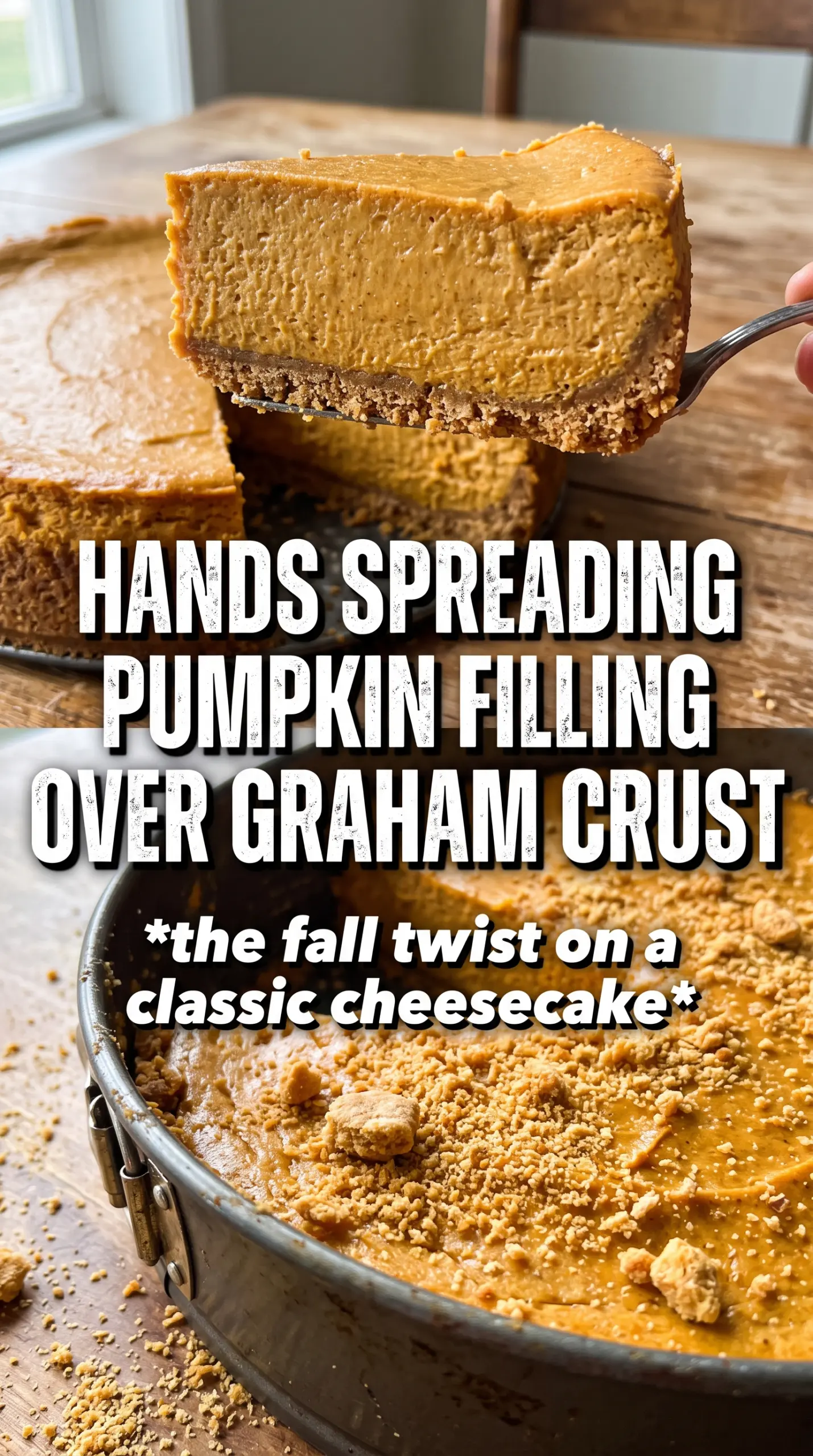
- Gingersnap crumbs — These give the crust its spice and snap. Graham crackers work in a pinch, but they taste flatter; if you swap them in, add a little extra cinnamon so the crust still carries its weight.
- Cream cheese — This is the backbone of the filling, so it needs to be fully softened before you start. Cold cream cheese leaves tiny lumps behind that never disappear, no matter how long you beat the batter.
- Pumpkin puree — Use plain pumpkin puree, not pumpkin pie filling. The filling already has sugar and spice mixed in, which throws off both texture and balance.
- Sour cream — This adds tang and keeps the cheesecake from eating heavy. Full-fat works best here; lighter versions can make the filling a little looser.
- Brown sugar and cinnamon — The brown sugar deepens the pumpkin flavor, and the cinnamon rounds it out without making the filling taste like candy. That mix is what gives this cheesecake its warm, baked dessert flavor instead of a one-note sweetness.
Building the Filling So It Bakes With a Gentle Wobble
Pressing and Prebaking the Crust
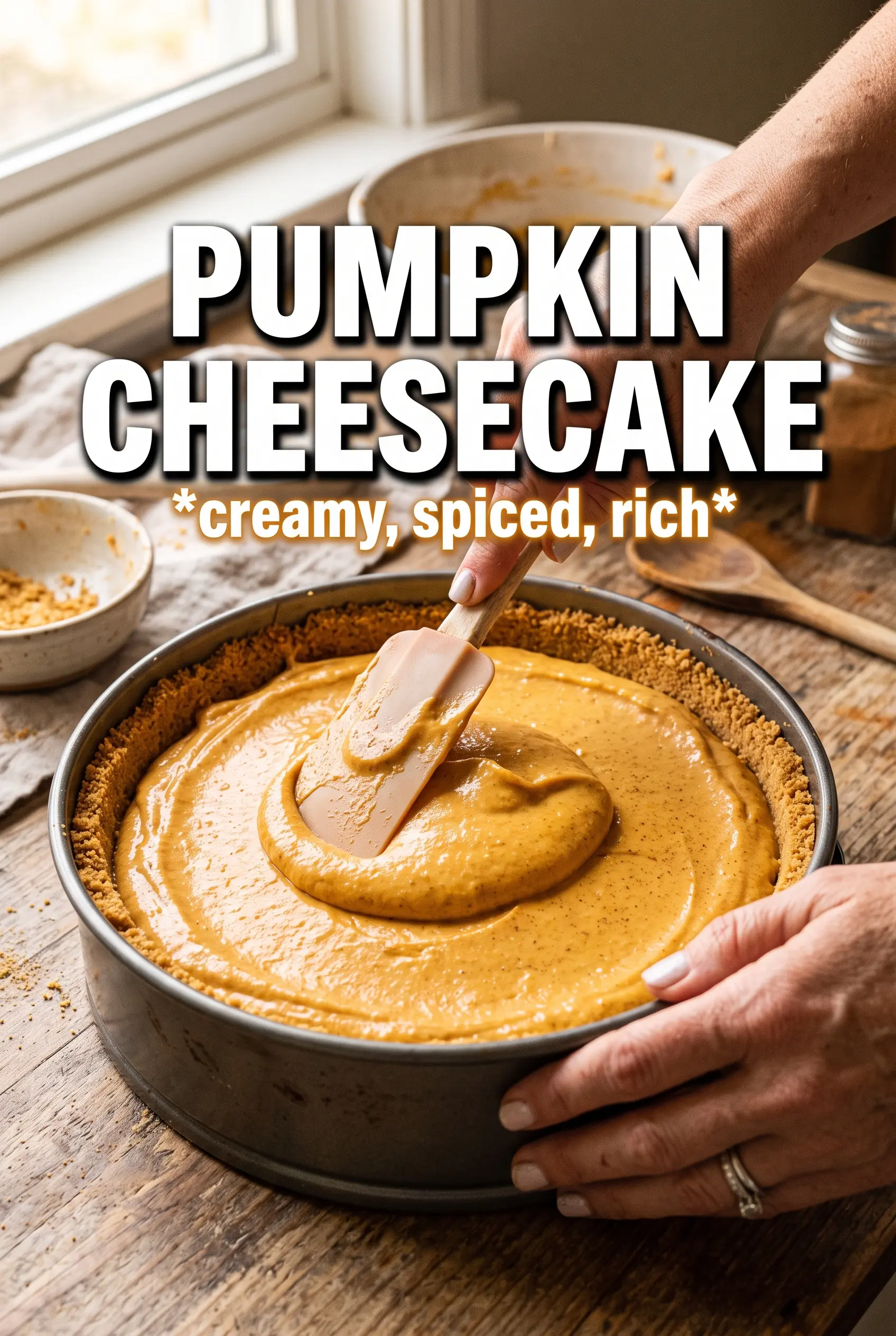
Mix the gingersnap crumbs, sugar, and melted butter until the texture feels like damp sand, then press it firmly into the springform pan. The base should be even and compact, especially along the sides, or it will crumble when you slice. Bake it for 10 minutes so it sets before the filling goes in; a raw crust under cheesecake often turns soft and pasty.
Making the Batter Without Adding Too Much Air
Beat the cream cheese with both sugars until the mixture looks completely smooth and glossy, with no grainy streaks around the bowl. Add the eggs one at a time and mix only until each one disappears. Stir in the pumpkin, sour cream, spices, and vanilla on low speed or by hand if your mixer is aggressive; too much air at this stage gives you a cheesecake that rises fast, then falls and splits.
Baking and Cooling at the Right Pace
Pour the batter over the crust and set the pan in a water bath before baking. The cheesecake is done when the edges look set and the center still has a slight wobble, like Jell-O that hasn’t fully firmed up yet. Turn the oven off, crack the door, and let it rest inside for an hour; that slow cooldown helps the center finish gently instead of collapsing. Once it reaches room temperature, chill it for at least 6 hours so the texture firms up enough to slice cleanly.
Three Ways to Adjust This Pumpkin Cheesecake Without Losing the Texture
Gluten-Free Crust Swap
Use gluten-free gingersnap cookies or gluten-free graham crackers in the crust. The filling doesn’t need any changes, and the cheesecake still bakes up the same way, but the crust may be a touch more delicate when slicing, so let it chill fully before removing the pan ring.
Dairy-Free Version
Use dairy-free cream cheese and a thick dairy-free sour cream alternative with a neutral flavor. The texture will be a little softer and less rich, but it still slices well if you chill it overnight; avoid thin substitutes or the filling can stay loose in the center.
Mini Cheesecakes for a Crowd
Press the crust into lined muffin cups and divide the batter among them for individual servings. They bake faster and chill more quickly, which makes them handy for parties, but start checking early because overbaking even a few minutes can turn the centers dry.
Make-Ahead Storage
This cheesecake is best made a day ahead, which gives the filling time to fully set and the spices time to settle in. Cover it once it’s completely chilled, and keep the whipped cream off until serving so the top stays neat.
Questions I Get Asked About This Pumpkin Cheesecake
Pumpkin Cheesecake
Ingredients
Equipment
Method
- Preheat oven to 325F, then press gingersnap crumbs, sugar, and melted butter firmly into a 9-inch springform pan. Bake for 10 minutes, then set aside to cool slightly.
- Beat cream cheese and both sugars until completely smooth, scraping the bowl as needed. Add eggs one at a time and mix just until each is incorporated.
- Mix in pumpkin puree, sour cream, pumpkin pie spice, cinnamon, and vanilla extract until the batter is evenly spiced. Pour the filling over the cooled crust.
- Place the springform in a water bath (set the pan in a larger pan and add hot water partway up the sides). Bake at 325F for 60-65 minutes until the edges are set but the center has a slight wobble.
- Turn the oven off and crack the oven door, then rest the cheesecake in the oven for 1 hour. Cool completely at room temperature.
- Refrigerate the cheesecake for 6 hours or overnight, uncovered or loosely covered to prevent odors. Serve chilled with whipped cream and a dusting of cinnamon.