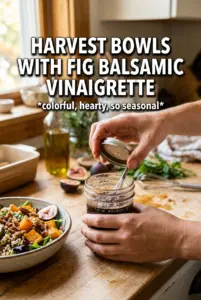
Roasted sweet potatoes, crisp chickpeas, and shaved Brussels sprouts turn into a bowl that eats like a full meal, not a pile of toppings. The mix of warm grains, crunchy nuts, juicy pomegranate, and tangy goat cheese gives every bite a little contrast, which is exactly why this kind of bowl never gets boring.
The part that makes this version stand out is the fig balsamic vinaigrette. Fig jam brings a round, jammy sweetness that plain balsamic doesn’t have on its own, and Dijon helps the dressing stay smooth instead of separating into oily streaks. Roasting the sweet potatoes and chickpeas separately matters too. They both finish at different times, and crowding them together tends to leave one soft and the other underdone.
Below, I’ve included the small details that make the bowl work the way it should, plus a few swaps if you need to adapt what’s in your kitchen.
The dressing was the best part for me — it coated everything without getting watery, and the roasted chickpeas stayed crisp even after I assembled the bowls.
Save these harvest bowls with fig balsamic vinaigrette for the nights when you want something colorful, filling, and packed with texture.
The Reason These Bowls Stay Crisp Instead of Turning Soggy
The biggest mistake with grain bowls is building them like a salad bar and letting everything sit together too long. Warm roasted vegetables release steam, and that steam softens the sprouts, dulls the chickpeas, and turns the grains heavy. This bowl holds its texture because each part is cooked and cooled enough to keep its own lane, then the dressing gets drizzled on at the end instead of soaking the whole bowl from the start.
Another detail that matters is balance. Sweet potatoes and fig balsamic bring sweetness, so the raw Brussels sprouts and Dijon keep the bowl from tasting flat. That little hit of sharpness is what makes the bowl feel complete instead of one-note.
- Roast the components separately — sweet potatoes need a longer roast than chickpeas, and giving each one its own pan or space keeps the chickpeas crisp.
- Use the Brussels sprouts raw and shaved — they add crunch and bite without needing another cooking step.
- Dress just before serving — the vinaigrette is meant to coat, not marinate, or the greens start to wilt and the grains soak it up too fast.
What Each Ingredient Is Actually Doing in This Recipe
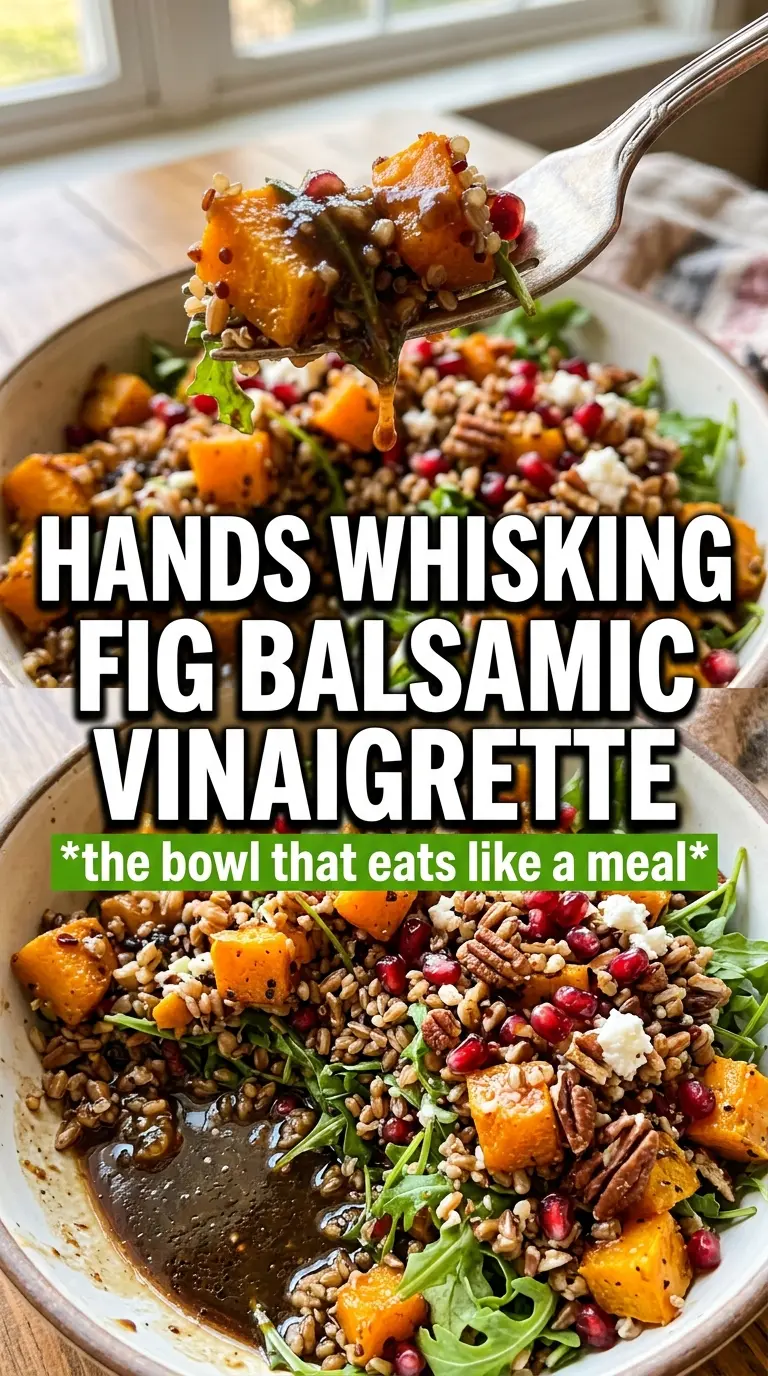
- Primary ingredient (the star) — Quality matters most. Choose the best you can find.
- Cooking medium (oil, butter, or broth) — This carries flavors and prevents dryness.
- Seasonings (salt, pepper, spices, herbs) — Layer flavors so nothing overpowers. Build depth gradually.
- Aromatics (garlic, onion, herbs) — Cook with fat to bloom flavors. Become the foundation.
- Supporting ingredients — Complement the main ingredient without overpowering it.
- Sauce or liquid (if applicable) — Brings flavors together. Balance richness with acid.
- Acid (lemon, vinegar, wine, or other) — Brightens and prevents flat-tasting results.
- Final finish (garnish, glaze, or sauce) — Prevents one-dimensional taste and adds visual appeal.
What the Fig Jam Is Doing in the Dressing
- Fig jam — this is what gives the vinaigrette body and that deep, mellow sweetness. A thick jam works better than fig preserves with large fruit pieces because it blends into the dressing more smoothly.
- Balsamic vinegar — balsamic brings the sharp edge that keeps the dressing from tasting like sweet syrup. If your balsamic is very harsh, start with a little less and add more after tasting.
- Dijon mustard — Dijon helps the dressing emulsify, so it turns glossy instead of breaking apart. Yellow mustard won’t give the same flavor or texture.
- Olive oil — use a good everyday oil here, not your most expensive bottle. It softens the vinegar and helps carry the dressing across all the toppings.
- Goat cheese — its tang matters as much as its creaminess. Feta can work if that’s what you have, but the flavor will be saltier and less smooth.
Building Each Layer So the Bowl Eats Like a Meal
Roasting the Sweet Potatoes Until the Edges Caramelize
Cut the sweet potatoes into even cubes so they roast at the same pace. Spread them out in a single layer and give them space, because crowding traps steam and leaves you with soft edges instead of browned ones. They’re done when the outsides are deeply golden and the centers give easily with a fork.
Getting the Chickpeas Crispy Enough to Matter
Drain the chickpeas well and dry them before they hit the oven. Any water left on the surface slows down browning and makes them leathery instead of crisp. Roast them until they look browned in spots and sound dry when you shake the pan. If they start to split or feel hard, they’ve gone too far.
Whisking the Vinaigrette Until It Turns Glossy
Stir the fig jam with the balsamic first so the jam loosens before the oil goes in. Once the mustard and garlic are added, whisk until the dressing looks smooth and slightly thickened. If it tastes too sharp, add a touch more fig jam. If it tastes too sweet, a pinch of salt and another small splash of vinegar will bring it back into balance.
Assembling for Texture, Not Just Appearance
Start with the farro or quinoa, then add the roasted sweet potatoes and chickpeas while they’re just warm. Pile the shaved Brussels sprouts, pomegranate seeds, and candied pecans on top so the cooler ingredients keep their crunch. Finish with goat cheese and drizzle the dressing over the top instead of tossing everything together. That keeps the bowl bright and textured from the first bite to the last.
How to Adapt These Bowls for What You Have on Hand
Make It Dairy-Free
Skip the goat cheese or replace it with a dairy-free soft cheese. The bowl still works because the dressing and roasted vegetables carry most of the flavor, but you’ll lose a little tang and creaminess unless you add something sharp like extra Dijon or a few olives.
Make It Gluten-Free
Use quinoa instead of farro. Quinoa stays light and fluffy, while farro brings a chewier bite, so the finished bowl will feel a little softer and more delicate with quinoa. It still holds up well under the roasted toppings and dressing.
Swap the Sweetness Around
If you don’t have fig jam, use apricot preserves or even a spoonful of honey with a little extra balsamic. Fig has a darker, more earthy sweetness, so the swap will taste brighter and slightly less rich, but the dressing still comes together cleanly.
Change the Crunch
Candied pecans can be swapped for toasted walnuts or almonds if that’s what you have. You’ll lose some of the caramel note from the candied coating, so add an extra pinch of salt or a few more pomegranate seeds to keep the bowl lively.
Storage and Reheating
- Refrigerator: Store the components separately for up to 4 days. The Brussels sprouts and pomegranate stay freshest when kept apart from the dressing.
- Freezer: The roasted sweet potatoes, chickpeas, and cooked grains can be frozen for up to 2 months, but the fresh toppings and dressing don’t freeze well.
- Reheating: Warm the grains, sweet potatoes, and chickpeas in the oven or a skillet until just heated through. Don’t microwave them too long or the chickpeas lose their crisp edges and the sweet potatoes turn soft.
Questions I Get Asked About This Recipe
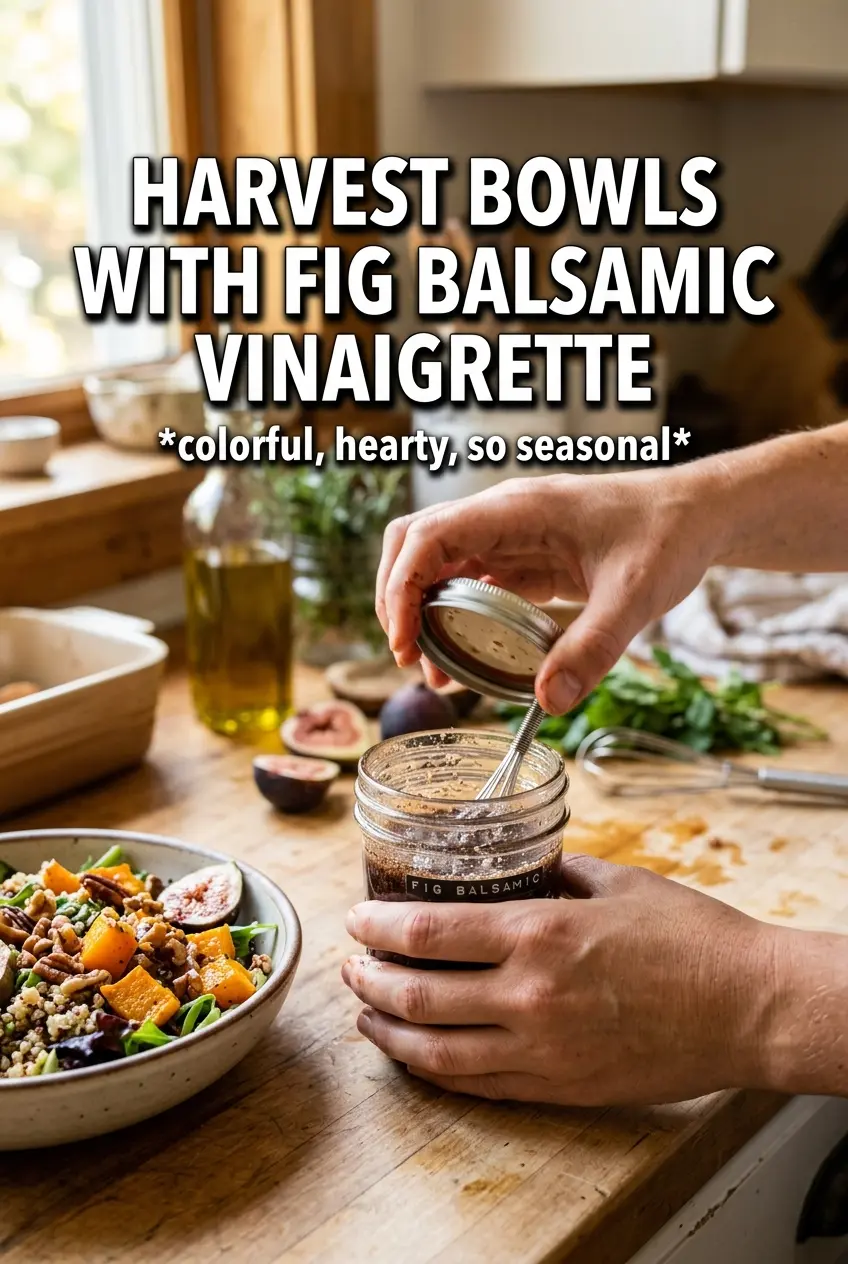
Harvest Bowls With Fig Balsamic Vinaigrette
Ingredients
Equipment
Method
- Roast the sweet potato cubes on a sheet pan at 425F for 25 minutes until browned and tender, spreading in an even layer for best caramelization.
- Roast the drained chickpeas on a separate sheet pan at 425F for 20-25 minutes until crispy, shaking the pan once halfway through to dry the outsides.
- Whisk together fig jam, balsamic vinegar, olive oil, Dijon mustard, and minced garlic until smooth and glossy, then season with salt and pepper to taste.
- Divide the cooked farro or quinoa among bowls as the base, then top with the roasted sweet potatoes and crispy chickpeas.
- Add shaved Brussels sprouts, pomegranate seeds, and candied pecans on top for crunch, color, and pops of sweetness.
- Crumble goat cheese over each bowl, then drizzle generously with the fig balsamic vinaigrette right before serving.