These gluten-free pumpkin spice snickerdoodle cookies bake up with crackly cinnamon-sugar tops, soft centers, and that familiar tangy snickerdoodle bite that keeps you reaching for “just one more.” The pumpkin stays in the background where it belongs, adding a warm color and a little depth without turning the cookies cakey. What comes out of the oven looks and tastes like a classic snickerdoodle, only with a fall-leaning spice note and a slightly richer crumb.
The trick is keeping the pumpkin puree very dry before it ever touches the dough. Gluten-free flour already needs a careful hand because it can turn soft or gummy fast, and extra moisture from pumpkin makes that worse. Cream of tartar gives the cookies their signature tang and helps the texture stay in snickerdoodle territory instead of drifting into plain spice cookie land.
Below, I’ll show you how to keep the dough from spreading too much, how to get that heavy cinnamon-sugar coating to stick, and what to change if you need a dairy-free version.
The pumpkin flavor was subtle, and the cookies stayed soft in the middle with those crinkly tops I always want in a snickerdoodle. Drying the pumpkin first made a huge difference — mine baked up thick instead of puffy and cakey.
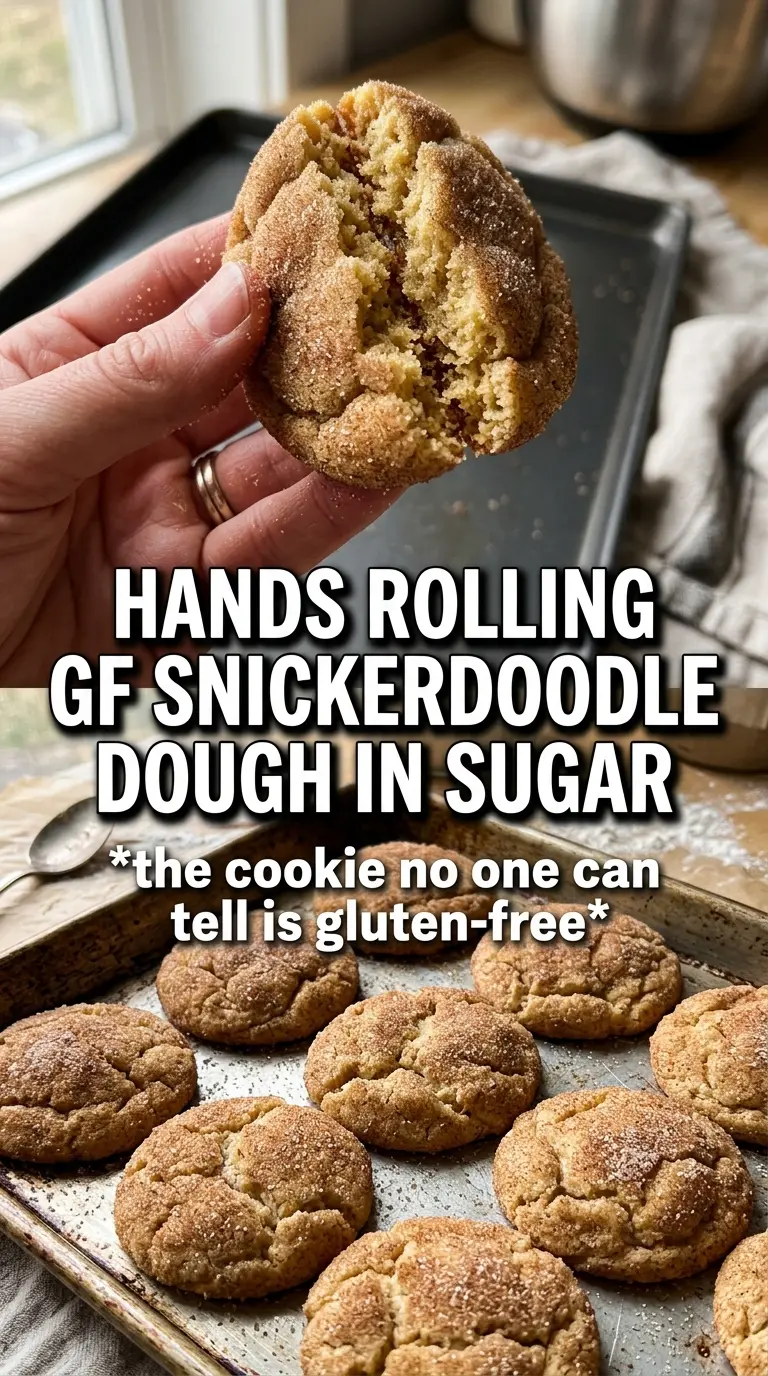
These gluten-free pumpkin spice snickerdoodle cookies stay soft, crinkly, and cinnamon-heavy — perfect for saving when you want a classic snickerdoodle look with pumpkin spice warmth.
The Pumpkin That Makes or Breaks the Texture
With snickerdoodle dough, the biggest mistake is treating pumpkin puree like a harmless add-in. It isn’t. Even a little extra moisture changes how the cookies spread, and in a gluten-free dough that can mean puffiness, cakiness, or a center that never settles into the soft chew people expect.
Blotting the pumpkin dry is the step that keeps these cookies on track. Press it between layers of paper towel until it looks almost pasty and loses that wet sheen. That small annoyance pays off in a dough that creams properly with the butter and sugar instead of turning loose and sticky. The result is a cookie with a defined edge, a crinkled top, and a center that stays tender without collapsing.
- Gluten-free all-purpose flour blend — Use one that already includes xanthan gum. That gives the dough the structure it needs so the cookies don’t crumble when you roll them in sugar or lift them off the pan.
- Cream of tartar — This is the ingredient that makes them taste like snickerdoodles instead of pumpkin spice sugar cookies. It adds that faint tang and helps create the classic crinkled top.
- Pumpkin puree — Blot it until it is dry enough to mound instead of smear. Canned pumpkin works fine as long as you remove the excess moisture; fresh puree usually needs even more blotting.
- Butter — Softened butter creams into a fluffy base that holds air. If it is too warm, the dough gets greasy and the cookies spread more than they should.
What Each Ingredient Is Actually Doing in This Recipe
- Primary ingredient (the star) — Quality matters most. Choose the best you can find.
- Cooking medium (oil, butter, or broth) — This carries flavors and prevents dryness.
- Seasonings (salt, pepper, spices, herbs) — Layer flavors so nothing overpowers. Build depth gradually.
- Aromatics (garlic, onion, herbs) — Cook with fat to bloom flavors. Become the foundation.
- Supporting ingredients — Complement the main ingredient without overpowering it.
- Sauce or liquid (if applicable) — Brings flavors together. Balance richness with acid.
- Acid (lemon, vinegar, wine, or other) — Brightens and prevents flat-tasting results.
- Final finish (garnish, glaze, or sauce) — Prevents one-dimensional taste and adds visual appeal.
Building the Dough So the Cookies Stay Thick and Crinkly
Creaming the Butter and Sugar
Beat the butter and sugar until the mixture looks pale and fluffy, not just combined. That trapped air helps the cookies rise a little before they set, which matters when you’re using a gluten-free flour blend. If the mixture looks slick or dense, the butter was too soft and the cookies may spread too much.
Adding the Pumpkin Without Overwetting the Dough
Mix in the egg, blotted pumpkin, and vanilla until the batter is smooth. The pumpkin should disappear into the dough without leaving wet streaks. If it clings to the bowl in damp patches, stop and blot it again before moving on.
Bringing in the Dry Ingredients
Fold in the flour, cream of tartar, baking soda, spices, and salt just until no dry pockets remain. Overmixing after the flour goes in can make the dough dense, and in gluten-free baking that also makes the finished cookie sandy instead of tender. The dough should be soft but scoopable, not pourable.
Rolling for the Signature Crust
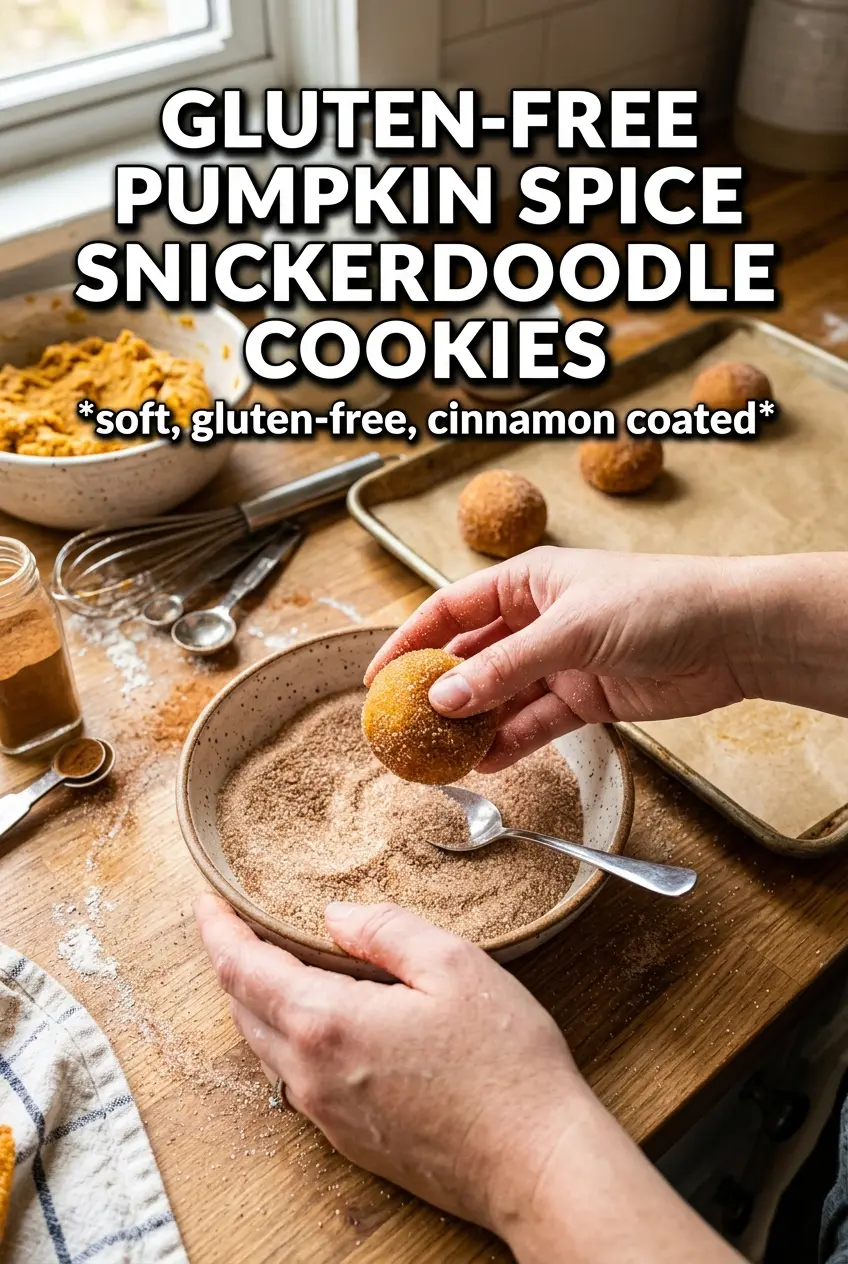
Mix the rolling sugar and spices in a shallow bowl, then coat each dough ball generously. You want a visible, sandy layer all over the outside because that coating melts into the crinkles and gives the cookies their classic finish. If the sugar seems to slide off, the dough is too warm; chill it for 10 to 15 minutes and try again.
Dairy-Free Butter Swap
Use a solid dairy-free baking stick instead of buttery spread from a tub. Baking sticks behave more like real butter and help the cookies hold their shape, while softer spreads can make them greasy and flatter.
Gluten-Free Flour Blends Are Not All Equal
A blend with xanthan gum gives the most reliable result here. If your blend doesn’t include it, the cookies may still work, but they can be more fragile and a little more crumbly at the edges.
Make Them Extra Spiced
Increase the pumpkin pie spice in the dough by 1/2 teaspoon if you want a louder spice note. That adds warmth without changing the texture, though the cinnamon-sugar coating will still be the main flavor on the outside.
Storage and Reheating
- Refrigerator: Store in an airtight container for up to 5 days. The cinnamon-sugar coating softens a little, but the centers stay tender.
- Freezer: Freeze baked cookies for up to 2 months, or freeze scooped dough balls and roll them in sugar just before baking. The dough freezes well and bakes up with better texture than thawed cookies.
- Reheating: Warm cookies in a 300F oven for 4 to 5 minutes. The microwave makes them soft in a sticky way, so use the oven if you want the edges to perk back up.
Questions I Get Asked About This Recipe
Gluten-Free Pumpkin Spice Snickerdoodle Cookies
Ingredients
Equipment
Method
- Preheat the oven to 375°F and line baking sheets with parchment or a silicone mat (visual cue: sheets ready and flat).
- Blot the pumpkin puree extremely dry; this is especially important for gluten-free cookies (visual cue: puree looks thick, not wet or glossy).
- Beat the softened butter and granulated sugar until very fluffy (visual cue: lighter in color and noticeably airy).
- Beat in the egg, then mix in the blotted pumpkin puree and vanilla (visual cue: batter looks smooth and unified).
- Fold in the gluten-free flour blend, cream of tartar, baking soda, cinnamon, pumpkin pie spice, nutmeg, and salt (visual cue: no dry streaks remain).
- Mix the rolling spices in a shallow bowl using the sugar, cinnamon, and pumpkin pie spice (visual cue: evenly speckled cinnamon-sugar).
- Scoop about 1 1/2 tablespoon balls, then roll generously in the cinnamon spice sugar (visual cue: each ball is fully coated).
- Bake for 10–12 minutes at 375°F until the edges look set and the tops look crinkled (visual cue: crackled crinkle surface forms).