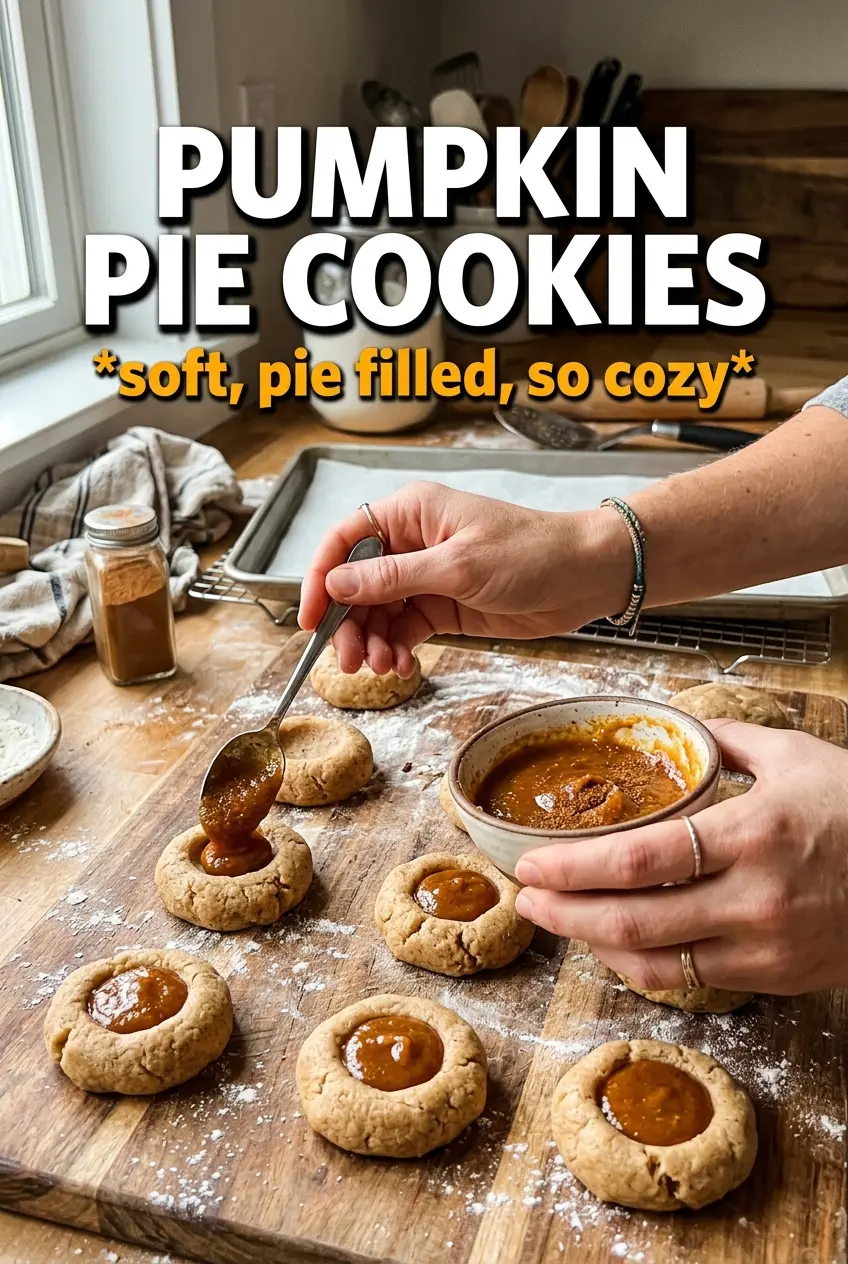
Pumpkin pie cookies give you the best part of pumpkin pie in a two-bite form: crisp, buttery pastry cups filled with smooth custard and finished with a little cloud of whipped cream. The contrast is what makes them worth repeating. You get a tender shell that holds its shape, a filling that tastes like classic pumpkin pie, and just enough spice on top to keep every bite lively.
The pastry matters here. Cold butter stays in visible pieces when you cut it into the flour, and those pieces turn into flaky layers instead of a dense cookie base. The filling is built with sweetened condensed milk, which gives it body and a glossy finish without needing a long ingredient list. Bake the cups first so the bottoms set before the custard goes in; that’s the difference between neat little tartlets and soggy bottoms.
Below, you’ll find the one step that keeps the crust crisp, the ingredient swap that matters most if you’re short on time, and a few variations that make these work for different occasions.
The crust stayed crisp even after chilling, and the pumpkin filling set up with that old-fashioned pie texture instead of turning runny. I topped them right before serving and everyone thought they came from a bakery.
Like these pumpkin pie cookies? Save them to Pinterest for the crisp pastry cups and creamy pumpkin filling you’ll want all season long.
The Step That Keeps the Crust Crisp Under the Custard
Pumpkin pie filling is moist by design, which means the crust needs a head start before the custard goes in. Pre-baking the pastry cups for those first 10 minutes sets the bottom and starts the edges before the filling has a chance to soak in. If you skip that part, the shells can go soft before they ever get a chance to brown.
The other thing that matters is thickness. Roll the dough to about 1/8 inch so it bakes through cleanly without turning heavy or bready. Thicker dough sounds sturdy, but it just steals room from the filling and makes the cookie cups taste more like pie dough puck than a delicate shell.
- Cold butter — Those little butter pieces create the flaky texture. If the butter softens too much, the cups bake up dense instead of crisp.
- Powdered sugar — It gives the pastry a tender, shortbread-like bite. Granulated sugar will work in a pinch, but the texture will be less delicate.
- Ice water — Use only enough for the dough to hold together. Too much water makes the pastry tougher and encourages shrinkage.
What Each Part Is Doing in These Pumpkin Pie Cookies
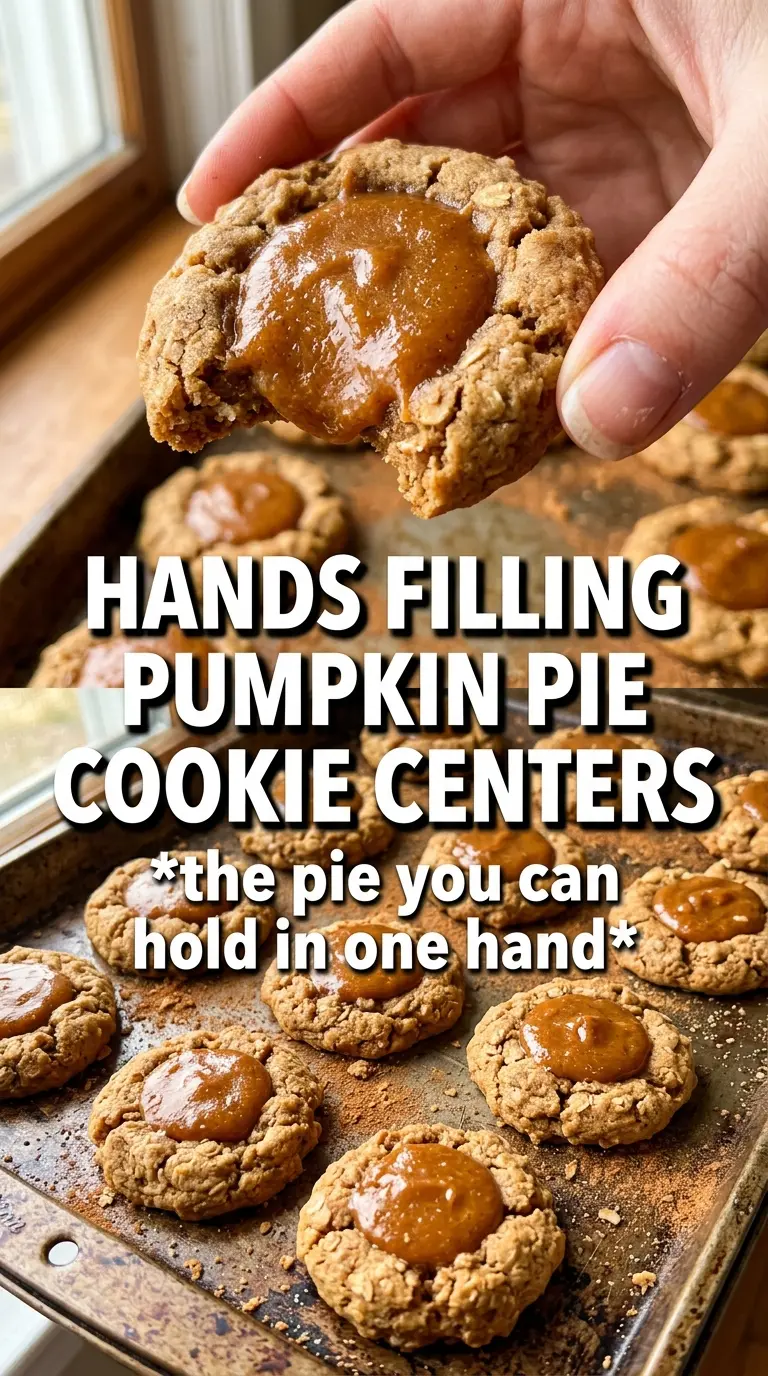
- Pumpkin puree — Use plain pumpkin puree, not pumpkin pie filling. The canned pie filling already contains sugar and spices, which throws off the texture and seasoning.
- Sweetened condensed milk — This is what gives the filling its silky set and concentrated sweetness. There isn’t a perfect substitute here; evaporated milk won’t give the same body.
- Egg yolk — It helps the custard set without making it rubbery. A whole egg can work, but the filling will be a little firmer and less rich.
- Pumpkin pie spice plus cinnamon — The spice blend brings the classic pie flavor, while the extra cinnamon keeps the filling from tasting flat. Fresh spices matter more here than in a heavily sauced dessert because there’s nowhere for weak seasoning to hide.
- Whipped cream — Add it after the cookies are fully cool. If you pipe it on while the filling is warm, it softens and slides off the tops.
Building the Filling Without Overbaking the Centers
Mix the Custard Until It Looks Uniform
Whisk the pumpkin puree, sweetened condensed milk, egg yolk, pumpkin pie spice, cinnamon, and salt until the mixture looks smooth and even. You don’t want streaks of yolk or pockets of spice because they bake into uneven bites. The filling should look loose and pourable, not thick like frosting.
Fill the Cups to the Right Level
Spoon the filling into the pre-baked shells and stop just below the top edge. If you overfill them, the custard can spill over and glue the cookies to the pan. A small measuring spoon or teaspoon makes this cleaner than free-pouring from a bowl.
Bake Until the Centers Still Jiggle a Little
Pull the pan when the filling is just set around the edges and the center still has a slight wobble. It will firm up as it cools. If you wait until the tops look completely firm in the oven, the custard can turn dry and lose that smooth pumpkin pie texture.
Cool Before You Top
Let the cookies cool all the way in the pan before lifting them out. Warm custard is fragile, and the pastry can crack if you try to move them too soon. Once they’re cool, a dollop of whipped cream and a dusting of spice finish them cleanly.
Three Ways to Make These Work for Different Kitchens
Dairy-Free Version
Swap the butter for a solid plant-based butter that’s meant for baking. The pastry won’t taste quite as rich, but it will still hold its shape and bake up crisp if the replacement stays cold. Don’t use a soft tub spread here; it usually melts too fast and makes the dough greasy.
Gluten-Free Cookie Cups
Use a 1:1 gluten-free baking blend that includes xanthan gum. The dough may feel a little more fragile, so chill it well before rolling and pressing it into the muffin tin. The flavor stays close to the original, but the edges can be slightly more crumbly when you unmold them.
Bigger Batch for a Party Tray
The dough doubles cleanly, and the filling scales without any special adjustments. If you’re making several pans, keep the unrolled dough chilled between batches so the butter doesn’t soften. That keeps the shells crisp instead of turning pale and heavy.
Storage and Reheating
- Refrigerator: Store in an airtight container for up to 4 days. The pastry softens a little over time, but the filling stays creamy.
- Freezer: Freeze the baked cookie cups without whipped cream for up to 1 month. Wrap them well and thaw in the refrigerator so condensation doesn’t make the crust soggy.
- Reheating: These are best served chilled or at cool room temperature, not reheated. If you warm them, the custard can loosen and the whipped cream will collapse.
Questions I Get Asked About These Pumpkin Pie Cookies
Pumpkin Pie Cookies
Ingredients
Equipment
Method
- In a bowl, combine all-purpose flour, powdered sugar, and salt. Cut in the cold, cubed unsalted butter until the mixture looks like coarse crumbs.
- Add ice water, 1 tablespoon at a time, until the dough holds together when pressed. Stop as soon as it forms so the dough stays tender.
- Chill the dough for 30 minutes. Refrigerate until firm enough to roll without sticking.
- Roll the chilled dough to about 1/8 inch thick on a lightly floured surface. Aim for even thickness so the cups bake uniformly.
- Cut dough into 3-inch circles. Press each circle into a greased mini muffin tin to form the cookie cups.
- Preheat the oven to 375°F. Set a rack in the middle for even browning.
- Pre-bake the cups for 10 minutes at 375°F. Bake until they look slightly set and dry out a bit.
- Whisk pumpkin puree, sweetened condensed milk, egg yolk, pumpkin pie spice, cinnamon, and salt until smooth. The filling should be fully blended with no streaks.
- Spoon the filling into the pre-baked cups, dividing evenly. Fill each cup to about the same level for consistent bake time.
- Bake for 12–14 minutes at 375°F until the filling is just set. Look for a gentle jiggle in the center, not wet sloshing.
- Cool the cookies completely in the pan or on a rack. Wait for full cooling so the whipped cream doesn’t melt.
- Top each cookie with whipped cream and finish with a pinch of pumpkin pie spice. Serve after topping for the best visual contrast.