Pumpkin French toast casserole bakes up like the best part of a weekend breakfast: plush in the middle, crisp at the edges, and crowned with a buttery streusel that cracks under your fork. The bread soaks up a spiced pumpkin custard overnight, then the oven turns it into something halfway between bread pudding and classic French toast, with enough structure to slice and serve without losing its soft center.
The overnight rest matters here. Brioche or challah needs time to drink in the custard, and pumpkin puree adds body that keeps the casserole from tasting loose or watery. The streusel goes on just before baking, not the night before, so it stays crumbly instead of melting into the top. That combination gives you a casserole that feels special without turning fussy.
Below you’ll find the small details that keep the texture light instead of soggy, plus a few smart swaps for the bread, dairy, and topping if you need them.
The bread soaked up the pumpkin custard overnight and baked into the fluffiest center, and that cinnamon streusel stayed crisp on top instead of disappearing. My kitchen smelled like a bakery.
Love the puffed pumpkin center and cinnamon streusel top? Save this Pumpkin French Toast Casserole for a make-ahead breakfast that feels bakery-worthy.
The Overnight Rest Is What Keeps the Center Custardy, Not Wet
Most French toast casseroles fail for one of two reasons: the bread never fully absorbs the custard, or it absorbs too much liquid and collapses into a soggy bake. This version avoids both by using sturdy bread and giving it a full night in the fridge. That rest lets the cubes soak evenly all the way through, so the casserole bakes into a soft, set center instead of a bread puddle.
Use brioche or challah if you can. Both hold their shape well and bring a tender richness that works with pumpkin. If your bread is very fresh and soft, cube it and let it sit out for a few hours first. Slightly stale bread actually works better here because it drinks in the custard without falling apart.
The other piece that matters is the bake. You want the top golden and puffed, but the middle should still have a little give when you nudge the pan. If you bake until it looks fully dry in the center, it’ll overcook by the time it cools.
What Each Ingredient Is Actually Doing in the Dish
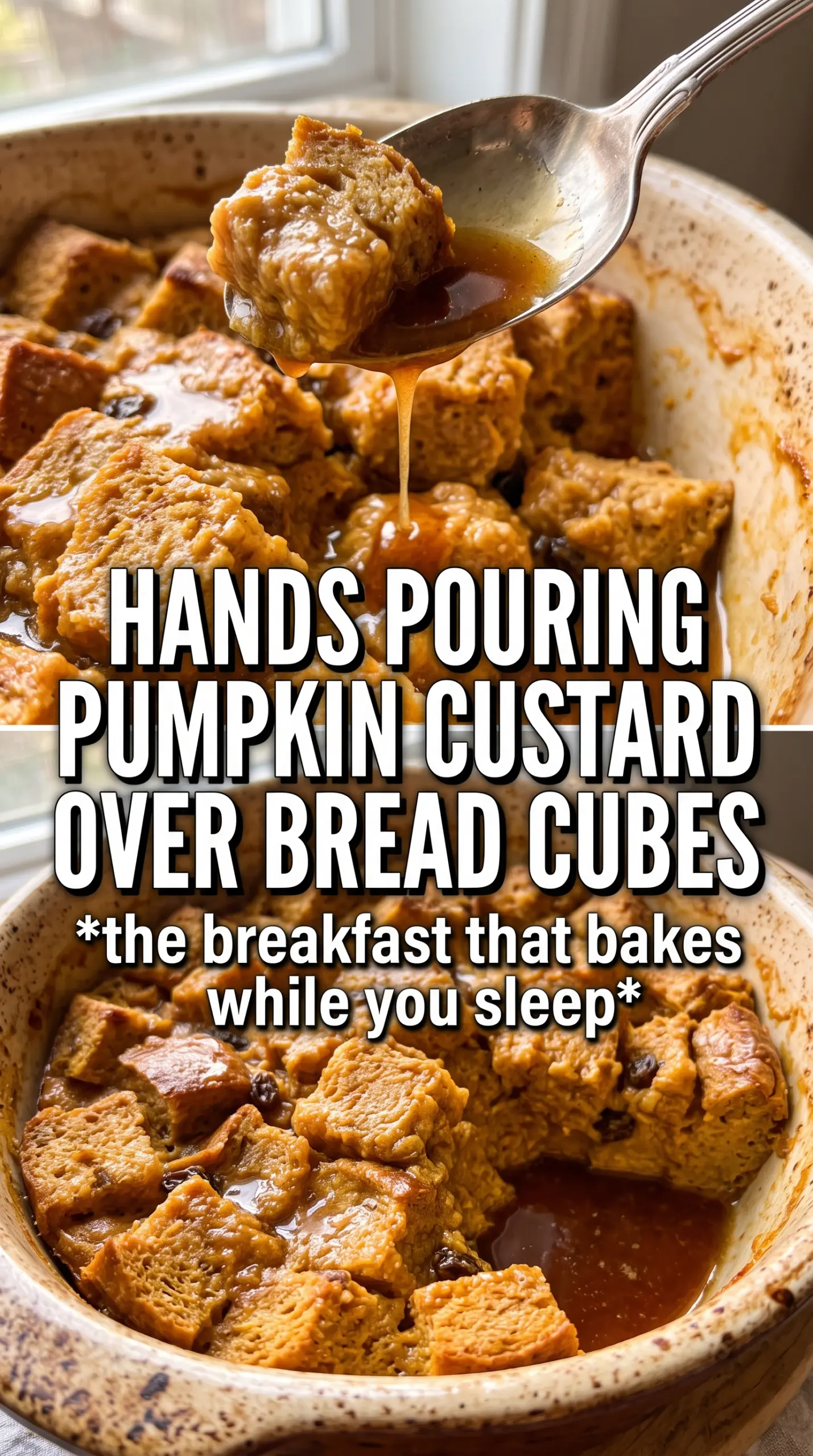
- Brioche or challah — This is the backbone. Both breads have enough structure to hold the custard, and their tender crumb bakes up plush instead of dense. A plain sandwich loaf turns mushy faster, so use it only if that’s what you have and dry it out first.
- Pumpkin puree — This adds body, color, and that unmistakable pumpkin flavor without needing extra thickeners. Use pure pumpkin puree, not pumpkin pie filling, or the casserole will turn too sweet and heavily spiced before it ever hits the oven.
- Whole milk and heavy cream — The milk keeps the custard pourable while the cream gives it a richer finish. You can swap in half-and-half if needed, but don’t replace both with low-fat milk or the bake loses its soft, almost silky texture.
- Eggs — They set the custard so the casserole slices cleanly after baking. Whisk them well with the pumpkin mixture so you don’t end up with streaks of cooked egg in the finished dish.
- Brown sugar and maple syrup — These sweeten the custard and deepen the pumpkin flavor. The maple is worth keeping if you have it, since it gives the casserole a warmer finish than plain sugar alone.
- Streusel topping — Cold butter is what keeps the topping crumbly. If the butter softens too much before it goes into the oven, the topping melts into a paste instead of baking into crisp crumbs.
Building the Bake So the Top Stays Crisp and the Middle Stays Soft
Arrange the bread with some space between the cubes
Spread the bread cubes in the greased 9×13 dish without packing them down too tightly. You want little pockets where the custard can settle, because a tightly compressed layer can bake into a heavy slab. If the cubes are all crammed together, the center takes longer to set and the edges dry out before the middle is done.
Whisk the custard until it looks smooth and uniform
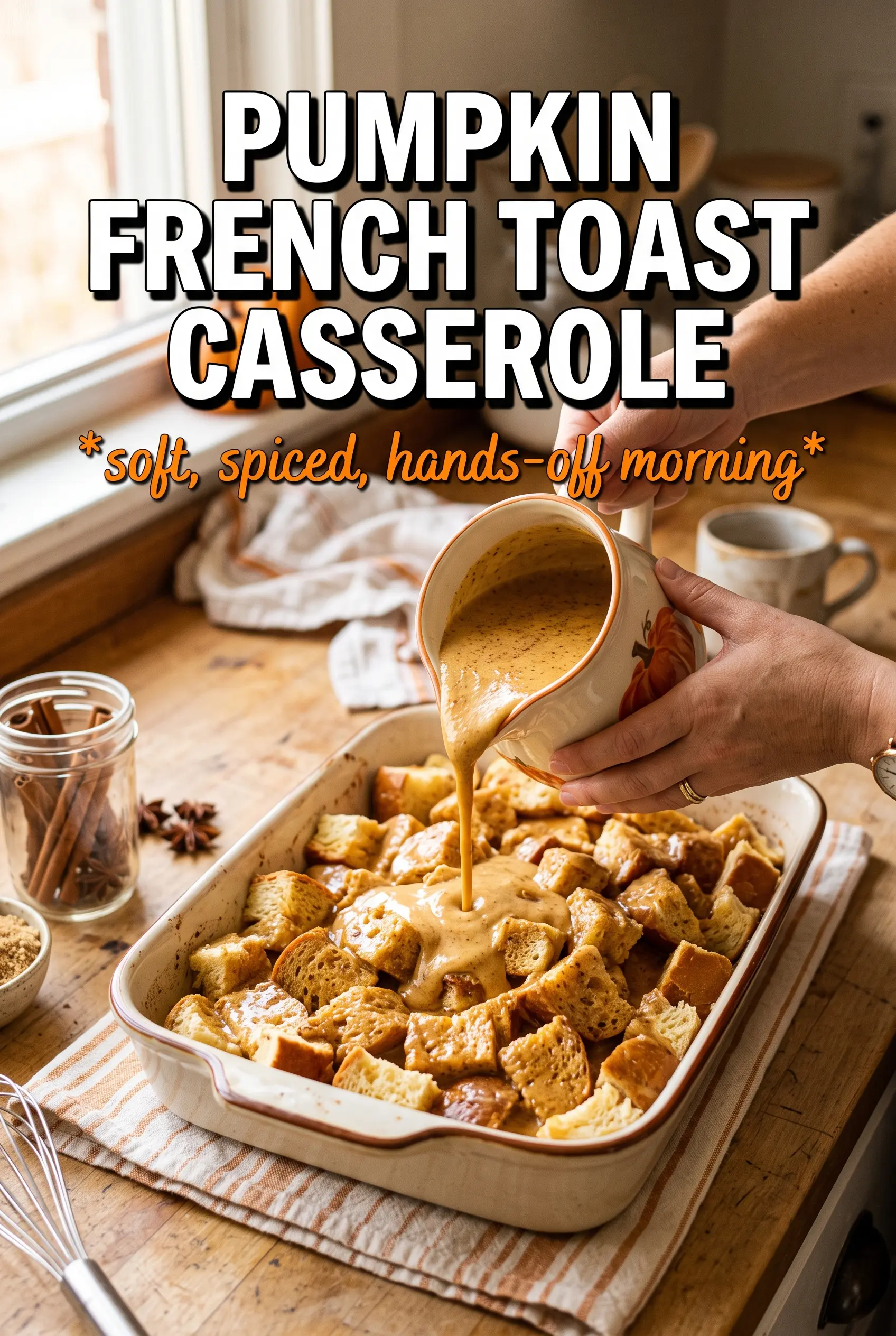
Combine the eggs, milk, cream, pumpkin puree, maple syrup, brown sugar, pumpkin pie spice, cinnamon, vanilla, and salt until the mixture is fully blended and the pumpkin is no longer streaky. Pumpkin puree likes to hide in the corners of the bowl, so scrape the whisk through the bottom as you go. Pour it over the bread slowly so it has time to sink in instead of running straight to the pan edges.
Press, cover, and chill overnight
Once the custard is in the dish, press the bread down lightly with a spatula or clean hands so the top layer starts absorbing right away. Cover the dish and refrigerate it overnight. That chilling time is what gives you even soaking, and it’s the difference between a casserole that slices neatly and one that leaks liquid into the pan.
Finish with streusel and bake until puffed
Mix the flour, brown sugar, cinnamon, and cold butter into coarse crumbs, then scatter them over the soaked bread right before baking. Bake at 350°F until the top is deeply golden and the center is set with just a slight wobble, about 50 to 55 minutes. If the top browns too quickly, lay a loose piece of foil over it for the last stretch so the center can finish without scorching.
Serve while the syrup is warm
Let the casserole rest for a few minutes after baking so the custard settles. Then serve it with warm maple syrup and a dusting of powdered sugar. That short rest matters; cut it too early and the slices will slump instead of holding their shape.
How to Adapt This for a Smaller Crowd, a Dairy-Free Pan, or a Better Make-Ahead Morning
Dairy-free version with the same custardy texture
Use unsweetened oat milk and canned coconut cream in place of the whole milk and heavy cream. The casserole will still bake up rich, but the coconut cream adds a faint coconut note, so keep the maple syrup and cinnamon front and center.
Gluten-free swap that still holds together
Use a sturdy gluten-free brioche-style loaf if you can find one, then let the cubes sit out a bit longer before adding the custard. Gluten-free bread is often softer and more fragile, so the extra drying time helps it keep some structure in the oven.
Make it ahead without losing the streusel crunch
Assemble the casserole the night before, but keep the streusel mixture separate in the fridge. Add it right before baking so the butter stays cold and the topping bakes up crisp instead of blending into the custard.
Storage and Reheating
- Refrigerator: Store leftovers covered for up to 4 days. The top softens a bit, but the flavor stays great.
- Freezer: Freeze baked portions tightly wrapped for up to 2 months. Thaw overnight in the fridge before reheating.
- Reheating: Warm individual pieces in a 325°F oven until heated through, or use the microwave in short bursts. The oven keeps the topping from turning soggy, which is the biggest problem with reheated French toast casseroles.
Questions I Get Asked About This Recipe
Pumpkin French Toast Casserole
Ingredients
Equipment
Method
- Arrange the brioche or challah cubes in a greased 9x13 dish so they sit in an even layer.
- In a bowl, whisk together eggs, whole milk, heavy cream, pumpkin puree, maple syrup, brown sugar, pumpkin pie spice, cinnamon, vanilla, and salt until smooth.
- Pour the custard over the bread and press down gently to help the cubes absorb it.
- Cover the dish and refrigerate overnight (chilling) so the bread fully soaks.
- Preheat the oven to 350°F.
- Make the streusel by rubbing flour, brown sugar, cinnamon, and cold butter together until crumbly.
- Scatter the streusel over the soaked bread.
- Bake for 50-55 minutes, until the top is golden and the casserole is puffed in the center.
- Let the casserole cool for 5 minutes, then serve with warm maple syrup and a dusting of powdered sugar.