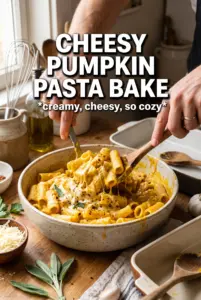
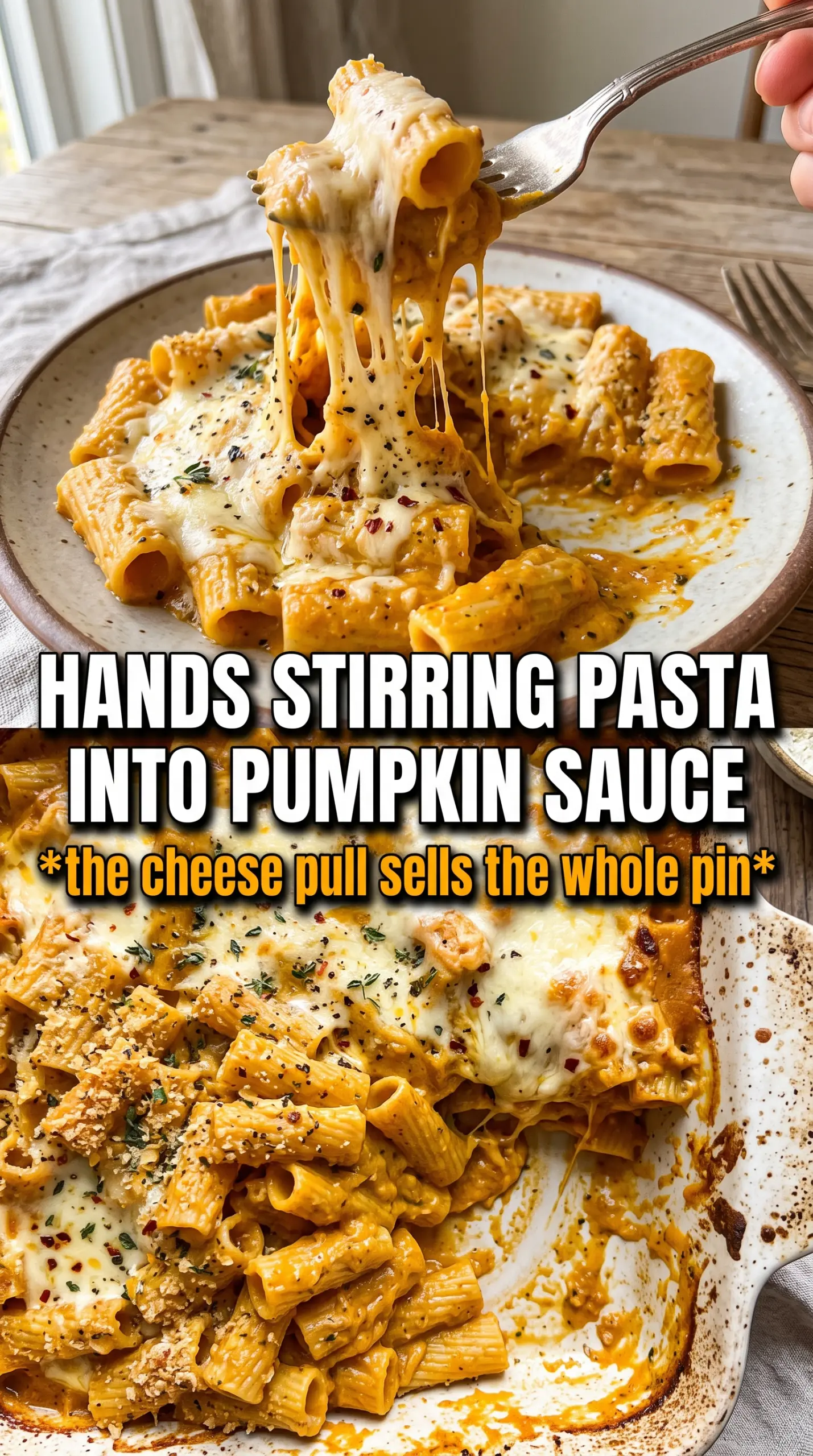
Cheesy pumpkin pasta bake lands in that sweet spot between cozy and substantial: creamy enough to feel indulgent, sturdy enough to hold its shape on the plate, and savory enough that nobody at the table calls it “just pumpkin.” The pumpkin melts into the cream sauce and clings to every ridge of rigatoni, while the sausage adds enough salt and richness to keep the whole dish grounded. Then the top goes bronzed and bubbly, with crisp edges where the cheese meets the pan.
What makes this version work is the balance. Pumpkin puree can turn flat or pasty if it isn’t backed up with enough fat, seasoning, and a little broth to loosen it up. Heavy cream gives the sauce body, parmesan sharpens the flavor, and a pinch of nutmeg plus cayenne keeps the sauce from tasting one-note. Cooking the pasta a couple of minutes shy of done matters too, because it finishes in the oven and soaks up the sauce instead of turning mushy.
Below you’ll find the small details that keep the sauce silky, the topping browned, and the bake sliceable instead of soupy. The little things matter here.
The sauce clung to the rigatoni perfectly, and the top browned up with those little crispy cheese spots I love. I used hot Italian sausage and the whole pan had just enough kick without overpowering the pumpkin.
Save this cheesy pumpkin pasta bake for the nights when you want a bronzed, bubbling pasta casserole with a silky pumpkin cream sauce.
The Trick to Keeping Pumpkin Sauce Creamy Instead of Thick and Pastly
Pumpkin needs support. On its own, it can eat like baby food, which is why so many pumpkin pasta bakes end up heavy instead of silky. The cream and broth loosen the puree into a sauce that can coat pasta evenly, and the parmesan adds the savory edge that keeps the pumpkin from tasting sweet or bland.
The other thing that matters is heat control. Once the pumpkin and dairy go in, let them simmer gently until the sauce looks smooth and slightly glossy. If it boils hard, the cream can separate and the sauce loses that velvety finish. The goal is a sauce that slides off the spoon in a thick ribbon, not one that clumps up in the pan.
- Rigatoni or ziti — Short, ridged pasta traps the sauce in the tubes and along the edges. Long pasta doesn’t give you the same baked-in bite.
- Italian sausage — This is the backbone of the dish. Mild sausage gives you a savory base, while hot sausage adds gentle heat that plays well with pumpkin.
- Pumpkin puree — Use pure pumpkin, not pumpkin pie filling. Pie filling is sweetened and spiced for dessert, which throws the whole dish off.
- Heavy cream — This keeps the sauce rich and stable in the oven. Half-and-half works in a pinch, but the sauce will be thinner and a little less plush.
- Parmesan and mozzarella — Mozzarella gives you the melt and parmesan gives you the salty crust. If you use only mozzarella, the top tastes bland.
What Each Ingredient Is Actually Doing in This Recipe
- Primary ingredient (the star) — Quality matters most. Choose the best you can find.
- Cooking medium (oil, butter, or broth) — This carries flavors and prevents dryness.
- Seasonings (salt, pepper, spices, herbs) — Layer flavors so nothing overpowers. Build depth gradually.
- Aromatics (garlic, onion, herbs) — Cook with fat to bloom flavors. Become the foundation.
- Supporting ingredients — Complement the main ingredient without overpowering it.
- Sauce or liquid (if applicable) — Brings flavors together. Balance richness with acid.
- Acid (lemon, vinegar, wine, or other) — Brightens and prevents flat-tasting results.
- Final finish (garnish, glaze, or sauce) — Prevents one-dimensional taste and adds visual appeal.
Building the Bake So the Pasta Stays Springy
Brown the Sausage First
Cook the sausage until it has real color and a few crisp edges. That browning is where a lot of the flavor comes from, and it also leaves behind browned bits in the pan that help season the sauce. Drain off excess fat, but leave a little behind if the sausage is on the lean side. If the pan looks dry, the onions can catch instead of soften.
Let the Sauce Simmer Before the Pasta Goes In
Stir in the pumpkin, cream, broth, seasonings, and spices, then let the mixture bubble gently for about five minutes. The sauce should thicken enough to coat a spoon but still look loose enough to move around the pan. If it gets too thick before you add the pasta, it will seem tight and gluey after baking, so add a splash of broth to loosen it before moving on.
Undercook the Pasta on Purpose
Boil the rigatoni or ziti two minutes less than the box says for al dente. It will finish in the oven and absorb some of the sauce as it bakes, which gives you a casserole that holds together instead of collapsing into mush. Drain it well before stirring it in, because extra water dilutes the sauce and keeps the cheese from browning properly.
Let the Cheese Top Turn Deep Gold
Scatter the mozzarella and parmesan evenly over the surface, then bake until the edges are bubbling and the top has golden spots. If the cheese starts to brown too quickly before the center is hot, tent the dish loosely with foil for the last part of baking. Fresh sage or basil goes on after baking, not before, so it stays bright and aromatic instead of turning dark and brittle.
How to Adapt This for a Lighter Table or a Different Pantry
Gluten-Free Pasta Bake
Use a sturdy gluten-free rigatoni or ziti and undercook it by a little more than you would with regular pasta. Gluten-free pasta softens faster in the oven, so it needs that extra buffer to keep its shape in the final bake.
Dairy-Free Version
Swap the cream for full-fat coconut milk and use a good melting dairy-free cheese blend on top. The sauce will taste a little less sharp and a touch more mellow, but the coconut flavor stays in the background if you keep the parmesan-style topping or add extra seasoning.
Make It Without Pork Sausage
Use turkey sausage or crumbled chicken sausage in the same amount. They bring less fat, so the filling tastes a little leaner and cleaner, which makes the pumpkin come forward more. If the pan looks dry after browning, add a tablespoon of olive oil before the onions go in.
Storage and Reheating
- Refrigerator: Store covered for up to 4 days. The pasta will keep absorbing sauce, so the bake gets a little thicker by day two.
- Freezer: It freezes well for up to 2 months, though the cream sauce may lose a little silkiness after thawing. Cool it completely, wrap it tightly, and thaw in the fridge before reheating.
- Reheating: Reheat covered in a 350F oven until hot in the center, adding a splash of broth or cream if it looks dry. The biggest mistake is blasting it uncovered in the microwave, which tightens the sauce and makes the cheese rubbery.
Questions I Get Asked About This Recipe
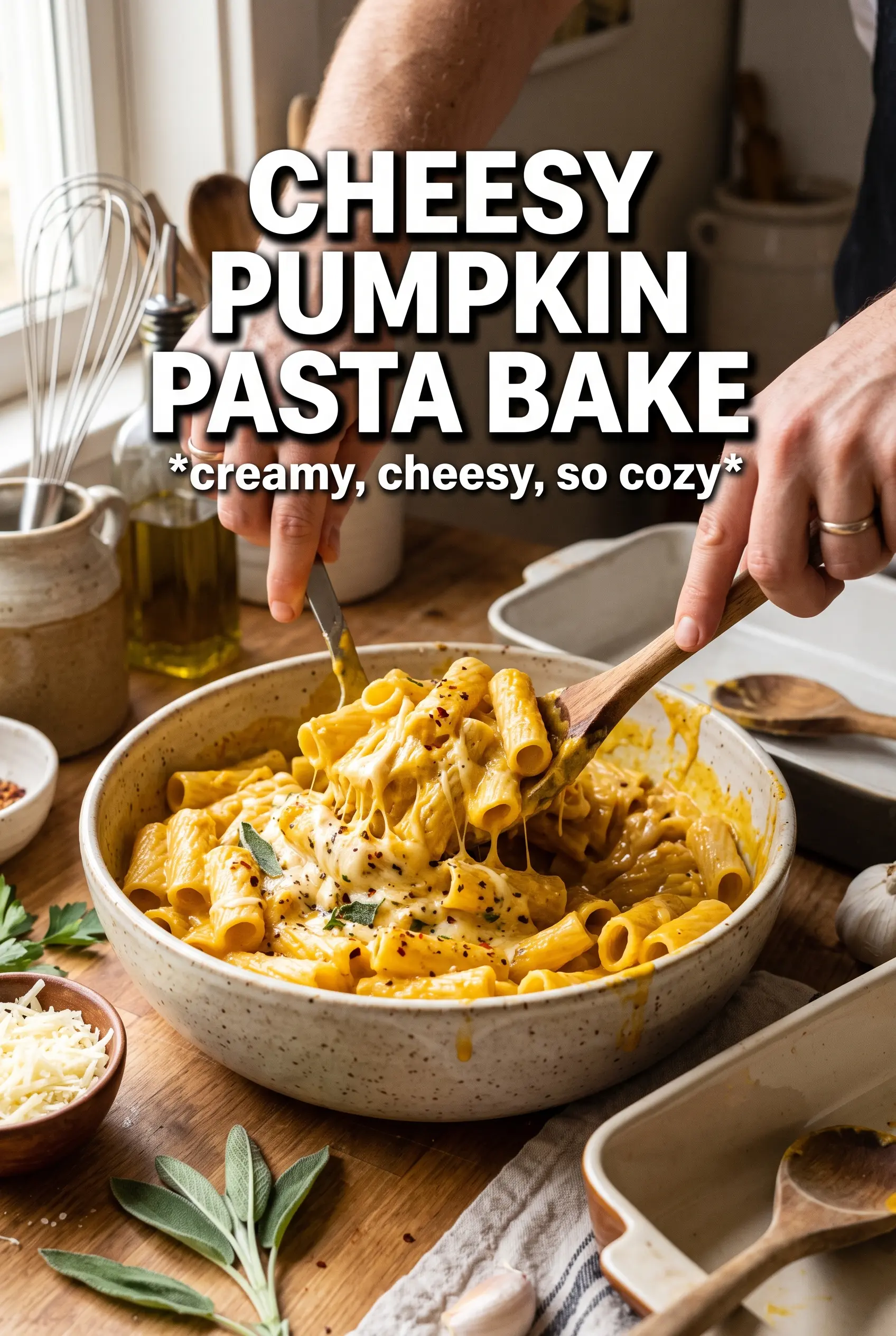
Cheesy Pumpkin Pasta Bake
Ingredients
Equipment
Method
- Preheat the oven to 375F. Cook the rigatoni or ziti 2 minutes less than al dente, then drain.
- Brown the Italian sausage in a large oven-safe skillet, then drain off excess fat. Add the diced onion and cook for 4 minutes, stirring as needed for softening.
- Add the minced garlic and cook for 1 minute, just until fragrant and not browned.
- Stir in pumpkin puree, heavy cream, chicken broth, Italian seasoning, nutmeg, and cayenne. Simmer for 5 minutes until the sauce looks cohesive and slightly thickened.
- Season with salt and pepper to taste. Toss the cooked pasta into the skillet until coated with the pumpkin sauce.
- Scatter shredded mozzarella and grated parmesan over the top in an even layer. Aim for full coverage so the surface bakes up golden.
- Bake for 25-30 minutes until bubbling and golden on top. Garnish with fresh sage or basil before serving.