Pumpkin snickerdoodles bake up soft, thick, and crinkly with that classic cinnamon-sugar shell and a warm pumpkin spice note underneath. The best ones have pillowy centers that stay tender for days, with golden edges that give just enough bite when you take one warm from the tray.
The trick is keeping the pumpkin dry. Pumpkin puree brings great flavor, but it also brings water, and too much moisture turns snickerdoodles cakey instead of chewy and wrinkled. Blotting it well, then beating the butter and sugar until light and fluffy, gives you the lift and texture these cookies need. Cream of tartar is doing its usual job here too: it sharpens the flavor and helps create that signature tangy snickerdoodle finish.
Below, you’ll find the small details that matter most, from the spice blend that makes the coating taste like a real pumpkin cookie instead of plain cinnamon sugar to the timing that keeps the centers soft without overbaking.
The pumpkin was just right after blotting it dry, and the cookies came out soft in the middle with those crinkly cinnamon-sugar tops I was hoping for. My batch baked in 11 minutes and stayed tender the next day.
Save these pumpkin snickerdoodles for the batch that bakes up soft, crinkled, and perfectly spiced every time.
The Part That Keeps Pumpkin Snickerdoodles From Turning Cakey
The difference between a soft, crinkled snickerdoodle and a puffy pumpkin cookie comes down to moisture control. Pumpkin puree is the problem ingredient and the ingredient that gives the cookies their character, so the goal isn’t to remove it — it’s to manage it. Blotting the puree until it looks thick and almost paste-like keeps the dough from getting loose and keeps the cookies from baking up like little cake rounds.
The other thing that matters is the bake. Pull them when the edges are set and the centers still look slightly underdone. They finish on the sheet pan, and that carryover heat is what gives you the soft middle without drying out the tops. If they look fully baked in the oven, they’re already past the point you want.
- Cream of tartar — This is what gives snickerdoodles their signature tang and helps with the texture. There isn’t a perfect stand-in, so keep it if you want the real thing.
- Blotted pumpkin puree — Use plain canned pumpkin, not pumpkin pie filling. If the pumpkin still leaves moisture on the paper towel after blotting, keep going.
- Room temperature butter — Soft butter traps air when it’s beaten with the sugar, which helps the cookies spread just enough without going flat.
- All-purpose flour — This recipe depends on a standard flour structure. Bread flour makes the cookies tougher, and cake flour makes them too delicate for the rolling sugar coating.
What Each Ingredient Is Actually Doing in This Recipe
- Primary ingredient (the star) — Quality matters most. Choose the best you can find.
- Cooking medium (oil, butter, or broth) — This carries flavors and prevents dryness.
- Seasonings (salt, pepper, spices, herbs) — Layer flavors so nothing overpowers. Build depth gradually.
- Aromatics (garlic, onion, herbs) — Cook with fat to bloom flavors. Become the foundation.
- Supporting ingredients — Complement the main ingredient without overpowering it.
- Sauce or liquid (if applicable) — Brings flavors together. Balance richness with acid.
- Acid (lemon, vinegar, wine, or other) — Brightens and prevents flat-tasting results.
- Final finish (garnish, glaze, or sauce) — Prevents one-dimensional taste and adds visual appeal.
Getting the Dough Mixed Just Enough
Building the Base
Start by whisking the dry ingredients together so the spice and leavening are spread evenly through the flour. That keeps you from biting into one cookie that tastes heavy on nutmeg and another that barely tastes spiced at all. In the mixer, beat the butter and sugar until the mixture looks pale and fluffy, not just blended. If you stop too soon, the cookies bake up denser and spread less cleanly.
Adding the Pumpkin Without Wrecking the Texture
Beat in the egg, blotted pumpkin, and vanilla after the butter mixture is light. The pumpkin should disappear into the dough without making it look wet or loose. If the dough starts to look greasy or slack, the pumpkin was still too moist, and the cookies will likely bake up soft in the wrong way. Fold in the flour mixture just until no dry streaks remain; overmixing here makes the cookies tough and dulls the crinkled top.
Rolling for a Strong Sugar Shell
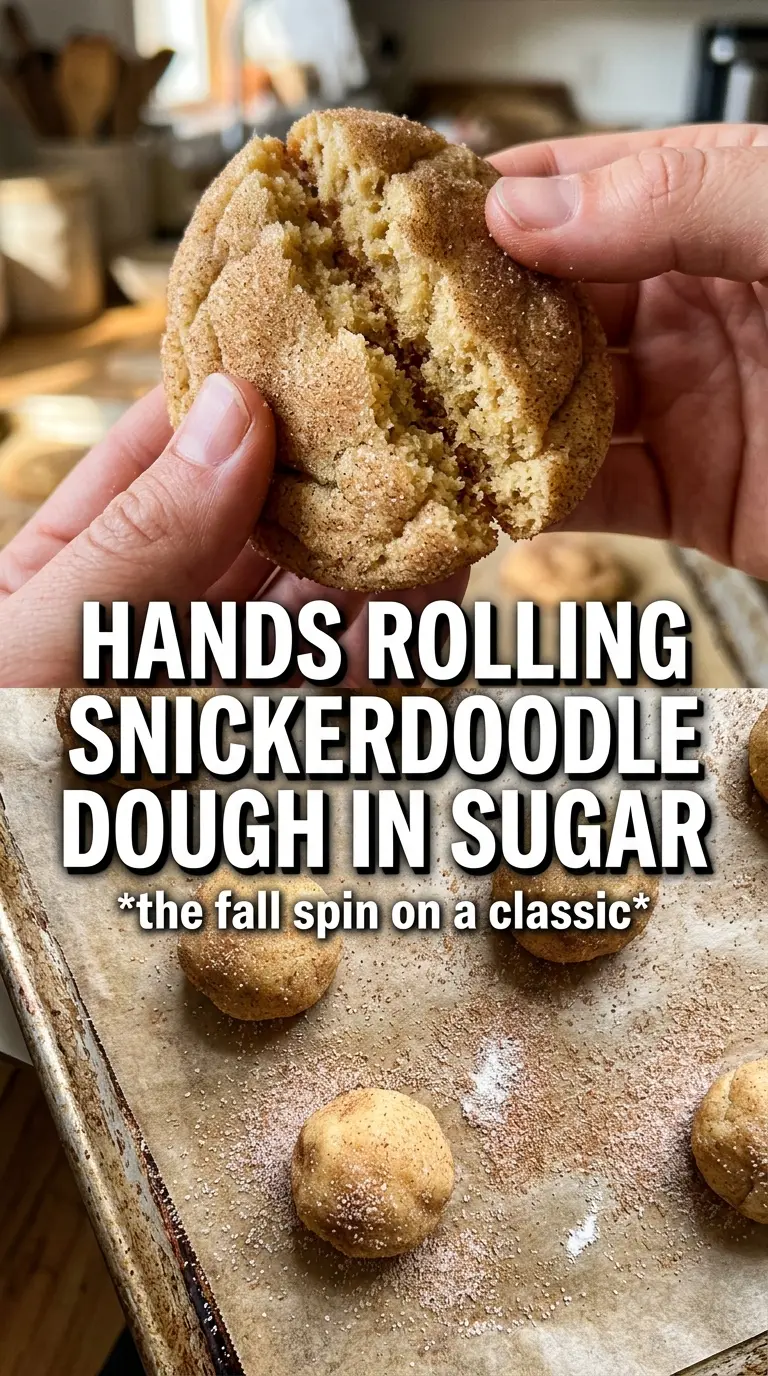
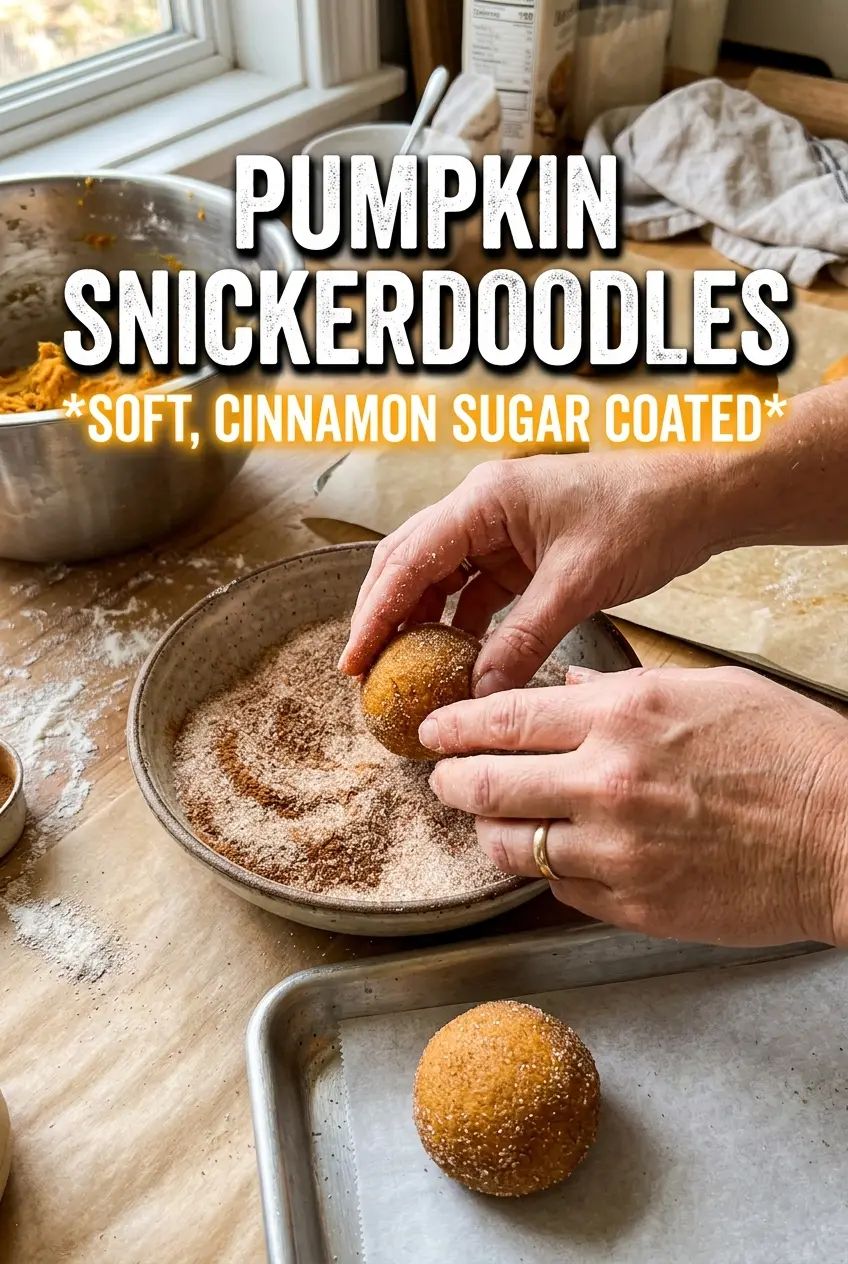
Mix the rolling sugar and spices in a shallow bowl, then scoop the dough into 1 1/2 tablespoon balls. Roll them generously so every surface gets coated. That outer layer helps the cookies crack and wrinkle as they bake, and it gives you the cinnamon-sugar bite that makes snickerdoodles worth making in the first place. If the coating looks patchy, the cookies won’t get that even, sandy crust.
The Bake Window That Matters
Bake just until the edges look set and the centers are still soft and slightly puffy. On my oven, that usually lands around 10 to 12 minutes, but the visual cue matters more than the clock. Let them sit on the hot pan for a few minutes before moving them so the centers finish gently. If you move them too soon, they can collapse before the structure sets.
How to Adjust the Cookies Without Losing the Snickerdoodle Feel
Make Them Dairy-Free
Use a solid plant-based butter stick instead of dairy butter. The cookies will still spread and brown well, but the flavor will be a little less rich, so the cinnamon-sugar coating does more of the heavy lifting.
For a Stronger Pumpkin Spice Finish
Add a pinch more pumpkin pie spice to the rolling sugar, not the dough. That keeps the cookie flavor balanced and concentrates the spice right where your tongue hits first.
If You Want Thicker Cookies
Chill the scooped dough for 20 to 30 minutes before rolling and baking. The cookies will hold their shape a little better and bake up puffier, but they’ll lose a touch of that soft spread that makes this version so good.
Storage and Reheating
- Refrigerator: Store in an airtight container for up to 5 days. They stay soft, though the sugar coating softens a bit after day two.
- Freezer: Freeze baked cookies for up to 2 months, or freeze dough balls after rolling in sugar. Dough bakes best from frozen with an extra minute or two in the oven.
- Reheating: Warm baked cookies in a 300°F oven for 3 to 5 minutes. Microwaving makes them gummy and can blur the crinkled tops.
Questions I Get Asked About This Recipe
Pumpkin Snickerdoodles
Ingredients
Equipment
Method
- Preheat the oven to 375°F and line baking sheets with parchment or silicone mats.
- Blot the pumpkin puree thoroughly on paper towels to remove excess moisture.
- Whisk the all-purpose flour, cream of tartar, baking soda, cinnamon, nutmeg, allspice, and salt until evenly combined.
- Beat the softened unsalted butter and granulated sugar until very fluffy.
- Add the egg, blotted pumpkin puree, and vanilla extract, then mix just until smooth.
- Fold in the flour mixture until no dry streaks remain.
- Mix the rolling spices in a shallow bowl using the sugar, cinnamon, and pumpkin pie spice.
- Scoop 1-1/2 tablespoon balls, then roll generously in the cinnamon-spice sugar until well coated.
- Bake for 10 to 12 minutes at 375°F, until the cookies look crinkled with edges set but centers still soft.