Chicken tortellini soup lands in the bowl with the kind of comfort that makes dinner feel handled. The broth stays light but still tastes rich, the tortellini turn plump and tender, and the shredded chicken gives every spoonful enough substance to count as a full meal. It’s the sort of soup people go back to for seconds before they’ve even finished the first bowl.
What makes this version work is the order. The vegetables get a head start so they soften and sweeten in the pot, the garlic and herbs bloom for just a minute so they don’t turn bitter, and the tortellini go in near the end so they stay intact instead of bloating and splitting. Spinach only needs a short swim in the hot broth; if you cook it too long, it loses its color and disappears into the soup.
Below, I’ve included the timing that keeps the pasta from overcooking, plus a few ways to adapt the soup if you need to stretch it, lighten it up, or make it ahead.
The tortellini stayed tender without falling apart, and the broth picked up so much flavor from the carrots and basil. I used leftover rotisserie chicken and it tasted like I had simmered it all afternoon.
Save this chicken tortellini soup for the nights when you want a hearty bowl with tender pasta, shredded chicken, and a broth that tastes like it simmered longer than it did.
The Trick to Keeping Tortellini Tender Instead of Mushy
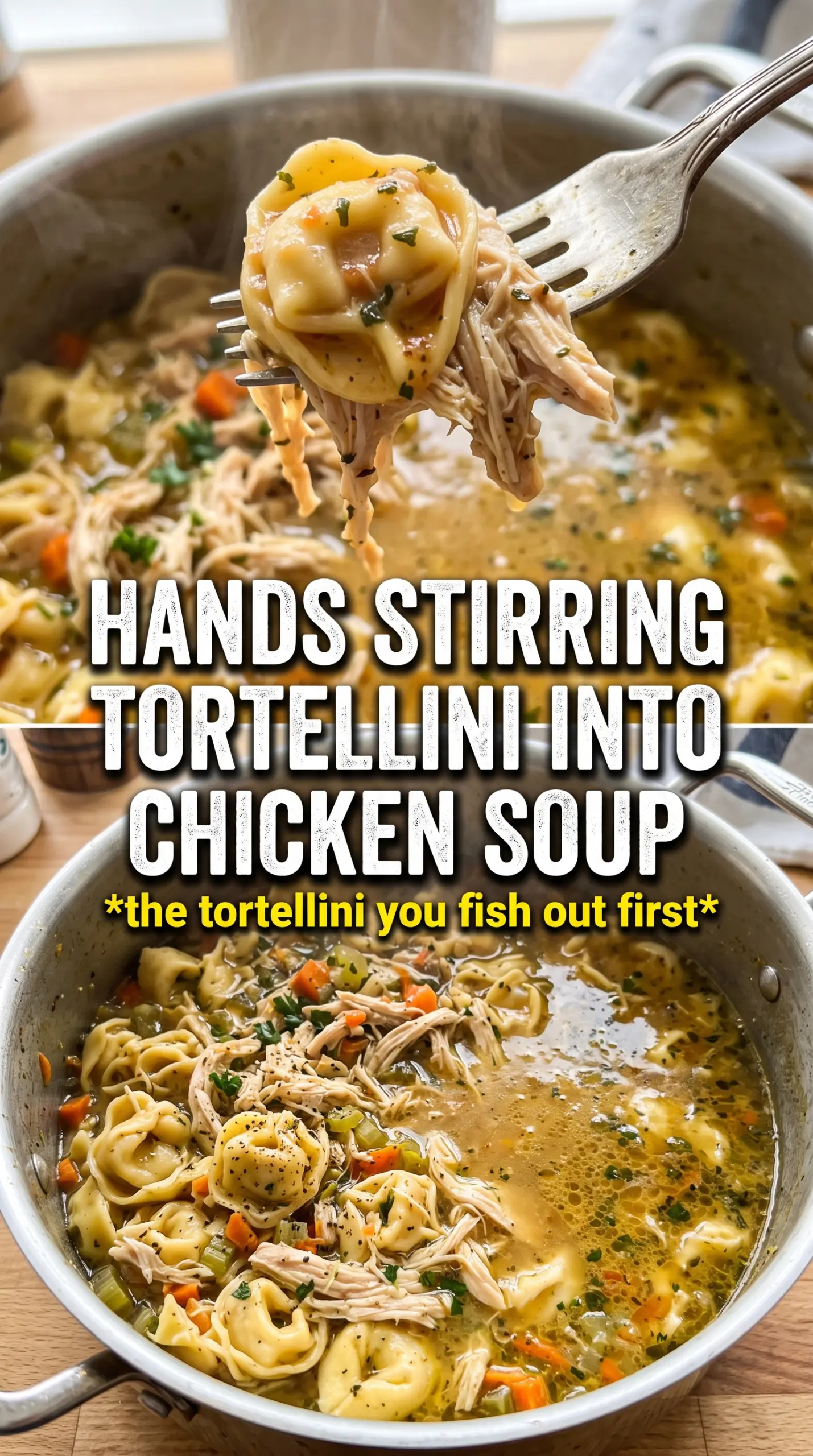
Refrigerated tortellini cook fast, and that’s where a lot of soups go wrong. If they simmer too long in the broth, the pasta swells past the point of tenderness and the filling can start to push through the seams. The best texture comes from adding them after the broth is already boiling and pulling the pot the moment they’re just tender at the edges.
The other thing worth knowing is that this soup keeps cooking in the hot liquid even after the burner goes off. That means you want to stop a minute earlier than you think. By the time the chicken and spinach go in, the tortellini should be soft but still hold their shape when you ladle the soup.
- Short cooking time matters here — refrigerated tortellini only need a few minutes. Frozen tortellini usually need a little longer, but I’d still taste one early so the pasta doesn’t go from tender to blown-out.
- Broth temperature matters more than stirring — a rolling boil gets the pasta moving and cooks it evenly, but once the tortellini go in, keep the boil gentle enough that they’re not smashing into each other.
- Spinach is a finish, not an ingredient to simmer — it wilts in the residual heat. If you cook it longer, it gets dark and stringy instead of fresh and green.
What Each Ingredient Is Actually Doing in This Soup
- Chicken broth — this is the backbone of the soup, so use one you’d drink on its own. A bland broth gives you a flat pot no matter how much seasoning you add later.
- Refrigerated cheese tortellini — fresh tortellini give the best texture here because they cook quickly and stay pillowy. If you swap in frozen, add a minute or two and watch closely near the end.
- Shredded chicken — cooked chicken breast keeps this soup lean and fast. Rotisserie chicken works well and saves time, but break it into small shreds so every spoonful feels balanced.
- Carrots, onion, and garlic — these build the sweet, savory base of the soup before the broth even goes in. Dice the onion small and slice the carrots evenly so they soften at the same pace.
- Italian seasoning and dried basil — these herbs give the broth its familiar Italian-American backbone without making it taste like tomato sauce. If your seasoning blend is old and faded, the soup will taste dull, so use a fresh jar if you have one.
- Spinach — baby spinach is the easiest choice because it wilts quickly and disappears into the soup without getting tough. Regular spinach works too, but strip out the thicker stems first.
Building the Pot So the Broth Stays Light but Tastes Full
Softening the vegetables first
Warm the olive oil in a large pot, then cook the onion and carrots until the onion turns translucent and the carrots start to soften at the edges. This first stage gives the broth sweetness and body without needing cream. If the vegetables are still firm when you add the broth, they’ll feel underdone in the finished soup.
Blooming the garlic and herbs
Stir in the garlic, Italian seasoning, and dried basil for just about a minute. You should smell the herbs bloom immediately, but the garlic should never color deeply or turn brown. Burnt garlic makes the whole pot taste sharp and bitter, and there’s no fixing that later.
Cooking the tortellini at the end
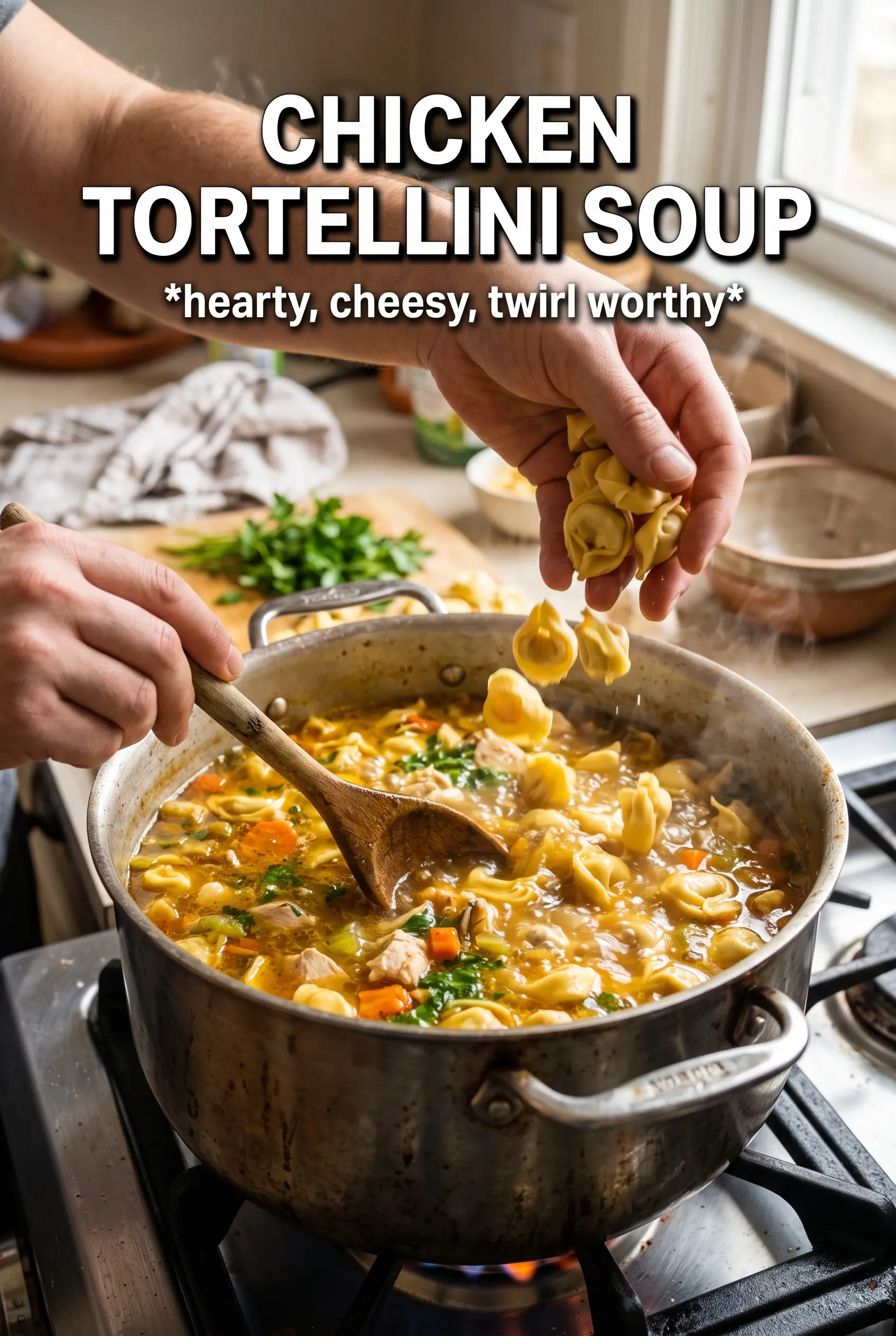
Bring the broth to a boil, add the tortellini, and cook until they’re just tender. The soup will look fuller almost immediately as the pasta plumps up. As soon as the tortellini are ready, add the chicken and spinach, then cook only until the spinach wilts and the chicken is heated through.
Finishing with salt, pepper, and parmesan
Taste the broth at the very end and season it once the tortellini are in the pot. Pasta absorbs salt, so a soup that tastes perfect before the tortellini may need another pinch afterward. Serve it with parmesan and fresh basil right away so the cheese melts a little into the steam and the basil stays bright.
How to Adapt This Chicken Tortellini Soup for Different Nights
Use rotisserie chicken for a faster dinner
Rotisserie chicken shortens the cook time and adds a little extra richness to the soup. Pull it into small shreds and add it at the end just long enough to warm through, or it can dry out and lose its texture.
Make it gluten-free with the right tortellini
Use a gluten-free tortellini and keep a close eye on the pot, since many gluten-free pastas soften faster and can break apart if they sit too long. The broth and vegetables don’t need any other changes.
Add extra vegetables without throwing off the broth
Zucchini, peas, or diced celery all work well if you want more vegetables in the pot. Add quick-cooking vegetables near the end so they stay bright and don’t muddy the broth.
Storage and Reheating
- Refrigerator: Store for up to 3 days. The tortellini will keep soaking up broth, so expect the soup to thicken a bit.
- Freezer: It freezes, but the tortellini texture softens after thawing. If you want to freeze it, do it without the pasta and add fresh tortellini when you reheat.
- Reheating: Warm gently on the stove over medium-low heat until steaming, not boiling. A hard boil will split the tortellini and can make the chicken dry.
Questions I Get Asked About This Recipe
Chicken Tortellini Soup
Ingredients
Equipment
Method
- Heat 2 tbsp olive oil in a large pot over medium heat, then add the diced onion and carrot slices. Sauté for 5 minutes until the onion turns translucent and the carrots begin to soften.
- Stir in the minced garlic, Italian seasoning, and dried basil, cooking for 1 minute until fragrant and lightly toasted. Keep the heat at medium so nothing browns too quickly.
- Pour in the chicken broth and bring it to a boil. Once boiling, keep it at a steady boil for easy, even cooking.
- Add the refrigerated cheese tortellini and cook for 4-5 minutes until just tender. Look for tortellini edges to float and the centers to be cooked but not mushy.
- Add the shredded chicken and baby spinach, then cook for 2-3 minutes until the chicken is heated through and the spinach wilts. Stir until the spinach is dark green and fully incorporated.
- Season with salt and pepper to taste, then serve immediately with generous Parmesan and fresh basil. Top for a fresh, speckled finish.