
Pumpkin crinkle cookies bake up with soft, cake-like centers, crisp edges, and that dramatic powdered sugar crackle that makes people reach for a second one before they’ve finished the first. The pumpkin flavor stays warm and spiced without turning muddy or heavy, and the sugar coating gives every bite a little sweet crunch before you hit the tender middle.
The trick is keeping the pumpkin puree as dry as you can and giving the dough a full chill. Pumpkin brings a lot of water to the bowl, and if you skip that step, the cookies spread too much and lose the deep cracks that make them special. Rolling the dough in granulated sugar before powdered sugar also helps the coating stay bright instead of melting into the cookie as it bakes.
Below, you’ll find the small details that matter most: how to avoid flat cookies, what the sugar coating is doing for the final texture, and a few smart swaps if you need to adjust the recipe.
The cookies came out with those deep cracks on top and stayed soft in the middle even the next day. Rolling them in the granulated sugar first made a big difference — the powdered sugar stayed bright instead of disappearing into the dough.
Save these pumpkin crinkle cookies for the batch that bakes up thick, crackled, and coated in snowy powdered sugar.
The Chill That Gives These Cookies Their Cracks
Crinkle cookies need structure before they hit the oven. Without the chill, the dough spreads too fast, the powdered sugar melts, and you get soft cookie puddles instead of thick, cracked domes. The two-hour rest firms up the butter and gives the flour time to hydrate, which is what helps the cookies hold their shape long enough to split open on top.
The other thing that matters here is the pumpkin. If it’s watery, the dough behaves like cake batter and bakes up pale and puffy instead of crinkly. Blotting the puree on paper towels removes enough moisture to keep the texture in the cookie zone, not the muffin zone.
- Pumpkin puree — Canned pumpkin works well, but blot it hard before measuring. That one step keeps the dough from loosening too much and helps the tops crack instead of slump.
- Melted butter — Melted butter gives these cookies their dense, tender bite. Don’t swap in softened butter here; you want the dough to mix quickly and chill into a scoopable mass.
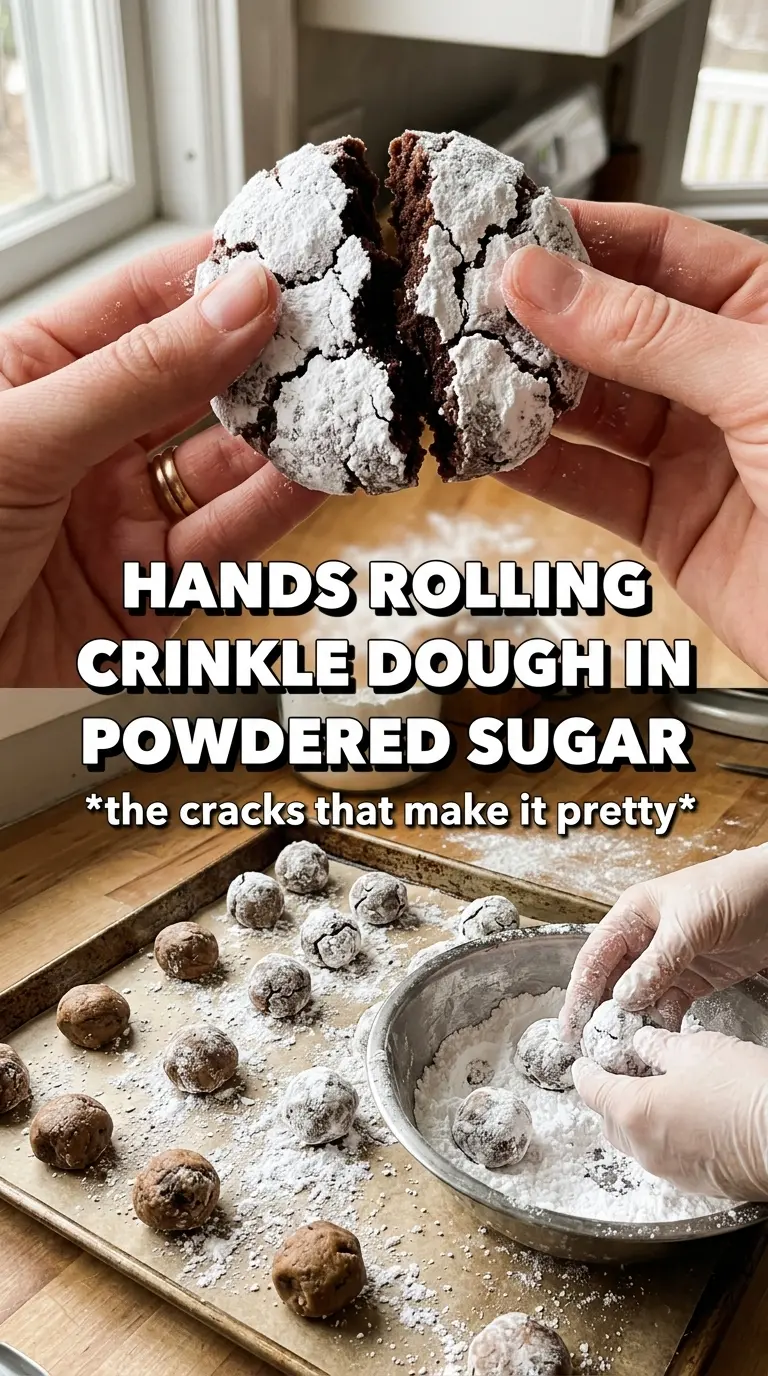
- Granulated sugar first, powdered sugar second — The plain sugar acts like a dry base coat so the powdered sugar clings in a thick, snowy layer. Skip it and the white coating disappears faster in the oven.
What Each Ingredient Is Doing in the Bowl
- All-purpose flour — Gives the cookie its shape and enough body to hold the crackly top. A lower-protein flour can make them a little more tender, but standard all-purpose is the safest choice.
- Baking powder — This is the lift that creates those dramatic splits. Don’t reduce it, or the cookies stay flatter and more cake-like without the craggy top.
- Pumpkin pie spice and cinnamon — These season the cookie without overpowering the pumpkin. If you only have pumpkin pie spice, use it for both and keep the cinnamon lighter.
- Brown sugar — Adds moisture and a deeper caramel note that works with the pumpkin. Granulated sugar alone makes the cookies sweeter but less rounded in flavor.
- Eggs — They bind the dough and help it puff. Room-temperature eggs mix more evenly into the melted butter base, which keeps the dough smoother.
- Vanilla — It softens the spice and fills in the flavor between the pumpkin and sugar. Use real vanilla if you have it; this is one place you notice the difference.
Building the Dough So It Bakes Up Thick and Crinkled
Whisk the Dry Mix First
Combine the flour, baking powder, pumpkin pie spice, cinnamon, and salt until the mixture looks evenly speckled. That even distribution matters because the baking powder needs to be spread throughout the dough, or you’ll get uneven rise and odd little raw pockets. If you see clumps in the spice mix, break them up now before they end up streaked through the cookies.
Mix the Wet Ingredients Until Smooth
Stir the melted butter with both sugars, then add the blotted pumpkin, eggs, and vanilla. The mixture should look glossy and loose, not fluffy. If the pumpkin still looks wet and streaky, blot it a little more; extra moisture is the fastest way to lose the crackle.
Bring the Dough Together Without Overworking It
Fold the dry ingredients into the wet just until no flour streaks remain. The dough will be soft and sticky, and that’s normal. Overmixing makes the cookies tough and can make the tops smooth instead of sharply crinkled, so stop as soon as the dough comes together, then cover and chill it for a full two hours.
Roll, Coat, and Bake Fast
Scoop the dough into 1 1/2-tablespoon portions, roll each one in granulated sugar, then coat generously in powdered sugar. The granulated layer gives the powdered sugar something to grip, which keeps the cookies looking snowy after baking. Bake just until the cookies are set around the edges and deeply cracked on top; if you wait for them to look fully done in the center, they’ll dry out as they cool.
How to Adapt These Cookies for Different Kitchens
Gluten-Free Version
Use a good 1:1 gluten-free flour blend in place of the all-purpose flour. The cookies will still crack nicely, but they may bake up a touch more fragile, so let them cool on the pan for a few minutes before moving them.
Dairy-Free Swap
Replace the butter with a dairy-free stick-style baking butter. Avoid soft tub spreads; they hold too much water and can make the dough spread before the cracks set.
Extra-Spiced Cookies
If you want a stronger spice hit, add a pinch of cloves or nutmeg. Keep it light, though, because too much spice can muddy the pumpkin and make the coating taste harsh.
Storage and Reheating
- Refrigerator: Store in an airtight container for up to 5 days. The powdered sugar softens a bit over time, but the cookies stay tender.
- Freezer: Freeze the baked cookies in a single layer, then transfer to a container with parchment between layers for up to 2 months. You can also freeze the dough balls before coating, then roll them in sugar just before baking.
- Reheating: Bring cookies to room temperature before serving, or warm them for 5 to 8 seconds in the microwave. Too much heat melts the powdered sugar and turns the centers rubbery, so keep it brief.