Sugar cookie vegan pumpkin bars hit that sweet spot between sturdy and creamy: a tender, lightly crisp cookie base on the bottom, a smooth pumpkin layer in the middle, and a chilled frosting finish on top that slices cleanly instead of sliding around. The contrast is what makes them worth repeating. You get the comfort of pumpkin bars, but the sugar cookie crust gives each square a little structure and a softer, bakery-style bite.
The key is treating the bottom layer like a real crust, not just an afterthought. Cold vegan butter is worked into the flour until the mixture looks sandy with a few pea-size pieces left behind, then the crust gets a short bake before the filling goes in. That head start keeps it from turning soggy under the pumpkin mixture. The filling itself leans on coconut milk for richness and cornstarch for a set that’s firm after chilling, not gummy or loose.
Below, I’ve included the details that matter most: how to keep the crust tender, what the filling should look like before it goes in the oven, and how to get those neat, chilled bars that hold their shape when you cut them.
The crust stayed buttery and the pumpkin layer set up perfectly after chilling. I cut them the next day and the frosting held its shape instead of smearing everywhere.
Save these sugar cookie vegan pumpkin bars for the kind of dessert that slices neatly, chills beautifully, and brings together pumpkin spice, coconut richness, and a soft cookie crust.
The Shortcut Most Pumpkin Bars Need: A Head Start for the Crust
Most bar desserts fail because the bottom layer and the filling bake at the same pace. That sounds efficient, but it usually leaves you with a pale crust that tastes underbaked or a filling that has to stay in the oven too long just to finish the base. The short pre-bake here fixes that. By the time the pumpkin layer goes on, the cookie dough has already set enough to stay distinct, so the bars cut into clean layers instead of one soft, muddy middle.
The other thing that matters is the texture of the crust dough before it hits the pan. It should hold together when pressed, but it shouldn’t look wet or stretchy. If it does, the vegan butter was too warm or the plant milk went in too fast. Stop mixing as soon as the dough comes together, press it evenly, and you’ll keep that sugar-cookie texture instead of turning it into a dense shortbread slab.
- Cold vegan butter — This is what gives the base its tender, slightly crumbly bite. If it softens too much, the crust gets greasy and tight instead of light.
- Powdered sugar — It sweetens the crust without making it gritty, and it helps the bottom layer bake up with a smoother, more delicate texture than granulated sugar would.
- Cornstarch in the filling — This is what turns the pumpkin layer into sliceable bars after chilling. Flour won’t set the same way here and can leave the filling pasty.
- Full-fat coconut milk — This brings the richness that dairy cream would normally provide. Light coconut milk won’t give the same body, and the filling can end up thin.
What Each Layer Is Doing in These Vegan Pumpkin Bars
- All-purpose flour — This gives the crust enough structure to hold the pumpkin layer without becoming tough. Bread flour would make the base chewier than you want.
- Vegan cream cheese — Use the full-fat block-style kind for the frosting. Tub styles can be loose and make the topping slide, especially if the bars aren’t fully chilled.
- Pumpkin puree — Use plain puree, not pumpkin pie filling. Pie filling is already sweetened and spiced, which throws off the balance and can make the bars too soft.
- Maple syrup or sugar — Maple gives a rounder, deeper sweetness, while sugar keeps the pumpkin flavor a little cleaner. Either works, but if you use maple, the filling may bake a touch softer and need the full chill time.
- Plant milk — Just enough to bring the crust together. Too much turns the dough sticky, and sticky dough presses unevenly in the pan.
Building the Base, Setting the Filling, and Finishing Cleanly
Mixing the Cookie Dough
Stir the dry ingredients first so the baking powder and salt spread evenly through the flour. Cut in the cold vegan butter until the mixture looks like damp sand with a few little butter bits still visible, then add the plant milk and vanilla just until the dough clumps together. If you keep mixing past that point, the crust bakes up dense instead of tender.
Pressing and Pre-Baking the Crust
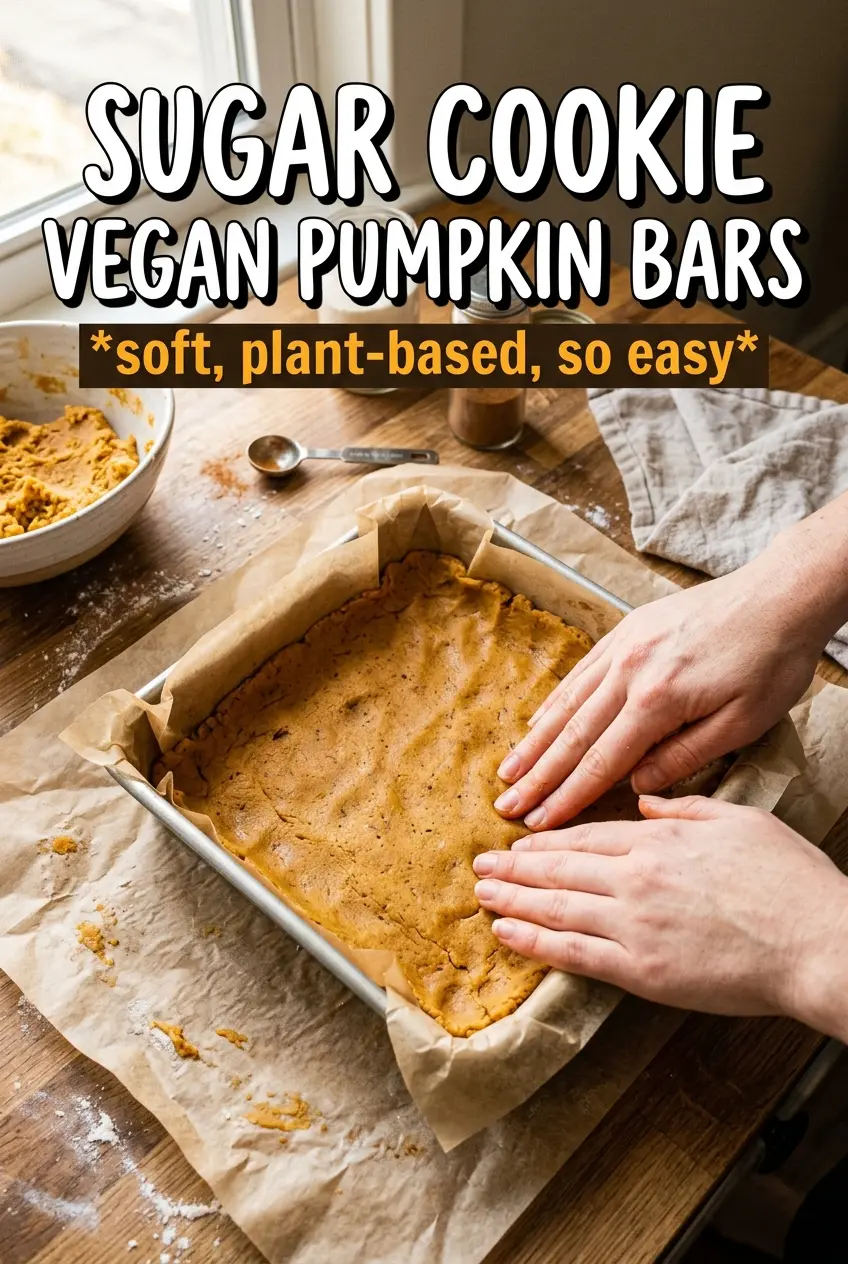
Press the dough into an even layer in the lined pan, paying attention to the corners so they aren’t thinner than the center. Bake it until the top looks set and the edges are just starting to dry out, about 12 minutes. You’re not looking for color yet; you’re looking for a crust that can support the filling without dissolving into it.
Whisking the Pumpkin Layer Smooth
Whisk the filling until the cornstarch disappears and the mixture looks completely smooth. Any little pockets of cornstarch can bake up into specks, and those never feel as clean on the tongue. Pour the filling over the warm crust right away so it settles evenly, then smooth the top before it goes back into the oven.
Baking Until the Center Sets
Bake just until the edges are set and the center has a slight wobble when you nudge the pan. If it looks fully firm in the oven, it’s probably overbaked and may crack as it cools. The bars finish setting in the fridge, so pulling them at the right moment matters more than chasing extra color.
Chilling Before Frosting
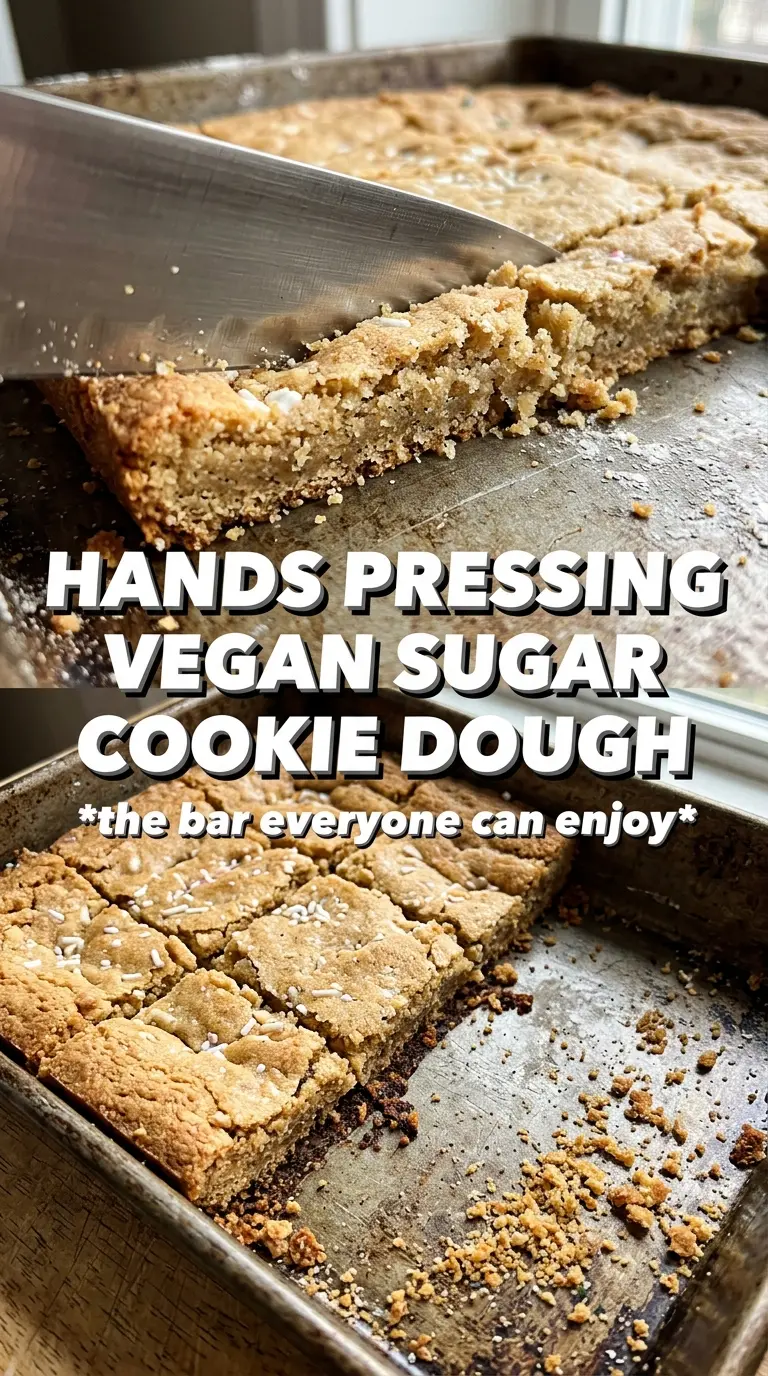
Let the bars cool completely, then refrigerate them for at least 2 hours before adding the frosting. That chill is what gives you clean squares and keeps the frosting from melting into the pumpkin layer. If the bars are even a little warm, the topping softens and the slices blur at the edges.
How to Adapt These Bars Without Losing the Soft Cookie-and-Pumpkin Contrast
Gluten-Free Version
Use a 1:1 gluten-free baking blend that includes xanthan gum. The crust will be a little more delicate when warm, but after chilling, it still cuts well. Avoid single-flour swaps like almond flour alone; they won’t hold the base together the same way.
Oil-Free Isn’t the Best Swap Here
This recipe depends on cold vegan butter for the cookie texture, so swapping in oil changes the crust into something soft and cakey. If you need a lower-fat dessert, it’s better to make a smaller batch and keep the butter in place than to remove it entirely.
Maple Sweetener Swap
You can use granulated sugar instead of maple syrup in the filling if you want a firmer, more classic pumpkin flavor. Maple adds warmth and depth, but sugar gives a cleaner finish and can help the filling set a touch more firmly.
Storage and Reheating
- Refrigerator: Store covered for up to 5 days. The frosting stays best when the bars are kept cold, and the crust softens slightly in a good way.
- Freezer: These freeze well without the frosting. Wrap the chilled bars tightly, freeze up to 2 months, and frost after thawing in the fridge for the cleanest finish.
- Reheating: Don’t reheat these. They’re meant to be served chilled or cool, and heat will loosen the filling and melt the frosting.