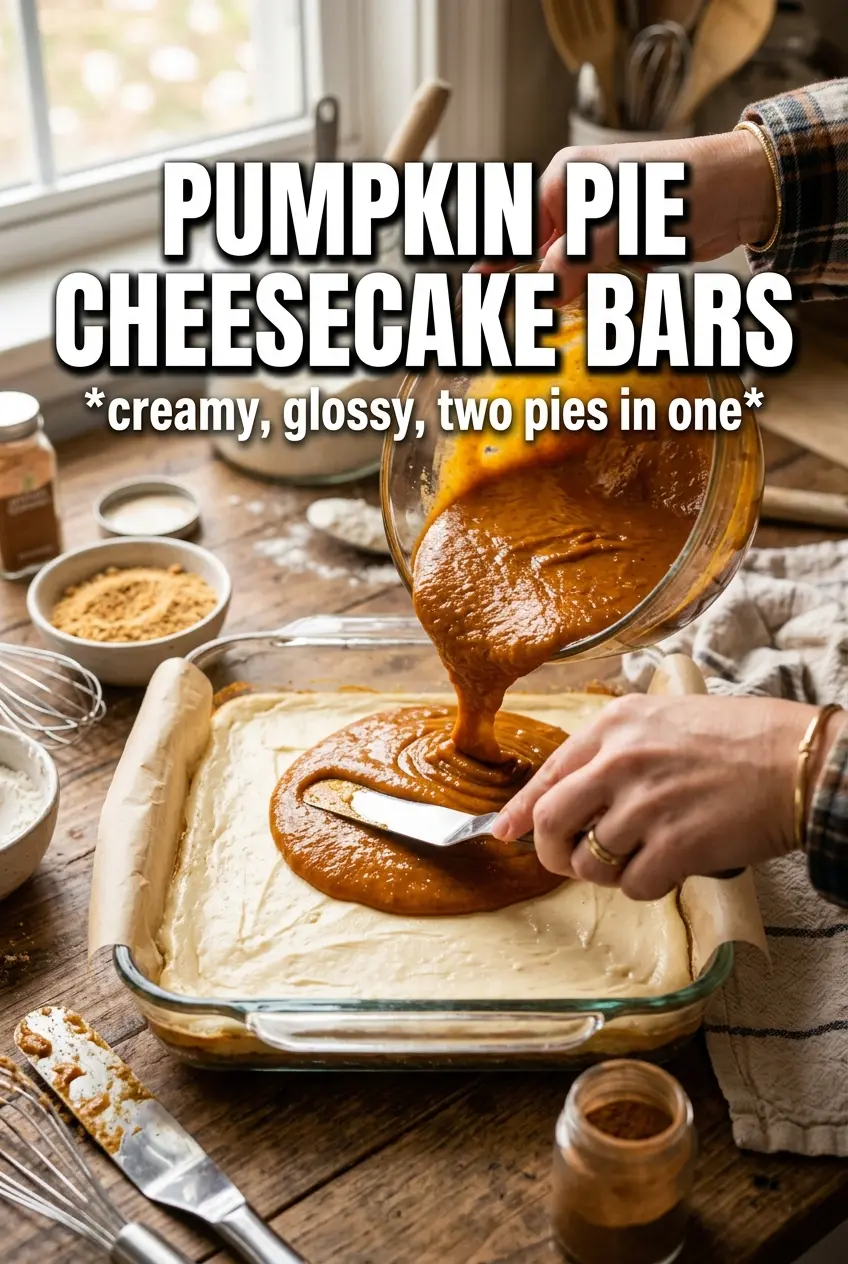
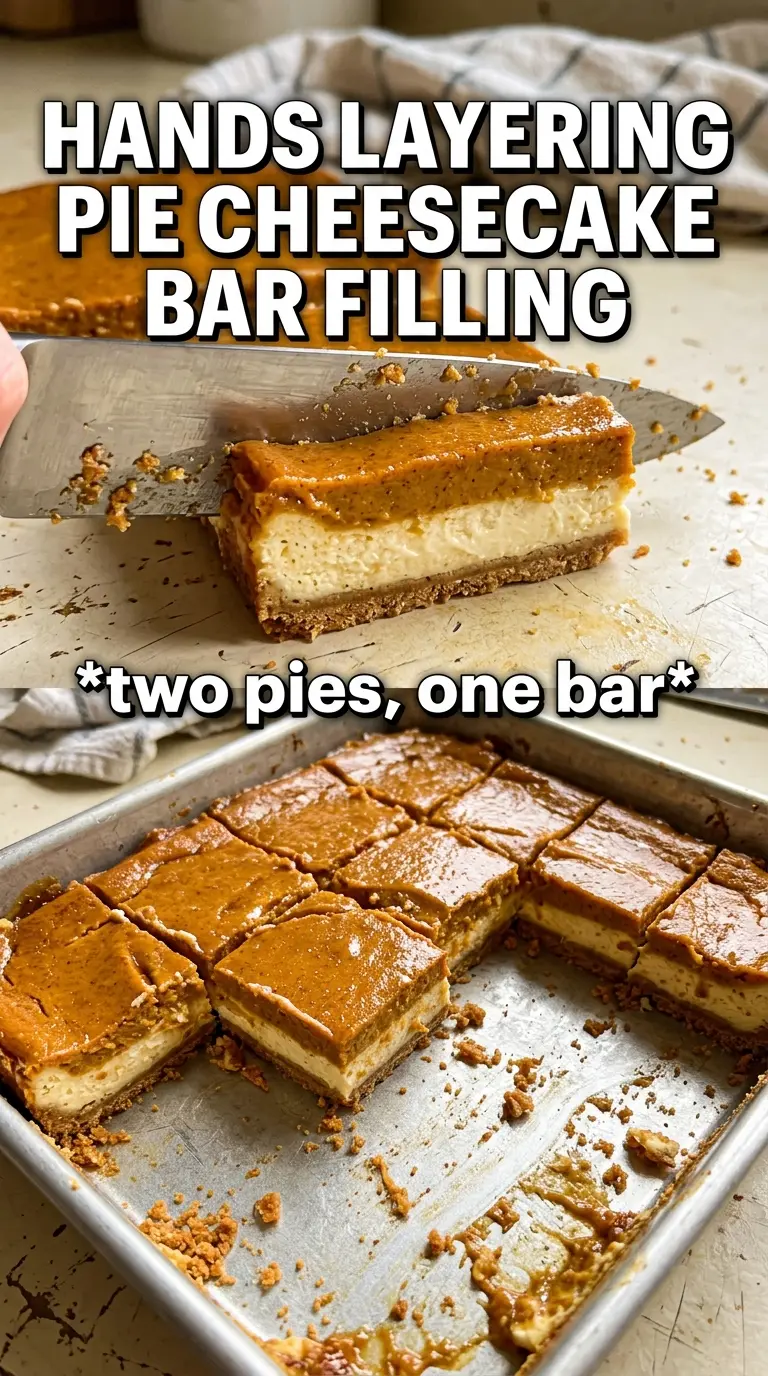
Pumpkin pie cheesecake bars give you the best parts of two desserts in one square: a crisp, spiced crust, a smooth cheesecake layer, and a ribboned pumpkin filling that tastes like Thanksgiving without the pie pan fuss. The texture is the part I come back for. You get a clean slice, a creamy middle, and just enough spice from the gingersnaps to keep every bite from feeling heavy.
What makes this version work is the contrast. The crust gets a short bake before the filling goes in, which keeps it from turning sandy under all that cream cheese. The batter is split after the sour cream and vanilla go in, so both halves stay equally rich before one gets the pumpkin treatment. That gives you two flavors that stay distinct instead of blending into one muddy layer.
Below, I’ve included the small details that matter most: how to keep the filling smooth, how to swirl without overmixing, and how long these bars need to chill before you cut them cleanly. The chill time is not optional here. It’s what turns a soft cheesecake into neat, bakery-style bars.
The crust stayed crisp under the filling and the swirl set up beautifully after chilling. I cut the bars after 4 hours in the fridge and they came out with clean edges, plus my family kept sneaking back for “just one more” square.
Save these Pumpkin Pie Cheesecake Bars for the dessert tray that needs a clean slice, a spiced gingersnap crust, and a pumpkin swirl that holds its shape.
The Chill Time Is What Gives You Clean Bars
Pumpkin pie cheesecake bars look forgiving while they bake, but the real structure happens in the fridge. If you cut them early, the filling smears and the swirl loses its shape. Four hours is the minimum I’d trust for neat squares, and overnight is even better if you want the cleanest edges.
The other thing that trips people up is overbaking. The center should still have a slight jiggle when you pull the pan from the oven. It firms as it cools, and that gentle carryover is what keeps the texture silky instead of dry and crumbly.
- Gingersnap crumbs — These bring spice and a sturdier flavor than a plain graham crust. If gingersnaps aren’t available, graham crumbs work, but the bars will taste sweeter and less warm.
- Cream cheese — Full-fat brick cream cheese gives the filling its dense, sliceable texture. Softened cream cheese matters here; cold cream cheese leaves little lumps that don’t fully disappear once the eggs go in.
- Sour cream — This loosens the filling just enough and adds tang so the bars taste like cheesecake, not pumpkin custard. Plain Greek yogurt can stand in, but it brings a slightly sharper finish and a firmer set.
- Pumpkin puree — Use plain pumpkin puree, not pumpkin pie filling. Pie filling already contains sugar and spice, which throws off the balance and makes the pumpkin half taste flat.
What Each Ingredient Is Actually Doing in This Recipe
- Primary ingredient (the star) — Quality matters most. Choose the best you can find.
- Cooking medium (oil, butter, or broth) — This carries flavors and prevents dryness.
- Seasonings (salt, pepper, spices, herbs) — Layer flavors so nothing overpowers. Build depth gradually.
- Aromatics (garlic, onion, herbs) — Cook with fat to bloom flavors. Become the foundation.
- Supporting ingredients — Complement the main ingredient without overpowering it.
- Sauce or liquid (if applicable) — Brings flavors together. Balance richness with acid.
- Acid (lemon, vinegar, wine, or other) — Brightens and prevents flat-tasting results.
- Final finish (garnish, glaze, or sauce) — Prevents one-dimensional taste and adds visual appeal.
Building the Swirl Without Overmixing the Filling
Pressing and Prebaking the Crust
Mix the gingersnap crumbs, sugar, and melted butter until every crumb looks evenly moistened, then press the mixture firmly into a lined 9×13 pan. A flat-bottomed cup helps you get into the corners without packing one area too hard. Bake it for 10 minutes, just until it smells toasty and sets enough to hold the filling. If the crust is loose, the bars will break apart at the base when you slice them.
Making the Cheesecake Base
Beat the cream cheese with both sugars until it’s smooth before the eggs go in. This is the stage where most grainy cheesecake starts, usually because the cream cheese wasn’t soft enough or the mixer didn’t run long enough. Add the eggs one at a time so the batter stays glossy and doesn’t turn thin and foamy. Once the sour cream and vanilla go in, divide the batter in half right away.
Creating the Pumpkin Half
Stir the pumpkin puree, pumpkin pie spice, and cinnamon into one half of the batter until it looks evenly colored. Don’t beat it hard at this point or you’ll introduce too much air, which can cause cracks on top. The pumpkin batter should be slightly thicker and a little deeper in color than the plain cheesecake half.
Swirling and Baking
Alternate spoonfuls of each batter over the crust, then drag a knife through the top in broad, shallow sweeps. A few passes are enough. If you keep swirling, the layers muddy together and you lose that pretty marbled look. Bake until the edges are set and the center still has a slight wobble, then cool it completely before chilling.
Make Them Gluten-Free With the Right Crust
The filling is already gluten-free, so the only swap you need is the crust. Use gluten-free gingersnap cookies or crumbs with the same measured butter and sugar, and press them in the same way. The bars will still slice cleanly, though some gluten-free cookies bake up a little more fragile, so chill them fully before cutting.
Dairy-Free Needs a Different Dessert, Not a Straight Swap
This recipe depends on cream cheese and sour cream for its texture, so dairy-free substitutions won’t give the same result. If you need a dairy-free version, use a recipe built around vegan cream cheese and a stabilizer designed for baking. That swap changes both the set and the tang, so it’s better to start with a formula intended for it.
For a More Defined Pumpkin Layer
If you want the pumpkin flavor to stand out more, add an extra tablespoon of pumpkin puree and a small pinch of cinnamon to the pumpkin half. Don’t add too much more puree or the filling can turn loose. The bars will taste more pumpkin-forward, but the swirl may be slightly softer.
Storage and Reheating
- Refrigerator: Store covered for up to 5 days. The bars stay firm and the crust softens only slightly.
- Freezer: They freeze well. Wrap individual bars tightly and freeze for up to 2 months, then thaw in the fridge overnight.
- Reheating: Serve these chilled or at cool room temperature. Don’t microwave them, or the cheesecake texture turns soft and the swirl loses its clean edges.