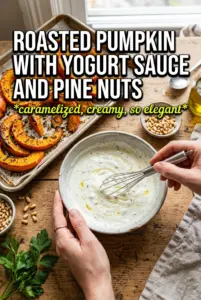
Caramelized pumpkin wedges over cool yogurt make the kind of side dish that disappears fast. The edges turn sticky and browned in the oven, the center stays tender, and the whole plate gets lifted by garlic, lemon, herbs, and toasted pine nuts. It lands right in that sweet spot where it feels a little special but still fits beside a weeknight roast or a simple grain bowl.
The key is roasting the pumpkin hard enough to get color before the sugars soften completely. A hot oven, enough oil, and wedges that aren’t cut too thin give you those browned edges without turning the squash mushy. The yogurt sauce also matters: thick Greek yogurt holds its shape on the platter, while lemon and garlic keep it sharp enough to balance the sweetness of the pumpkin.
Below you’ll find the small details that make this dish work every time, plus a few smart swaps if you need to adjust for what’s in your kitchen.
The pumpkin caramelized beautifully and the yogurt stayed thick instead of running all over the plate. I loved the little pop from the pomegranate seeds with the pine nuts on top.
Save this roasted pumpkin with yogurt sauce and pine nuts for a side that brings creamy, crisp, sweet, and tangy all to one platter.
The Trick to Getting Real Color on Pumpkin Wedges
Roasted pumpkin goes bland and soft when the pieces are crowded or cut too small. The goal here is not gentle steaming; it’s direct heat that lets the edges brown before the flesh collapses. That’s what gives you flavor and a clean, wedge-like texture instead of a tray of soft squash.
Cut the pumpkin into wedges that are sturdy enough to hold their shape, and don’t peel away every bit of the skin if it’s tender. The skin helps the wedges stay intact as they roast, and you can eat around it or remove it after cooking if it’s tough. The spice mix also needs enough oil to cling, because dry spices on dry squash just fall off in the oven.
- Pumpkin or butternut squash — Both work well, but butternut is usually easier to cut and more reliable if you want even wedges. A small pumpkin can bring a deeper squash flavor, though the exact texture depends on the variety.
- Olive oil — This is what carries the spices and helps the edges caramelize. Don’t cut it too far or the seasonings will look dusty instead of forming that glossy roast.
- Cumin, coriander, smoked paprika, and cayenne — This is the backbone of the dish. Cumin and coriander give warmth, smoked paprika adds a little depth, and cayenne stays in the background unless you push it.
- Greek yogurt — Thick yogurt is worth using here because it spreads into a proper base instead of turning watery on the platter. If you use regular yogurt, strain it first so the sauce doesn’t pool.
What Each Ingredient Is Actually Doing in This Recipe
- Primary ingredient (the star) — Quality matters most. Choose the best you can find.
- Cooking medium (oil, butter, or broth) — This carries flavors and prevents dryness.
- Seasonings (salt, pepper, spices, herbs) — Layer flavors so nothing overpowers. Build depth gradually.
- Aromatics (garlic, onion, herbs) — Cook with fat to bloom flavors. Become the foundation.
- Supporting ingredients — Complement the main ingredient without overpowering it.
- Sauce or liquid (if applicable) — Brings flavors together. Balance richness with acid.
- Acid (lemon, vinegar, wine, or other) — Brightens and prevents flat-tasting results.
- Final finish (garnish, glaze, or sauce) — Prevents one-dimensional taste and adds visual appeal.
Building the Roast So the Sauce and Toppings Can Shine
Season the wedges evenly
Toss the pumpkin thoroughly with oil and spices until every cut surface looks coated, not patchy. If some wedges are bare, they’ll roast pale while the seasoned spots darken, and the dish will taste uneven. Spread them in a single layer with space around each piece so the hot air can do its job. If they’re touching, they steam.
Roast until the edges go deep gold
Put the tray into a fully hot 425F oven and leave it alone for the first part of the roast. You’re looking for browned edges, softened centers, and a smell that turns nutty instead of raw. If the pumpkin is still pale at 30 minutes, give it a few more minutes rather than pulling it early; under-roasted squash tastes flat and waterlogged.
Whisk the yogurt into a sharp, smooth base
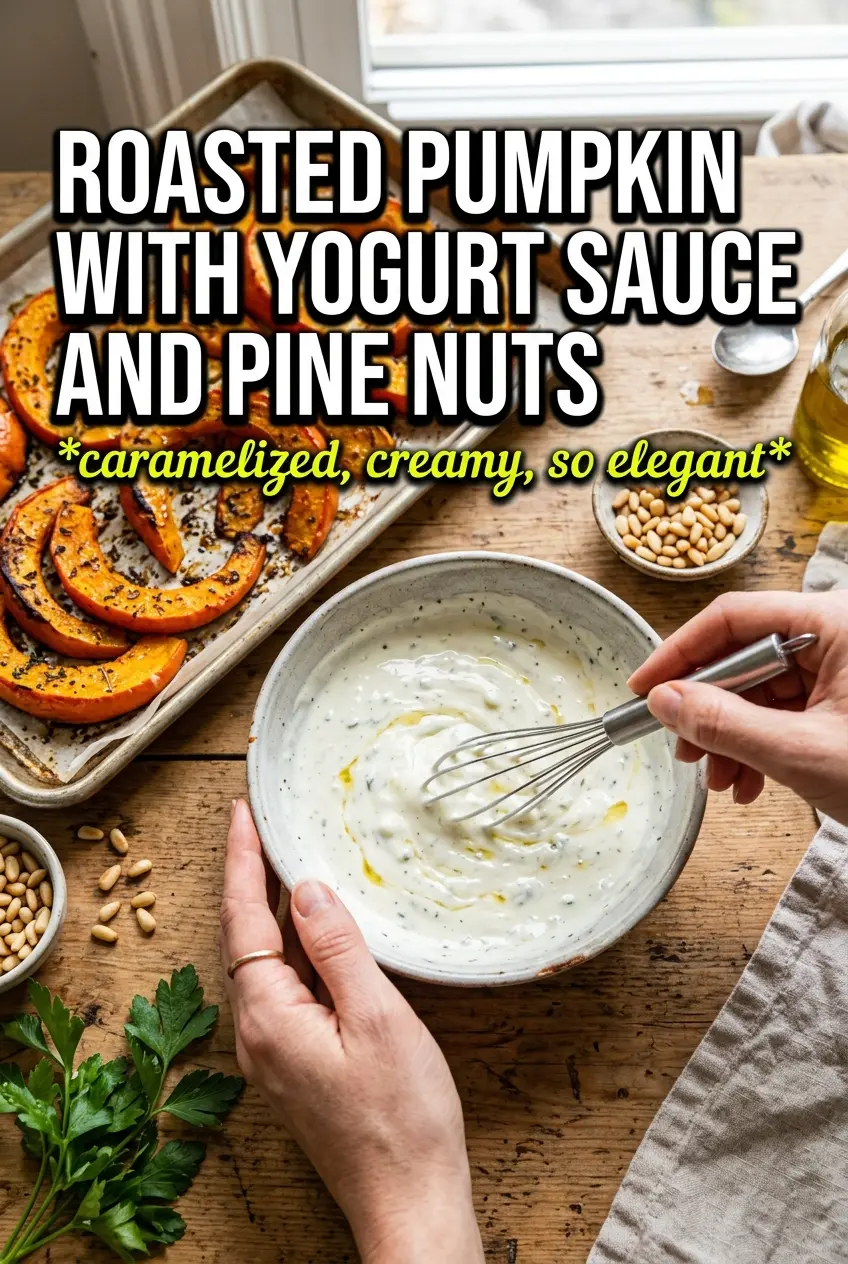
Stir the yogurt with garlic, lemon juice, herbs, and salt until it tastes bright and balanced. The sauce should be thick enough to hold a spoon mark. If it tastes dull, add a little more lemon or salt before you plate it, because once the pumpkin goes on top, the sauce has to carry the contrast.
Finish with texture and contrast
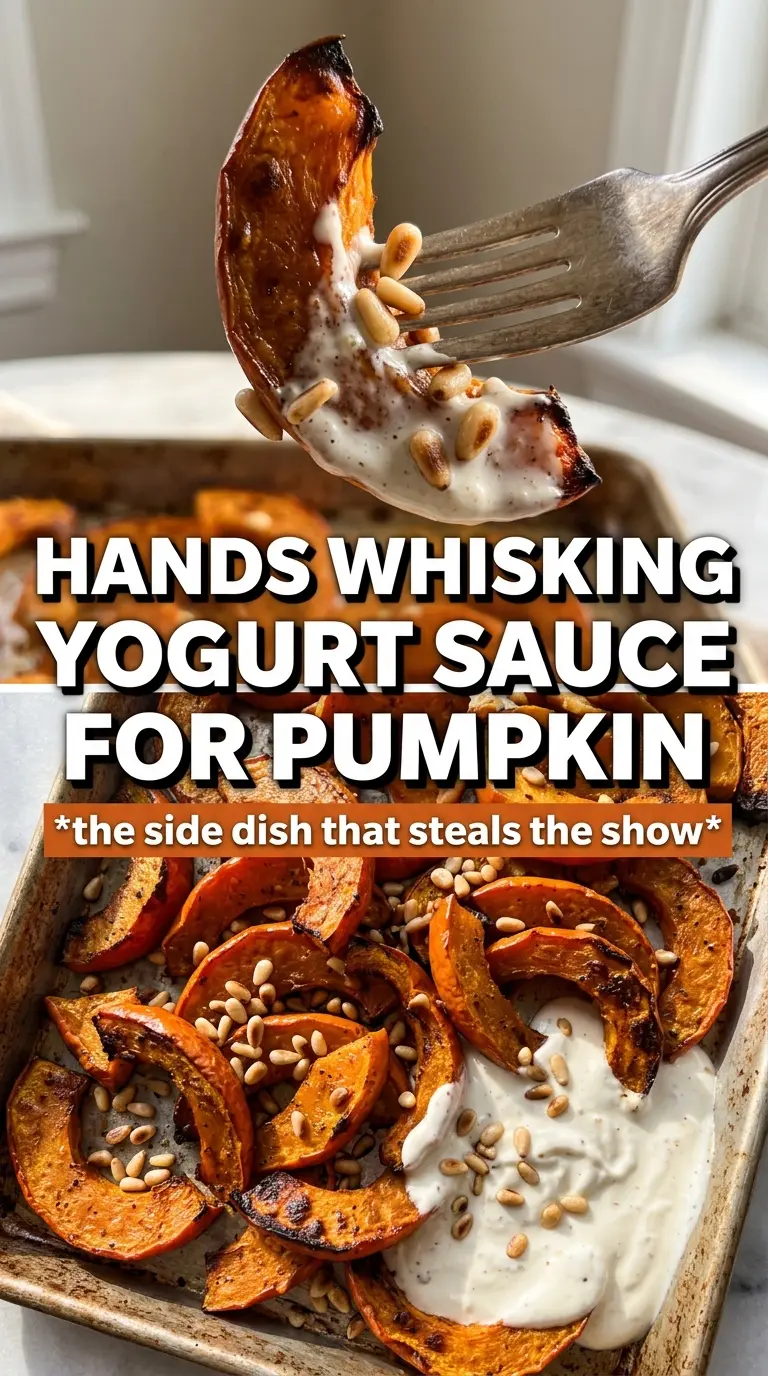
Spread the yogurt on the platter first, then arrange the warm pumpkin over it so some of the sauce stays visible around the edges. Scatter the pine nuts, pomegranate seeds, and mint at the end, not before, or the toppings lose their freshness and crunch. A thin drizzle of pomegranate molasses pulls everything together with sweet-tart shine.
Make It Dairy-Free
Use a thick unsweetened coconut yogurt or almond yogurt in place of Greek yogurt. Coconut yogurt gives the richest result, while almond yogurt stays lighter and a little less tangy. Add the lemon gradually and taste as you go, since some dairy-free yogurts already have a noticeable tang.
Swap the Pine Nuts if You Need To
Toasted slivered almonds or pistachios work well if pine nuts are expensive or hard to find. Almonds bring a firmer crunch, while pistachios add more color and a slightly sweeter taste. Keep the nuts toasted and add them at the end so they stay crisp.
Turn It Into a Main Dish
Add chickpeas to the roasting tray for the last 15 minutes, or serve the pumpkin over cooked farro or couscous. Chickpeas bring more protein and make the dish feel heartier without changing the core flavor. If you do that, keep the yogurt sauce a little thicker so it anchors the extra ingredients.
Storage and Reheating
- Refrigerator: Store the pumpkin and yogurt sauce separately for up to 3 days. The pumpkin softens a little, but it still tastes good cold or reheated.
- Freezer: The roasted pumpkin freezes well on its own for up to 2 months. Don’t freeze the yogurt sauce; it turns grainy once thawed.
- Reheating: Warm the pumpkin in a 375F oven until heated through, or use a skillet over medium heat for a few minutes. Don’t microwave it too long or the wedges go soggy instead of staying caramelized.
Questions I Get Asked About This Recipe
Roasted Pumpkin With Yogurt Sauce And Pine Nuts
Ingredients
Equipment
Method
- Preheat oven to 425F. Toss pumpkin wedges with olive oil, cumin, coriander, smoked paprika, cayenne, salt, and pepper until evenly coated.
- Spread the seasoned pumpkin on a sheet pan in a single layer. Roast 30-35 minutes, turning once if needed, until caramelized and browned at the edges.
- Whisk Greek yogurt, minced garlic, lemon juice, fresh herbs (mint, parsley), and salt until smooth. Continue whisking until no garlic bits are noticeably coarse and the sauce looks creamy.
- Spread the yogurt sauce on a platter to form a smear. Use the back of a spoon to distribute it in an even layer for easy topping.
- Arrange warm roasted pumpkin wedges over the yogurt sauce. Place them so the caramelized surfaces face up for maximum color.
- Scatter toasted pine nuts, pomegranate seeds, and fresh mint over the pumpkin. Drizzle pomegranate molasses on top right before serving for a glossy finish.