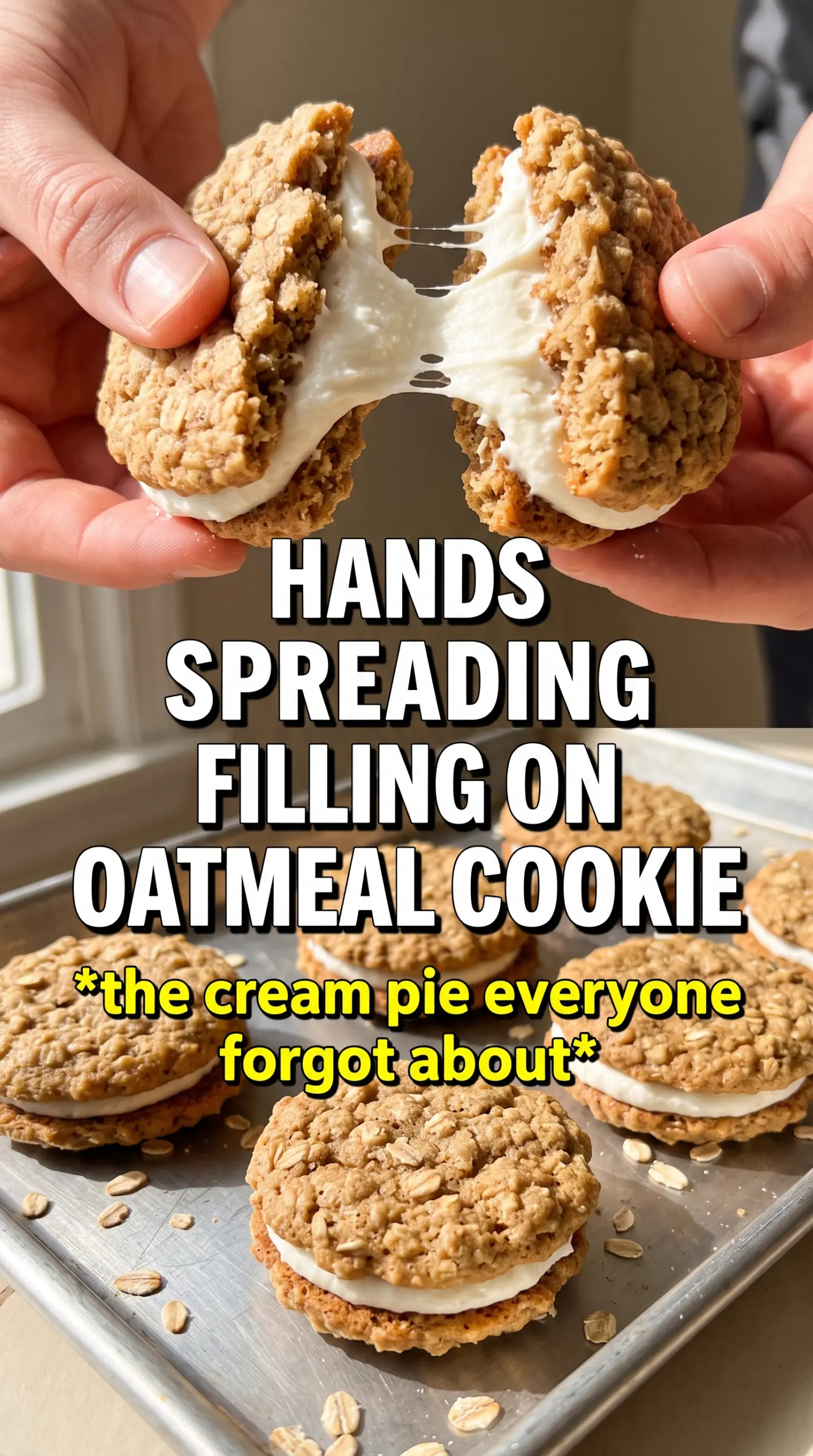
Soft pumpkin oatmeal cookies with crisp-edged tops and a thick cinnamon cream cheese filling have a way of disappearing before they’ve even fully cooled. The oat base gives these sandwich cookies enough structure to hold the filling without tasting dry, while the pumpkin keeps the centers tender and a little chewy. Each bite lands somewhere between cozy bakery cookie and old-fashioned snack cake, which is exactly why they keep getting made again.
The trick is drying the pumpkin first. Pumpkin puree carries a lot of water, and if you skip that step the cookies spread too much and bake up cakey in the wrong way. Blotting it on paper towels takes only a minute, but it makes the dough more cooperative and helps the oats stay pleasantly chewy instead of soggy. The filling matters too: cream cheese and butter need to be beaten until smooth before the sugar goes in, or you’ll end up with little lumps that show through every sandwich.
Below, I’ve included the one cooling mistake that ruins the filling, plus a few smart swaps if you need a dairy-free or gluten-free version.
The pumpkin flavor came through without making the cookies soft and sticky, and the cinnamon filling stayed thick enough to pile high between them. I chilled the filling for ten minutes and it spread like a dream.
Save these pumpkin oatmeal sandwich cookies for the kind of dessert that needs a soft, chewy cookie and a thick cinnamon cream cheese center.
The Small Move That Keeps Pumpkin Cookies Chewy Instead of Puffy
Pumpkin cookies can go wrong fast. The dough looks sturdy in the bowl, then bakes into soft little mounds that taste fine but eat more like cake than sandwich cookies. That happens when the pumpkin brings too much moisture into the dough or when the cookies are baked until they look set in the oven instead of slightly underdone at the center.
This version keeps the texture where it should be by using enough oats and flour to balance the pumpkin, plus a short bake at a fairly hot oven. You’re looking for edges that are just turning golden and centers that still look a touch soft when they come out. They finish setting on the pan, and that’s what keeps them chewy once cooled.
- Rolled oats — These give the cookies their hearty bite. Quick oats will work in a pinch, but they make the dough denser and less textured.
- Blotted pumpkin — This is the difference between a chewy cookie and a soft, wet one. Press the pumpkin between paper towels until it looks noticeably drier before adding it.
- Brown sugar — It adds moisture and a deeper molasses note that works with the spices. Light brown sugar is fine here; dark brown sugar will make the cookies a little richer and darker.
- Cream cheese filling — It needs to be thick enough to hold the sandwiches together. Full-fat cream cheese gives the best body, and the filling sets best if you beat it until completely smooth before adding the sugar.
What Each Ingredient Is Doing in the Dough and Filling
- Flour — Just enough to hold the oats and pumpkin together without making the cookies tough. Spoon and level it so the dough doesn’t dry out.
- Baking soda — It gives a little lift and helps the cookies spread into a soft, even round. Too much would make them taste soapy and fragile, so measure it carefully.
- Pumpkin pie spice and cinnamon — These carry the warm spice note through the cookie itself. If you only have pumpkin pie spice, use it for both spice elements and skip extra cinnamon in the dough.
- Butter — In the cookie dough, it gives the edges flavor and a little crispness. In the filling, softened butter keeps the cream cheese from tasting too sharp.
- Eggs — They bind the dough and help the cookies bake up tender instead of crumbly. Add them one at a time so the mixture stays smooth.
- Powdered sugar — This is what turns the filling fluffy and pipeable. If the filling looks loose, add a little more sugar instead of chilling the cookies warm; the cookies need to be cool before sandwiching anyway.
Building the Dough and Filling So the Sandwiches Hold Together
Mixing the Wet Base
Beat the butter and brown sugar until the mixture looks lightened and a little fluffy, not just combined. That step traps air and helps the cookies bake with a softer bite. Add the blotted pumpkin, then the eggs and vanilla, and mix only until smooth. If the pumpkin is still wet on the towels, the dough will feel looser than it should and the cookies will spread more than you want.
Bringing in the Oats
Stir the flour mixture in first, then fold in the oats. The dough should be thick enough to scoop cleanly, but still a little sticky. If you overmix once the flour goes in, the cookies can turn tight and dry, so stop as soon as the last streaks disappear. Use a two-tablespoon scoop for even rounds so the sandwich halves match up later.
Baking to the Right Set
Bake at 375°F for 10 to 12 minutes, just until the edges look set and the tops have lost that glossy raw look. Don’t wait for deep browning; oatmeal cookies dry out fast if they stay in too long. Let them cool on the pan for a few minutes before moving them to a rack, because they’re fragile when hot and finish firming as they cool.
Whipping the Filling and Assembling
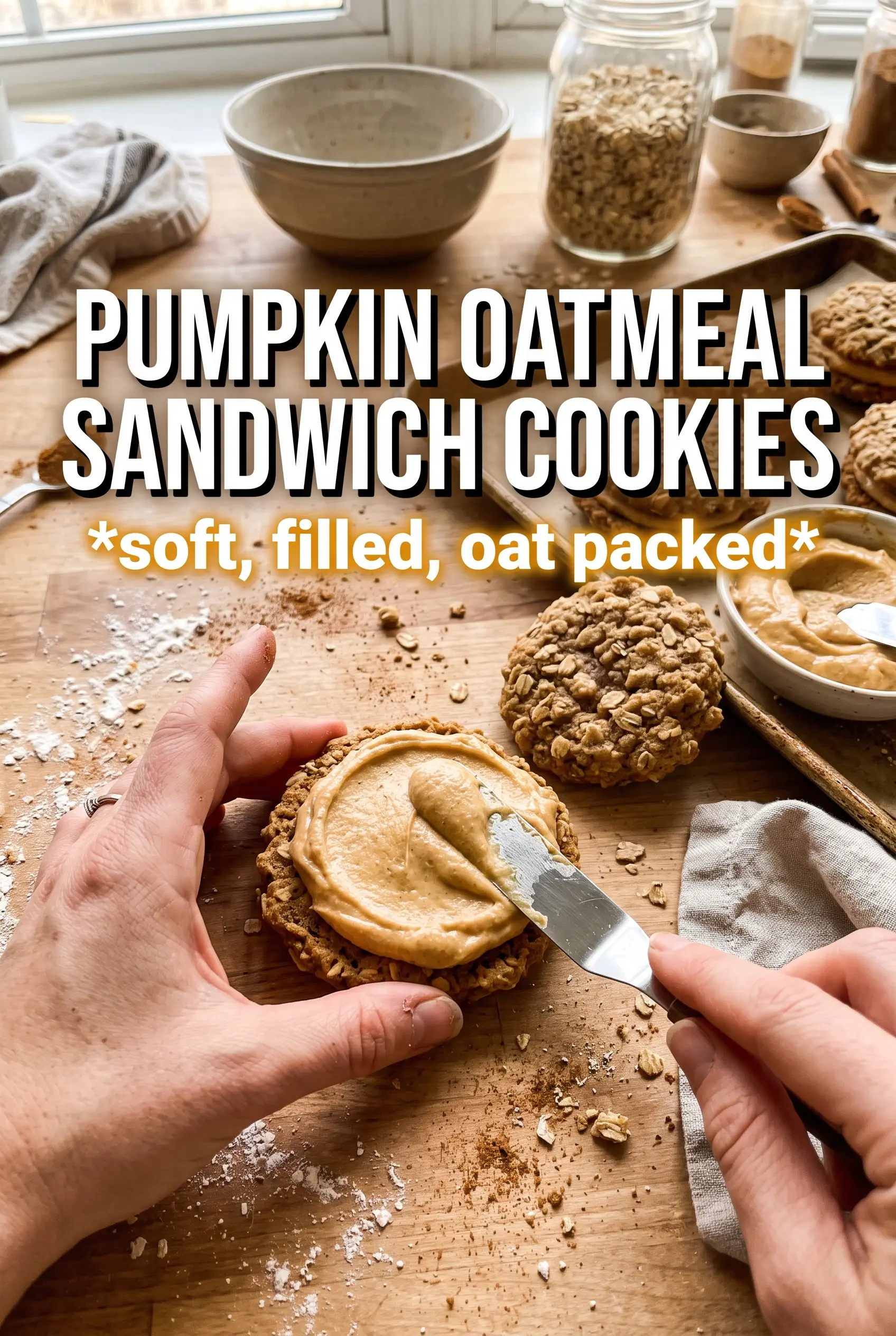
Beat the cream cheese, butter, powdered sugar, cinnamon, vanilla, and nutmeg until the filling is smooth and fluffy. If the cream cheese is still cold, you’ll get tiny lumps that won’t disappear later. Pair the cookies by size, then spread a generous layer on the flat side of one cookie and press the second one on top just until the filling reaches the edges.
Three Ways to Make These Pumpkin Sandwich Cookies Fit Your Kitchen
Dairy-Free Filling
Use dairy-free butter and a plant-based cream cheese that’s thick and tangy, not whipped. The filling won’t be quite as firm as the original, so chill it for 15 to 20 minutes before assembling. The flavor stays close, but the texture is a little softer.
Gluten-Free Cookies
Swap the flour for a 1:1 gluten-free baking blend that includes xanthan gum, and use certified gluten-free oats. The cookies may spread a little differently, but the oats still give them that chewy sandwich-cookie feel.
Less Sweet Filling
Cut the powdered sugar back by about 1/4 cup if you want a sharper cream cheese flavor. The filling will be a little softer, so chill it briefly before spreading it between the cookies.
Storage and Reheating
- Refrigerator: Store filled cookies in an airtight container for up to 4 days. The cookies soften a bit as they sit, which is normal with cream cheese filling.
- Freezer: Freeze the unfilled cookies for up to 2 months. Wrap them well and thaw at room temperature before filling for the best texture.
- Reheating: These aren’t meant to be heated once assembled. If you want that just-baked feel, warm the unfilled cookies for a few seconds in the microwave and add the filling after they’ve cooled again.
Answers to the Questions Worth Asking
Pumpkin Oatmeal Sandwich Cookies
Ingredients
Equipment
Method
- Beat butter and brown sugar until smooth and slightly lighter in color. Add the blotted pumpkin, then beat in the eggs and vanilla until the mixture looks cohesive.
- In a separate bowl, mix flour, rolled oats, baking soda, pumpkin pie spice, cinnamon, and salt. Add the dry mixture to the wet mixture and fold just until the dough forms and no dry streaks remain.
- Scoop the dough into 2-tablespoon rounds and place them on a sheet pan with space between cookies. Bake at 375°F for 10-12 minutes until the edges look set and the centers are slightly soft.
- Cool cookies completely on the baking surface. Wait until they are fully cooled before filling so the cream cheese filling stays thick.
- Beat the softened cream cheese and softened butter until smooth and creamy. Add powdered sugar, cinnamon, nutmeg, and vanilla, then beat until fluffy with a spreadable texture and no lumps.
- Match cooled cookies into pairs of similar size. Spread or pipe generous filling onto one cookie and press a second cookie on top until you see filling reach the edges.