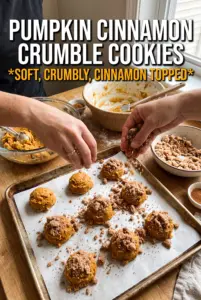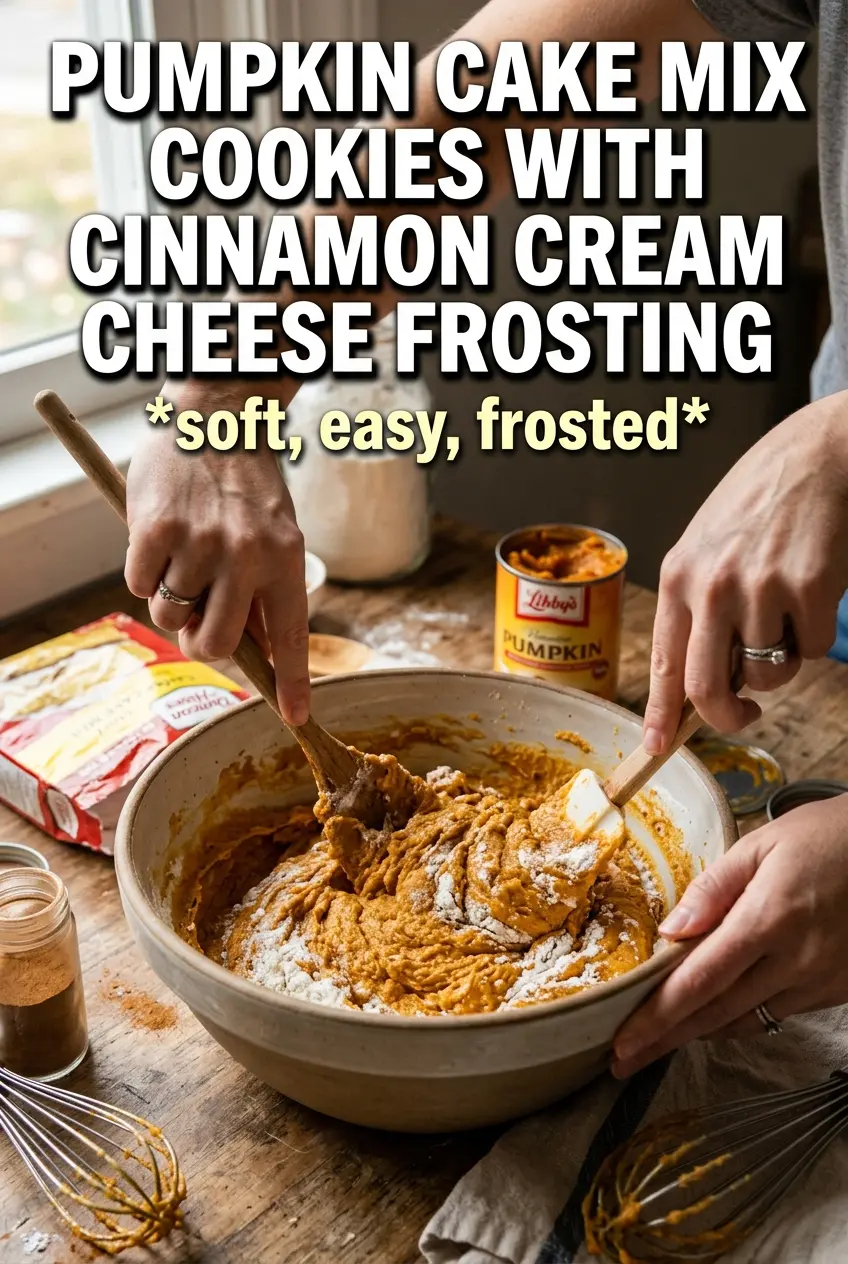
Soft pumpkin cookies with a thick, cakey center and a swirled cap of cinnamon cream cheese frosting are the kind of dessert that disappears from the tray before they’ve even fully cooled. The spice cake mix gives these cookies a deep bakery-style base without making the dough fussy, and the pumpkin keeps them tender instead of dry or crumbly. Once the frosting goes on, you get that sweet-tangy finish that makes each bite taste like it took a lot more effort than it did.
What makes this version work is the balance. Pumpkin puree adds moisture, but not enough on its own to turn the dough sticky and slack. The eggs and oil give the cookies enough structure to bake up soft and puffed, while the cinnamon in the frosting keeps the sweetness in check. I also like that these cookies are made to be frosted after cooling, which keeps the topping thick and spreadable instead of melting into the cookies.
Below you’ll find the small details that matter most, including how to keep the frosting fluffy and what to do if your dough feels looser than expected. Those little fixes are what turn a simple box-mix cookie into something you’ll want to make again.
The cookies baked up soft and cakey, and the cinnamon cream cheese frosting held its shape beautifully even after sitting out for an hour. My kids kept sneaking them off the tray before I could finish frosting the rest.
Love these pumpkin cake mix cookies with cinnamon cream cheese frosting? Save them to Pinterest for an easy soft-cookie dessert that always bakes up thick and tender.
The Trick to Keeping These Pumpkin Cookies Soft Instead of Dense
These cookies work because the dough is meant to be thick, not smooth and pourable. Pumpkin puree brings a lot of moisture, but spice cake mix already contains sugar, flour, and leavening, so the dough comes together fast and sets up quickly once it hits the oven. If it looks a little sticky, that’s normal. The biggest mistake is adding extra flour, which can make the cookies bake up dry and turn the frosting into the best part by default.
The other thing that matters is the bake time. Pull them when the tops look set and the centers still feel soft if you touch them lightly. They finish setting on the pan as they cool, and that’s what keeps the texture tender instead of crumbly. If you overbake them, they’ll still taste good, but you lose that plush, cakey middle that makes this recipe worth repeating.
What the Cake Mix, Pumpkin, and Frosting Each Bring to the Pan

- Spice cake mix — This does the heavy lifting for both structure and flavor. It already has the warm spices built in, so you get a reliable cookie base without measuring out a long list of dry ingredients. A plain yellow cake mix can work in a pinch, but you’ll lose some of the depth that makes these taste like pumpkin cookies instead of just sweet cookies with pumpkin in them.
- Pumpkin puree — Use plain pumpkin puree, not pumpkin pie filling. Pie filling is already sweetened and seasoned, which throws off the texture and the balance. If your puree seems watery, blotting it lightly with paper towel can help, especially if your dough tends to spread too much.
- Vegetable oil — Oil keeps the crumb soft and moist in a way butter doesn’t quite match here. Butter adds flavor, but it also firms up more as the cookies cool. For this style of cookie, oil gives you that plush, bakery-style bite.
- Cream cheese and butter — The frosting needs both. Cream cheese gives the tang that cuts through the sweetness, while butter keeps it smooth and pipeable. If you use low-fat cream cheese, the frosting can get loose, so stick with full-fat for the best texture.
- Cinnamon — Don’t treat this as garnish only. Cinnamon in the frosting makes the whole cookie taste more balanced and intentional. It pulls the spice cake mix and pumpkin together instead of letting the frosting taste like a separate layer.
How to Mix, Bake, and Frost Them Without Losing That Soft Texture
Building the Dough Fast
Stir the cake mix, pumpkin, eggs, oil, and pumpkin pie spice until the dough looks thick and evenly combined. Don’t keep mixing once the flour streaks are gone, because overmixing can make the cookies a little tough at the edges. The dough should scoop cleanly but still feel soft. If it seems looser than expected, let it sit for five minutes before scooping; the cake mix will hydrate and firm up on its own.
Baking to the Right Set
Scoop the dough into 2-tablespoon rounds and leave a little space between each one. These cookies don’t spread a lot, but they do puff and settle as they bake. Pull the pans when the tops look dry and set, with just a hint of softness in the center. If the bottoms get too dark, your oven is running hot or the rack is too low.
Whipping the Frosting Until It’s Spreadable
Beat the cream cheese and butter first until the mixture is completely smooth. Then add the powdered sugar, cinnamon, vanilla, and just enough milk to loosen it into a thick frosting. If the frosting looks grainy, the dairy wasn’t soft enough or the sugar went in before the base was smooth. You want it fluffy and pipeable, not runny, because warm frosting will slide right off these cookies.
Finishing the Cookies Once They’re Cool
Wait until the cookies are completely cool before frosting them. Even a little warmth will melt the cream cheese topping and make it sink into the tops. A piping bag gives you that bakery look, but a spoon works fine if you want a thicker, rustic finish. A light dusting of extra cinnamon at the end ties everything together.
Three Ways to Make These Cookies Work for Different Kitchens
Gluten-Free Version
Use a gluten-free spice cake mix that measures like a standard 15.25-ounce box. The dough and frosting stay the same, but give the batter a few extra minutes to rest before scooping so the mix can hydrate. The texture may be a little more delicate, so handle the baked cookies gently when frosting.
Dairy-Free Frosting Swap
Swap in dairy-free cream cheese and a plant-based butter with a firm texture. The frosting will still be tangy and sweet, though it may soften faster at room temperature. Chill it briefly before piping if it feels loose, and don’t add extra milk unless you need it.
Extra-Spiced Cookies
Add a pinch of ground ginger or cloves if you want a stronger spice-cake feel. Keep the amount small, because the box mix already brings plenty of seasoning. This is the easiest way to make the cookies taste a little deeper without changing the texture.
Storage and Reheating
- Refrigerator: Store frosted cookies in an airtight container for up to 4 days. The cookies stay soft, but the frosting will firm up in the fridge.
- Freezer: Freeze unfrosted cookies for up to 2 months. Frosting doesn’t freeze as cleanly, so add it after thawing for the best texture.
- Reheating: These are best served at room temperature. If you want to soften refrigerated cookies, let them sit out for 15 to 20 minutes instead of microwaving them, which can melt the frosting and make the cookies gummy.