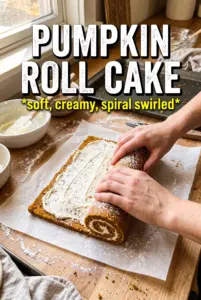
Pumpkin roll cake earns its place on the dessert table because it gives you two things at once: a tender spiced sponge and a thick ribbon of tangy cream cheese filling in every slice. When it’s rolled while warm and cooled in that shape, the cake sets into a clean spiral instead of cracking apart, and the whole thing slices into neat, bakery-style rounds with almost no effort at the end.
The trick is in the cake’s structure. The batter needs to be beaten long enough with the eggs and sugar to hold some lift, then folded carefully so it stays light after the pumpkin goes in. The bake is short and exact; a pumpkin roll dries out fast, and an overbaked sheet cake is the number one reason rolls split. The filling matters too. It should be soft enough to spread without tearing the cake, but thick enough that it doesn’t squeeze out the sides once rolled.
Below, I’ll walk you through the part that matters most: how to roll it without panic, how to keep the spiral tight, and what to do if your cake sticks a little in the towel.
The cake rolled up without any cracks, and the filling stayed thick and creamy after chilling. I followed the towel step exactly and the spiral came out picture-perfect.
Love that creamy spiral and powdered sugar finish? Save this Pumpkin Roll Cake for the next time you want a dessert that slices clean and looks like you bought it.
The Reason Pumpkin Rolls Crack Before the Filling Ever Goes On
The cake is thin on purpose, which means it bakes fast and loses moisture fast. If it spends even a minute too long in the oven, the edges dry out first and the first roll turns into a crack line. That’s why the cake should spring back when touched in the center, not sit in the pan waiting for a deeper color.
The second key is rolling it while it’s still warm. The towel gives the cake a gentle shape memory, so when it cools and gets filled, it wants to curl back into the same spiral instead of fighting you. If you wait until it’s fully cool before the first roll, the surface stiffens and splits the second you try to bend it.
- Eggs and sugar — This is where the cake gets its lift. Beat them until thick and pale so the batter can hold air without needing a heavy hand later.
- Pumpkin puree — Use plain pumpkin puree, not pie filling. Pie filling already has sugar and spices, which throws off both the structure and the flavor balance.
- Flour mixed with baking powder and baking soda — This keeps the cake tender but still flexible enough to roll. Sifting or whisking well helps prevent a pocket of dry flour from tearing the sponge.
- Parchment and powdered sugar on the towel — The sugar is not just for looks. It keeps the warm cake from welding itself to the towel when you invert it.
Building the Spiral Without Losing the Cake
Whipping the Batter Base
Start by beating the eggs and sugar until the mixture looks thick, glossy, and a little ribbon-like when it falls from the beaters. That extra volume gives the cake its flexibility, so don’t rush this part. Once the pumpkin and vanilla go in, the batter will loosen, which is normal. Fold the dry ingredients in just until the flour disappears; overmixing makes the cake tougher and more likely to crack at the fold points.
Baking the Sheet at the Right Moment
Spread the batter evenly into the prepared jelly roll pan and bake until the top springs back when lightly touched in the center. You’re looking for a soft, set surface, not deep browning. If the cake pulls away from the sides before the timer is up, check it early because even a minute can matter here. A dry edge is the part that usually breaks first during rolling.
The Warm Roll and the Chill
Invert the cake onto a powdered sugar-dusted kitchen towel, peel off the parchment, and roll it up from the short end while it’s still warm. Roll it with the towel inside so it cools in that curved shape. When it’s fully cool, unroll it gently, spread the filling edge to edge, and roll it back up without the towel. Chill for at least an hour before slicing so the filling firms and the spiral holds cleanly.
What the Pumpkin, Cream Cheese, and Spice Each Need to Get Right
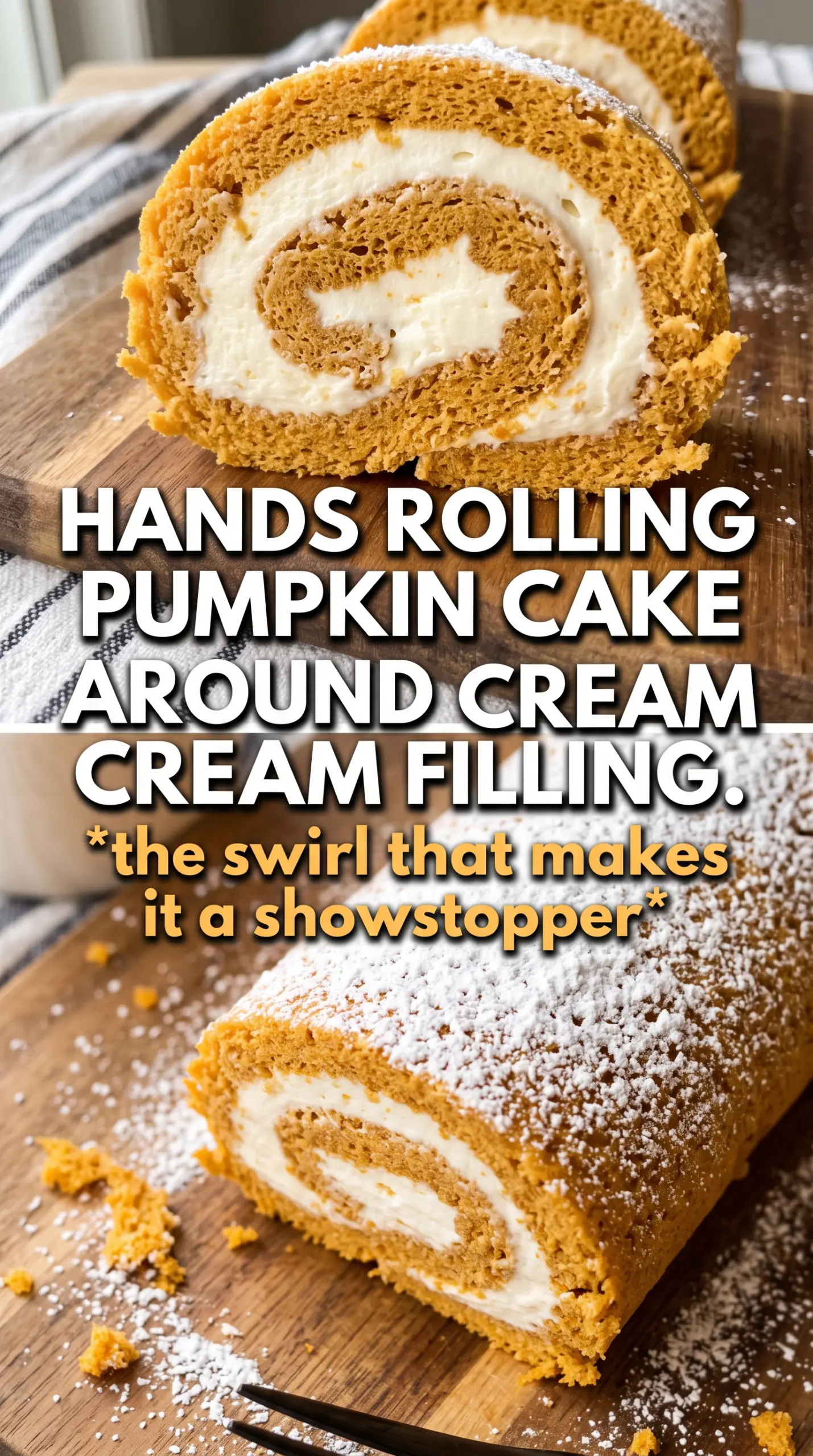
- Pumpkin puree — This brings moisture and that dense, autumn-style color without making the cake heavy. If your puree looks watery, blot it briefly with paper towels; too much extra liquid can make the sponge gummy.
- Cream cheese — Full-fat cream cheese gives the filling its tang and structure. Low-fat versions can turn loose and grainy after mixing, which makes the filling squeeze out when you slice the roll.
- Butter in the filling — Softened butter helps the filling whip smooth and pipeable. If it’s still cold, you’ll get little lumps that won’t spread evenly across the cake.
- Powdered sugar — This sweetens and thickens the filling at the same time. Add it gradually so the filling stays fluffy instead of turning stiff and chalky.
- Cinnamon and pumpkin pie spice — The cake needs both for depth, but the cinnamon in the filling keeps the whole dessert from tasting flat. If you want a sharper spice note, add an extra pinch of cinnamon to the filling rather than loading the cake batter.
Three Ways to Adjust Pumpkin Roll Cake Without Ruining the Spiral
Dairy-Free Filling That Still Holds Shape
Use a dairy-free cream cheese and vegan butter with a firm texture, not a whipped spread. The filling will be a little softer and less tangy, but it still works if you chill it before spreading and again before slicing.
Gluten-Free Version That Rolls Cleanly
Use a 1:1 gluten-free baking blend that contains xanthan gum. The cake may be a touch more delicate, so don’t overbake it, and roll it while it’s still warm so the structure bends instead of breaking.
Lighter Spice for a Softer Finish
Cut the pumpkin pie spice back a little and keep the cinnamon in place if you want the pumpkin to stand out more. You’ll get a gentler, less perfumed cake that pairs nicely with the tangy filling instead of competing with it.
Make-Ahead Storage and Slicing
- Refrigerator: Store the rolled cake wrapped tightly for up to 4 days. The filling firms up a bit more, which actually helps the slices stay neat.
- Freezer: This freezes well. Wrap the whole roll in plastic, then foil, and freeze for up to 2 months. Thaw overnight in the refrigerator before slicing.
- Reheating: No reheating needed. Serve it cold or let it sit at room temperature for 15 to 20 minutes. The mistake people make is warming it too much, which softens the filling and blurs the spiral.
Questions I Get Asked About This Recipe
Pumpkin Roll Cake
Ingredients
Equipment
Method
- Preheat oven to 375F, then grease a 15x10 jelly roll pan and line it with parchment. Use a smooth parchment fit so the cake releases cleanly.
- Beat eggs and granulated sugar until thick, then add pumpkin puree and vanilla. Continue beating just until the mixture looks evenly combined.
- Fold in all-purpose flour, baking powder, baking soda, pumpkin pie spice, cinnamon, and salt. Mix until you no longer see dry streaks.
- Spread the batter evenly in the prepared pan. Make the surface level so the roll bakes uniformly.
- Bake at 375F for 11-13 minutes, until the cake springs back when touched. Watch for a lightly set top with no wet center.
- Invert the hot cake onto a powdered sugar-dusted kitchen towel and peel off the parchment. The cake should look pliable, not crisp.
- Roll the cake from the short end using the towel, then cool completely. Keep it snug so the spiral holds its shape.
- Beat cream cheese until smooth, then beat in powdered sugar, unsalted butter, vanilla, and cinnamon. Mix until the filling looks glossy and spreadable.
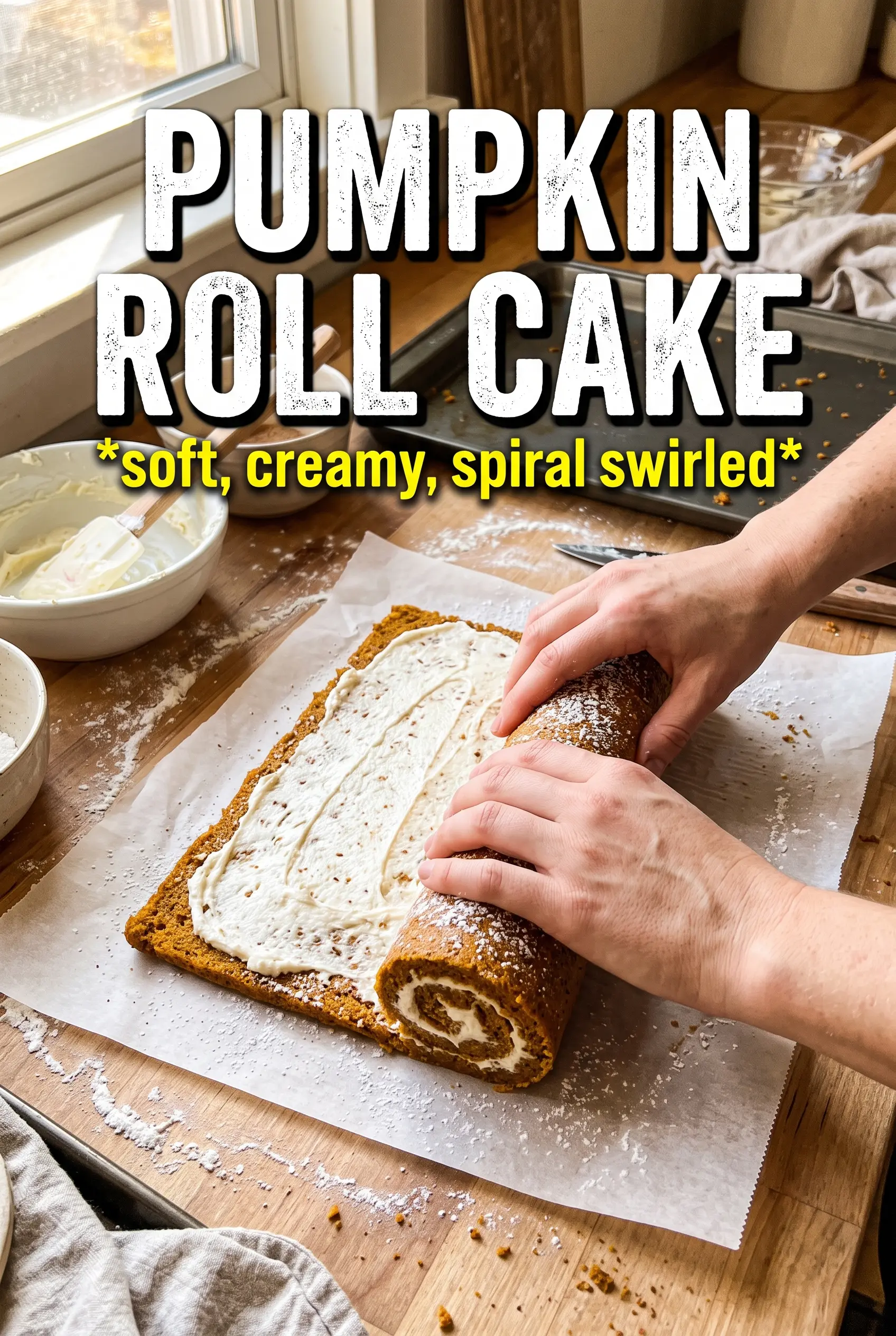
- Unroll the cooled cake and spread the cream cheese filling evenly over the surface. Leave a small border so it doesn’t spill when re-rolled.
- Re-roll the cake without the towel. Place seam-side down for cleaner slices.
- Refrigerate for 1 hour to set the filling. The roll should feel firm and sliceable after chilling.
- Dust the top with powdered sugar. Slice and serve once the roll is fully chilled.