Pumpkin pie macarons bake up with smooth little shells, crisp at the edges and chewy in the center, then sandwich a spiced pumpkin buttercream that tastes like the filling of a pie tucked inside a French cookie. The payoff is all in the contrast: delicate almond shells, warm pumpkin spice, and just enough sweetness to keep each bite clean instead of cloying.
What makes these work is the balance between dry ingredients and moisture. Pumpkin puree never goes straight into the shells, because even a little extra water can flatten the batter and leave you with hollow tops or sticky feet. The spice belongs in both the shell and the filling, but in small amounts so the pumpkin flavor stays defined instead of muddy.
Below, I’ve broken down the part that matters most — the macaronage, the shell rest, and the buttercream texture — so you can spot trouble before it costs you a tray.
The shells came out smooth with those little feet I always chase, and the pumpkin buttercream held its shape without squishing out the sides. I let them sit overnight like you said, and the texture the next day was spot on.
Like these Pumpkin Pie Macarons? Save them to Pinterest for the smooth shells, spiced filling, and that overnight rest that gives them the perfect bite.
The Part Most Macarons Get Wrong: Moisture Control
Pumpkin spice belongs in the filling first, not the shell, because macarons punish excess moisture fast. The dry ingredients need to stay light and fine, and the batter needs to move in a slow ribbon, not slump like cake batter. If the shells spread too much, the batter was overmixed or the whites were under-whipped. If they crack in the oven, the skin didn’t form long enough before baking.
The other trap is rushing the finish. Macarons need a dry skin on the outside so the steam can lift them from below and form those feet. In a humid kitchen, that can take closer to an hour than 45 minutes, and it’s worth waiting until the tops no longer tack to your finger.
- Almond flour — Use fine almond flour, not almond meal. Meal leaves specks and a rougher shell.
- Egg whites — Aged whites whip more predictably because a little moisture evaporates and the proteins tighten up. Room temperature helps them foam faster.
- Pumpkin puree — Blot it dry before it goes into the buttercream. Straight puree brings too much water and can loosen the filling.
- Orange gel coloring — Gel gives color without thinning the batter. Liquid food coloring can upset the texture.
What Each Ingredient Is Actually Doing in These Pumpkin Pie Macarons
- Powdered sugar — This gives the shells their smooth finish and helps the batter hold together. Don’t swap in granulated sugar here.
- Almond flour — This is the structure of the shell, and the finer the grind, the cleaner the top. If yours is coarse, sift it with the sugar mixture and discard the stubborn bits.
- Pumpkin pie spice and cinnamon — These add warmth without watering anything down. The amount is small on purpose so the shells stay balanced.
- Egg whites — They create the meringue that gives macarons their lift. Separate them cleanly, because even a trace of yolk will slow the whip.
- Granulated sugar — This stabilizes the meringue and helps it turn glossy. Add it gradually once the whites reach soft peaks.
- Butter — Softened butter makes a smooth buttercream that pipes cleanly. If it’s too cold, the filling turns lumpy; if it’s greasy-soft, it won’t hold shape.
- Pumpkin puree — It gives the filling that pie-like note, but only when it’s well blotted. A dry puree keeps the buttercream fluffy instead of slack.
Getting the Batter, Shells, and Filling to Behave
Building the Meringue
Beat the egg whites to soft peaks first, then add the granulated sugar a little at a time. The meringue should turn thick, glossy, and able to hold its shape without looking dry or clumpy. If you beat past stiff and glossy into a dull, grainy mess, the shells can become brittle and uneven. Stop as soon as the peaks stand tall and the bowl looks smooth.
The Macaronage
Fold the dry ingredients in three additions, and keep the motions deliberate. You’re looking for batter that falls from the spatula in a thick ribbon and settles back into itself after about 10 to 15 seconds. If it breaks in chunks, keep folding; if it runs like pancake batter, it’s gone too far and the shells will spread flat. Add the gel coloring during the folding so it blends without extra stirring.
Resting and Baking
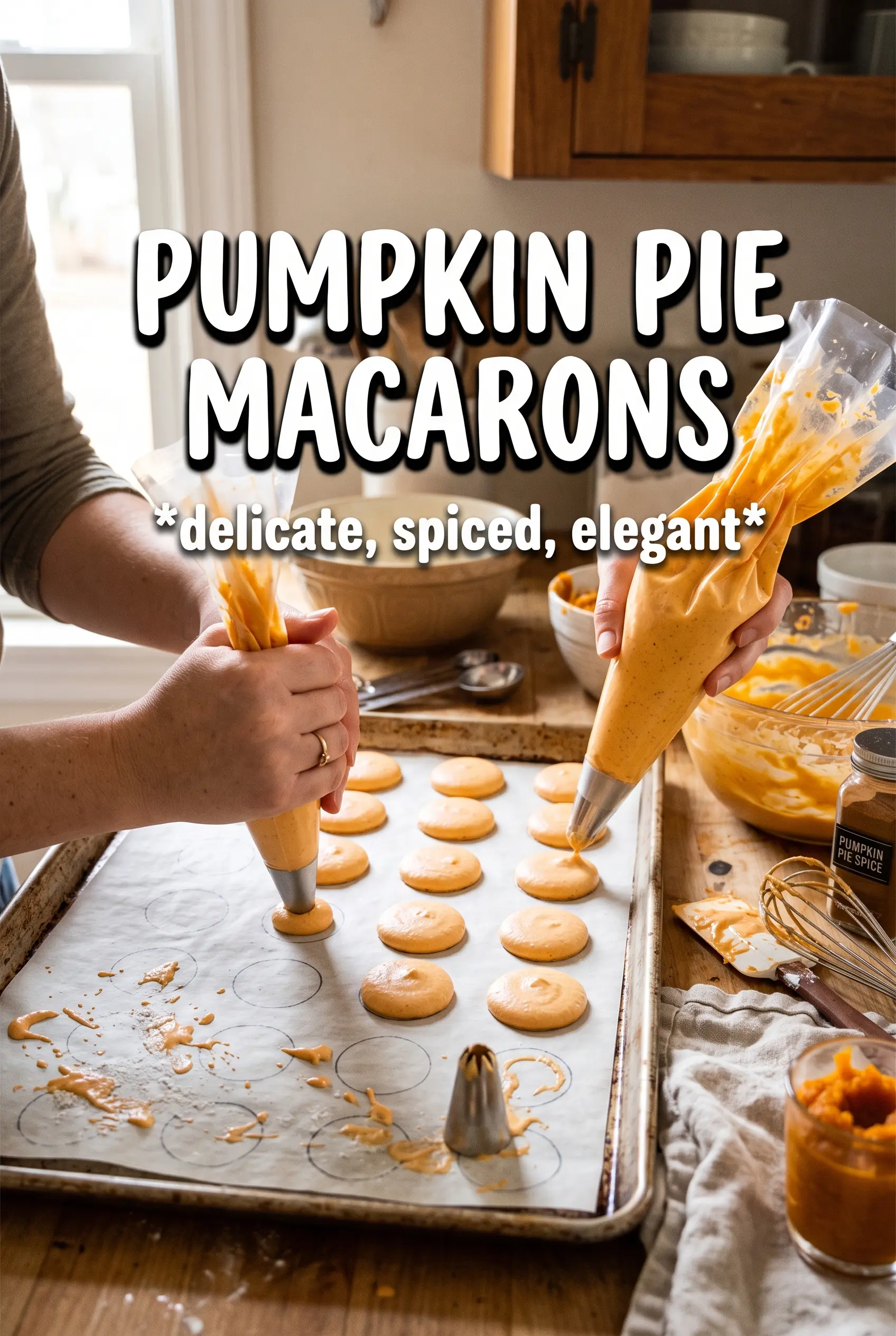
Pipe 1.5-inch circles on parchment and tap the tray to knock out air pockets. Let the shells rest until the surface feels dry, because that skin is what helps create feet instead of cracks. Bake at 300°F until the tops are set and the shells peel away cleanly from the parchment. If they stick, they need another minute or two; if they brown, your oven is running hot.
Filling and Maturing
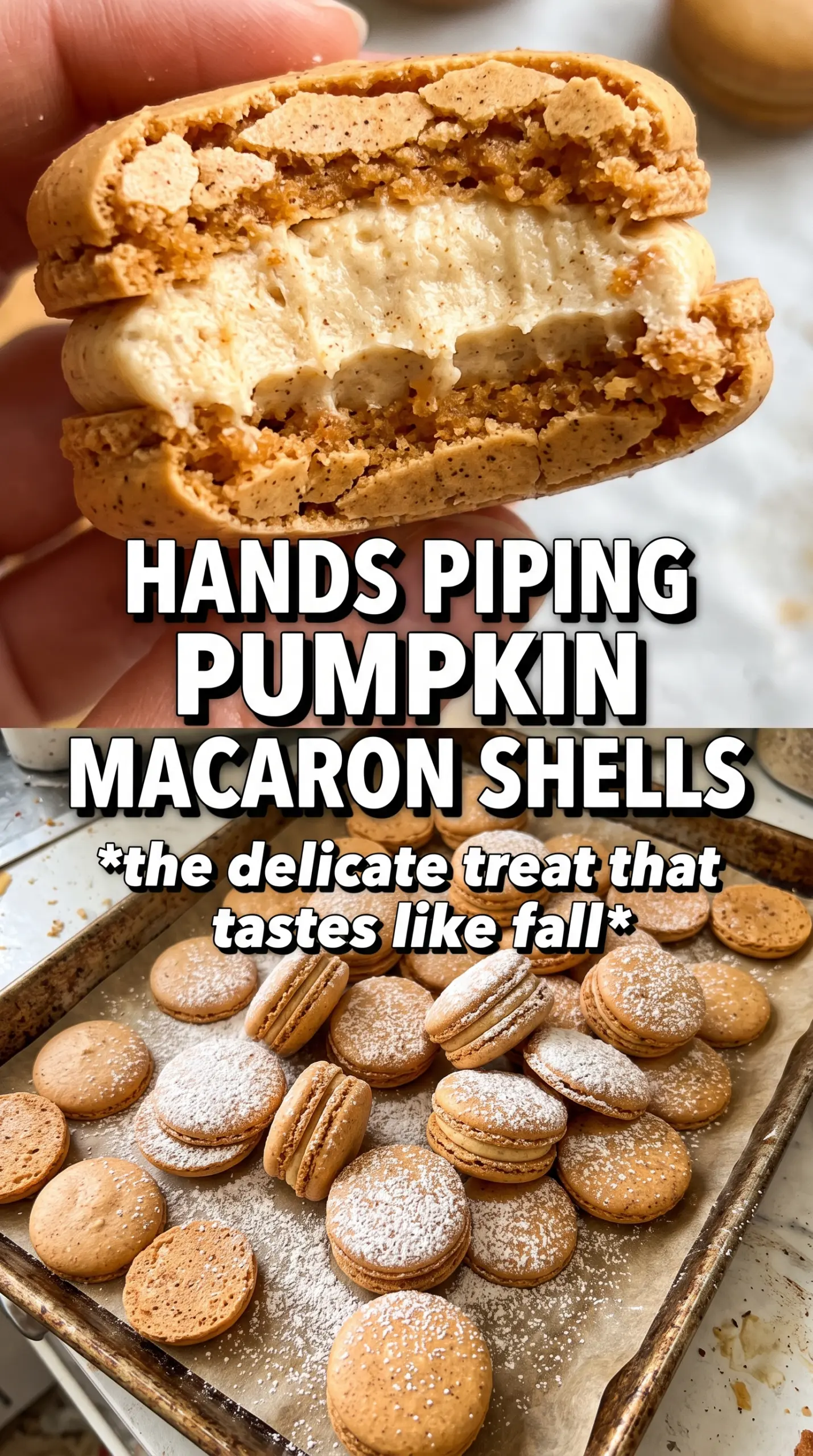
Beat the buttercream until it looks smooth and pipes in soft ridges, then sandwich the cooled shells. They’ll taste good right away, but the texture improves after an overnight rest in the fridge. That time lets the filling soften the interior just enough so the bite turns chewy instead of dry. Bring them back to room temperature before serving so the centers aren’t stiff.
How to Adjust These Macarons Without Losing the Texture
Dairy-Free Filling Swap
Use a dairy-free butter substitute that’s meant for baking, not a soft spread in a tub. The filling will still pipe well, but the flavor turns a little less rich and a little more neutral.
Extra-Spiced Filling
Increase the pumpkin pie spice slightly in the buttercream if you want a stronger pie note, but don’t push the cinnamon too far or it takes over. The shells should stay lighter in spice so the filling leads.
Make-Ahead Timing
Bake the shells a day ahead and assemble them the next day if that’s easier. Macarons actually improve after they’ve sat filled overnight, which makes them one of the rare desserts that rewards planning.
Freezer Storage
These freeze well once assembled. Layer them between parchment in an airtight container, then thaw in the fridge so condensation doesn’t soften the shells too quickly.
Storage and Reheating
- Refrigerator: Store filled macarons in an airtight container for up to 5 days. The shells soften a bit, which is part of their best texture.
- Freezer: Freeze assembled macarons for up to 1 month. Wrap well so they don’t pick up odors and thaw slowly in the refrigerator.
- Reheating: No reheating needed. Let chilled macarons sit at room temperature for 15 to 20 minutes before serving so the buttercream loosens and the shells aren’t firm.
Questions I Get Asked About This Recipe
Pumpkin Pie Macarons
Ingredients
Equipment
Method
- Sift powdered sugar, almond flour, pumpkin pie spice, and cinnamon together, discarding large pieces to keep the shells smooth and uniform.
- Beat aged egg whites to soft peaks, then gradually add granulated sugar and continue beating until stiff, glossy peaks form.
- Fold the almond flour mixture and orange gel food coloring into the meringue in three additions using macaronage until the batter flows like lava.
- Pipe 1.5-inch circles onto parchment, then rest 45-60 minutes until a dry skin forms when gently touched.
- Bake at 300F for 12-14 minutes, until the feet form and the shells are set.
- Beat unsalted butter until smooth, then beat in powdered sugar until combined.
- Add pumpkin puree (blotted very dry), pumpkin pie spice, cinnamon, and vanilla, then beat until the buttercream is smooth.
- Pipe the pumpkin spice buttercream onto cooled shells and sandwich to form macarons.
- Rest the assembled macarons overnight for best texture, allowing the shells to mature and soften slightly.