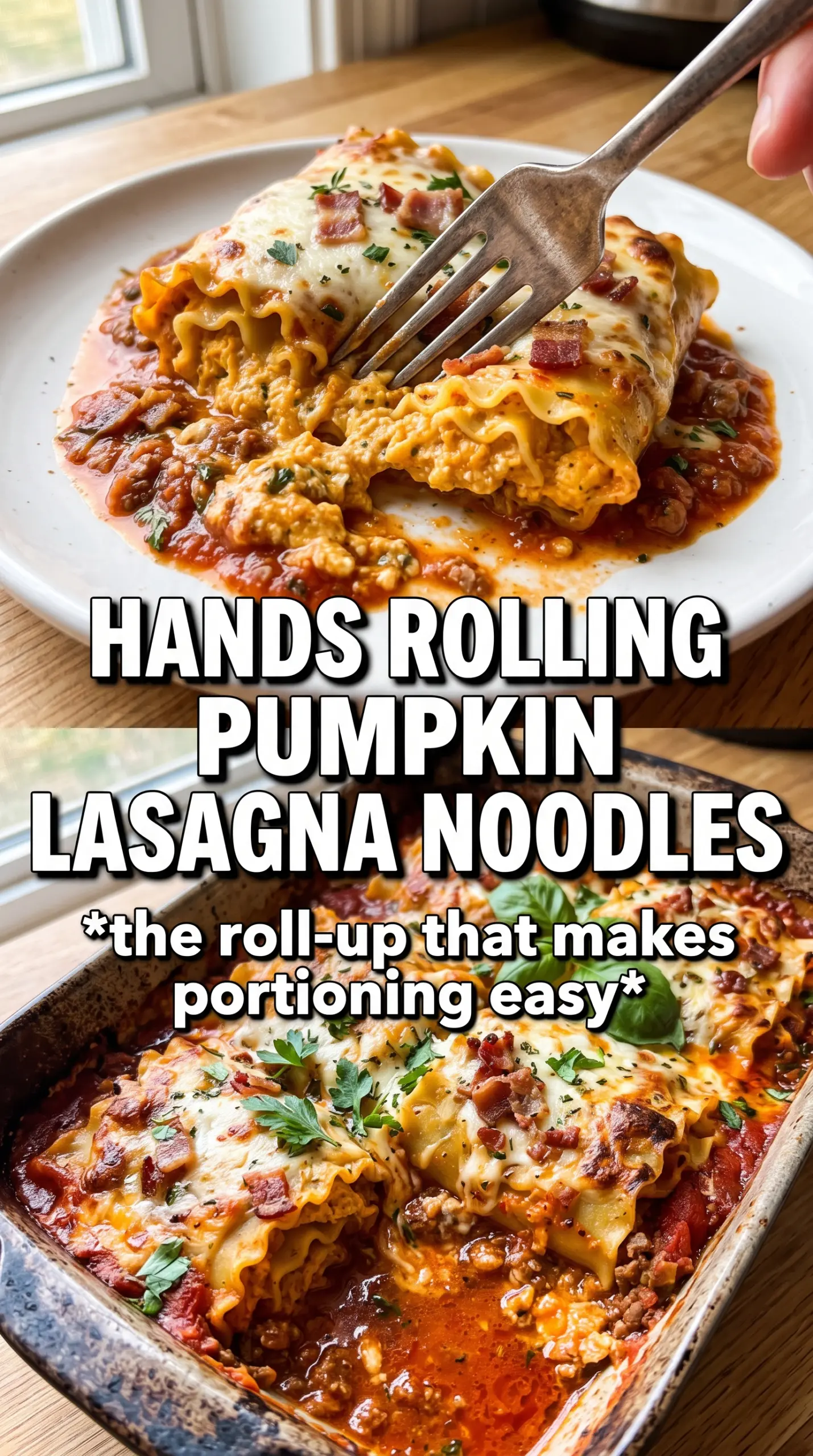
Pumpkin lasagna rolls with bacon bake up into neat little spirals of tender pasta, creamy ricotta, and a pumpkin sauce that turns silky in the oven instead of heavy. The bacon cuts through the sweetness of the pumpkin and keeps every bite from tasting flat, while the mozzarella on top gives you those browned, bubbling edges everyone goes after first.
What makes this version work is the balance. The pumpkin goes into both the filling and the sauce, which ties everything together without making the dish taste one-note, and the egg in the ricotta keeps the filling set so it doesn’t ooze out when you slice in. I also like using a little sage and nutmeg, because both spices read as warm and savory once the casserole hits the oven.
Below, I’ll show you how to keep the sauce from getting too thick, how to roll the noodles without tearing them, and a few ways to adapt the dish if you want to swap the bacon or make it a little lighter.
The sauce baked down into the creamiest layer and the noodles held their shape perfectly. I was worried the pumpkin would be overpowering, but the bacon and parmesan kept it savory, not sweet.
Save these pumpkin lasagna rolls with bacon for the night you want a creamy baked pasta with crisp bacon and a golden mozzarella top.
The Reason the Pumpkin Stays Creamy Instead of Turning Heavy
Pumpkin can go grainy or pasty in baked pasta if it’s overloaded with cheese or cooked too hard before it even reaches the oven. This recipe avoids that by loosening the pumpkin with heavy cream and garlic first, then baking it just long enough to thicken in the dish. The sauce should pour easily and look a little thinner than you want in the final pan, because the noodles absorb some of it as everything bakes together.
The other thing that matters is where the bacon goes. Mixing some into the filling keeps each roll seasoned from the inside out, while the mozzarella on top gives you a browned finish without burying the pumpkin flavor under too much cheese. If the sauce seems too thick before baking, it will turn stodgy after 40 minutes in the oven.
- The pumpkin puree gives the sauce body and that gentle sweetness, but it needs cream and parmesan to stay savory and smooth.
- The ricotta filling should be thick enough to spread without running. If your ricotta is wet, drain it briefly before mixing.
- The egg helps the filling set inside the roll. Skip it and the centers can slump when you slice into the pan.
- The bacon adds salt and crunch, so it works best crumbled, not chopped into big pieces that can poke through the noodles.
What Each Ingredient Is Doing in the Pan
- Lasagna noodles — Cook them until just flexible, not fully soft. They need enough structure to roll cleanly without tearing, and they’ll finish cooking in the oven.
- Ricotta — This is the creamy center, so use a whole-milk ricotta if you can. Part-skim works, but the filling won’t taste as lush.
- Pumpkin puree — Use plain pumpkin puree, not pumpkin pie filling. The canned pie mix has sugar and spice already added, which throws off the balance.
- Heavy cream — This keeps the sauce smooth and rich. Half-and-half can work in a pinch, but the sauce will be a little lighter and less stable.
- Parmesan — It seasons the sauce and filling at the same time. Freshly grated melts cleaner than the shelf-stable kind.
- Sage and nutmeg — These are the quiet finish that make the pumpkin taste savory instead of dessert-like. Keep the nutmeg restrained.
- Bacon — Cook it until crisp enough to crumble. Soft bacon gets lost in the rolls and doesn’t give you that contrast.
- Mozzarella — This is the lid on the dish. It should melt into long bubbles and turn spotty-golden on top, not form a thick rubbery blanket.
Rolling, Saucing, and Baking the Noodles So They Don’t Tear
Building the Pumpkin Cream Sauce
Start the sauce before you assemble anything else. Whisk the pumpkin, cream, garlic, parmesan, and nutmeg together until smooth, then warm it just enough to take the raw edge off the garlic and melt the cheese. Don’t let it boil hard on the stove or it can tighten up before it even gets into the baking dish. You want it pourable, glossy, and pale orange.
Spreading the Ricotta Without Overfilling
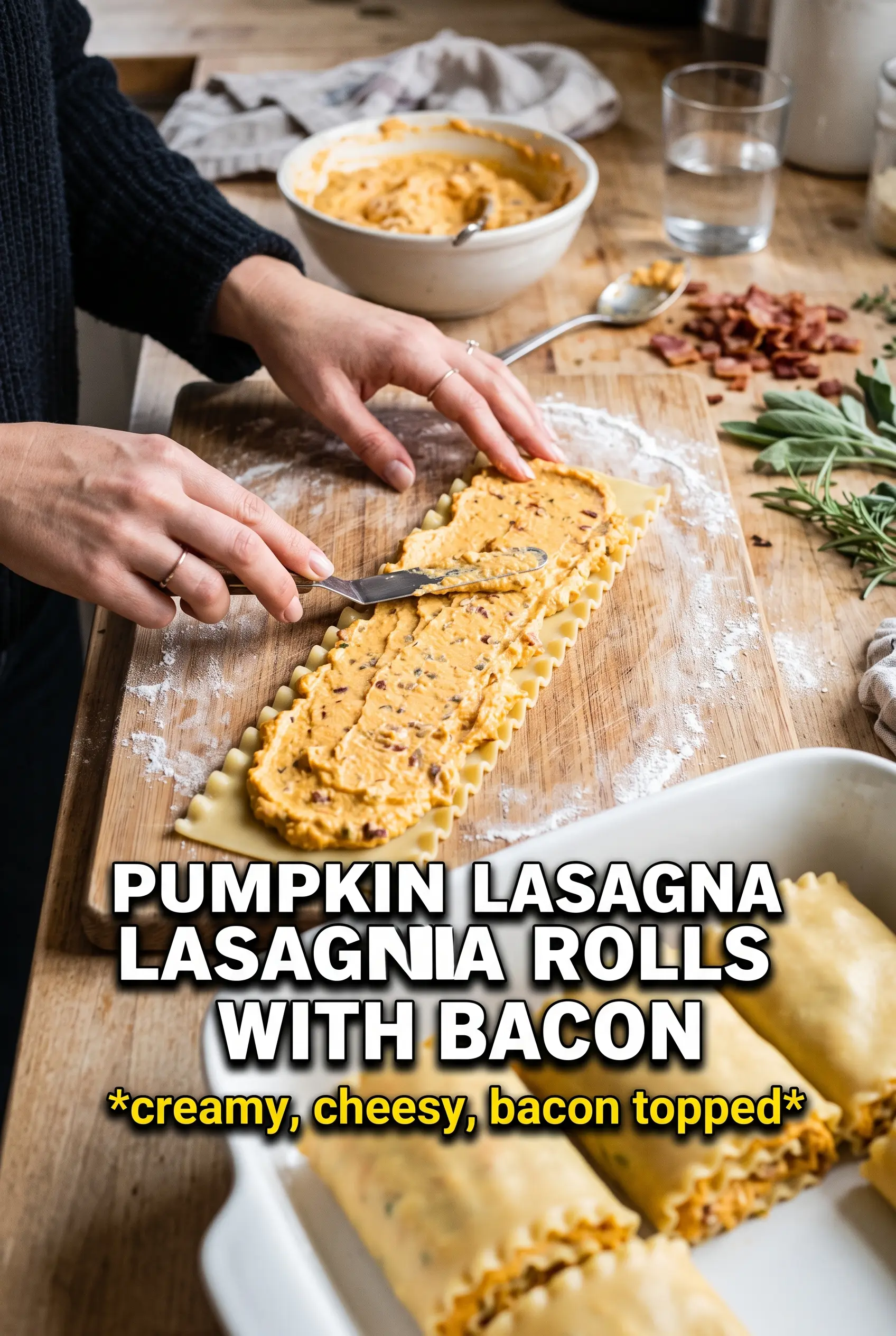
Lay the noodles flat and spread the ricotta mixture in a thin layer from end to end, leaving just a little room at the edges. Too much filling makes the noodles slip open when you roll them, and the rolls won’t sit seam-side down. Scatter the bacon over the filling after it’s spread, not before, so it stays where it belongs instead of rolling off the pasta.
Rolling Into the Sauce
Pour most of the sauce into the greased baking dish first. That bottom layer keeps the noodles from sticking and steams the underside just enough to finish cooking. Roll each noodle snugly, place it seam-side down, and nestle the rolls close together so they support one another in the oven. If a roll looks loose, tuck it under the neighboring one so it stays closed.
Finishing Under the Oven Heat
Spoon the remaining sauce over the top, then scatter mozzarella across the surface so every roll gets covered. Bake until the sauce is bubbling at the edges and the cheese has browned in spots. If the top browns before the center is hot, lay a piece of foil loosely over the dish for the last stretch. Let it rest for 10 minutes before serving so the rolls set and slice cleanly.
How to Adapt These Pumpkin Lasagna Rolls for Different Tables
Make It Gluten-Free
Use gluten-free lasagna noodles and cook them just until flexible. They can be more fragile than wheat noodles, so handle them gently and give them extra room while rolling. The filling and sauce stay the same, and the final dish still bakes up creamy.
Skip the Bacon for a Vegetarian Version
Leave out the bacon and add a pinch more salt plus an extra tablespoon of parmesan to keep the filling savory. If you want more texture, stir in finely chopped sautéed mushrooms or caramelized onions. You lose the smoky bite, but the pumpkin and sage still carry the dish.
Use Half-and-Half Instead of Heavy Cream
Half-and-half will work if that’s what you have, but the sauce won’t be as rich or as stable after baking. Keep the dish uncovered only until the cheese starts to brown, then let it finish gently so the sauce doesn’t thin out too much. This is the swap I’d use for a lighter version, not for the creamiest result.
Make Ahead for an Easier Dinner
Assemble the rolls up to a day ahead, cover tightly, and refrigerate before baking. Add a few extra minutes in the oven since the dish will be cold from the fridge. The noodles hold up well, and the sauce actually has time to soak into the layers a little more.
Storage and Reheating
- Refrigerator: Store leftovers covered for up to 4 days. The sauce thickens a bit as it chills, but the flavor holds up well.
- Freezer: Freeze baked portions tightly wrapped for up to 2 months. The texture is best if you freeze after baking, then thaw in the fridge before reheating.
- Reheating: Reheat covered in a 350°F oven until hot in the center. If you microwave it, use lower power and a splash of cream or milk so the sauce doesn’t dry out at the edges.
Questions I Get Asked About This Recipe
Pumpkin Lasagna Rolls With Bacon
Ingredients
Equipment
Method
- Preheat the oven to 375F and grease a 9x13 dish for easy release. Spread a thin base of greasing so the rolls don’t stick at the edges.
- Make pumpkin cream sauce by pouring most of the pumpkin into the greased dish as the sauce base. Keep the remaining sauce for later to coat the rolls.
- Mix ricotta filling with egg, parmesan, pumpkin puree, sage, salt, and black pepper until smooth and spreadable. Taste and adjust seasoning so every bite has clear flavor.
- Lay cooked lasagna noodles flat and spread ricotta filling on each noodle, then scatter crumbled bacon over the filling. Aim for an even layer so rolls stay consistent.
- Roll up each lasagna noodle and place them seam-side down in the sauce. Nestle the rolls close together so they hold their shape while baking.
- Pour the remaining pumpkin cream sauce over the rolls and scatter shredded mozzarella on top. Make sure mozzarella reaches the visible roll seams for browning.
- Bake at 375F for 35-40 minutes, until the sauce is bubbly and the top is golden. Look for bubbling around the edges and melted cheese with browned spots.
- Rest for 10 minutes before serving so the rolls set and slice cleanly. Serve warm after the filling firms up slightly.