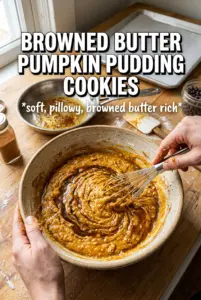
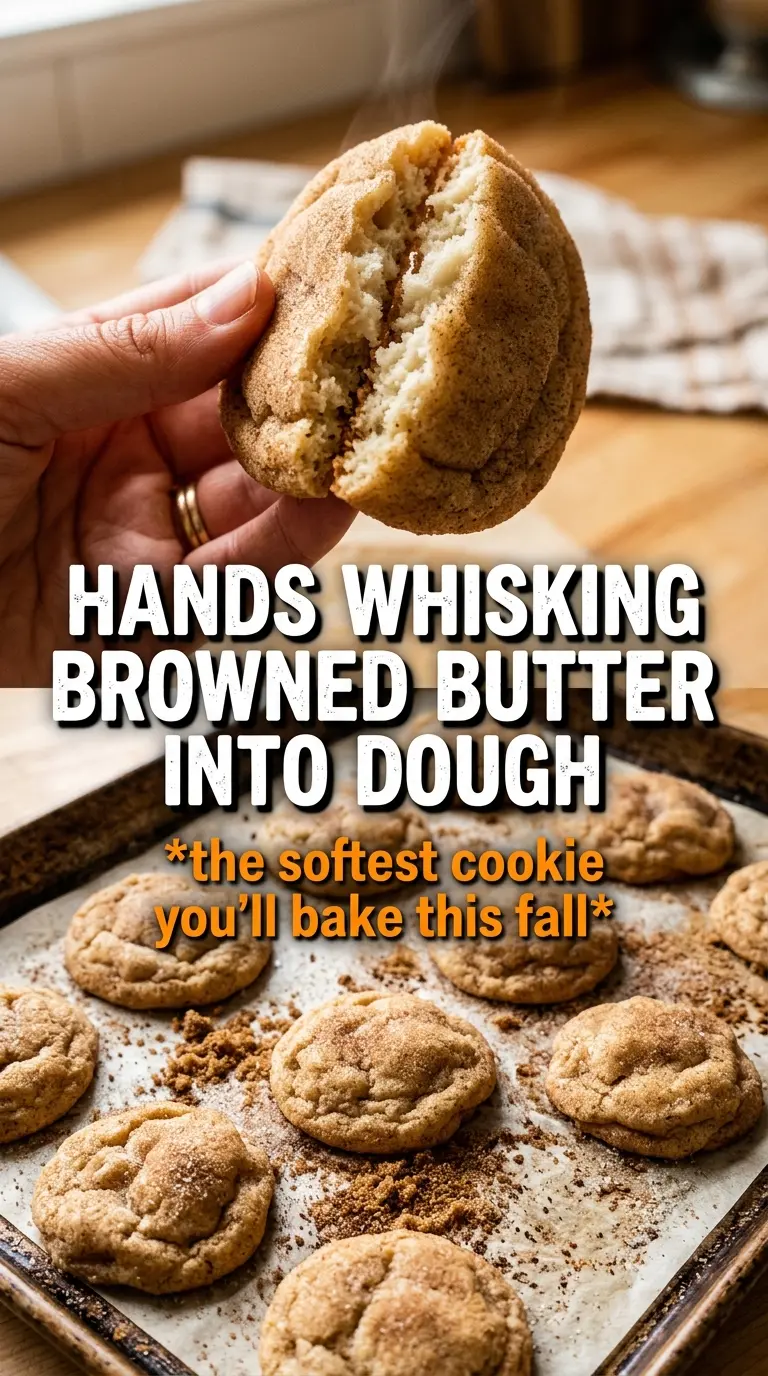
Browned butter pumpkin pudding cookies bake up thick, chewy, and deeply golden with a soft center that stays tender for days. The browned butter brings a toasty, almost butterscotch edge, while the instant pudding mix gives these cookies that plush, bakery-style bite that doesn’t dry out after cooling. A little flaky salt on top keeps the sweetness in check and makes the pumpkin spice pop even more.
The part that makes these cookies work is the balance of moisture and fat. Pumpkin puree adds flavor, but too much of it turns cookies cakey, so blotting it dry matters more than people expect. Cooling the browned butter until it solidifies also matters; if it goes into the dough warm, the cookies spread too much and lose that thick, chewy center.
Below, I’ve included the small details that make the difference between decent pumpkin cookies and the kind you keep sneaking from the tray. The texture is the whole point here, and once you get the dough right, the rest is straightforward.
The cookies came out thick instead of puffy, and the browned butter gave them this caramel note that worked perfectly with the pumpkin spice. I followed the dry pumpkin step and they stayed chewy even the next day.
Save these browned butter pumpkin pudding cookies for the thick, chewy pumpkin cookie recipe with that butterscotch edge and flaky salt finish.
The Trick to Keeping Pumpkin Cookies Thick Instead of Cakey
The main risk with pumpkin cookies is turning them into soft little cake puffs. Pumpkin adds water, and that extra moisture changes the texture fast if you don’t manage it. Blotting the puree dry pulls back enough liquid to keep the dough dense and scoopable, which is what gives these cookies their chew instead of a muffin-like crumb.
The other thing that keeps them thick is the chilled browned butter. Browning gives you flavor, but then you need to let it firm back up before mixing. If you rush that part, the dough gets greasy and the cookies spread before the centers set. Cold, solidified butter creams with the sugars much more like a classic cookie base, which is why the edges set while the middles stay soft.
- Blotted pumpkin puree — This is the difference between a chewy cookie and one that bakes up cakey. Press it between paper towels until it feels noticeably drier and more concentrated.
- Instant pudding mix — The dry mix adds starch and a soft, plush texture that regular flour alone can’t mimic. Butterscotch gives the deepest flavor here; vanilla is the cleanest swap.
- Solidified browned butter — You want the flavor of browned butter without the spread of warm butter. Chill it until firm, then beat it like room-temperature butter.
- Flaky sea salt — Don’t skip it. It sharpens the spice and keeps the sweetness from flattening the whole cookie.
What Each Ingredient Is Actually Doing in These Cookies
- All-purpose flour — Gives the cookies structure without making them tough. Measuring it lightly matters; too much flour makes the cookies dry and dull.
- Dry pudding mix — This is the ingredient that gives the cookies their soft, bakery-style crumb. It also helps the cookies stay tender the next day instead of turning crumbly.
- Brown sugar — Adds moisture and a deeper caramel note that works with the browned butter. It also helps the centers stay chewy.
- Granulated sugar — Helps the edges set and gives a little lift. Using all brown sugar would make the cookies heavier and softer.
- Pumpkin puree — Use just enough for flavor and color. If it isn’t blotted dry, the dough gets sticky and bakes up too soft.
- Eggs and vanilla — Eggs bind the dough, while vanilla fills out the brown butter and spice. The vanilla won’t taste loud, but you’d miss it if it were gone.
Building the Dough So the Cookies Don’t Spread
Brown the butter, then let it become solid again
Cook the butter until the milk solids turn amber and smell nutty, then refrigerate it until it firms up. You’re aiming for solid, not melted, because the texture of the dough depends on it creaming with the sugars. If the butter is still soft or oily, the cookies will spread too fast and bake flat.
Dry the pumpkin before it ever hits the bowl
Scoop the pumpkin puree onto a paper towel and press out the excess moisture. The pumpkin should look thicker and slightly dull, not glossy and wet. That tiny step keeps the cookies from turning gummy or cakey in the middle.
Mix just until the flour disappears
Once the dry ingredients go in, fold only until no streaks of flour remain. Overmixing builds too much strength in the dough, and these cookies need tenderness, not a bready chew. The dough should be thick enough to scoop cleanly without slumping.
Bake until the edges are set and the centers still look soft
Pull the cookies when the edges are lightly golden and the tops no longer look wet, even if the centers still seem a little underdone. They finish setting on the baking sheet. If you wait for them to look fully baked in the oven, they’ll end up dry after cooling.
Vanilla pudding instead of butterscotch
Vanilla pudding keeps the same soft, thick texture but tones down the caramel note. The cookies taste a little lighter and more classic pumpkin spice, which is the right move if you want the browned butter to stay in the foreground.
Gluten-free version
Swap in a good 1:1 gluten-free baking flour blend for the all-purpose flour. Keep the pudding mix the same, and expect a slightly more delicate cookie that still holds onto the chewy center if you don’t overbake it.
Dairy-free adaptation
Use a plant-based butter that browns well or a dairy-free butter alternative with a firm texture. You’ll lose a little of the nutty depth from real browned butter, but the pudding mix and spice still carry the cookie nicely.
Smaller, crisper cookies
Scoop the dough a little smaller and bake for a minute or two longer. You’ll get more edge and less center chew, which works well if you want a cookie that feels a little firmer once cooled.
Storage and Reheating
- Refrigerator: Store in an airtight container for up to 5 days. They stay chewy, though the tops lose a little of their fresh-baked softness.
- Freezer: Freeze baked cookies for up to 2 months, or freeze scooped dough balls and bake from frozen with 1 to 2 extra minutes.
- Reheating: Warm baked cookies for 8 to 10 seconds in the microwave, just until the centers soften. Longer than that and they go from chewy to cakey fast.
Questions I Get Asked About This Recipe
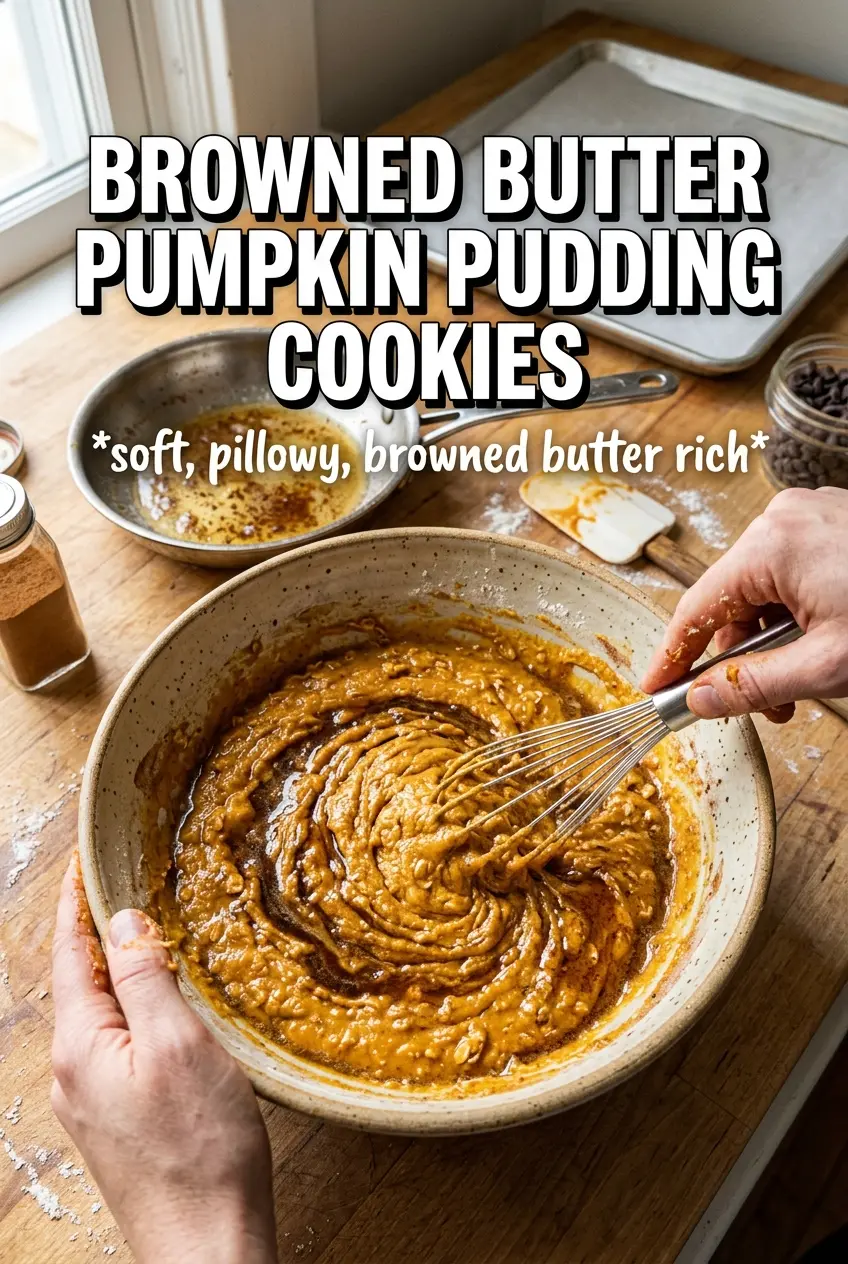
Browned Butter Pumpkin Pudding Cookies
Ingredients
Equipment
Method
- Brown the unsalted butter, then let it cool until solid, about 1 hour (refrigerate as needed to fully solidify). The butter should look firm and scoopable before mixing.
- Preheat the oven to 375F and line baking sheets with parchment or a nonstick liner. You want the oven fully preheated before baking.
- Blot the pumpkin puree dry until excess moisture is reduced. Stop when the puree clings less to the paper.
- Whisk together all-purpose flour, instant butterscotch or vanilla pudding mix (dry), baking soda, pumpkin pie spice, cinnamon, and salt. Mix until the dry spices and pudding powder are evenly distributed.
- Beat the solidified browned butter with both sugars until smooth and cohesive. The mixture should look glossy and uniform.
- Beat in the blotted pumpkin puree, then add the eggs and vanilla. Stop when no streaks remain.
- Fold the flour mixture into the wet ingredients until just combined. The dough should be thick enough to scoop.
- Scoop 2-tablespoon rounds onto the lined baking sheets with space between them. Keep the portions level for consistent thickness.
- Bake for 10-12 minutes at 375F until the edges look set and the centers remain slightly soft. Sprinkle flaky sea salt immediately while the cookies are hot.