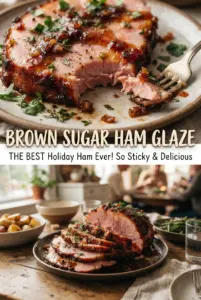
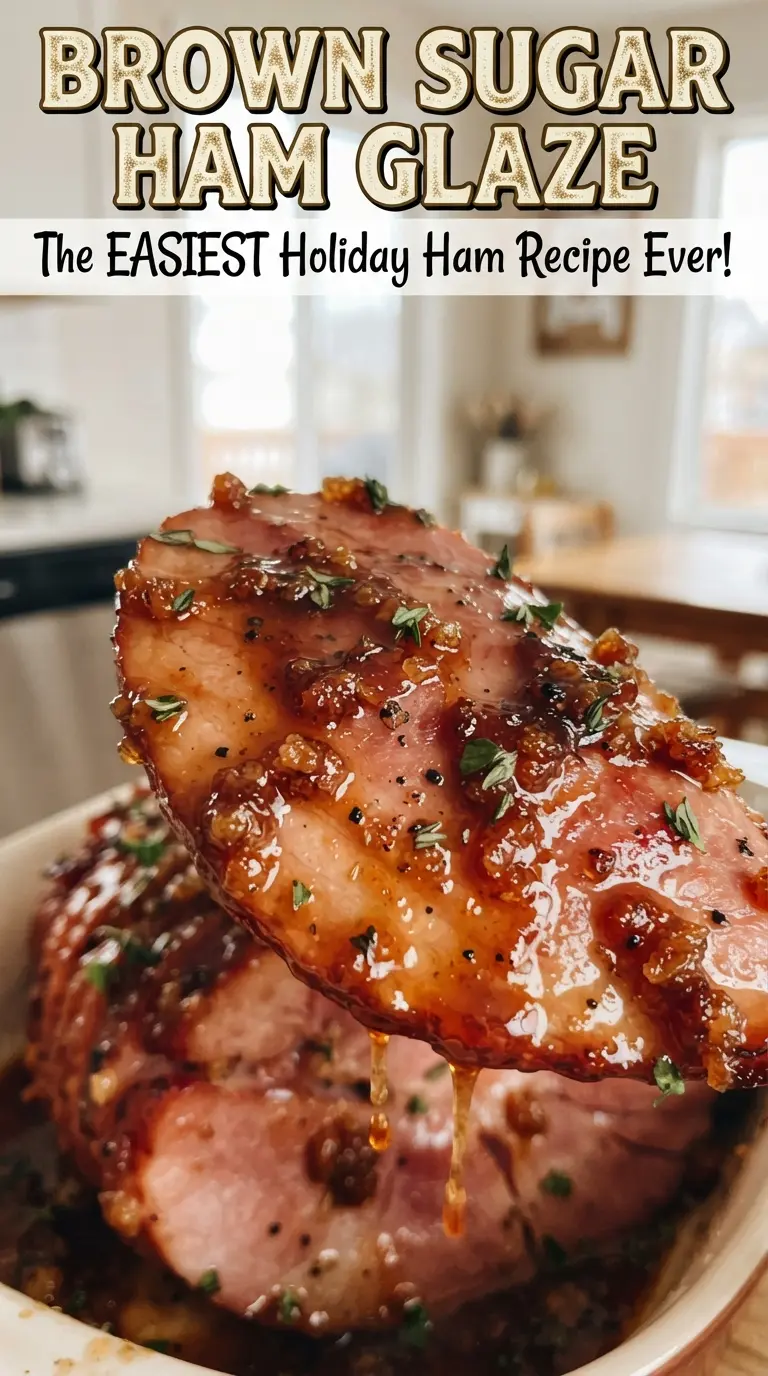
Brown sugar ham glaze turns a plain baked ham into something lacquered, glossy, and deeply savory-sweet with edges that cling instead of sliding off the first slice. The best versions don’t taste like straight candy; they have enough mustard, vinegar, and spice to keep the glaze balanced and bright while still giving you that sticky finish people expect on a holiday table.
This version works because the sugar is dissolved before it ever touches the ham, then simmered just long enough to thicken into a brushable syrup. Honey adds shine and helps the glaze stay soft as it bakes, while Dijon and cider vinegar cut through the richness so the flavor stays clean. A little cinnamon and clove give it that warm, classic ham-house note without turning the glaze into dessert.
Below, you’ll find the timing that keeps the glaze from burning, the ingredient swaps that still give you a good shine, and the mistake that makes most ham glazes slide right off the meat.
The glaze thickened up in just a few minutes and brushed on beautifully without running off the ham. The pineapple juice and Dijon gave it a balance that kept it from tasting too sweet.
Like this brown sugar ham glaze? Save it to Pinterest for the next time you want a glossy, sweet-savory finish that clings to every slice.
The Reason This Glaze Stays On the Ham Instead of Sliding Off
A lot of ham glazes look perfect in the saucepan and disappear in the oven. That happens when the glaze is too thin, too sugary, or added too early. Sugar alone caramelizes fast and can scorch before it has time to set, while a glaze with no acid or mustard tends to taste flat once it hits a rich, salty ham.
The fix is a short simmer that dissolves the sugar and gives the mixture just enough body to cling. You’re not cooking it down into candy; you’re building a syrup that can brush on in thin layers and tighten as the ham finishes baking. Repeating the brushing every 10 minutes matters because each layer sets on top of the last one and creates that shiny, lacquered finish instead of one heavy coat that runs straight down the pan.
- Brown sugar gives the glaze its deep molasses flavor and helps it thicken quickly. Packed brown sugar matters here because loose sugar measures short and leaves the glaze thin.
- Honey adds gloss and keeps the texture supple as the glaze cools. If you swap it for more brown sugar, the glaze will taste heavier and can crystallize a little more on the edges.
- Dijon mustard keeps the sweetness in check and helps the glaze taste balanced against salty ham. Regular yellow mustard works in a pinch, but Dijon gives a smoother, less sharp finish.
- Vinegar and fruit juice bring acidity and brightness. Pineapple juice gives a softer tropical note; orange juice makes it a little rounder and more citrusy.
What Each Ingredient Is Doing in the Pan
- Brown sugar forms the base of the glaze and gives you the deep amber color people expect on ham. Light brown sugar works fine; dark brown sugar gives a richer molasses note.
- Honey makes the glaze shine and helps it stay brushable. Maple syrup can replace it, but the flavor turns more woodsy and less classic.
- Pineapple or orange juice loosens the mixture enough to simmer evenly and adds a little fruit brightness. Use bottled juice if that’s what you have; just avoid anything with added pulp if you want the smoothest finish.
- Dijon mustard adds sharpness and a little emulsifying power, which helps the glaze look smooth instead of greasy. It’s one ingredient worth keeping if you can.
- Butter rounds out the edges and gives the glaze a soft, satin texture. Salted or unsalted both work.
- Apple cider vinegar wakes up the sweetness and keeps the glaze from tasting one-note. If you skip it, the glaze can feel heavy.
- Cinnamon and cloves bring warmth and that old-fashioned baked-ham aroma. Don’t overdo them; a little goes a long way.
How to Cook It Until It Turns Glossy and Brushable
Combining the Base
Add everything to a small saucepan before turning on the heat so the sugar can start dissolving evenly. Stir through the bottom and corners of the pan; dry pockets of brown sugar can cling there and later show up as gritty bits in the glaze. The mixture will look cloudy at first, then loosen into a smooth, dark syrup as the butter melts.
Bringing It to a Gentle Simmer
Set the pan over medium heat and watch for small bubbles around the edges, not a hard boil. If the heat is too high, the sugars can scorch before the glaze has time to thicken. Stir often until the liquid looks cohesive and you can no longer see sugar grains dragging across the spoon.
Thickening to the Right Nap
Let it simmer for 3 to 4 minutes until it looks glossy and lightly syrupy. It should coat the back of a spoon but still brush on easily; if it gets too thick in the pan, it will seize up on the ham before you finish basting. Pull it off the heat as soon as it turns shiny, because it continues to thicken as it cools.
Brushing the Ham in Layers
Apply the glaze during the last 30 minutes of baking, then brush again every 10 minutes. The first coat gives the ham a sticky surface, and the later coats build color and shine without burning the sugars too early. If the ham is already deeply browned, tent loosely with foil between bastes so the edges don’t darken too fast.
Make It More Tangy
Add another teaspoon of Dijon or an extra half tablespoon of cider vinegar if you want the glaze to cut harder through a salty ham. The finish will taste brighter and less candy-like, which works especially well on spiral-cut ham.
Use Orange Instead of Pineapple
Orange juice makes the glaze a little softer and more citrus-forward, while pineapple gives a brighter tropical edge and a slightly stickier finish. Both work, but orange reads more classic and pineapple leans a touch sweeter.
Make It Dairy-Free
Use a plant-based butter with a neutral flavor if you need to skip dairy. The glaze will still coat well, though it may look a little less rich in the pan and set with a slightly lighter sheen.
Keep It Gluten-Free
This glaze is naturally gluten-free if your Dijon mustard is certified gluten-free. Check the label on the mustard and any juice blend, since some flavored juices can include additives you don’t want here.
Storage and Reheating
- Refrigerator: Store leftover glaze in a sealed container for up to 5 days. It will thicken as it chills.
- Freezer: It freezes well for up to 2 months. Thaw overnight in the refrigerator before reheating.
- Reheating: Warm it in a small saucepan over low heat with a splash of juice or water to loosen it. Don’t boil it hard again or it can turn sticky and overly thick.
Answers to the Questions Worth Asking
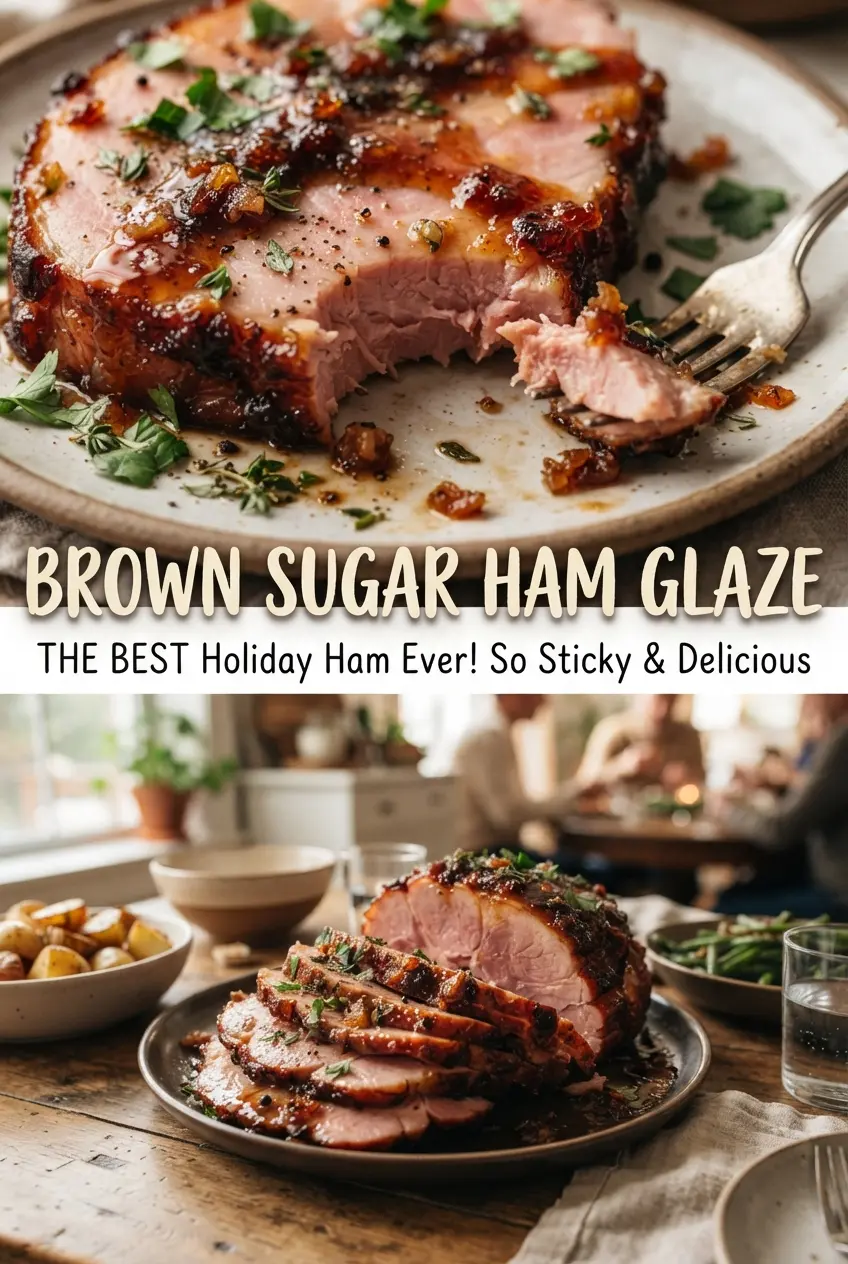
Brown Sugar Ham Glaze
Ingredients
Equipment
Method
- Add brown sugar, honey, pineapple or orange juice, Dijon mustard, butter, apple cider vinegar, cinnamon, and cloves to a saucepan.
- Bring the mixture to a simmer over medium heat, stirring until the sugar dissolves, about 2 minutes.
- Simmer for 3-4 minutes until slightly thickened and glossy, keeping it at a steady simmer while you stir.
- Brush the warm glaze over a fully cooked ham during the last 30 minutes of baking.
- Brush again every 10 minutes during those final 30 minutes, re-coating the scored diamond pattern for a glossy coat.
- Spoon any remaining warm glaze over sliced ham at the table.