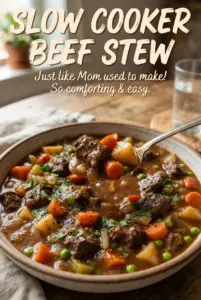
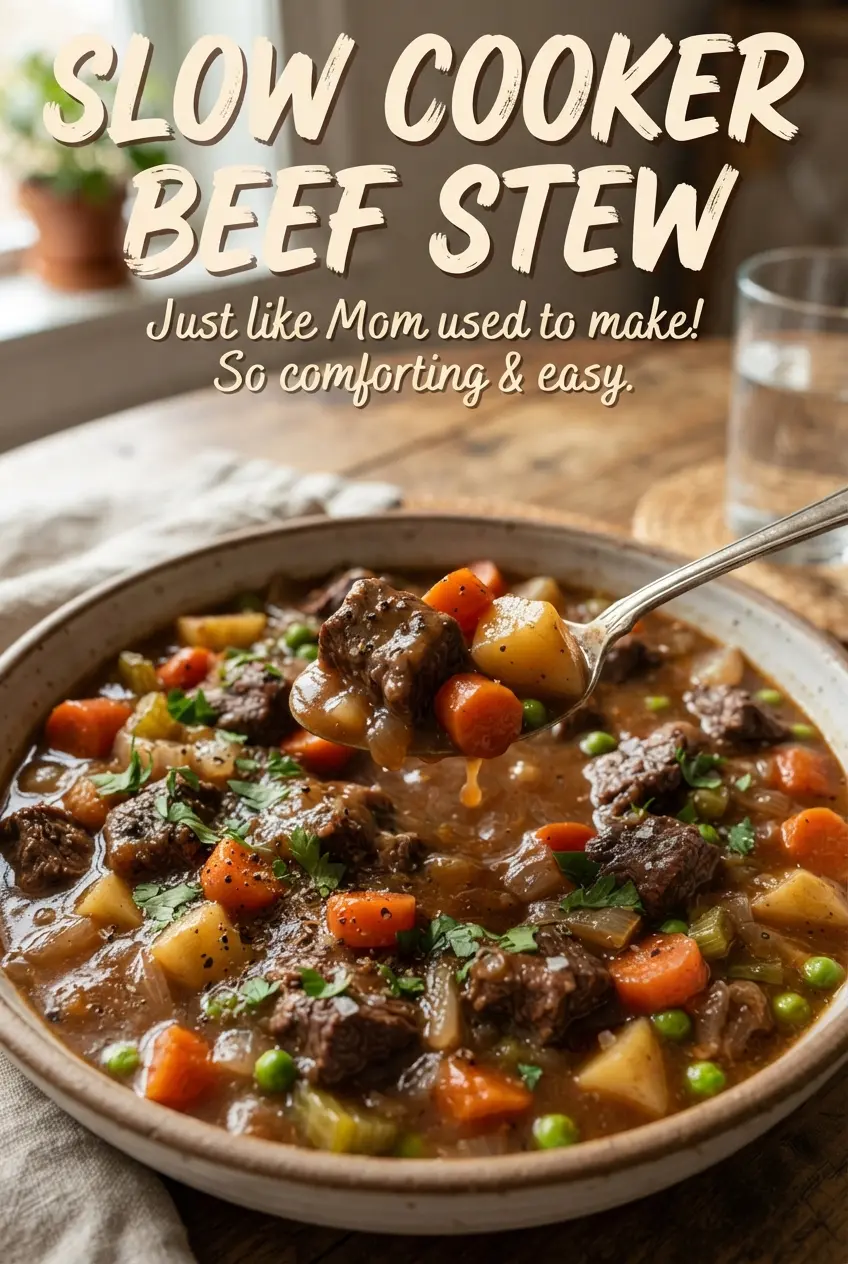
Slow cooker beef stew should come out with spoon-tender beef, potatoes that hold their shape, and a broth that tastes like it simmered all day because it did. The version I make most often starts with a quick browning step, and that one move gives the stew a deeper, meatier base than dumping everything in raw. By the time it’s done, the broth has turned glossy and rich, and the carrots and celery have given up just enough of their sweetness to round everything out.
The trick is treating the slow cooker like the finishing tool, not the whole cooking method. Browning the beef and cooking the tomato paste for a minute wakes up the flavor before the long cook begins, and scraping the pan with broth pulls every bit of that flavor into the stew. Yukon gold potatoes are the right choice here because they stay creamy without dissolving, and the peas go in at the end so they stay bright instead of dull and mushy.
Below, I’ve included the little timing details that keep the stew from turning flat or watery, plus a few easy swaps if you need to work around what’s in the pantry.
The beef was fall-apart tender and the broth thickened up beautifully after the flour on the meat and the tomato paste had time to cook in. I added the peas at the end like you said, and they stayed bright instead of getting mushy.
Save this slow cooker beef stew for the nights when you want tender beef, buttery potatoes, and a rich broth without standing over the stove.
The Browning Step That Keeps This Stew from Tasting Flat
The biggest mistake with slow cooker beef stew is skipping the sear and expecting the long cook to do all the work. It won’t. Raw beef tastes boiled, while browned beef brings that deep, savory edge that makes the broth taste finished instead of thin and one-note.
Flouring the beef before browning does two jobs at once. It helps the meat get a better crust in the pan, and some of that flour ends up in the stew, where it gives the broth a light body after hours of cooking. The pan will look like it has sticky brown bits at the bottom after the beef comes out. That’s not a problem. That’s the flavor base.
What Each Ingredient Is Actually Doing in the Pot
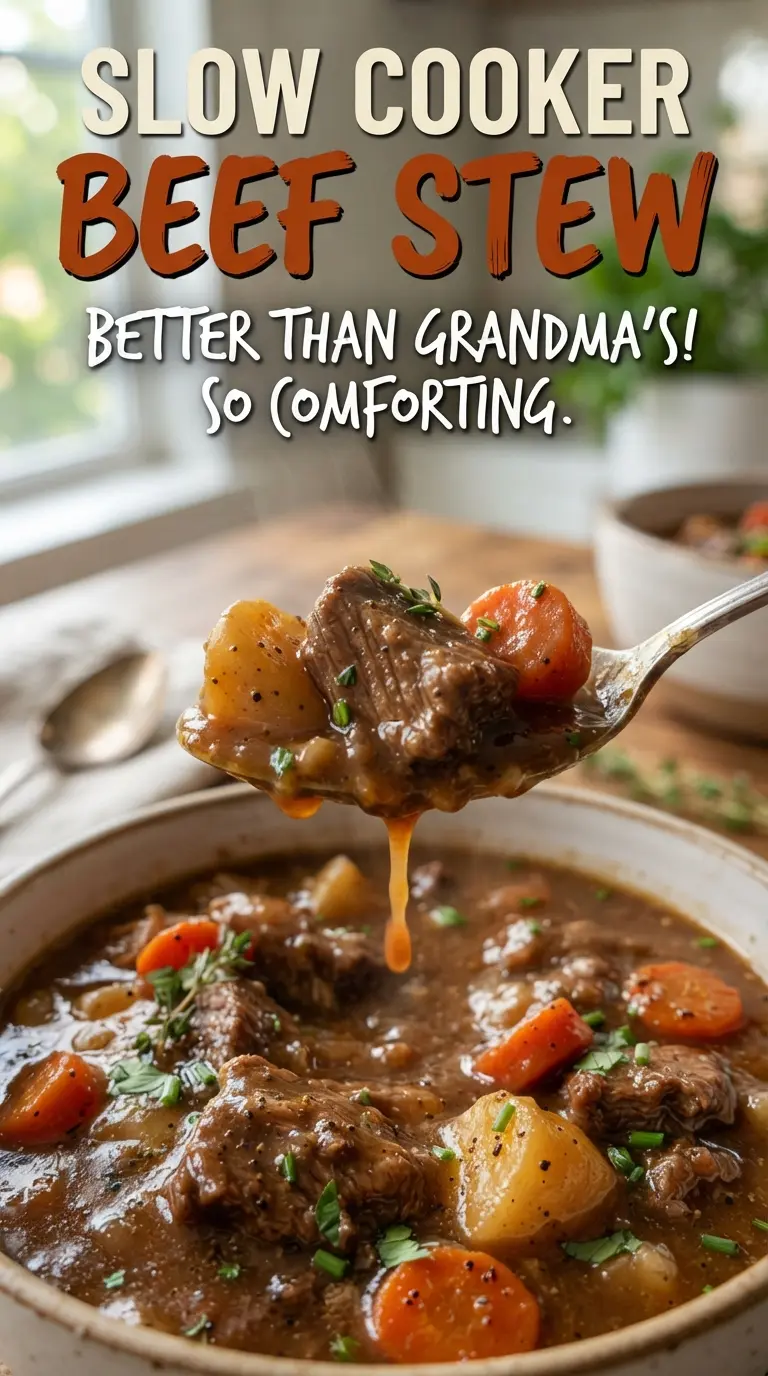
- Beef chuck roast — This is the cut that gives you tender chunks after a long cook. Leaner beef dries out before the potatoes are done. Cut it into even cubes so it softens at the same pace.
- All-purpose flour — A light coating helps the beef brown and lightly thickens the broth. If you need it gluten-free, use a 1:1 gluten-free flour blend, not cornstarch, because the coating does more than just thicken.
- Tomato paste — This is one of the quiet heroes here. Cooking it for a minute with the onion removes the raw edge and gives the stew a deeper, richer background flavor.
- Yukon gold potatoes — They hold their shape better than russets and turn creamy instead of grainy. Cut them into chunks that are close in size so they finish evenly.
- Worcestershire sauce — It adds a savory backbone that broth alone can’t give. If you don’t have it, soy sauce works in a pinch, but use a little less since it’s saltier and less complex.
Building the Stew So the Vegetables Don’t Turn to Mush
Searing the Beef in Batches
Brown the beef in a hot pan without crowding it. If the pieces are packed too tightly, they steam and turn gray instead of forming a crust. You want a deep brown surface, not a full cook-through, so 4 to 5 minutes per batch is enough. Pull the meat to the slow cooker as it browns and leave the browned bits in the pan.
Cooking the Onion and Tomato Paste
Cook the onion in the same pan until it softens and picks up some color from the beef drippings. Then add the garlic and tomato paste and stir them for about a minute. If the paste stays raw, the stew can taste sharp and tinny. Once the pan smells rich and a little sweet, it’s ready for the broth.
Letting the Slow Cooker Finish the Work
After deglazing the pan with broth, pour everything into the slow cooker and add the remaining broth, Worcestershire, potatoes, carrots, celery, thyme, and bay leaves. Cook on LOW for 8 hours if you want the best texture, or HIGH for 4 to 5 hours if you’re short on time. The stew is ready when the beef gives easily with a fork and the potatoes are tender at the center but still intact.
Adding the Peas at the End
Stir in the peas during the last 10 minutes only. Any longer and they lose their color and pop. Remove the bay leaves before serving, then finish with fresh parsley for a clean, fresh note that cuts through the richness of the broth.
Three Ways to Adapt This Stew Without Losing What Makes It Good
Gluten-Free Version
Swap the flour for a 1:1 gluten-free flour blend so the beef still gets a light coating before browning. That keeps the texture and the subtle thickening without changing the flavor of the stew. Avoid skipping the coating altogether, or the broth will be thinner and the beef won’t brown as well.
Make It Heartier with Mushrooms
Add 8 ounces of sliced cremini mushrooms with the onions. They deepen the savory flavor and make the stew feel even richer, but they also release liquid, so let them cook down in the pan before you add the garlic and tomato paste.
Dairy-Free and Pantry-Friendly by Default
This stew already works without dairy, which is part of why I make it often. If you’re out of Yukon gold potatoes, red potatoes are the closest backup because they also hold their shape. Russets will break down more and make the stew softer and cloudier.
Storage and Reheating
- Refrigerator: Store in an airtight container for up to 4 days. The broth thickens as it sits, which is normal.
- Freezer: Freeze for up to 3 months. The potatoes soften a little after thawing, but the flavor holds up well. Cool completely before freezing in portions.
- Reheating: Reheat gently on the stove over medium-low heat or in the microwave at reduced power. A hard boil can make the beef stringy and break up the potatoes.
Answers to the Questions Worth Asking
Slow Cooker Beef Stew
Ingredients
Equipment
Method
- Toss beef with flour, salt, and pepper. Brown in batches in hot olive oil for 4-5 minutes per batch until deeply browned, then transfer to the slow cooker.
- Cook the diced onion in the same pan for 4 minutes until softened. Add garlic and tomato paste and cook for 1 minute.
- Pour in 1 cup broth and scrape up the browned bits. Pour this mixture into the slow cooker.
- Add the remaining broth, Worcestershire sauce, potatoes, carrots, celery, dried thyme, and bay leaves to the slow cooker. Cover and cook on LOW for 8 hours or on HIGH for 4-5 hours until the beef is fork-tender.
- Stir in frozen peas and cook for the last 10 minutes until hot. Remove bay leaves and top with chopped fresh parsley before serving.