Mulligan stew is the kind of pot that gets better as it sits on the stove, with beef that turns spoon-tender, smoky sausage running through the broth, and vegetables that hold their shape instead of dissolving into soup. What you end up with is thick, hearty, and full of the kind of layered flavor that makes people come back for a second bowl before the first one is gone.
The trick is building the stew in stages. Browning the beef and sausage first gives the broth depth right away, and adding the potatoes, carrots, and cabbage later keeps them from turning mushy. The Worcestershire and diced tomatoes do a lot of quiet work here, adding acidity and savory backbone so the broth tastes rounded instead of flat.
Below, I’ll walk through the part that matters most: how to keep the meat tender, how to time the vegetables so they stay distinct, and how to adjust the pot if you want it a little thicker or a little looser at the end.
The beef got perfectly tender and the cabbage held onto just enough texture. I loved that the broth tasted rich without being too heavy, and the leftovers were even better the next day.
Save this hearty Mulligan Stew for the nights when you want beef, sausage, potatoes, cabbage, and beans all simmered into one big rustic pot.
The Part That Keeps Mulligan Stew from Going Flat
The biggest mistake with a stew like this is rushing straight to the liquid. If the beef and sausage don’t get a real brown crust first, the broth ends up tasting like boiled meat instead of stew. Those browned bits on the bottom of the pot are the base of the whole dish, and they’re what give the broth that deep, savory edge.
The second thing that matters is timing the vegetables. Potatoes, carrots, and cabbage all soften at different speeds, and if they go in too early, the cabbage disappears and the potatoes collapse. Adding them after the meat has had time to simmer keeps the texture balanced, and the corn and kidney beans at the end keep their shape instead of turning mealy.
What Each Ingredient Is Doing in This Pot
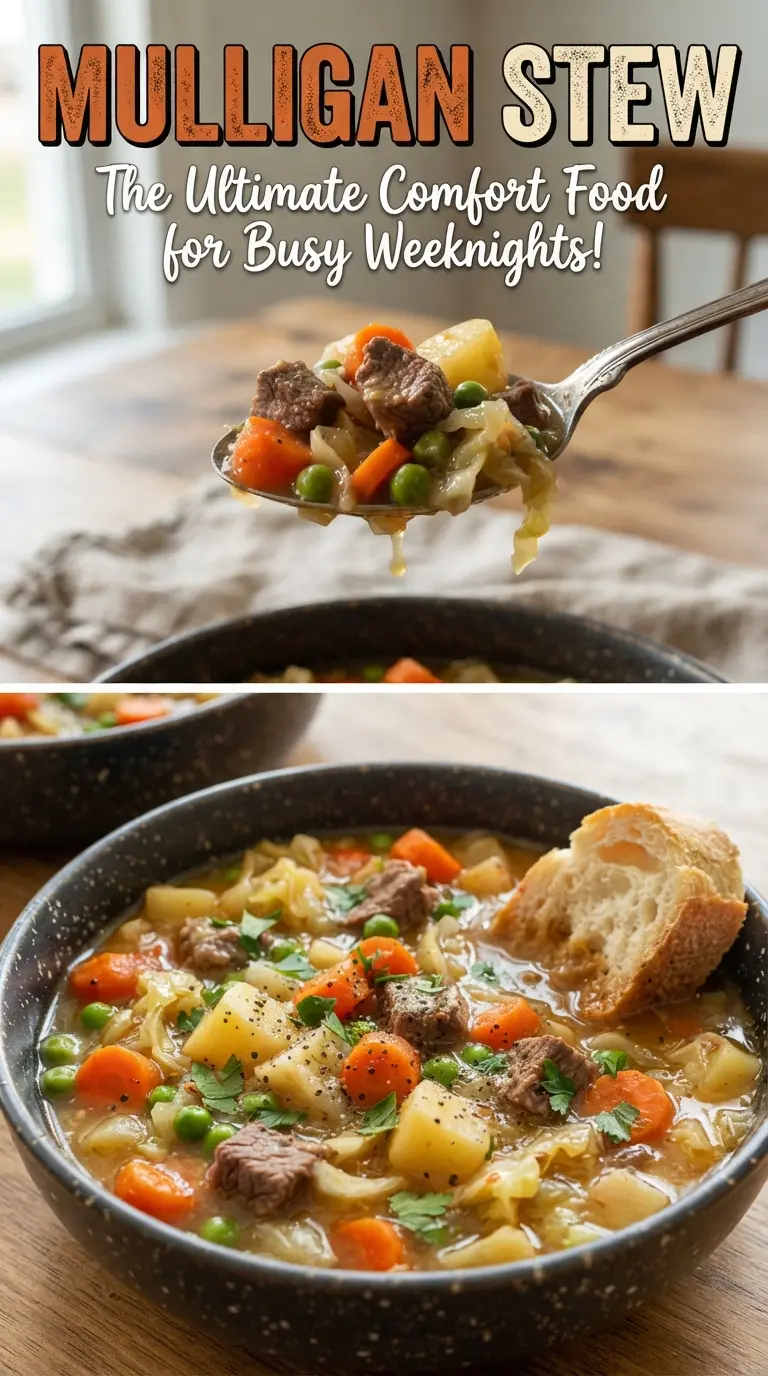
- Beef chuck — This is the cut that gives you rich stew meat and turns tender with long simmering. If you swap it, use another well-marbled braising cut; lean beef stays stringy in a pot like this.
- Smoked sausage — This adds smoke, salt, and extra fat that carry the flavor through the broth. Kielbasa works well here if that’s what you have.
- Diced tomatoes — They bring acidity and a little body to the liquid without making the stew taste like tomato soup. Crushed tomatoes will make it thicker and more blended if that’s the direction you want.
- Beef broth — This is the main flavor vehicle, so use one you’d actually drink. If your broth is very salty, hold back a little on the seasoning until the end.
- Potatoes, carrots, and cabbage — These give the stew its bulk and classic rustic feel. Cut the potatoes into even pieces so they cook at the same rate, and keep the cabbage in larger pieces so it doesn’t vanish.
- Kidney beans and corn — They add sweetness, starch, and color in the final stretch. Add them near the end so the beans stay intact and the corn tastes fresh instead of canned-cooked.
Building the Stew in the Right Order
Browning the Meat First
Season the beef, then brown it in batches with the sausage in the hot oil. You want color on the meat, not just a gray surface, so don’t crowd the pot or the pieces will steam. Once the sausage has some edges browned and the beef has a deep sear, pull everything out and leave the drippings behind. That’s where the flavor starts.
Cooking the Aromatics
Add the onion to the pot and cook it until it turns soft and translucent, then stir in the garlic for just 30 seconds. If the garlic goes in too early or stays in the pan too long, it gets bitter fast. You’re looking for the smell of onion sweetness lifting from the pot before you move on.
Simmering for Tender Meat
Stir in the tomatoes, broth, Worcestershire sauce, thyme, beef, and sausage, then bring the pot up to a gentle simmer. Keep the heat low enough that the surface barely bubbles. A hard boil will tighten the beef and cloud the broth. After about 1 1/4 hours, the meat should be close to tender and the broth should taste developed, not thin.
Finishing the Vegetables
Add the potatoes, carrots, and cabbage and simmer until the potatoes are soft at the center and the carrots give up their raw edge. The cabbage should be tender but still visible in the pot. Stir in the corn and kidney beans for the last 10 minutes so they warm through without breaking apart. Taste at the end and adjust salt and pepper only after the stew has fully reduced.
How to Adjust Mulligan Stew Without Losing What Makes It Work
Make it thicker and more spoonable
Let the finished stew simmer uncovered for 10 to 15 minutes at the end. That reduces the broth without turning the vegetables to mush. If you want it even heartier, mash a few potato pieces against the side of the pot to naturally thicken the liquid.
Use a different sausage
Kielbasa, andouille, or another smoked sausage all work here. Andouille adds heat, while kielbasa stays milder and a little sweeter. Just keep the sausage smoked, because fresh sausage won’t bring the same depth to the broth.
Make it gluten-free
This recipe is naturally close to gluten-free, but the sausage and Worcestershire sauce need a quick label check. Use a certified gluten-free Worcestershire and a sausage with no fillers or breadcrumbs, and the stew stays just as hearty.
Storage and Reheating
- Refrigerator: Store for up to 4 days. The broth will thicken as it chills and the vegetables will soften a little more overnight.
- Freezer: Freezes well for up to 3 months, though the potatoes may soften slightly after thawing. Cool completely before freezing in airtight containers.
- Reheating: Warm gently on the stove over medium-low heat with a splash of broth or water. Don’t boil it hard, or the potatoes can break down and the sausage can turn rubbery.
Answers to the Questions Worth Asking
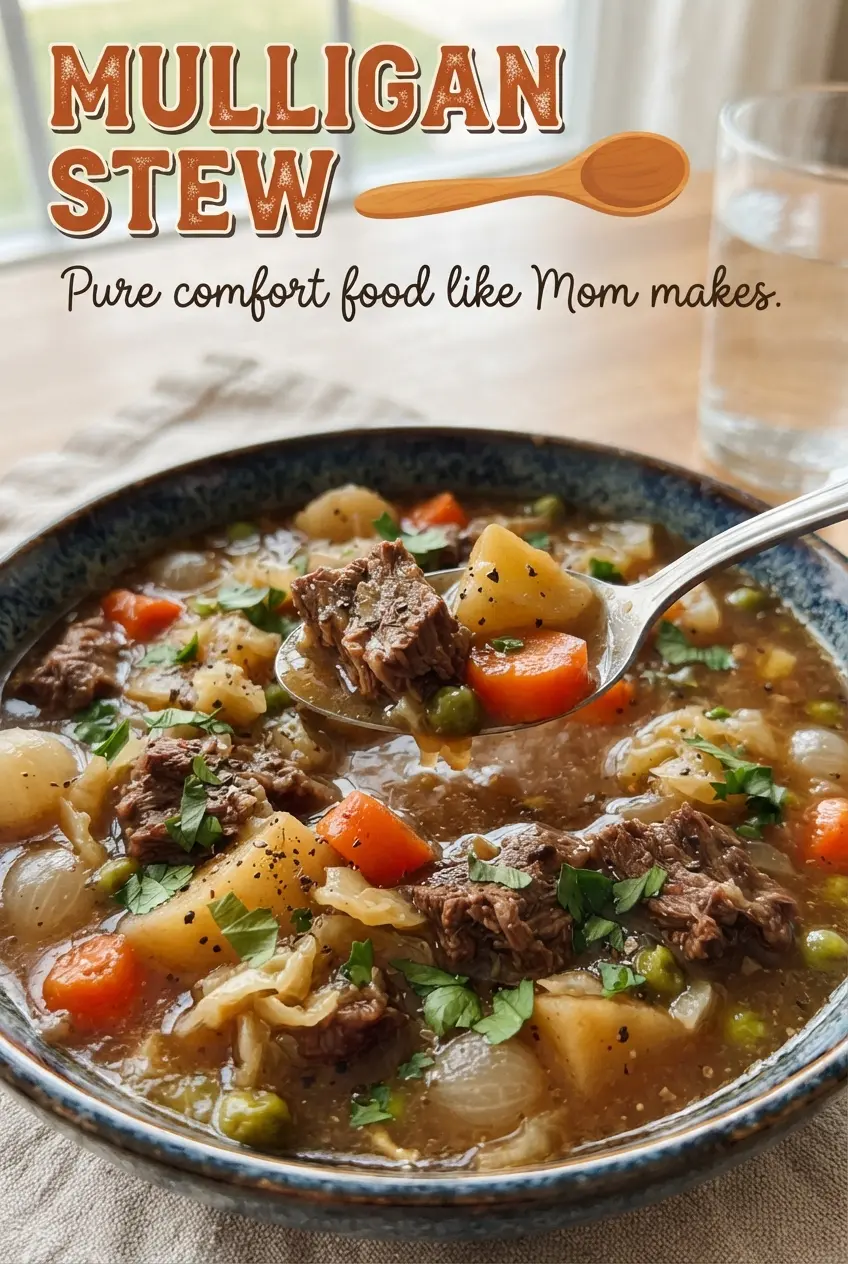
Mulligan Stew
Ingredients
Equipment
Method
- Season the beef chuck with salt and black pepper, then brown it in the vegetable oil in a Dutch oven until browned, adding the sausage to cook alongside. Transfer the beef and sausage to a plate and set aside.
- Cook the diced onion in the Dutch oven for 4 minutes, stirring until softened. Add the minced garlic and cook for 30 seconds, just until fragrant.
- Add the diced tomatoes, beef broth, Worcestershire sauce, dried thyme, the set-aside beef, and the sausage back to the pot. Cover and simmer at a gentle boil for 1 1/4 hours, stirring occasionally so nothing sticks.
- Add the cubed potatoes, sliced carrots, and chopped cabbage to the pot. Cover and simmer until the potatoes are tender, about 30 minutes.
- Stir in the corn kernels and drained kidney beans. Cover and simmer for 10 minutes more, then season to taste and serve hot.