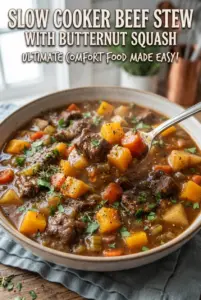
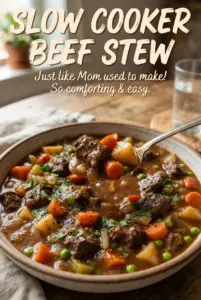
Slow cooker beef stew gets especially satisfying when the broth turns glossy and the beef gives way without falling apart into strings. The butternut squash changes the whole bowl, adding gentle sweetness and a soft, velvety texture that plays against the savory gravy instead of turning everything heavy. A handful of kale at the end keeps the stew looking fresh and gives each bite a little bite back.
The trick here is building flavor before anything goes into the slow cooker. Browning the floured beef first gives you a deeper base, and cooking the tomato paste briefly in the pan takes away that raw edge that can make a stew taste flat. The squash goes in later on purpose so it stays intact, and the kale waits until the end so it turns tender instead of muddy.
You’ll find the timing that keeps the beef tender, the squash intact, and the broth balanced. I’ve also included a few simple swaps and storage notes, because this is the kind of stew that gets even better the next day.
The beef came out fork-tender and the squash held its shape instead of disappearing. Adding the kale at the end was perfect — it stayed bright and the broth thickened up beautifully overnight.
Save this slow cooker beef stew with butternut squash for a rich, hands-off dinner with tender beef, sweet squash, and a savory gravy.
The Part That Keeps the Squash From Going Mushy
Butternut squash doesn’t belong in the slow cooker from the start unless you want soft edges and a stew that tastes more like puree than chunks of vegetables. Beef chuck needs the long cook time; squash doesn’t. That’s why the squash goes in later, after the meat has already had time to relax and turn tender.
The flour on the beef does two jobs here. It helps the meat brown a little more deeply, and it gives the broth a natural thickness without needing a separate slurry at the end. If you skip the browning step, the stew still cooks, but it loses that browned, savory depth that makes the gravy taste finished.
- Beef chuck — This is the right cut because the connective tissue has time to soften during a long cook. Leaner stew meat can work, but it tends to dry out before the broth gets rich.
- Butternut squash — Use firm cubes cut a little larger than you think you need. Smaller pieces collapse before the beef is tender.
- Red wine — This adds roundness and a little edge to the broth. If you don’t want to use it, replace it with extra beef broth and a splash of balsamic vinegar for some of that same backbone.
- Kale — Add it at the end so it keeps a little texture and stays green. If you cook it from the start, it turns dull and soft.
What Each Ingredient Is Actually Doing in This Recipe
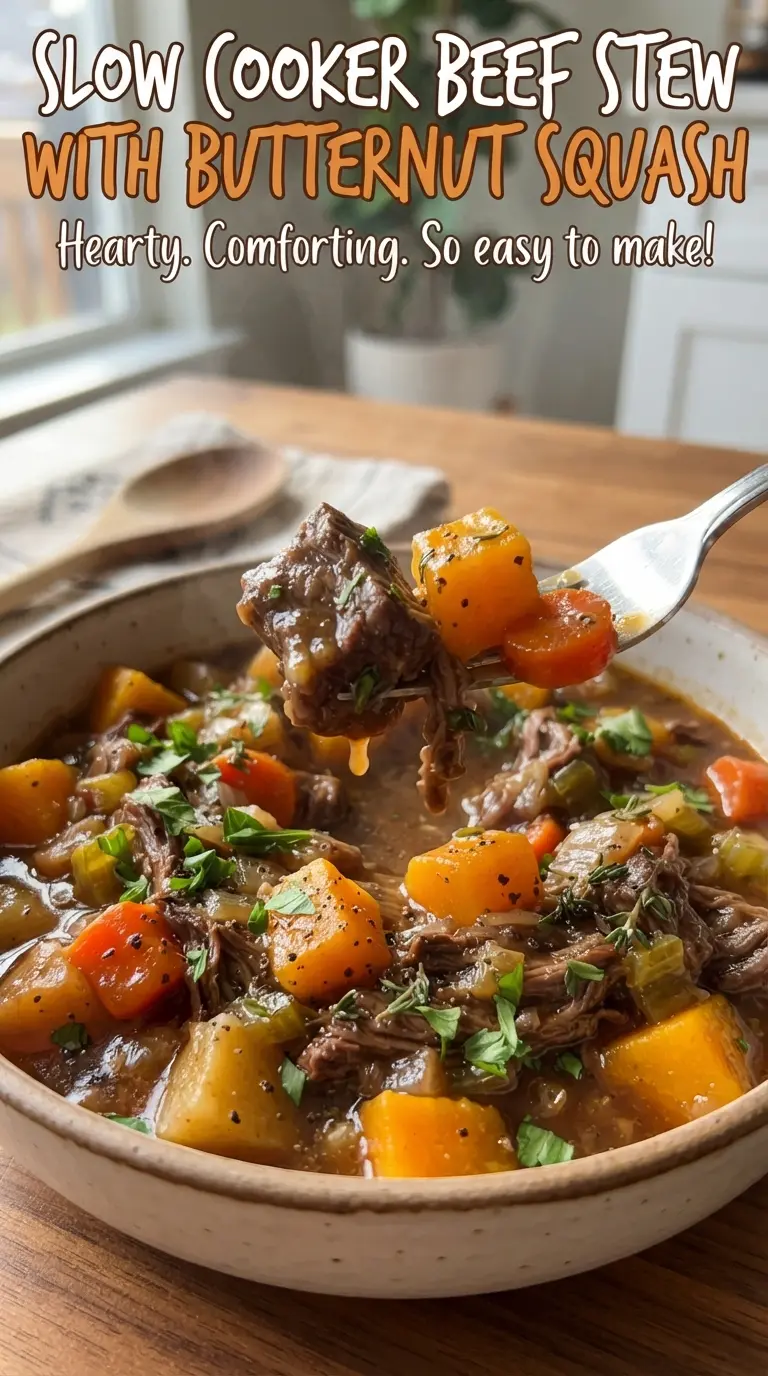
- Primary ingredient (the star) — Quality matters most. Choose the best you can find.
- Cooking medium (oil, butter, or broth) — This carries flavors and prevents dryness.
- Seasonings (salt, pepper, spices, herbs) — Layer flavors so nothing overpowers. Build depth gradually.
- Aromatics (garlic, onion, herbs) — Cook with fat to bloom flavors. Become the foundation.
- Supporting ingredients — Complement the main ingredient without overpowering it.
- Sauce or liquid (if applicable) — Brings flavors together. Balance richness with acid.
- Acid (lemon, vinegar, wine, or other) — Brightens and prevents flat-tasting results.
- Final finish (garnish, glaze, or sauce) — Prevents one-dimensional taste and adds visual appeal.
Building the Stew in Layers, Not All at Once
Browning the Beef First
Toss the beef with flour, salt, and pepper until the coating looks even and dusty, then brown it in hot oil in batches. The pan should sizzle when the meat hits it, and the pieces should pick up deep brown spots before you turn them. If the pan looks crowded, stop and do it in more batches; packed beef steams, and steamed beef won’t give you the flavor foundation this stew needs.
Cooking Out the Tomato Paste
After the onion softens, add the garlic and tomato paste and cook them for a few minutes until the paste darkens slightly and smells sweet instead of sharp. That short cook matters. Raw tomato paste tastes tinny in a slow cooker, and once it’s diluted into the broth you can’t correct it later.
Adding the Squash and Kale at the Right Time
Let the beef and carrots cook first, then add the squash for the final stretch so it turns tender without falling apart. The stew is ready for the kale only when the squash gives easily at the center but still holds its shape. Stir the kale in during the last 15 minutes just until it wilts and turns bright; if it cooks much longer, it loses that fresh, leafy finish.
What to Change When You Want a Different Bowl
Dairy-Free and Naturally Gluten-Free
This stew already leans dairy-free, and the flour is the main gluten source. Swap the flour for a gluten-free all-purpose blend if you need the coating and thickening effect, or skip it and thicken the broth later with a cornstarch slurry. The texture will be a little lighter without the flour-coated beef.
No Wine in the Pot
Use extra beef broth and add 1 tablespoon balsamic vinegar or red wine vinegar to replace some of the brightness wine would bring. You’ll lose a little depth, but the stew will still taste balanced instead of flat.
Swapping the Greens
If you don’t have kale, use chopped Swiss chard or spinach. Chard needs about the same timing as kale, while spinach should go in during the last few minutes because it wilts almost instantly. The flavor stays clean and the stew still gets that final hit of green.
Storage and Reheating
- Refrigerator: Keep in an airtight container for up to 4 days. The stew thickens as it chills, and the squash softens a bit more overnight.
- Freezer: Freezes well for up to 3 months. Cool it completely first, then portion it into containers with a little extra headspace because the broth will expand.
- Reheating: Warm gently on the stove over low to medium-low heat, stirring now and then. If you blast it on high, the beef tightens up and the squash breaks down before the center is hot.
Answers to the Questions Worth Asking
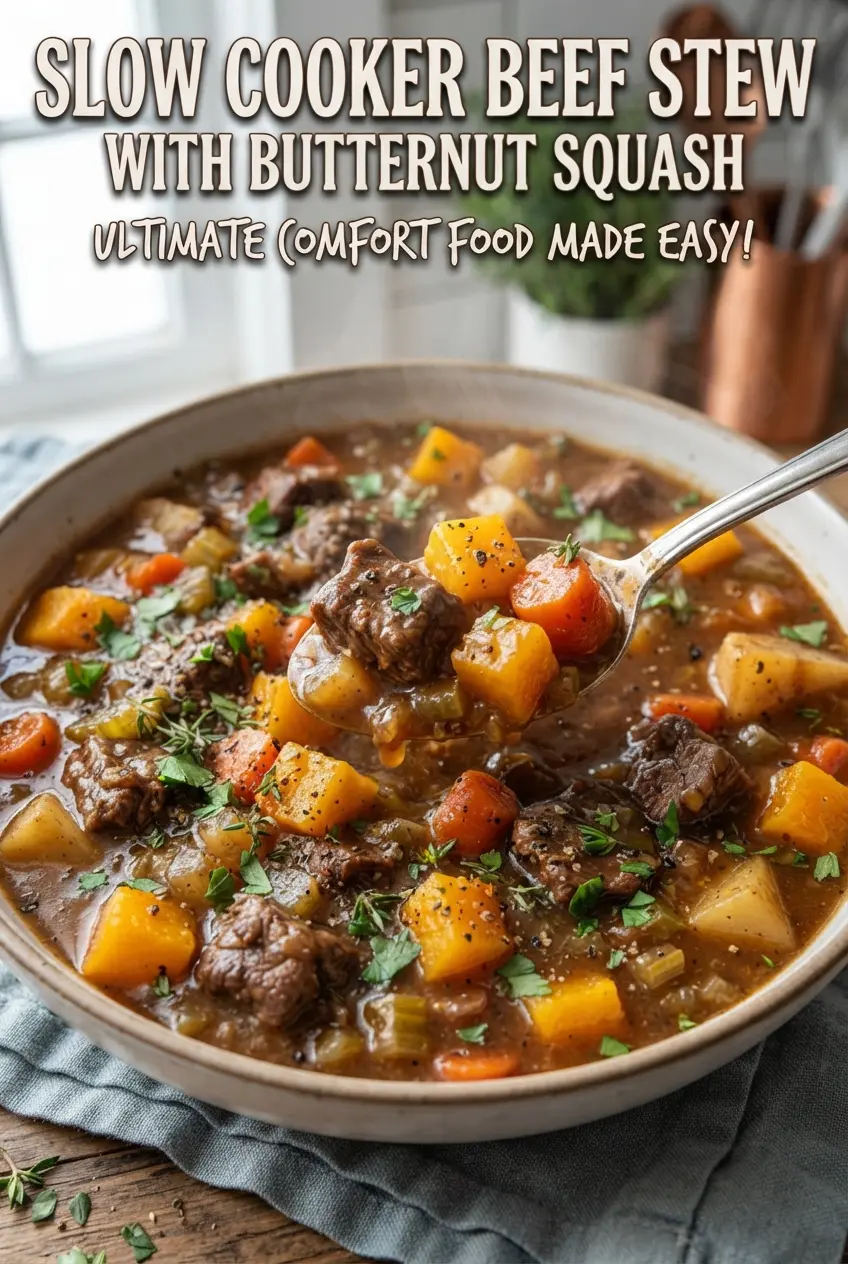
Slow Cooker Beef Stew with Butternut Squash
Ingredients
Equipment
Method
- Toss the cubed beef with flour, salt, and black pepper, coating all sides.
- Heat the olive oil in a Dutch oven over high heat until shimmering, then brown the beef in batches and add it to the slow cooker.
- Cook the diced onion, minced garlic, and tomato paste in the Dutch oven for 3 minutes.
- Pour in the red wine to deglaze, scraping up browned bits, then add the mixture to the slow cooker.
- Add the beef broth, Worcestershire sauce, dried thyme, dried sage, and sliced carrots to the slow cooker.
- Cover and cook on LOW for 5 hours.
- Stir in the butternut squash cubes, then cover and cook on LOW for 2-3 hours more until the beef and squash are tender.
- Stir in the chopped kale and cook for the last 15 minutes.
- Taste and season as needed, then serve hot.