Bright, tart cranberry relish cuts through rich holiday food better than almost anything else on the table. The texture stays chunky and fresh, with little bursts of cranberry, orange, and apple in every bite, and the sugar softens the sharp edge just enough without turning it into jam.
What makes this version work is the balance of fine chopping and resting time. The cranberries get pulsed just enough to break them up, while the orange and apple are chopped smaller so they melt into the berries without disappearing. A few hours in the fridge gives the sugar time to dissolve and the flavors time to settle into something clean and vivid.
Below, I’ll show you why the order of chopping matters, when pecans should go in, and how far ahead you can make it without losing that fresh crunch.
I left it in the fridge overnight and the sugar dissolved perfectly. The cranberries stayed bright and chunky, and the orange peel gave it that fresh bite we were missing from the canned stuff.
Love this bright cranberry relish with orange and apple? Save it to Pinterest for the holiday meal that needs a fresh, chunky side.
The Trick to Keeping Cranberry Relish Bright Instead of Watery
The biggest mistake with cranberry relish is overprocessing it into a puree. Once the berries are broken down too far, they release a lot of juice and the relish turns loose instead of spoonable. Pulse in short bursts and stop while you still see small, uneven pieces.
The other thing that matters is the rest time. Right after mixing, the sugar is still grainy and the fruit tastes separate. After a few hours, the sugar pulls moisture from the cranberries and orange, then dissolves into the juices, which gives you that glossy, cohesive texture without any cooking at all.
What Each Ingredient Is Doing in the Bowl
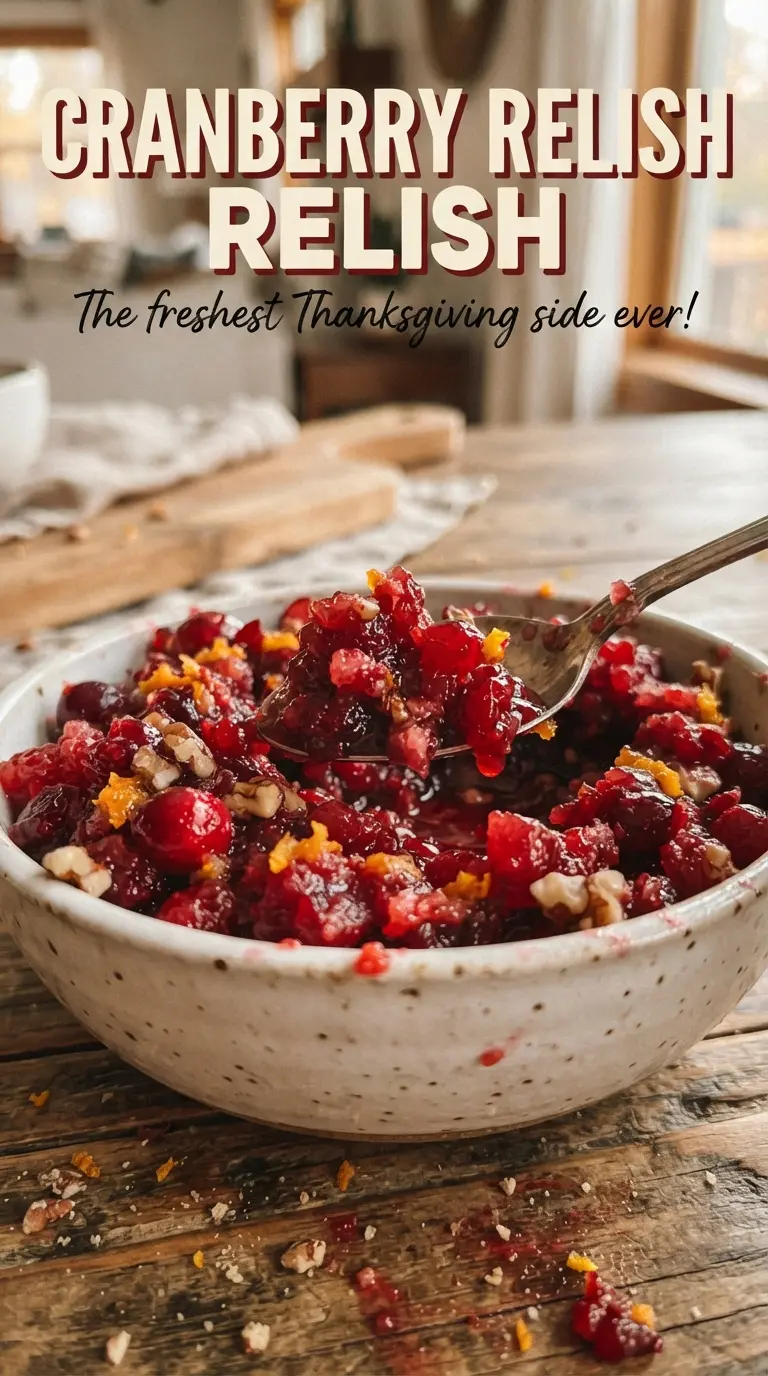
- Fresh cranberries — These bring the sharp, clean bite that defines the relish. Frozen cranberries work in a pinch, but thaw and drain them first so the mixture doesn’t get watery.
- Unpeeled orange — The peel adds a fragrant bitterness that keeps the relish from tasting flat. Seed it well, because even a few seeds can make the texture unpleasant.
- Apple — Apple softens the tart edge and gives the relish a little natural sweetness and body. A crisp variety like Fuji, Honeycrisp, or Gala holds up best after chilling.
- Sugar — This isn’t here just for sweetness; it dissolves into the fruit juices and turns the mix glossy. Cutting it too far leaves the relish harsh and muddy, so keep the amount close to the recipe unless you know you want a very tart result.
- Pecans — Add these at the end so they stay crunchy. If they go in too early, they soften and get lost in the fruit.
Building the Crunch Before the Chill Does the Work
Chopping the Cranberries
Pulse the cranberries in a food processor in short bursts until they look coarsely chopped, not minced. You want obvious pieces, because that texture is what keeps the relish lively on the plate. If you run the machine too long, the berries collapse into juice and the mixture turns slushy before it has a chance to chill.
Bringing in the Orange and Apple
Pulse the orange and apple separately or together until finely chopped. The goal is to get them smaller than the cranberries so they blend through the bowl without dominating each bite. If the orange is left in large chunks, the peel can taste sharp; if the apple is chopped too small, it disappears and you lose the little bits of sweetness that make this relish balanced.
Mixing and Resting
Stir the fruit with the sugar until everything looks evenly coated, then cover and chill for at least 4 hours. That resting time is where the texture comes together as the sugar dissolves and the fruit juices thicken around the chopped pieces. Don’t add the pecans yet; wait until serving so they keep their snap instead of softening in the bowl.
How to Adapt Cranberry Relish Without Losing Its Bite
Make It Ahead for a Busy Holiday Table
Cranberry relish actually improves after a night in the fridge, so it’s one of the best make-ahead side dishes you can put on the table. The flavor gets brighter and the sugar fully dissolves, which gives you a cleaner finish than a freshly mixed batch.
Dairy-Free and Gluten-Free as Written
This recipe already fits both diets without any changes. Just check your pecans for cross-contamination if that matters for your kitchen, and you’re set.
Swap the Pecans for a Different Crunch
Walnuts bring a slightly more bitter edge, while pistachios add a softer, buttery crunch. If you skip nuts altogether, the relish stays bright and clean, just a little softer in texture.
Use Less Sugar for a Sharper Relish
You can reduce the sugar slightly if you prefer a tart relish, but don’t cut it aggressively or the mixture will taste harsh instead of balanced. The sugar is part seasoning, part texture here, since it helps draw out the juices and smooth the bite.
Storage and Reheating
- Refrigerator: Store in an airtight container for up to 5 days. The relish will loosen a little as it sits, but the flavor stays bright.
- Freezer: It freezes well for about 1 month, though the apple softens a bit after thawing. Freeze in a tightly sealed container and thaw in the refrigerator.
- Reheating: No reheating needed. Serve it cold or at cool room temperature, and stir in the pecans just before bringing it to the table so they stay crunchy.
Answers to the Questions Worth Asking
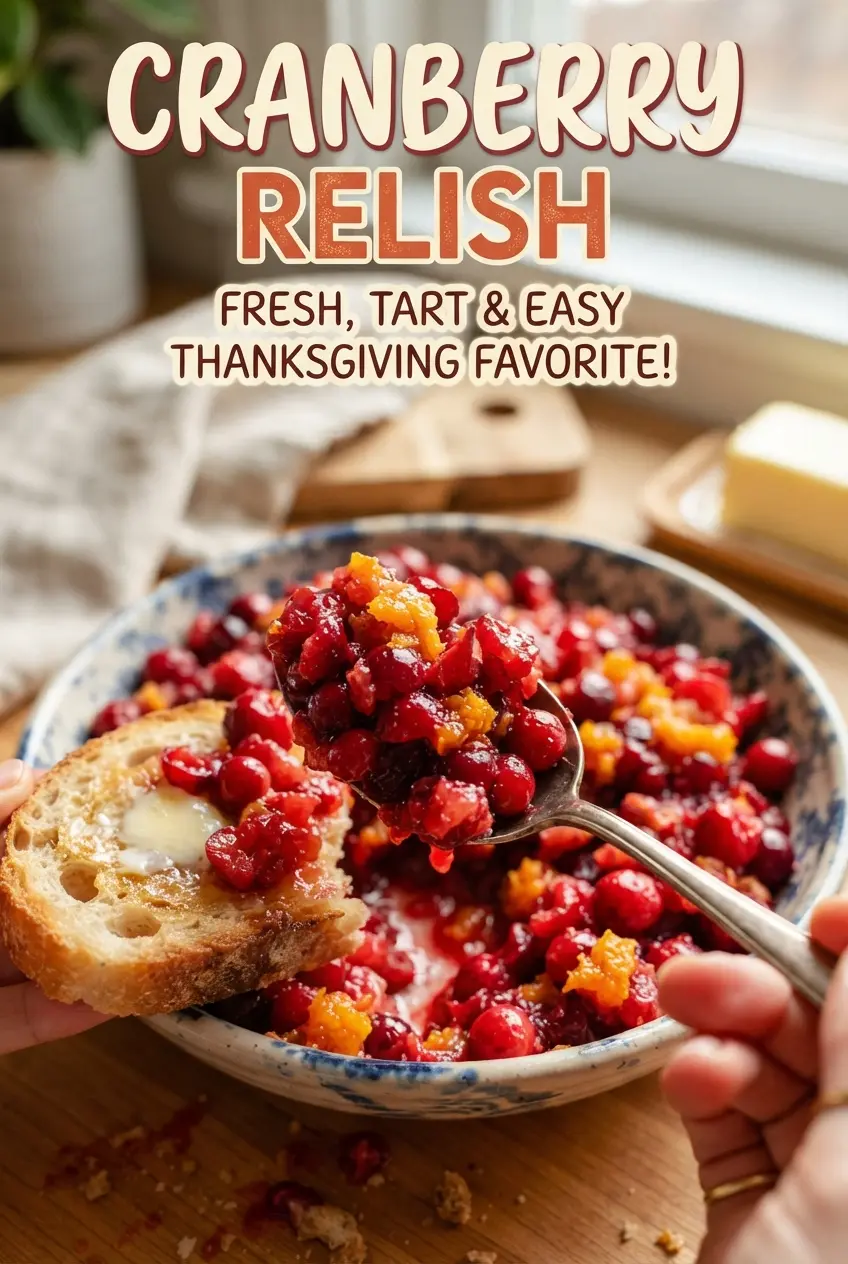
Cranberry Relish
Ingredients
Equipment
Method
- Pulse the fresh cranberries in a food processor until coarsely chopped, then transfer them to a bowl. Stop when the pieces are chunky rather than puréed.
- Pulse the orange and apple in the food processor until finely chopped. Scrape down as needed so the pieces chop evenly.
- Stir the orange, apple, and sugar into the cranberries. Mix until the sugar looks evenly distributed.
- Cover and chill at 4 hours (or overnight) so the sugar dissolves and the flavors meld. Keep the relish refrigerated until you’re ready to serve.
- Stir in the chopped pecans just before serving. This keeps the nuts crunchy and prevents sogginess.