Korean BBQ chicken tacos hit that sweet spot between sticky, savory, and fresh. The chicken gets lacquered in a gochujang-sesame glaze that clings to every bite, and the quick kimchi brings just enough crunch and tang to keep the tacos from feeling heavy. Put it all in a warm tortilla and you get a dinner that tastes brighter and more put-together than the short ingredient list suggests.
The trick here is cooking the chicken until it’s almost done before the sauce goes in. Gochujang and honey can scorch if they hit the pan too early, but when you add them near the end, they reduce into a glossy coating instead of turning bitter. The quick kimchi also matters more than it looks on paper: a short rest with salt, vinegar, sesame oil, and chili flakes softens the cabbage just enough while keeping a clean snap.
Below, I’ve included the little details that make the glaze stick, the kimchi stay crisp, and the tacos come together fast without losing that bold sweet-heat balance.
The chicken got that sticky caramelized coating in the last few minutes, and the quick kimchi stayed crunchy instead of getting soggy. My husband asked if we could put this in the regular dinner rotation.
Love the sticky gochujang chicken and crisp quick kimchi? Save these Korean BBQ Chicken Tacos for the nights when you want bold takeout-style flavor in 35 minutes.
Why the Gochujang Goes in After the Chicken Starts Browning
The biggest mistake with this kind of sauce is adding it too early and letting the sugars burn before the chicken has a chance to cook through. Chicken thighs can handle high heat, but the glaze can’t sit in a screaming-hot pan for the full cooking time without turning bitter and sticky in the wrong way. Browning the chicken first gives you fond in the pan, which turns into part of the sauce instead of getting wiped away.
You’re aiming for mostly cooked chicken before the gochujang mixture goes in. At that point, the sauce only needs a few minutes to bubble, thicken, and coat the meat. If the pan looks dry, that’s fine; the sauce loosens as the chicken releases a little moisture, then tightens back up into that glossy finish.
What Each Ingredient Is Actually Doing in These Tacos
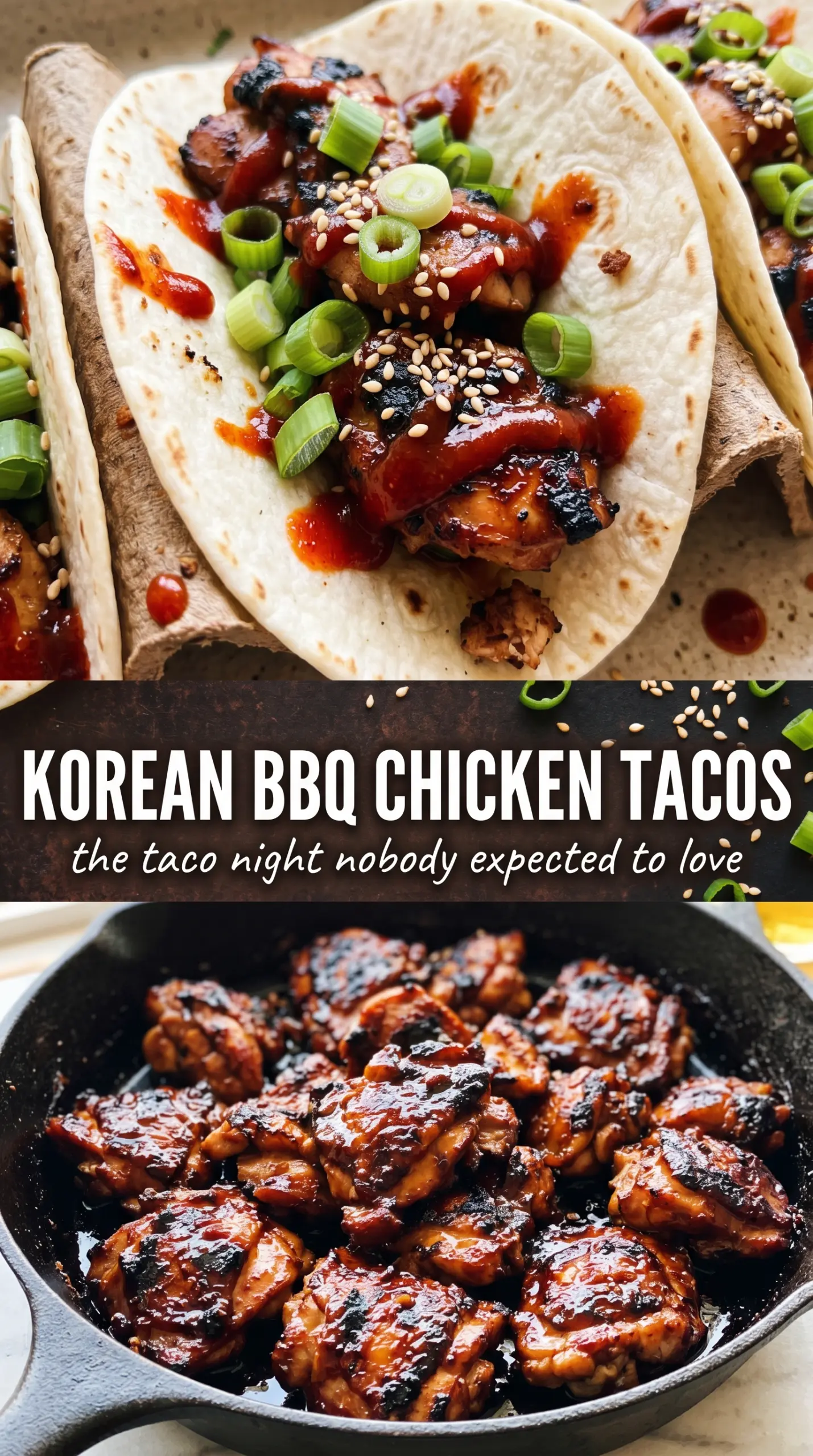
- Chicken thighs — Thighs stay juicy under high heat and hold up to a sticky glaze better than chicken breast. If you swap in breast meat, cut the cooking time down and pull it the moment it’s cooked through, or it dries out fast.
- Gochujang — This gives the tacos their heat, depth, and that thick red sheen. There isn’t a perfect stand-in, but a mix of chili paste and a little miso can get you partway there if you’re in a pinch.
- Honey — Honey softens the chile heat and helps the sauce caramelize on the chicken. Maple syrup works if that’s what you have, though the finish tastes a little less rounded.
- Sesame oil — A little goes a long way here. It adds the nutty aroma that makes the glaze taste distinctly Korean-inspired, so don’t replace it with a neutral oil unless you’re okay losing that note.
- Napa cabbage — Napa cabbage wilts just enough in the quick kimchi while keeping its crunch. Regular green cabbage works too, but it takes a touch longer to soften.
Building the Kimchi and Glaze So They Finish at the Same Time
Mixing the quick kimchi first
Start the quick kimchi before the chicken so it has time to soften and season while you cook. The cabbage should look lightly wilted, glossy, and a little damp after 15 minutes, not swimming in liquid. If you salt it too heavily, the tacos can taste sharp and one-note, so season just enough to wake up the cabbage and support the sesame oil.
Cooking the chicken until the pan starts to look dry
Use a hot skillet or wok and let the chicken take on color before stirring too often. You want browned edges and cooked surfaces, not pale steamed pieces. If the pan is crowded, the chicken will release too much moisture and the glaze won’t cling later, so cook in batches if needed.
Reducing the sauce into a lacquer
Add the gochujang mixture and keep the chicken moving for just a few minutes. The sauce should bubble quickly and turn thick enough to coat the back of a spoon and leave a shiny film on the chicken. If it starts to look dry before the chicken is done, lower the heat a bit and splash in a teaspoon or two of water instead of letting the sugar scorch.
Warming the tortillas and assembling fast
Warm the tortillas in a dry skillet until they’re flexible and have a few toasted spots. Cold tortillas crack, which makes a sticky taco fall apart before you take the first bite. Build them immediately with chicken first, then quick kimchi, then scallions and sesame seeds so the toppings stay bright and the shell doesn’t get soggy.
How to Adapt These Tacos Without Losing the Point
Make Them Gluten-Free
Swap the flour tortillas for certified gluten-free tortillas and use a gluten-free soy sauce or tamari. The filling stays the same, and the flavor barely changes, but the tortilla matters because regular soy sauce and standard flour tortillas both carry gluten.
Make Them Dairy-Free and Egg-Free
This recipe is already naturally dairy-free and egg-free, which makes it easy to serve to a crowd with fewer swaps. Just check the tortillas if you’re buying packaged ones, since a few brands sneak in dairy or other additives.
Turn It Into a Rice Bowl
Skip the tortillas and serve the chicken and quick kimchi over hot rice or shredded cabbage. You’ll lose the handheld taco feel, but you gain a bowl that holds extra sauce better and makes the dish a little easier to stretch for a bigger group.
Storage and Reheating
- Refrigerator: Store the chicken and quick kimchi separately for up to 3 days. The cabbage softens a bit more each day, but the flavor holds.
- Freezer: The chicken freezes well for up to 2 months. The quick kimchi doesn’t freeze well because the cabbage turns limp and watery after thawing.
- Reheating: Reheat the chicken in a skillet over medium-low heat with a splash of water to loosen the glaze. Don’t blast it in the microwave on high or the sauce can tighten too much and the chicken edges dry out.
Questions I Get Asked About This Recipe
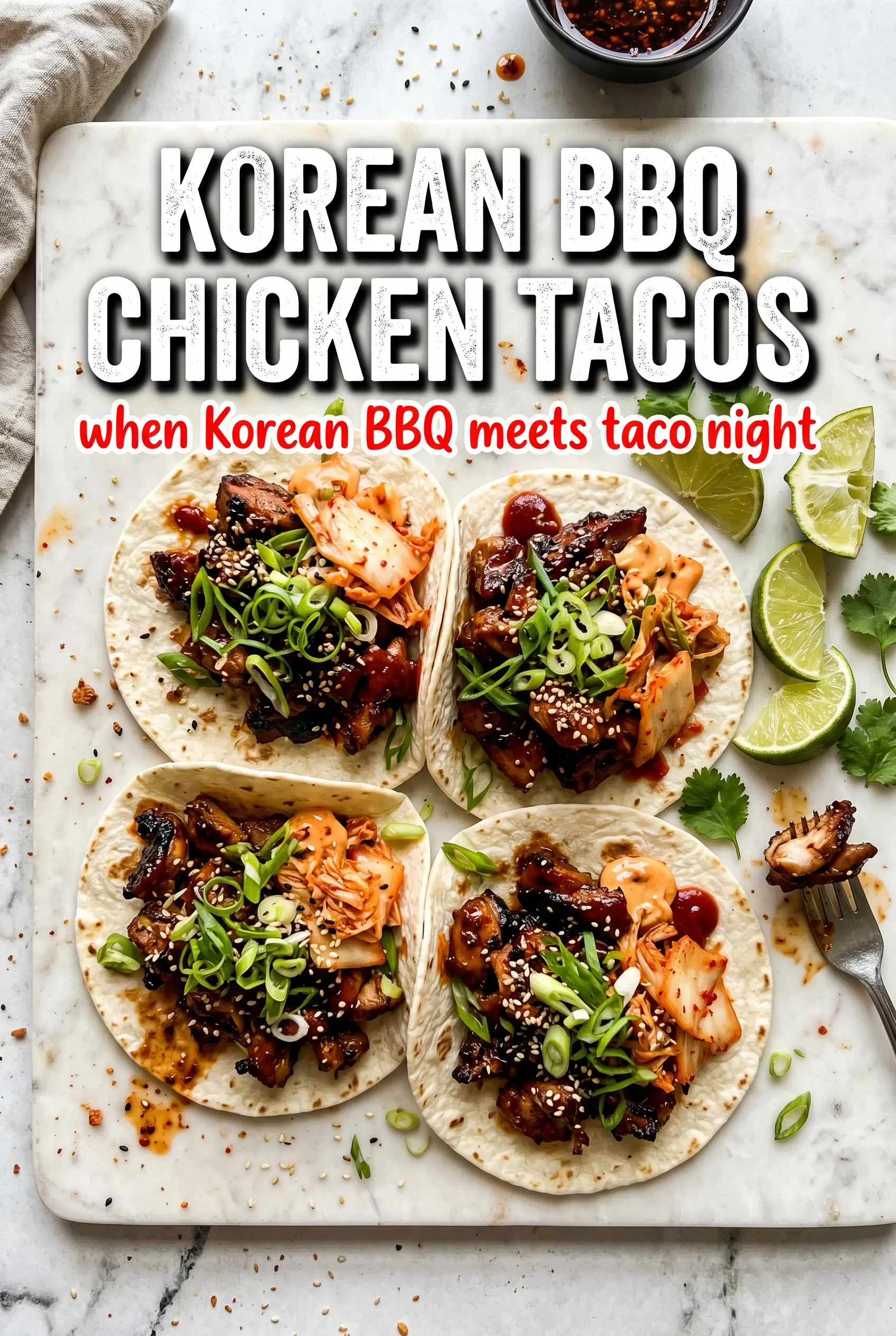
Korean BBQ Chicken Tacos with Quick Kimchi
Ingredients
Equipment
Method
- In a bowl, combine napa cabbage, red chili flakes, minced garlic, sesame oil, rice vinegar, and salt. Mix well, then set aside for 15 minutes while you prepare the chicken.
- Mix soy sauce, gochujang, honey, sesame oil, garlic, grated ginger, and rice vinegar in a bowl. Heat a large skillet or wok over high heat, add chicken pieces, and cook for 8-10 minutes until mostly cooked.
- Pour the gochujang mixture into the skillet and cook for 3-4 minutes more until caramelized and cooked through, stirring often to coat the chicken.
- Warm the flour tortillas in a dry skillet for about 20-30 seconds per side until pliable. Fill each tortilla with Korean BBQ chicken, top with quick kimchi, and garnish with sliced scallions and additional sesame seeds.
- Serve immediately while the chicken glaze is hot and glossy.