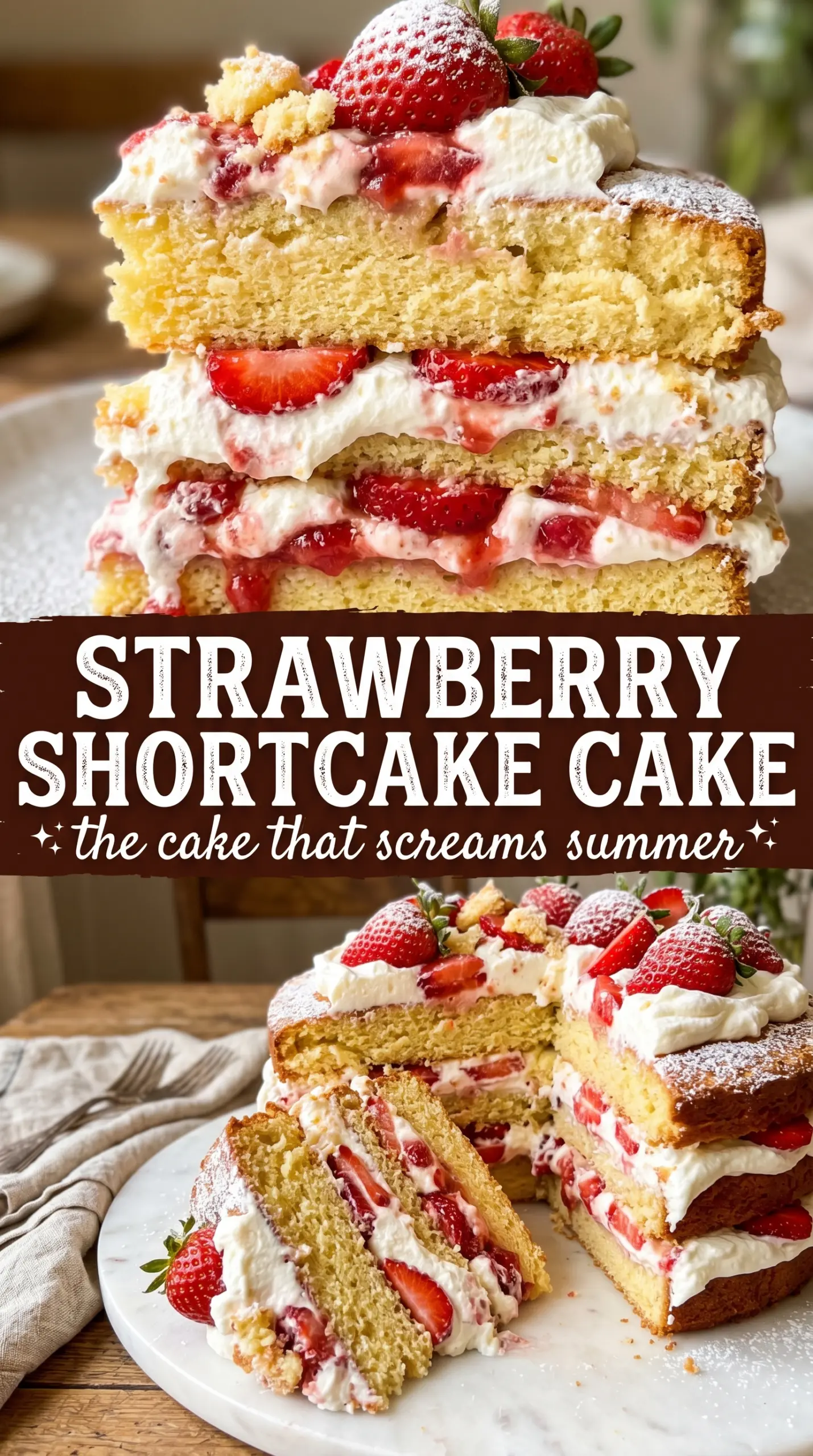
Strawberry shortcake cake lands right in the sweet spot between a bakery-style layer cake and the old-fashioned dessert people keep going back for seconds on. The sponge stays light enough to carry all that whipped cream, but it still has enough structure to slice cleanly without collapsing into berries and cream on the plate. What you get is soft cake, juicy strawberries, and a cool, cloudlike finish in every bite.
The part that makes this version work is restraint. The cake batter is simple and buttery, which gives the layers a tender crumb without turning them heavy. The strawberries are lightly macerated instead of cooked down, so they keep their fresh flavor and build their own syrup as they sit. And the whipped cream stays unsweetened enough to balance the fruit instead of turning the whole dessert cloying.
Below, I’m walking through the one step that keeps the layers from going gummy, the ingredient choices that matter most, and a few smart variations if you want to change the texture or make it a little easier to plan ahead.
The cake layers baked up so even and the whipped cream held its shape after assembling. I loved that the strawberries made their own syrup without turning everything soggy.
Save this strawberry shortcake cake for the dessert that needs soft layers, fresh berries, and a whipped cream finish that slices cleanly.
The Trick to Keeping the Layers Light Instead of Dense
The easiest way to lose a strawberry shortcake cake is to treat it like a heavy butter cake and beat the batter too much once the flour goes in. That pushes too much air out of the butter mixture and develops the gluten, which gives you a tighter crumb than you want here. The goal is a tender layer that can still hold cream and berries without feeling bready.
Alternate the dry ingredients and milk instead of dumping them in all at once. That keeps the batter smooth without overworking it, and the finished cake stays soft enough to soak up a little strawberry juice without falling apart. Let the layers cool completely before assembling too. Warm cake will melt the whipped cream fast, and then the whole thing starts sliding.
What Each Ingredient Is Actually Doing in This Cake
- All-purpose flour — This gives the cake enough structure to slice cleanly. Cake flour will make it a little softer, but all-purpose keeps the layers sturdy enough for stacking.
- Baking powder — This is the lift here. If yours is old, the cake will bake up flatter and heavier, so check the date before you start.
- Unsalted butter — Softened butter creams with the sugar and creates the light, airy base that gives the cake its tender crumb. Salted butter works in a pinch, but the flavor is harder to control.
- Whole milk — Whole milk keeps the batter rich without making it greasy. Lower-fat milk works, but the cake won’t taste as plush.
- Fresh strawberries — Fresh berries are the whole point. Slice them evenly so the macerating sugar pulls out juice at the same rate and you don’t end up with some pieces soft and others dry.
- Heavy cream — Don’t swap this for whipping cream if you want the filling to hold its shape. Heavy cream whips into a sturdier topping that stands up to the berries.
Building the Cake So It Stacks Cleanly
Mixing the Batter Without Toughening It
Cream the butter and sugar until the mixture looks pale and fluffy, not just combined. That step traps air and helps the cake rise evenly. Once the flour goes in, switch to a lighter hand and stop mixing as soon as the batter looks smooth. If you keep going after that point, the crumb tightens up and the layers lose that soft, shortcake-like bite.
Baking and Cooling the Layers
Divide the batter evenly between the pans so the layers bake at the same pace. The cakes are done when the tops spring back and a toothpick comes out clean or with a few moist crumbs. Cool them in the pans for a few minutes, then move them to a rack until they’re completely cool. If you assemble too early, the cream melts and the berries slide right off the cake.
Whipping and Assembling the Finish
Beat the cream with powdered sugar only until stiff peaks form. Stop there. If you go too far, the cream turns grainy and starts looking curdled at the edges. Spread the cream in an even layer, spoon the strawberries over it, then add the second cake layer gently so the filling doesn’t squeeze out the sides.
Make It More Citrus-Forward
Add a little finely grated lemon zest to the cake batter or stir it into the strawberries while they macerate. The cake stays the same structurally, but the lemon sharpens the berry flavor and keeps the dessert from tasting flat.
Dairy-Free Version
Use a plant-based butter in the cake and swap in a full-fat coconut whipping cream for the filling. The cake will bake up nicely, but the cream topping will taste a little coconut-forward and won’t hold as long at room temperature.
Gluten-Free Cake Layers
Use a 1:1 gluten-free baking blend that includes xanthan gum. The layers will be a little more delicate, so let them cool fully before handling and slice with a sharp knife for the cleanest result.
Storage and Reheating
- Refrigerator: Store covered for up to 3 days. The cake softens as it sits, and the strawberries will release more juice.
- Freezer: Freeze the unfrosted cake layers tightly wrapped for up to 2 months. Don’t freeze the assembled cake; the whipped cream and berries won’t thaw well.
- Reheating: This dessert isn’t meant to be reheated. Serve it chilled or at cool room temperature for the best texture, and slice it with a sharp knife wiped clean between cuts.
Questions I Get Asked About This Recipe
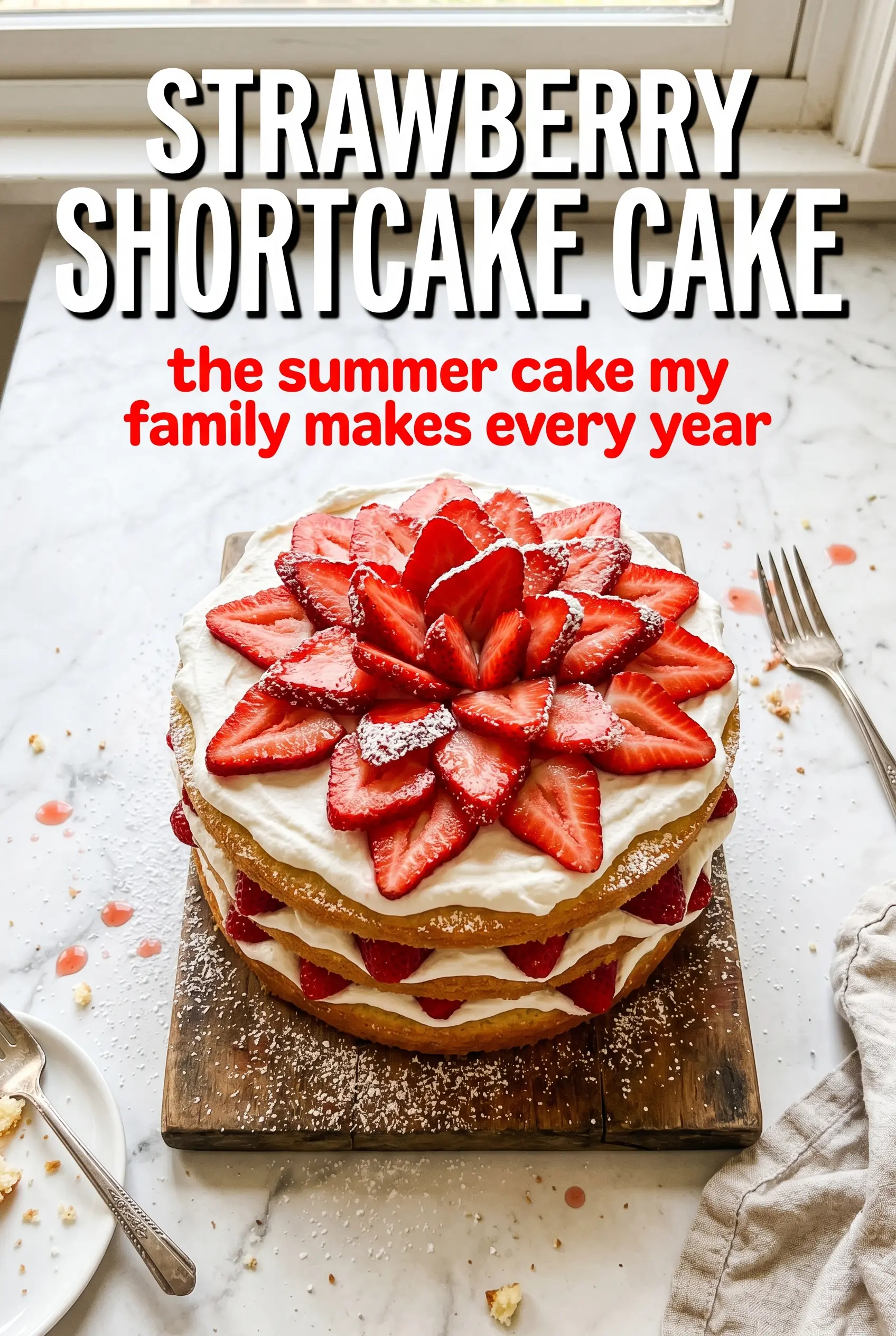
Strawberry Shortcake Cake
Ingredients
Equipment
Method
- Preheat the oven to 350°F and grease two 8-inch round cake pans.
- Whisk together the all-purpose flour, baking powder, and salt until evenly combined.
- Cream the softened unsalted butter and granulated sugar until light and fluffy, about 2-3 minutes, so the batter aerates.
- Beat in the eggs one at a time, then alternate adding the flour mixture and whole milk, beginning and ending with the flour.
- Stir in the vanilla extract until the batter looks smooth and uniform.
- Divide the batter evenly between the prepared pans and bake for 25-30 minutes until a toothpick comes out clean.
- Allow the cakes to cool completely before assembling so the cream won’t melt.
- Combine the sliced fresh strawberries with the remaining granulated sugar and let macerate for 30 minutes.
- Beat the heavy cream with the powdered sugar until stiff peaks form, which will hold layered slices cleanly.
- Place one cake layer on a serving plate and spread half of the whipped cream over it.
- Arrange half of the strawberries over the cream so the top layer stays juicy.
- Place the second cake layer on top and frost with the remaining whipped cream.
- Top with the remaining strawberries and garnish with Additional strawberries for garnish before serving.