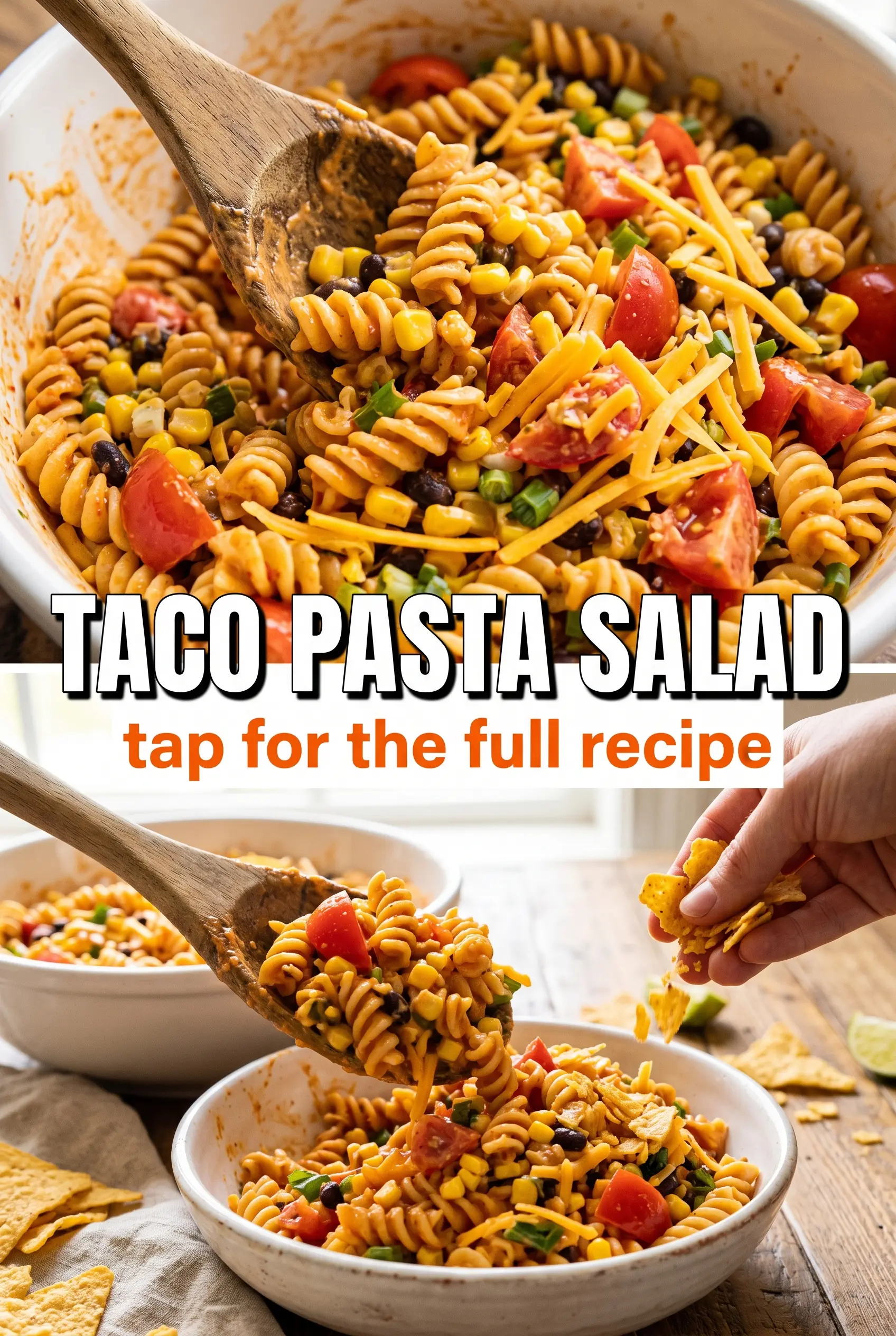
Crisp vegetables, seasoned beef, and a tangy ranch-lime dressing make this taco pasta salad the kind of cold side dish that disappears fast. It eats like a full meal if you want it to, but it still belongs at cookouts, potlucks, and weeknight dinners when you need something filling without turning on much more heat.
The part that makes it work is balance. Rotini catches the dressing in every curve, the pasta gets cooled before it meets the ranch so the sauce stays creamy, and the taco seasoning gets whisked into the dressing instead of sprinkled in dry. That keeps the flavor even from the first bite to the last. The tortilla strips go on at the end for a reason too. If they sit in the salad too long, they lose the crunch that makes the whole bowl feel finished.
Below, you’ll find the small details that keep this from turning watery or bland, plus a few ways to adapt it when you need to feed a crowd or work with what’s already in the fridge.
The ranch-lime dressing coated everything evenly, and the tortilla strips stayed crunchy when I added them right before serving. Even the leftovers the next day had great flavor after a quick stir.
Save this taco pasta salad for the next potluck when you want creamy ranch-lime flavor, crunchy tortilla strips, and a bowl that holds up on the buffet.
The Trick to Keeping Taco Pasta Salad From Turning Heavy
The usual problem with pasta salad like this is that it gets muddy and dense. Ground beef, cheese, and ranch can push it in that direction fast, especially if the pasta is still warm when the dressing goes on. Cooling the pasta first helps the dressing cling instead of soaking in, and it keeps the cheese from melting into little greasy pockets. That matters more here than in a lot of cold salads because this one has enough rich ingredients already.
Another thing worth watching is moisture from the vegetables and beans. Red bell pepper and red onion bring crunch, but they also release liquid after they sit. Draining the beans well and letting the pasta steam off for a few minutes after cooking keeps the bowl from getting soupy by the time it hits the table.
- Rotini pasta — The spirals trap the dressing and taco seasoning in every bite. Short pasta with ridges or twists works best here because smooth noodles let the sauce slide off.
- Ranch dressing — This is what gives the salad its creamy backbone. A bottled ranch is fine, but choose one that tastes tangy, not sweet, so the lime still comes through.
- Lime juice — Fresh lime is what keeps the salad from tasting flat. Bottled juice works in a pinch, but fresh gives the dressing a sharper edge and makes the beef and beans taste brighter.
- Taco seasoning — Mix it into the dressing instead of the beef alone. That spreads the flavor through the whole bowl instead of leaving the meat as the only seasoned part.
- Crispy tortilla strips — Add these at the very end. If they sit in the salad, they soften quickly and you lose the contrast that makes the texture work.
Building the Dressing Before It Hits the Pasta
Start by cooking the pasta just to al dente. If it goes soft in the pot, it gets even softer once it sits in dressing. Drain it well, then let it cool long enough that it no longer gives off steam; that little pause keeps the ranch from thinning out. While it cools, whisk the ranch, lime juice, and taco seasoning until the seasoning disappears into the dressing and the color looks even.
When you combine everything, fold rather than stir hard. A heavy hand breaks the pasta and smears the cheese before it has a chance to stay in visible shreds. Add the beef, corn, peppers, onion, and beans first so they get coated before the cheese goes in. Then finish with cilantro and the tortilla strips right before serving so the herbs stay fresh and the crunch stays intact.
Three Ways to Make This Bowl Fit the Table
Swap the beef for ground turkey
Ground turkey makes the salad a little lighter without changing the structure. Brown it well and season it generously, because turkey needs a stronger hand with salt and taco seasoning than beef does. The texture stays meaty, but the overall bowl tastes a bit cleaner and less rich.
Make it vegetarian with extra beans
Skip the beef and add another can of black beans or pinto beans for body. You’ll lose some of the savory richness from the meat, so bump up the taco seasoning a little and add a pinch more salt. The salad still holds together well, and the beans make it hearty enough to stand on its own.
Use Greek yogurt in place of part of the ranch
Replacing half the ranch with plain Greek yogurt gives the dressing a sharper, tangier finish and cuts the heaviness a little. The texture turns thicker and less silky, so whisk it well with the lime juice before adding the taco seasoning. It’s a good move when you want a colder, brighter salad.
Storage and Reheating
- Refrigerator: Store covered for up to 3 days. The pasta will absorb some dressing, so expect the salad to tighten up as it sits.
- Freezer: Don’t freeze this one. The vegetables turn watery and the ranch dressing separates after thawing.
- Reheating: This salad is meant to be served cold or cool. If it has been chilled hard, let it sit at room temperature for 15 to 20 minutes and stir in a spoonful of ranch or a squeeze of lime to loosen it back up.
Answers to the Questions Worth Asking
Taco Pasta Salad
Ingredients
Equipment
Method
- Cook the rotini pasta according to package directions until al dente, then drain well and set aside to cool.
- In a large bowl, combine cooked pasta, seasoned ground beef, corn, diced red bell pepper, diced red onion, and drained black beans.
- In a separate bowl, whisk together ranch dressing, lime juice, and taco seasoning until smooth.
- Pour the dressing over the pasta mixture and toss gently until evenly coated.
- Fold in shredded cheddar cheese and chopped fresh cilantro, then season with salt and pepper to taste.
- Chill the salad for at least 30 minutes before serving to let flavors meld.
- Just before serving, top with crispy tortilla strips for crunch.