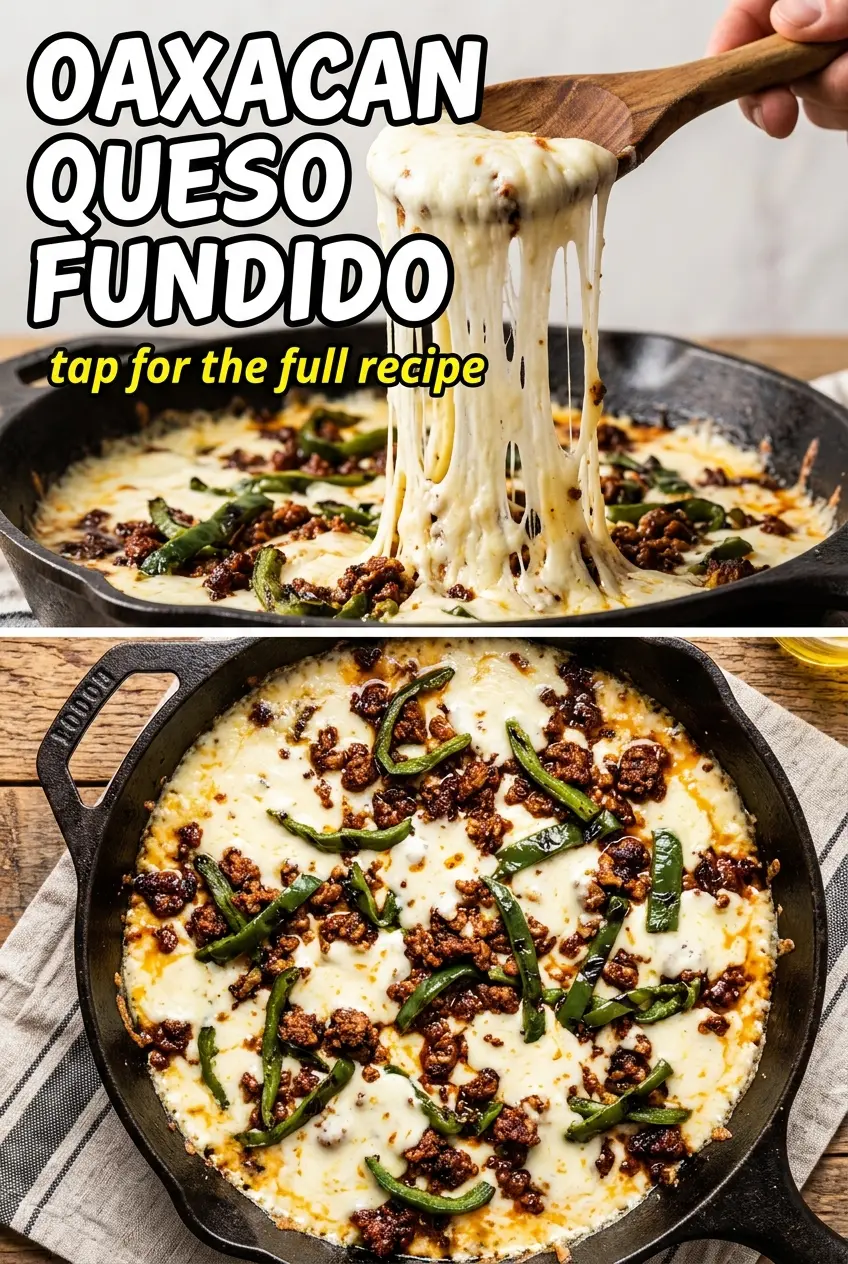
Queso fundido should hit the table bubbling at the edges, stretchy in the middle, with the kind of melt that clings to a tortilla chip instead of slipping off in one greasy sheet. The best versions don’t just taste like cheese; they taste layered, with smoky chorizo, sharp onion, and jalapeños cutting through the richness so every scoop feels balanced. This is the kind of appetizer people hover over until the skillet is scraped clean.
The trick is using a blend of cheeses with different jobs. Oaxaca brings the long, elastic pull, Chihuahua or asadero melts into a creamy base, and Cotija adds salty pockets that keep the dip from tasting flat. The chorizo also matters here because its rendered fat seasons the whole skillet before the cheese goes in. If you rush that part or use pre-shredded cheese coated with anti-caking starch, the texture turns grainy instead of glossy.
Below you’ll find the little details that make queso fundido behave the way it should, from the right heat level for melting to the best way to keep it warm without scorching the bottom. There are also a few smart variations if you want to swap the meat, lighten it up, or stretch it for a bigger crowd.
The cheese melted into this smooth, stretchy layer and never turned greasy. I kept it over low heat on the stove and it stayed scoopable the whole time, which never happens with my usual queso dips.
Save this chorizo queso fundido for the next time you want a skillet of stretchy cheese with just enough heat to keep every scoop interesting.
The Cheese Blend That Keeps Queso Fundido Stretchy, Not Greasy
Queso fundido fails when every cheese in the skillet melts the same way. You want one cheese for stretch, one for body, and one for salt. Oaxaca or mozzarella gives you those long strings people expect from a proper fundido, while Chihuahua or asadero melts into a softer, creamier base that keeps the dip from tightening up too fast.
Cotija is the small detail that keeps this from tasting one-note. It doesn’t melt into the sauce the way the others do; instead, it stays a little crumbly and salty, which is exactly what you want against the rich cheese and chorizo. If you only have mozzarella, use it, but the dip will be a little less supple and a little less complex.
- Oaxaca or mozzarella — This is your stretch cheese. If you can’t find Oaxaca, low-moisture mozzarella is the closest swap, but shred it yourself so it melts smoothly.
- Chihuahua or asadero — These melt into the creamy middle of the dip. Monterey Jack works in a pinch, though it tastes milder and sets a bit softer.
- Cotija — This adds salt and a little bite. Feta can stand in if that’s what you have, but it brings more tang and less of the nutty finish Cotija gives.
- Chorizo — Fresh Mexican chorizo seasons the whole skillet as it cooks. If yours is very fatty, drain off a spoonful or two of grease; too much can make the cheese look slick.
How to Build the Skillet So the Cheese Melts Smoothly
Rendering the Chorizo First
Start the chorizo in a cold cast iron skillet or heavy-bottomed pan and let the heat rise with it. That slow start helps the fat render out instead of seizing into hard little clumps. Break it apart as it cooks until you have browned crumbles and a thin, seasoned film on the bottom of the pan. If there’s a lot of grease pooling, spoon some off before the cheese goes in or the finished dip can turn oily.
Waking Up the Garlic and Jalapeños
Add the garlic and jalapeños to the hot chorizo and stir for about a minute, just until the garlic smells sweet and the jalapeños soften at the edges. This is a short stage, and that’s on purpose. Garlic burns fast in a skillet that’s already hot from rendered fat, and burnt garlic will take over the whole dish. You want fragrance, not browning.
Melting Without Breaking the Cheese
Turn the heat down before the cheese goes in. Add the cheeses with the cream and stir often enough that the bottom doesn’t catch, but not so aggressively that you beat the melt apart. The mix should go from clumpy to glossy, then settle into a thick, stretchy pool in about 5 to 7 minutes. If it looks grainy, the heat was too high; pull the pan off the burner for a minute and keep stirring until it smooths out.
Serving It at the Right Moment
Top the queso with onion and cilantro as soon as the cheese is fully melted. Then serve it right away in the skillet with warm chips. Queso fundido waits for no one, and it starts to firm up as soon as the pan cools. If you’re keeping it on low heat, stir it occasionally and don’t let it bubble hard, or the cheese around the edges can seize and stick.
What to Change When You Need a Different Version
Meatless Queso Fundido
Skip the chorizo and cook the garlic and jalapeños in a tablespoon of butter or olive oil instead. You’ll lose the smoky, spicy fat from the sausage, so add a pinch of smoked paprika and a little extra salt to bring back some depth. The texture stays the same, but the flavor leans cleaner and lighter.
Dairy-Free Version
This one is harder to fake because the stretch is the whole point, but you can use a good melting plant-based cheese blend and keep the heat low. Look for one that lists starches and coconut or cashew base, then stir in a small splash of unsweetened oat milk if it needs loosening. The result won’t pull like traditional queso fundido, but it will still dip well.
Milder Party Version
Use half the jalapeños, or swap them for poblano if you want the pepper flavor without as much heat. You can also double the onion topping, which gives each bite a little crunch and sweetness. This is the version I make when I know there will be kids or spice-shy guests at the table.
Keeping It Warm for a Crowd
Transfer the finished queso to a small slow cooker on warm if you’re serving it over a longer stretch. Stir it every so often so the edges don’t set into a skin. If it thickens too much, splash in a teaspoon or two of cream and stir until it loosens again.
Storage and Reheating
- Refrigerator: Store leftovers in a covered container for up to 3 days. The cheese will firm up and the texture won’t be quite as stretchy after chilling.
- Freezer: I don’t recommend freezing this one. Melted cheese dips tend to separate after thawing, and the texture gets grainy instead of smooth.
- Reheating: Rewarm it slowly over low heat with a splash of cream, stirring often. High heat is what causes the cheese to break, so patience matters more than speed here.
Answers to the Questions Worth Asking
Queso Fundido with Chorizo and Jalapeños
Ingredients
Equipment
Method
- Cook the chorizo in a cast iron skillet over medium heat, breaking it apart as it cooks. Once browned, add the minced garlic and diced jalapeños and cook for 1 minute until fragrant, with a lively sizzling cue.
- Add the shredded Oaxaca, Chihuahua, and Cotija cheeses along with the heavy cream. Stir frequently until the cheese is completely melted and smooth, about 5-7 minutes, watching for a glossy melt that bubbles at the edges.
- Top the queso fundido with the diced onion and chopped cilantro. Serve immediately in the cast iron skillet with warm tortilla chips for dipping, and keep it warm over low heat (or transfer to a slow cooker) so it stays stringy when scooped.