Tender strawberry bundt cake earns its place in the dessert rotation because it stays soft for days, slices cleanly, and delivers strawberry flavor in two different ways: the batter bakes up pink and fragrant, then the glossy glaze seals everything with a sweet, bakery-style finish. The crumb is plush from the sour cream, and the diced strawberries keep each bite from tasting flat or one-note.
The trick is balancing moisture without making the cake heavy. Strawberry puree brings flavor and color, but the sour cream is what keeps the crumb tender after baking. Fresh berries are folded in at the end so they stay dispersed instead of sinking, and the Bundt pan needs a thorough coating so the ridges release cleanly. That’s the difference between a cake that unmolds in one piece and one that tears at the edges.
Below, you’ll find the small details that matter most: how to keep the cake from sticking, when to glaze so it drips instead of disappearing, and what to change if your strawberries are especially juicy.
The cake released from the pan perfectly after 15 minutes, and the strawberry glaze set into those pretty drips without sliding right off. The sour cream kept the crumb super moist for two days.
Love a soft strawberry bundt cake with glossy pink glaze? Save this one for the days when you want a simple cake that still looks like you spent all afternoon on it.
Why the Glaze Belongs on a Fully Cooled Cake
Warm cake and warm glaze sound convenient, but that combination is what turns a pretty bundt into a slippery mess. The cake needs to cool completely so the crumb sets and the glaze can cling to the ridges instead of soaking straight in. When the cake is still even a little warm, the glaze thins out, loses its shine, and runs to the plate faster than it should.
The other thing that matters here is the thickness of the glaze itself. It should pour, not flood. If it’s too thick, it sits in clumps on the top; if it’s too thin, it disappears into the cake. Warming the strawberry glaze with a little water gives you that middle ground where it drips in glossy ribbons and sets with a soft finish.
What the Strawberry Puree, Sour Cream, and Fresh Berries Are Each Doing
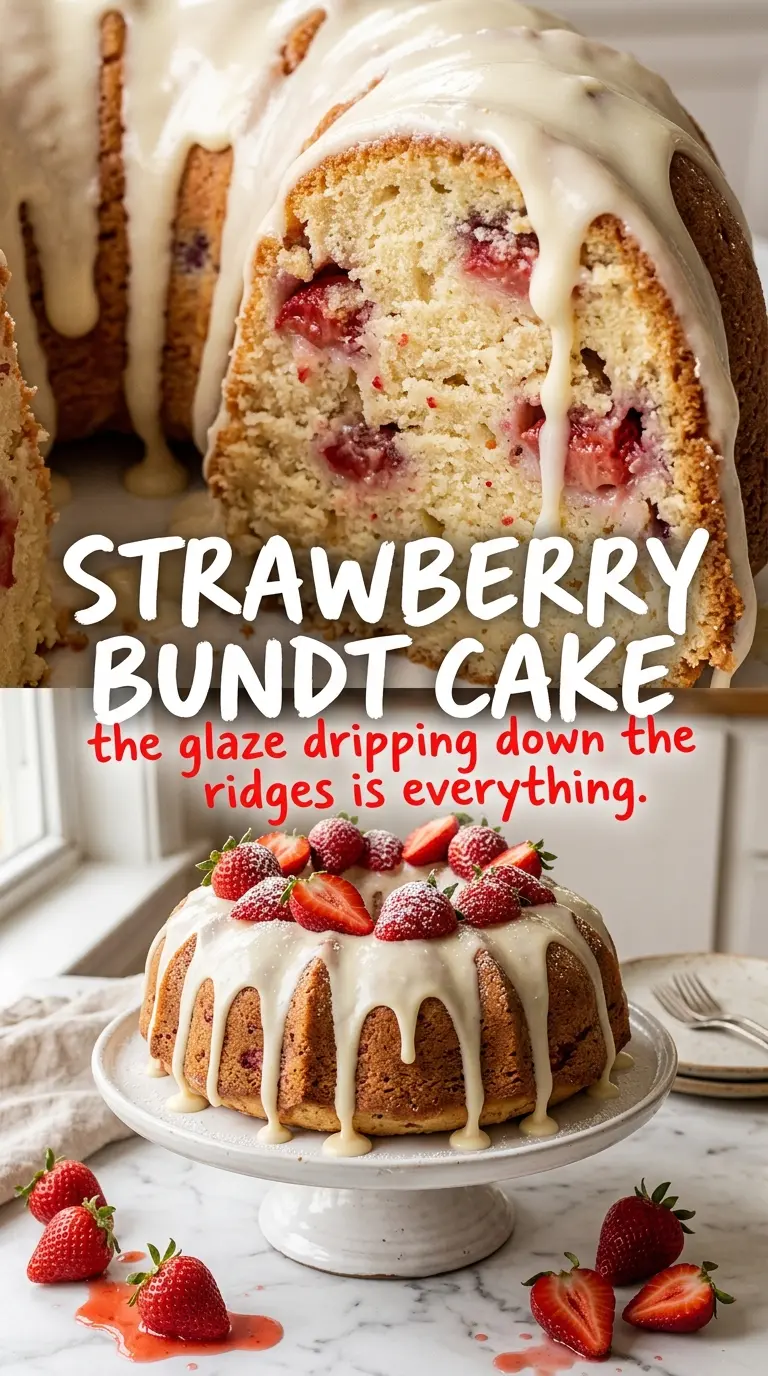
- Fresh strawberry puree — This gives the batter its strawberry flavor and pink tint without thinning the cake the way extra liquid juice would. Use ripe berries and puree them smoothly; chunky puree throws off the batter texture.
- Sour cream — This is the ingredient that keeps the crumb plush instead of dry. Plain full-fat Greek yogurt works in a pinch, but the cake will be a touch firmer and a little less rich.
- Fresh diced strawberries — These add little bursts of fruit in the finished cake, but they need to be chopped small so they don’t sink. Tossing them in at the end keeps them from breaking down and streaking the batter.
- Butter and sugar — Cream them until pale and fluffy. That step traps air, which gives the bundt cake lift and helps it bake up with a lighter crumb instead of a dense one.
- Bundt pan grease — This matters more than most people think. Get into every ridge with softened butter or baking spray plus flour, because the cake has to release cleanly after a 12-cup bake.
Building the Batter So It Stays Light and Releases Cleanly
Starting with the Dry Mix
Whisk the flour, baking powder, and salt before anything else. That spreads the leavener evenly through the batter, which matters in a thick cake like this one. If the baking powder isn’t distributed well, you’ll get uneven rise and a few gummy pockets near the center.
Creaming the Butter and Sugar
Beat the butter and sugar until the mixture looks pale and fluffy, not just blended. That usually takes a few minutes, and it’s worth the time because this is where the cake gets its structure. If you rush it, the crumb turns tighter and heavier than it should.
Alternating the Flour and Strawberry Mixture
Add the flour mixture in batches, alternating with the strawberry puree mixed with sour cream, and begin and end with flour. This keeps the batter from curdling and prevents the flour from overworking. Once the wet ingredients go in, mix only until the batter looks combined; overmixing is what makes a bundt cake tough.
Folding in the Fresh Strawberries
Use a spatula for the diced strawberries and stop as soon as they’re distributed. Stirring hard breaks them down and turns the batter watery in spots. Pour the finished batter into the prepared pan, smooth the top, and bake until a toothpick comes out clean and the cake starts to pull slightly from the sides.
Use frozen strawberries when fresh ones are out of season
Thaw them first and drain off the excess liquid before pureeing or dicing. Frozen berries can work, but they release more water, so the batter needs that drainage step to keep the cake from turning dense and wet in the middle.
Make it dairy-free
Use a plant-based butter and a thick dairy-free yogurt in place of the sour cream. The cake will still be tender, but the crumb may be a little less rich and the glaze may need a few extra drops of water to reach a pourable consistency.
Swap the glaze for a powdered sugar finish
If you want something lighter, dust the cooled cake with powdered sugar and skip the glaze entirely. You’ll lose the glossy strawberry drip, but the cake reads a little cleaner and lets the berry flavor in the crumb stand out more.
Storage and Reheating
- Refrigerator: Store covered for up to 4 days. The crumb stays moist, though the glaze will soften a little after the first day.
- Freezer: Freeze unfrosted slices tightly wrapped for up to 2 months. Glaze after thawing for the best texture, because the finished glaze can turn sticky in the freezer.
- Reheating: Bring slices to room temperature or warm them for 10 to 15 seconds in the microwave. Don’t heat too long or the cake dries out fast and the glaze gets runny.
Questions I Get Asked About This Recipe
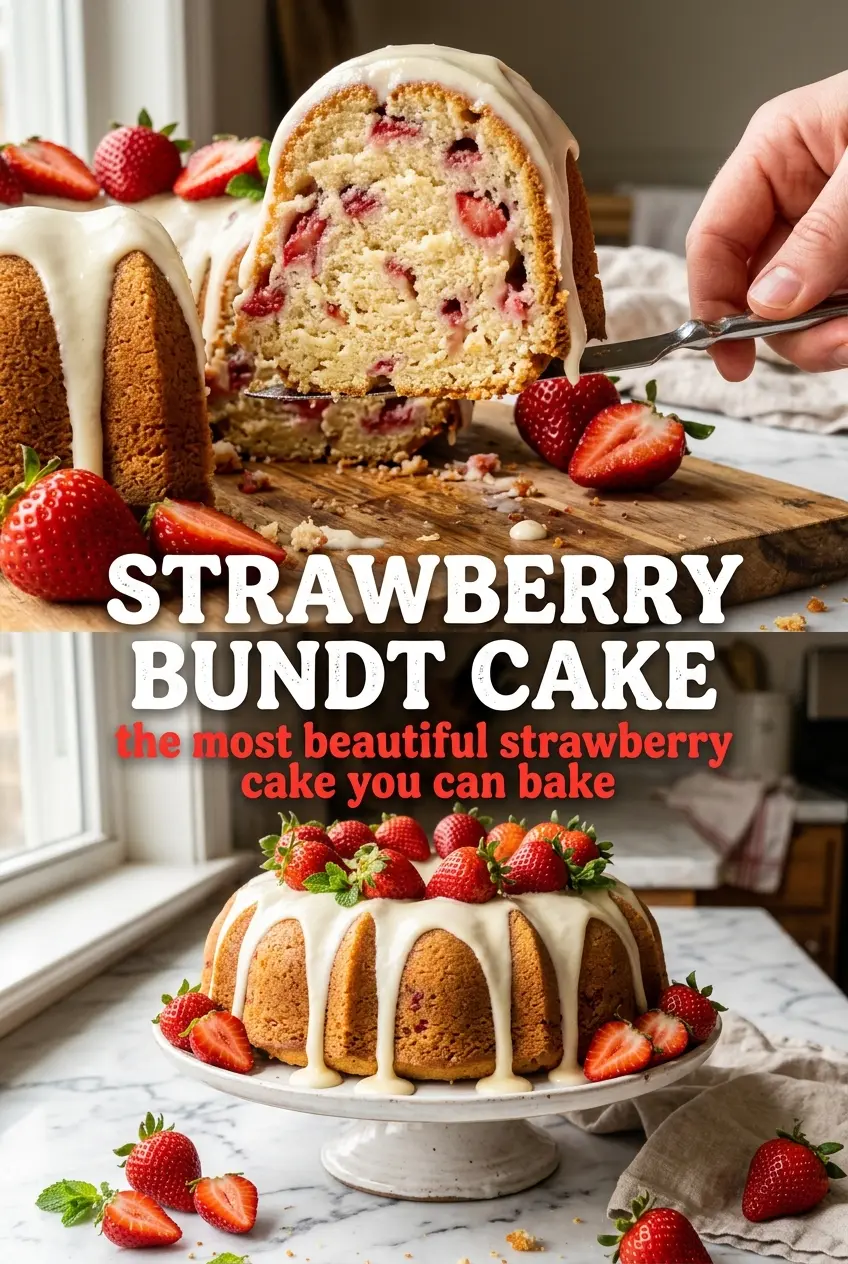
Strawberry Bundt Cake
Ingredients
Equipment
Method
- Preheat oven to 350°F and grease a 12-cup Bundt pan thoroughly so the cake releases cleanly.
- Whisk together all-purpose flour, baking powder, and salt in a mixing bowl until evenly combined.
- Beat butter and granulated sugar until light and fluffy to aerate the batter.
- Add eggs one at a time, mixing after each addition until smooth.
- Alternate adding the flour mixture and the strawberry mixture (fresh strawberry puree mixed with sour cream), beginning and ending with flour for a tender crumb.
- Stir in vanilla extract and fold in fresh strawberries, diced, keeping the fruit evenly distributed.
- Pour batter into the prepared Bundt pan and bake 45-50 minutes at 350°F until a toothpick comes out clean.
- Cool the cake in the pan for 15 minutes so it sets before unmolding (rest at room temperature).
- Invert the cake onto a wire rack and cool completely for best glaze adhesion.
- Warm strawberry glaze or jelly with water until pourable, stirring until smooth and glossy.
- Drizzle the warm glaze over the cooled cake, letting it run down the sides for a dripping look.
- Dust with powdered sugar before serving for a crisp, sweet finish.