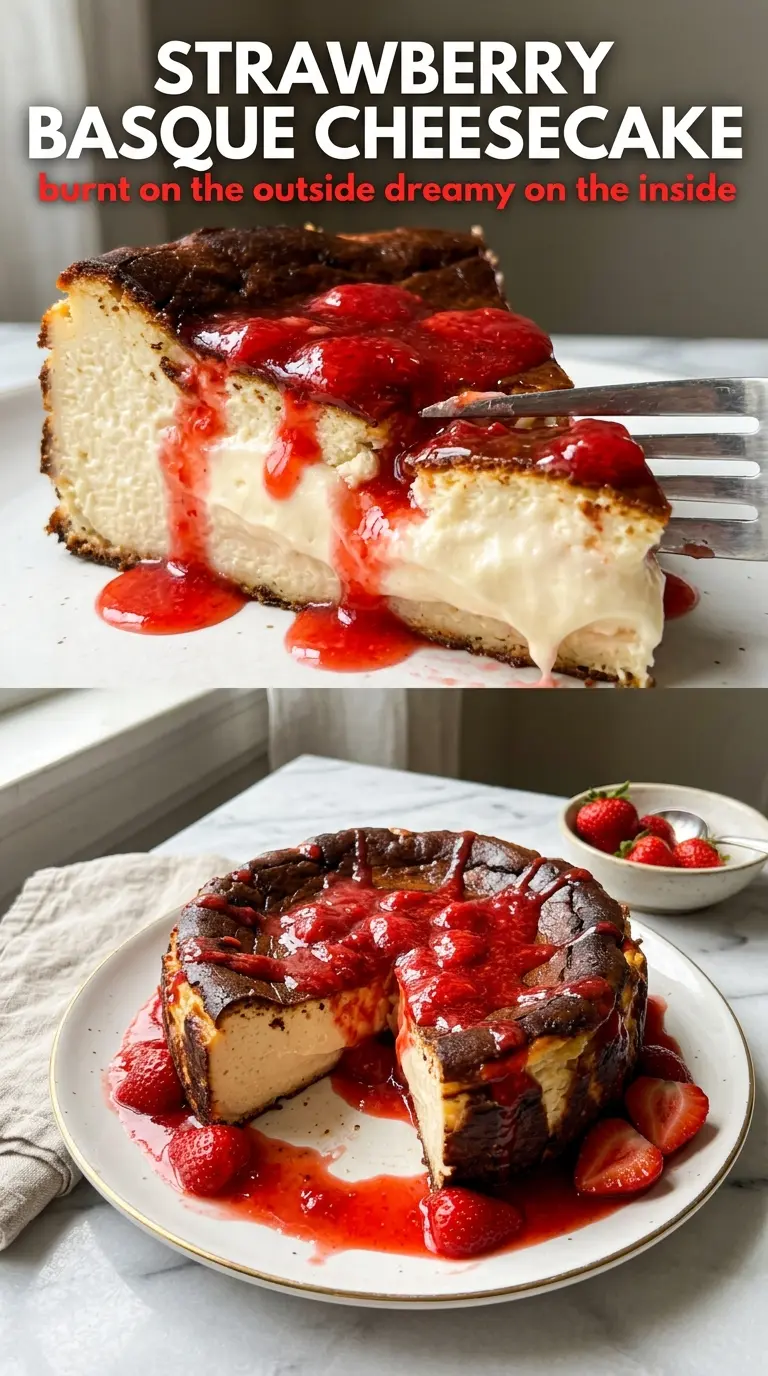
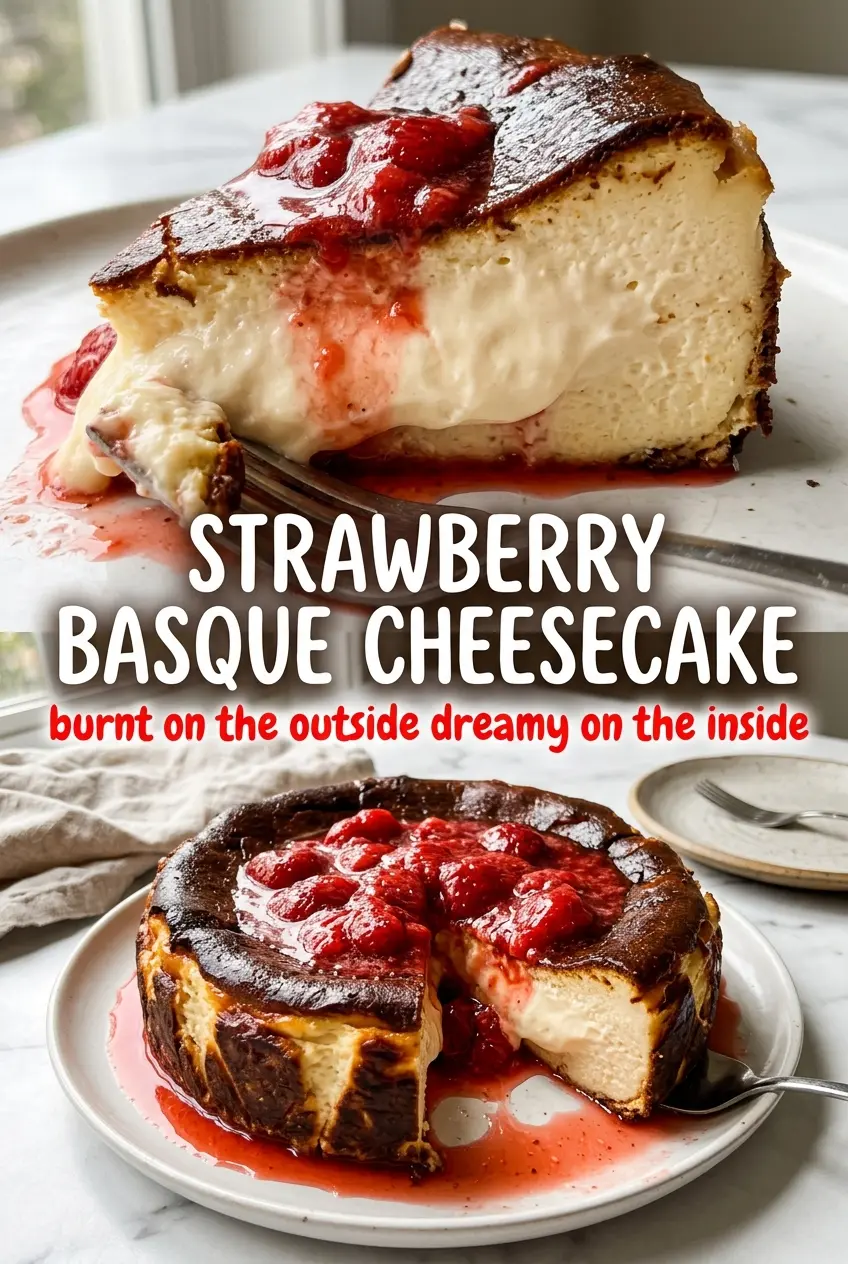
Strawberry Basque cheesecake lands somewhere between a brûléed custard and a classic cheesecake, with a dark, crinkled top that gives way to a creamy center beneath. The contrast is the whole point here: the edges bake up deep and almost caramelized, while the middle stays soft enough to cut with a spoon if you let it warm slightly before serving.
The strawberries do more than sit on top for color. A quick toss with honey and balsamic vinegar turns them glossy, a little syrupy, and sharp enough to cut through all that rich cream cheese. That small hit of acid keeps each bite from feeling heavy, and it makes the whole dessert taste brighter without turning it into a fruit tart.
Below you’ll find the key details that make this version work, from why the batter stays smooth to how to know when the center still has the right amount of wobble. I also included a few useful swaps and storage notes, since this is the kind of dessert that tastes even better after it has had time to settle in the fridge.
The top got that dark Basque crackle I was hoping for, and the strawberries with balsamic made it taste fancy without any extra work. Mine set up perfectly after chilling for half an hour.
Save this strawberry Basque cheesecake for the nights when you want a crackly top, creamy middle, and glossy berry topping in one pan.
The Trick to Keeping a Basque Cheesecake Creamy Instead of Grainy
The biggest mistake with Basque cheesecake is overmixing after the eggs go in, which whips in too much air and can give you a puffy, uneven texture. This batter wants to be smooth, but not beaten into submission. Low speed is enough once the cream cheese and sugar are combined, and each egg should disappear before the next one goes in.
The flour is doing a subtle job here. It gives the center just enough structure to slice cleanly after chilling, but too much mixing once it goes in can tighten the texture fast. Stop as soon as the batter looks uniform and glossy, because the cheesecake will finish setting in the oven and then firm up again in the fridge.
What the Cream Cheese, Strawberries, and Balsamic Are Each Doing
- Cream cheese — Use full-fat cream cheese and let it come fully to room temperature. Cold cream cheese leaves little lumps that never smooth out once the batter is mixed. This is the ingredient where quality and temperature both matter.
- Heavy cream — Heavy cream keeps the filling rich and soft, giving the cheesecake that custardy center Basque cheesecake is known for. Don’t swap in milk here; it thins the batter and changes the set.
- Eggs — Eggs provide the structure that lets the cheesecake hold together after that high-heat bake. Add them one at a time on low speed so the batter stays silky instead of foamy.
- Strawberries — Fresh berries are worth using here because they stay bright and juicy. If yours are very large, slice them so the honey and balsamic can coat the cut surfaces evenly.
- Honey and balsamic vinegar — This is the detail that wakes the dessert up. Honey softens the berries into a light syrup, and balsamic adds enough tang to sharpen the sweetness without tasting like salad dressing.
Getting the Dark Top and Wobbly Center at the Same Time
Mix the batter only until it looks smooth
Beat the cream cheese and sugar first until there are no visible lumps, then switch to low speed once the eggs go in. If the batter gets airy, the cheesecake can rise too much and crack in an uneven way instead of forming that rough, rustic top. The finished batter should look thick, glossy, and pourable.
Use parchment with tall overhangs
Line the pan so the paper comes up and over the sides. That loose collar helps the cheesecake lift out cleanly and also protects the sides a little from overbrowning. If the parchment tears or sits flat, the edges can stick and make serving messy.
Bake until the center still jiggles
At 400°F, the top should go deeply golden brown and the edges should look set while the center gives a clear wobble when you nudge the pan. If the middle looks fully firm in the oven, it has gone too far and will bake up dense once chilled. Pull it when it still trembles in the center; it will finish setting as it cools.
Chill before topping
Let the cheesecake cool all the way down before refrigerating it for at least 30 minutes. If you pile on the strawberries while it’s warm, their juices run into the top and blur the clean contrast between the cake and the fruit. The chilled surface holds the berries in place and slices more cleanly.
How to Adapt This Strawberry Basque Cheesecake for Different Kitchens
Gluten-Free Version
Swap the all-purpose flour for a 1:1 gluten-free baking blend. The cheesecake will still slice well, though the interior can feel a touch softer, so give it the full chill time before cutting.
No-Balsamic Berry Topping
If you want a sweeter finish, skip the balsamic and toss the strawberries with only honey and a tiny pinch of salt. You lose the sharp edge, but the topping turns more dessert-forward and less tangy.
Mixed Berry Variation
Raspberries or sliced cherries can replace part of the strawberries for a deeper fruit flavor. Keep the total amount the same so the topping doesn’t get watery, and taste before serving since different berries need different amounts of honey.
Make It Ahead
Bake the cheesecake a day in advance and keep it chilled, then add the strawberries right before serving. The texture gets even better after an overnight rest, and the topping stays fresh instead of bleeding into the surface.
Storage and Reheating
- Refrigerator: Store covered for up to 4 days. The texture stays creamy, and the berry topping may soften a little as it sits.
- Freezer: Freeze the cheesecake without the strawberries for up to 1 month, wrapped tightly. Thaw overnight in the fridge before topping.
- Reheating: This cheesecake isn’t meant to be reheated. Serve it cold or let slices sit at room temperature for 15 to 20 minutes so the center softens slightly and tastes fuller.
Questions I Get Asked About This Recipe
Strawberry Basque Cheesecake
Ingredients
Equipment
Method
- Preheat the oven to 400°F. Line an 8x8 inch baking dish or a 9-inch round baking dish with parchment paper, letting the edges hang over the sides.
- Beat the cream cheese and granulated sugar until smooth and combined. Keep mixing until no sugar lumps remain.
- Add the eggs one at a time, beating on low speed. Stop and scrape the sides between additions if needed.
- Stir in the heavy cream, vanilla extract, and all-purpose flour until just combined. Mix only until the batter looks uniform.
- Pour the batter into the prepared baking dish. Tap the dish lightly on the counter to settle the surface.
- Bake for 45-50 minutes at 400°F until the top is deeply golden brown and the center still jiggles slightly. Look for a rustic cracked surface and set edges while the middle wobbles.
- Cool the cheesecake completely. Let it come to room temperature before chilling.
- Refrigerate for at least 30 minutes. This helps the center firm up to a creamy slice.
- Toss the fresh strawberries with honey and balsamic vinegar. Stir until the berries are glossy and lightly syrupy.
- Top the cheesecake with the strawberry mixture just before serving. Finish with fresh mint for garnish.