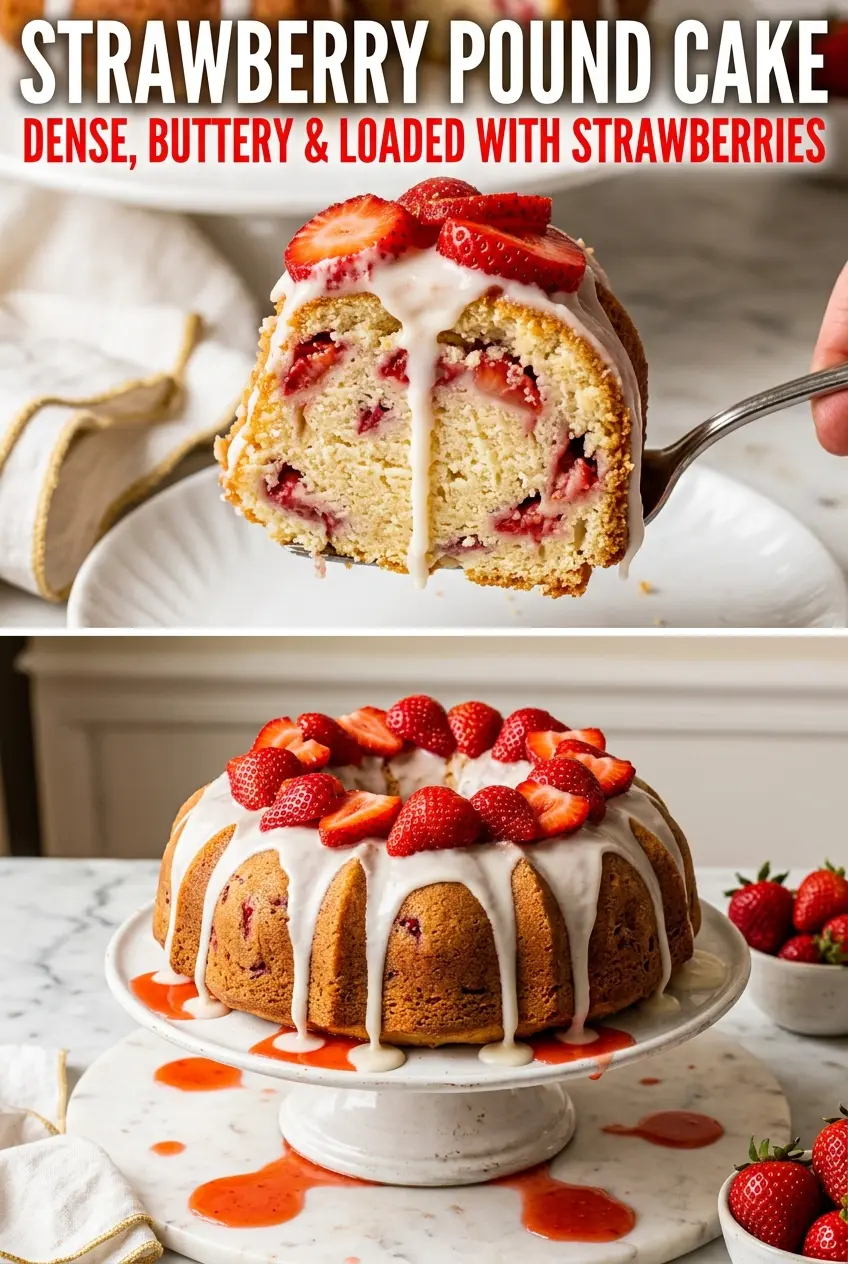
Dense, tender strawberry pound cake has a way of disappearing fast because it slices cleanly, holds together beautifully, and still tastes like fresh berries instead of candy. The crumb stays rich from the butter and sour cream, while the strawberry puree gives the batter a real berry flavor that runs all the way through the loaf. The diced strawberries add little bursts of juiciness that keep every bite interesting.
The trick is keeping the batter balanced. Fresh strawberry puree brings moisture, so the flour and sour cream have to do their job or the cake turns heavy in the middle. Folding the diced berries in at the end keeps them from sinking and streaking the batter pink-gray. A lemon glaze on top cuts the sweetness and sharpens the berry flavor instead of smothering it.
Below, you’ll find the small details that matter most: how to keep the loaf from baking up gummy, why the puree works better than chopped berries alone, and a few smart ways to adapt the cake when you need a different finish.
The cake came out dense in the best way, and the strawberry pieces stayed in place instead of sinking. I let it cool fully before glazing, and the lemon icing set up perfectly on top.
Save this strawberry pound cake for the days when you want a buttery loaf with real berry flavor and a bright lemon glaze.
The Part That Keeps Strawberry Pound Cake from Turning Heavy
Pound cake gets dense by design, but dense is not the same thing as wet or leaden. The difference here comes from how the strawberry puree is handled. It adds flavor and moisture, but it also loosens the batter, so the flour has to be added in stages and the cake needs the full bake time to set the center properly.
The other place people go wrong is with the strawberries themselves. Big chunks of fruit can drop to the bottom or leave wet pockets if they are folded in too aggressively. Dice them small, fold them in at the very end, and stop as soon as they disappear into the batter. Overmixing at that point tightens the crumb and deflates the air you built when creaming the butter and sugar.
What the Strawberry Puree and Sour Cream Are Doing Here
- Fresh strawberry puree — This is where the berry flavor really comes from. Cooked jam can work in a pinch, but it changes the taste and sweetness. If you’re using frozen berries, thaw them first and puree them completely so the batter doesn’t end up grainy.
- Sour cream — It keeps the loaf tender and gives the crumb enough body to support the extra moisture from the puree. Plain full-fat Greek yogurt can stand in, but the cake will be a little tangier and slightly less rich.
- Butter — Softened butter is what gives pound cake its tight, velvety structure. Cold butter won’t cream properly, and melted butter makes the cake denser than it should be. Let it soften until a finger presses in easily but doesn’t leave it oily.
- Fresh strawberries — The diced fruit adds texture and little pockets of fresh flavor. Frozen diced berries are more likely to bleed, so if you use them, keep them frozen until the last second and expect a softer, wetter crumb.
- Lemon juice in the glaze — This keeps the topping from tasting flat. It also brightens the strawberry flavor, which matters because pound cake needs something sharp on top to balance the butter and sugar.
Building the Batter Without Losing the Loaf Texture
Cream the Butter Until It Looks Pale and Fluffy
Beat the butter and sugar for about three minutes, until the mixture looks lighter in color and feels fluffy instead of grainy. That step traps air, which gives the loaf some lift before the batter goes into the oven. If you rush it, the cake will still bake, but it will come out tighter and more compact. Scrape the bowl halfway through so no cold butter hides at the bottom.
Alternate the Dry Mix and Strawberry Mixture
Add the flour mixture and the sour cream-strawberry puree in alternating additions, beginning and ending with flour. That order helps the batter hold its structure instead of separating or turning soupy. Once the flour goes in, mix only until the batter looks combined and smooth. If you keep beating after that, the crumb turns chewy instead of tender.
Fold in the Strawberries at the End
Use a spatula and fold in the diced strawberries by hand. The batter should look thick enough to hold the fruit in place, and you should still see distinct pieces rather than broken streaks of berry juice. If the strawberries are very juicy, pat them dry first so the extra liquid doesn’t create soggy pockets in the loaf. Pour the batter into the pan as soon as the fruit is evenly distributed.
Cool Before You Glaze
Let the cake rest in the pan for 15 minutes, then turn it out onto a rack and cool it completely. If you glaze a warm pound cake, the icing melts and runs off instead of sitting in a clean drizzle on top. Whisk the powdered sugar with lemon juice and water until it ribbons off the whisk, then drizzle it over the cooled loaf and finish with fresh strawberries.
How to Adapt This Strawberry Pound Cake for Different Kitchens
Dairy-Free Version with a Softer Crumb
Swap the butter for a good plant-based baking stick and use plain dairy-free yogurt in place of the sour cream. The cake will still slice well, but the flavor will be a little less rich and the crumb slightly more delicate. Use a brand that behaves like butter in baking, not a soft spread from a tub.
Gluten-Free Version That Still Holds Together
Use a 1:1 gluten-free baking blend that includes xanthan gum. The texture will be a little more delicate than the original, but the loaf should still slice cleanly after cooling completely. Let it rest in the pan for the full 15 minutes so it has time to set before you move it.
Extra-Berry Version for a Stronger Strawberry Hit
Reduce the puree slightly on the stovetop first if your berries are watery, then cool it before using. That concentrates the flavor and keeps the batter from becoming too loose. You can also add a spoonful of finely chopped strawberries to the glaze for more berry character on top.
Storage and Reheating
- Refrigerator: Store covered for up to 4 days. The crumb gets a touch firmer in the fridge, but the flavor stays good.
- Freezer: Freeze the unglazed loaf tightly wrapped for up to 2 months. Thaw overnight in the refrigerator, then glaze after it comes back to room temperature.
- Reheating: Warm individual slices for 10 to 15 seconds in the microwave. Too much heat dries out the butter-rich crumb and makes the strawberries taste dull.
Answers to the Questions Worth Asking
Strawberry Pound Cake
Ingredients
Equipment
Method
- Preheat oven to 325°F and grease a 9x5 inch loaf pan. Place the pan on a sheet pan so it’s easier to transfer and remove from the oven.
- Whisk all-purpose flour, baking powder, and salt until evenly combined. Pause and check there are no baking powder lumps.
- Beat butter and granulated sugar until light and fluffy, about 3 minutes. Stop once the mixture looks paler and slightly thicker.
- Add eggs one at a time, beating well after each addition. The batter should look smooth before you add the next egg.
- Alternate adding the flour mixture and sour cream mixed with fresh strawberry puree, beginning and ending with flour. Mix only until the ingredients are just incorporated.
- Stir in vanilla extract and gently fold in fresh strawberries, diced. Stop folding when you see strawberry pieces evenly distributed with no streaking.
- Pour batter into the prepared loaf pan and level the top. Tap the pan once to help release trapped air.
- Bake at 325°F for 50-55 minutes, until a toothpick comes out clean. The top should look set and lightly golden.
- Cool in the pan for 15 minutes. You’ll notice the cake firms up and pulls slightly from the sides.
- Turn out onto a wire rack to cool completely. Wait until the cake is fully cool so the glaze doesn’t run off.
- Whisk powdered sugar with fresh lemon juice and water to create a glaze. Mix until smooth and pourable with a glossy sheen.
- Drizzle the glaze over the cooled cake and garnish with fresh strawberries for garnish. Finish with a few visible strawberry pieces on top.