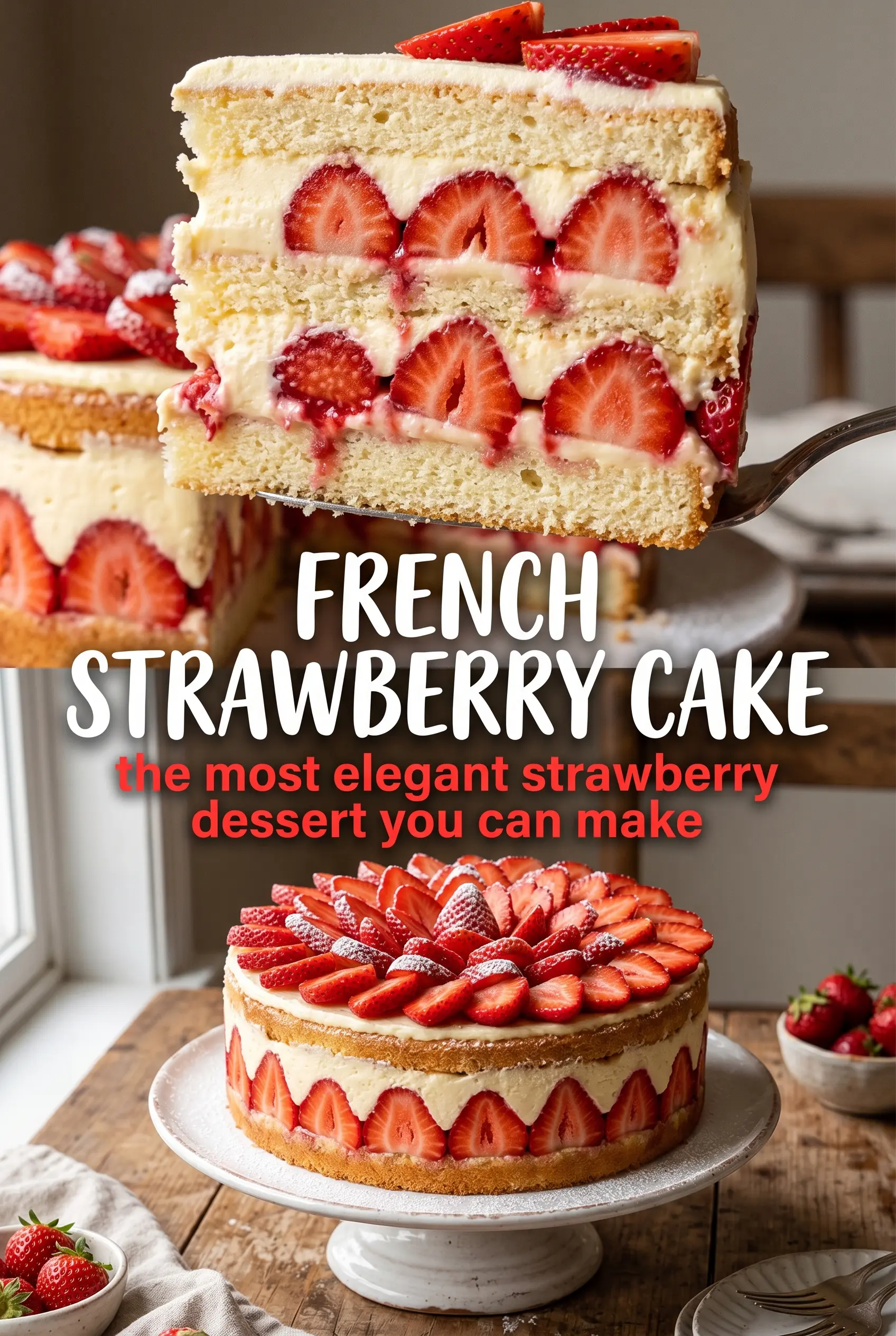
French strawberry cake lands with the kind of quiet elegance that makes people pause at the table before they take the first bite. The sponge stays light and tender, the pastry cream adds a cool, custardy layer, and the whole strawberries on top give each slice a clean, jewel-box finish. It looks special occasion without being fussy, which is exactly why it earns a place in the rotation.
The texture depends on two things done well: a properly aerated batter and complete cooling before assembly. Whipping the egg whites to stiff peaks gives the sponge its lift, while the yolk batter keeps the crumb rich enough to hold up under pastry cream. If the cake is even slightly warm, the cream softens and the layers slide, so the chill time matters just as much as the baking time.
Below, you’ll find the one detail that keeps the cake from turning soggy, plus a few smart swaps if your strawberries are small, tart, or not perfectly shaped. It’s the kind of dessert that looks like it came from a bakery case, but it’s built from straightforward steps you can manage at home.
The sponge stayed so light, and the pastry cream set up beautifully after an hour in the fridge. I used berries that were a little small, but the layered slices still looked gorgeous and held together cleanly when I cut it.
Save this French strawberry cake for the dessert that needs delicate layers, fresh strawberries, and a clean bakery-style finish.
The Sponge Needs Air, Not Extra Mixing
This cake gets its lift from whipped egg whites, not from a heavy batter or a long rise in the oven. Once the flour goes in, the mixing has to turn gentle and brief, or the sponge tightens up and loses the tender crumb that makes the layers cut cleanly. The goal is a batter that looks light and slightly foamy, not perfectly smooth.
Another common stumble happens when the egg whites are folded in too aggressively. If you stir them in like standard cake batter, you knock out the air you just worked to build. Use a wide spatula and fold only until the streaks disappear, because a few tiny white ribbons are better than a dense cake.
- Egg yolks and sugar — Beating these until pale and thick gives the cake its structure and that soft yellow color. Don’t rush this stage; the mixture should fall back in slow ribbons.
- Egg whites — These do the lifting here. Stiff peaks matter because soft peaks collapse too fast once the batter hits the oven.
- Oil — Oil keeps the crumb supple even after chilling. Butter can work, but it changes the texture and makes the cake a little firmer.
- Pastry cream — Use a cream that’s fully chilled and thick enough to hold its shape. Thin pastry cream turns the layers slippery instead of neat.
What Each Ingredient Is Actually Doing in This Cake
The strawberries are more than decoration. Their juice softens the pastry cream just enough at the edges, which makes each bite taste fresh instead of heavy, but they need to be dry when they go on the cake or the surface turns watery. Pat them dry after washing and hull them close to serving time so they keep their shape.
Vanilla and powdered sugar do quiet but important work. The vanilla rounds out the cream and the batter, while the powdered sugar on top gives the cake that finished French pastry look without weighing down the fruit.
- All-purpose flour — This is the right balance for a sponge that can stack without crumbling. Cake flour makes a softer crumb, but it can be too delicate for slicing and layering.
- Baking powder — The whites provide most of the lift, but the baking powder keeps the sponge from feeling flat. Fresh baking powder matters here; old powder gives you a thinner cake.
- Vegetable oil — Neutral oil keeps the crumb moist after refrigeration, where butter-based cakes often firm up too much.
- Strawberries — Choose berries that are ripe but still firm. Very soft berries bleed into the cream and make the top look muddied.
Building the Layers So the Cake Stays Clean and Tall
Baking the Sponge
Pour the batter into a prepared 9-inch round pan and smooth the top lightly so it bakes evenly. The cake is done when it springs back at the center and a toothpick comes out clean, but don’t wait for deep browning; that usually means the edges have started to dry out. Cool it in the pan first, then turn it out and let it finish cooling completely on a rack.
Splitting and Filling
Use a long serrated knife to split the cake into two even layers once it’s fully cool. If the cake feels warm at all, stop and wait, because a soft sponge tears under the knife. Spread half the pastry cream on the bottom layer, then arrange half the strawberries over it before adding the top layer; this keeps the cake stable and gives each slice a clean cross-section.
Finishing and Chilling
Spread the remaining pastry cream on top and arrange the rest of the strawberries in a pattern that looks intentional, not crowded. A light dusting of powdered sugar works best right before serving so it stays visible. The hour in the refrigerator is not optional; it lets the cream set and gives the cake the neat slices that make this dessert worth the effort.
How to Adapt This Cake When the Fruit or Cream Changes
Make it gluten-free with a cup-for-cup flour blend
A good 1:1 gluten-free blend can work here, but the cake will be a little more delicate and may need a gentler hand when slicing. Use the same amount by weight if you can, and let the baked cake cool completely before moving it, because the crumb firms as it sits.
Swap the pastry cream for stabilized whipped cream
Whipped cream makes the cake lighter and less custardy, which is nice if you want a softer dessert, but it won’t hold as long in the fridge. If you go this route, stabilize the cream so the layers don’t slump after a few hours.
Use mixed berries when strawberries aren’t perfect
Raspberries or sliced peaches can stand in for part of the strawberries, but keep the fruit firm and dry. Juicier fruit looks pretty for a minute, then bleeds into the cream and softens the top more than you want.
Storage and Reheating
- Refrigerator: Store covered for up to 2 days. The cake stays tasty, but the strawberries soften and the top loses some of its sharp finish after the first day.
- Freezer: I don’t recommend freezing the assembled cake. The pastry cream and fresh strawberries change texture once thawed, and the layers get watery.
- Reheating: Don’t reheat this cake. Serve it cold from the fridge or let it sit out just long enough to take the chill off, which brings out the strawberry flavor without melting the cream.
Questions I Get Asked About This Recipe
French Strawberry Cake
Ingredients
Equipment
Method
- Preheat the oven to 350°F and prepare a 9-inch round cake pan for baking. Set it aside so the batter goes in immediately after mixing.
- Whisk together all-purpose flour, baking powder, and salt in a mixing bowl. Whisk until the dry mix is evenly combined and looks uniform.
- Beat the egg yolks with granulated sugar until pale and thick, about 3 minutes. Stop when the mixture falls in ribbons and lightens in color.
- Add vegetable oil, water, and vanilla extract to the yolk mixture and mix until smooth. The batter should look glossy and cohesive.
- Fold the flour mixture into the yolk mixture just until no dry streaks remain. Stop as soon as the batter is combined to keep the sponge delicate.
- In a separate bowl, beat the egg whites until stiff peaks form. The peaks should stand upright without drooping.
- Gently fold the egg whites into the batter until light and combined. The batter should look airy with streaks fully incorporated.
- Pour the batter into the 9-inch round cake pan and bake at 350°F for 30 minutes. Bake until a toothpick inserted in the center comes out clean.
- Cool the cake completely in the pan. Let it cool fully before slicing so the layers stay intact.
- Slice the cake into two layers. Keep the layers even so the pastry cream spreads smoothly.
- Spread half the pastry cream over the bottom layer. Smooth it to the edges for a level, pale pink layer.
- Arrange half the whole strawberries on top of the pastry cream. Place them snugly so they form a jewel-like pattern.
- Add the top cake layer and press gently to level. Stop as soon as the layers meet with no sliding.
- Spread the remaining pastry cream over the top layer. Cover evenly for a consistent blush-pink finish.
- Arrange the remaining whole strawberries on top in a decorative pattern. Use whole berries to keep the surface looking bright and tidy.
- Dust the cake with powdered sugar right before chilling. The top should show a light, even snowfall effect.
- Refrigerate the cake for at least 1 hour before serving. Chill until the pastry cream firms and slices hold their shape.