Ruby-pink rhubarb jam with vanilla running through it is the kind of preserve that earns its place on the counter fast. It sets up glossy and spreadable, with enough tartness to keep every spoonful bright and enough sugar to make the rhubarb taste deeper instead of flatter. The vanilla doesn’t turn it dessert-like; it rounds the edges and makes the fruit taste fuller.
This version works because the pectin goes in before the sugar, which gives the jam a better chance to thicken evenly before the batch gets overloaded with sweetness. Rhubarb brings a lot of water to the pot, so the hard boil matters. That minute at a full boil after the sugar goes in is what gets the set started, and the 24-hour rest is what tells you whether you’ve landed on the right texture.
Below, I’ve added the small details that matter most: how to keep the jam from turning foamy or overcooked, what the vanilla bean is doing in the pot, and how to tweak the batch if you want a slightly softer set or a less sweet finish.
The jam set up beautifully after the 24-hour rest, and the vanilla bean flecks made it taste much more special than plain rhubarb jam. I loved how the texture stayed spreadable instead of getting stiff.
Save this vanilla-rhubarb jam for the jars that set ruby-bright and spread straight onto warm toast.
The Boil That Decides Whether This Jam Sets
Rhubarb jam can look finished long before it actually is. The mixture needs a true rolling boil after the pectin goes in, then a hard boil after the sugar is added, and that distinction matters. A lazy simmer leaves you with syrupy jam that never fully settles into a spreadable set.
The biggest mistake is backing off the heat when the mixture starts to foam and rise. That’s the moment the pectin and sugar are doing their work. Stir constantly so nothing catches on the bottom, but keep the boil moving until the minute is up. If you stop early, the jam may taste fine and still pour like sauce after it cools.
- Rolling boil first: This wakes up the pectin before the sugar makes the pot heavier and slower to thicken.
- Hard boil after sugar goes in: This is the set-making stage. The jam should bubble aggressively across the whole surface.
- 24-hour rest: Don’t judge the texture hot. Rhubarb jam tightens as it cools and finishes setting overnight.
What the Vanilla Bean Is Actually Doing Here
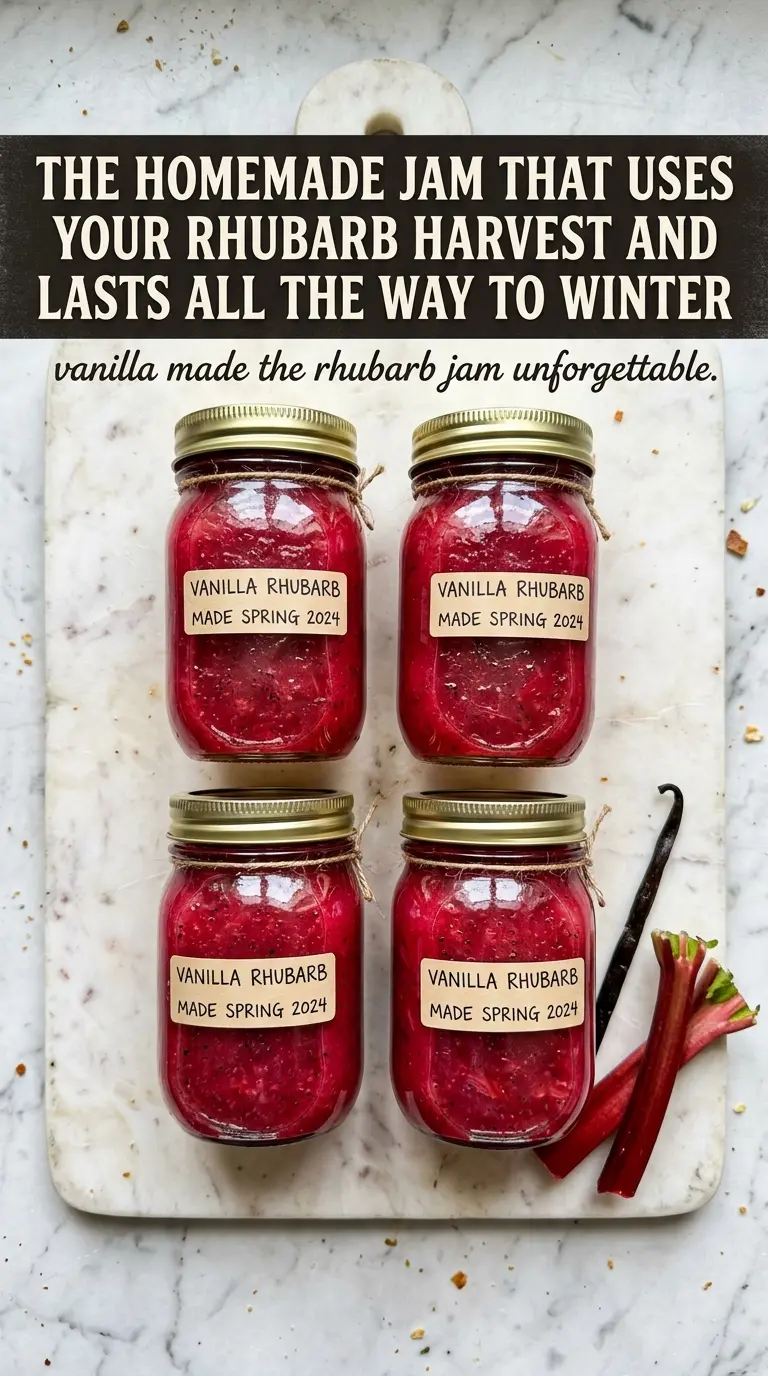
The vanilla bean is not just garnish. The seeds dot the jam with those tiny flecks you notice in the jar, but the pod itself carries a round, floral depth that leans into rhubarb’s tartness and softens the sharp edges. If you only use vanilla extract, you’ll get flavor, but not the same mellow background note or the visible speckled look.
- Fresh rhubarb: Use firm stalks and dice them evenly so they break down at the same rate. Thin pieces dissolve too fast; huge chunks stay stringy.
- Vanilla bean: This is worth using if you want the best flavor and the flecked look. If you need a swap, use 1 to 1 1/2 teaspoons pure vanilla extract and stir it in off the heat at the end.
- Lemon juice: It sharpens the fruit and helps the pectin do its job. Bottled juice works fine here because the acidity matters more than the freshness.
- Powdered pectin: Stick with the box amount. Reducing it changes the set more than people expect, especially with juicy rhubarb.
Getting the Jar-Fill and Water Bath Right
Once the jam reaches its finished boil, move fast. Foam on top is normal; skim off what you can after removing the pot from the heat so the jars look clean and the surface isn’t clouded. Fish out the vanilla bean pod before filling the jars, then ladle the jam into hot sterilized jars with the 1/4-inch headspace. Too little headspace can force jam out during processing, and too much can leave the seals weak.
Keep the rims clean, secure the lids fingertip-tight, and process the jars in a full boiling water bath for 10 minutes. The water needs to cover the jars by at least an inch the entire time. When the jars come out, resist the urge to press the lids or move them around; the vacuum seal forms as they cool, and jostling them can interfere with that first seal.
How to Adjust This Jam Without Losing the Set
Softer, Spoonable Jam
Pull the jam from the heat as soon as the 1-minute hard boil is up and don’t extend the cook time trying to make it thicker in the pot. It will look looser hot, but it sets into a softer preserve after the overnight rest. This version is best if you like jam that spreads easily over toast without feeling firm.
Less Sweet, Brighter Finish
You can’t cut the sugar dramatically and expect the same set, but you can serve the jam alongside tangy cheese or plain yogurt to balance it. If you want a more pronounced rhubarb edge, add a little extra lemon zest at the end rather than reducing the sugar in the pot. That keeps the preserve stable while sharpening the fruit.
Vanilla Extract Instead of a Bean
Use pure vanilla extract if that’s what you have, but add it after the jam comes off the heat so the aroma stays fresh. You’ll lose the speckled look and some depth, yet the jam will still taste rounded and balanced. This is the best backup when you want the recipe to work without a specialty ingredient.
Working With Frozen Rhubarb
Frozen rhubarb works, but it gives off more liquid and may need a slightly longer boil to reach the same set. Thaw and drain it first if you can, then measure the fruit after it’s defrosted. If the batch seems extra loose before boiling, that’s normal; the pectin and hard boil still do the heavy lifting.
Storage and Reheating
- Refrigerator: Unopened processed jars keep for about 1 year in a cool, dark pantry; once opened, refrigerate and use within 3 to 4 weeks.
- Freezer: This jam can be frozen in freezer-safe containers if you skip canning, leaving headspace for expansion. The texture may loosen a touch after thawing, but it still spreads well.
- Reheating: Jam doesn’t need true reheating, but if it thickens too much in the fridge, let the jar sit at room temperature for a bit. Microwaving a spoonful for a few seconds works too; heat it gently or the sugar can make it bubble over fast.
Questions I Get Asked About This Recipe
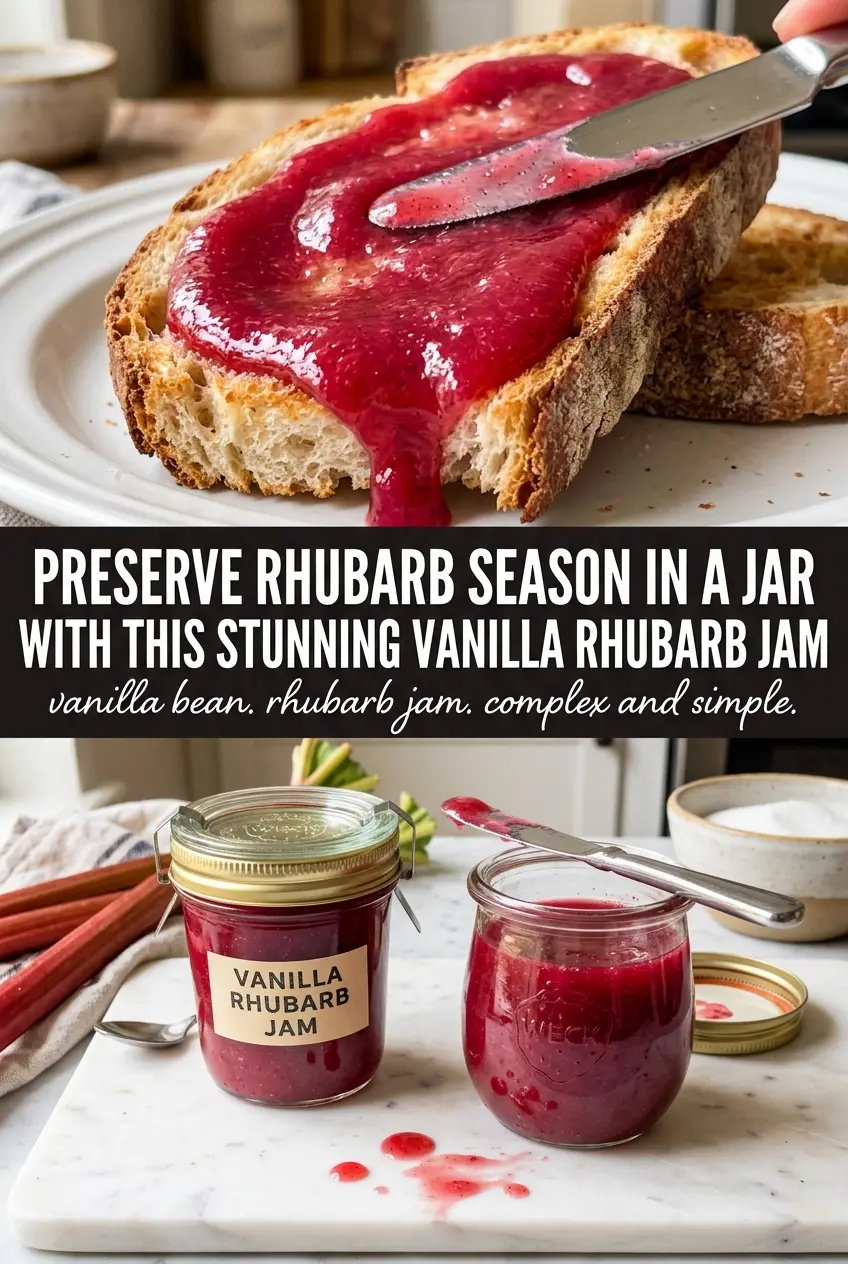
Vanilla-Rhubarb Jam
Ingredients
Equipment
Method
- Combine diced fresh rhubarb, vanilla bean pod and seeds, and lemon juice in a large pot. Stir to distribute the vanilla seeds throughout, creating a pink base with visible flecks.
- Stir in powdered pectin and bring the mixture to a rolling boil over medium-high heat, stirring constantly for steady bubbling. Keep it at a vigorous boil so the mixture thickens and looks glossy.
- Add the sugar all at once and return to a hard boil for 1 minute, stirring constantly. The jam should bubble rapidly and look clear-to-amber around the edges before it thickens.
- Remove the pot from heat, skim off any foam, and remove the vanilla bean pod. The jam should be smooth and ruby-pink with suspended vanilla bean flecks.
- Ladle the hot jam into sterilized half-pint jars, leaving 1/4-inch headspace. Wipe jar rims clean so the lids seal properly.
- Process the filled jars in a boiling water bath for 10 minutes. Keep the water at a true boil with jars fully covered for safe canning.
- Let jars sit undisturbed for 24 hours to set completely. The jam will firm into a thick, spreadable texture with a spoonable gel.