Soft brown sugar cookies with little bursts of tart rhubarb are the kind of bake that disappears fast from a cookie plate. The dough stays tender and chewy, while the rhubarb cuts through the sweetness with a bright, almost jammy pop in every bite. They taste familiar enough to pull people in, but the flavor is just unexpected enough to make them reach for a second cookie.
What makes this version work is the balance. Brown sugar keeps the crumb moist and gives the cookies that deeper caramel note, while the rhubarb is diced small so it softens in the oven without turning the dough wet. A short bake time matters here. Pull them when the edges are just turning golden and the centers still look a little soft; they finish setting on the pan and stay chewy instead of dry.
Below, I’ve included the small details that matter most, from keeping the rhubarb evenly distributed to the best way to store these once they cool. If you’ve only used rhubarb in pies or crisps, this is a good one to keep around.
The rhubarb stayed tender without making the cookies soggy, and the brown sugar gave them this deep, caramel flavor. I baked mine 11 minutes and they came out soft in the middle with crisp edges.
Brown Sugar Rhubarb Cookies deliver soft centers, tart pink bites, and that deep brown sugar chew in every batch.
The One Trick That Keeps Rhubarb Cookies Soft Instead of Wet
Rhubarb brings a lot of moisture with it, and that’s usually where fruit cookies go sideways. If the pieces are too large, they leak into the dough and make the centers gummy before the edges have a chance to set. Dicing the rhubarb finely solves that problem. It softens just enough to taste juicy, but it still reads as little tart pockets instead of streaks of wet fruit.
The other thing that matters here is the bake time. These cookies should not be browned all over when they come out of the oven. They need to look just set in the center, because the carryover heat on the pan finishes the middle without drying out the crumb. If you wait for a deep golden top, you’ve already gone too far.
What the Brown Sugar and Rhubarb Are Each Doing Here
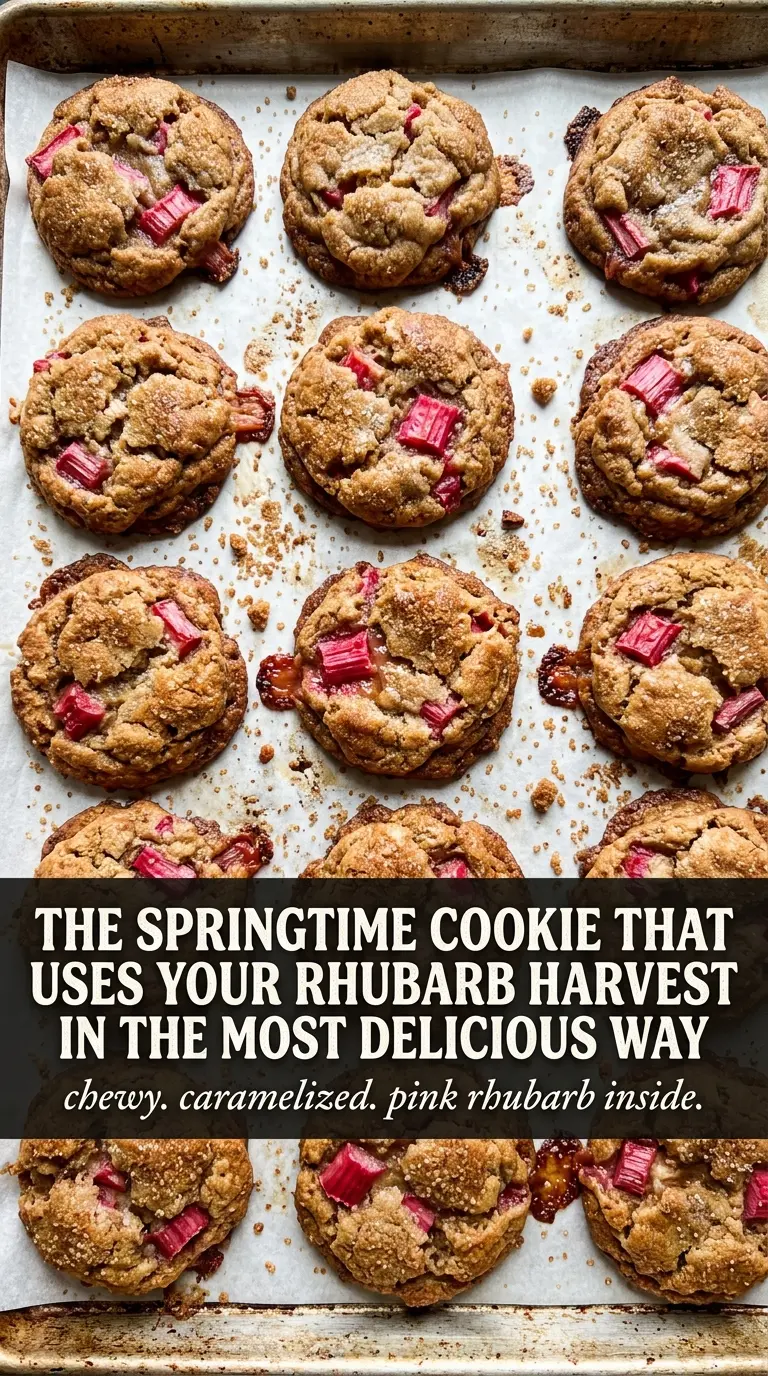
- Brown sugar — This is the backbone of the cookie. It adds moisture, keeps the crumb soft, and gives the dough that caramel note that plays so well with tart rhubarb. Light or dark brown sugar both work; dark brown sugar gives a deeper molasses flavor, while light brown sugar keeps the cookie a little cleaner and sweeter.
- Fresh rhubarb — Fresh is the right choice here. Frozen rhubarb releases too much water and can make the dough spread unevenly. If you only have frozen, thaw it fully and pat it dry very well before folding it in, but expect a softer, less tidy cookie.
- Butter — Softened butter creams with the sugar to trap air, which gives these cookies their tender lift. Cold butter won’t cream properly, and melted butter will make the dough greasy and dense.
- Walnuts — Optional, but useful if you want extra texture. They add a little crunch and bitterness that balances the sweetness. Leave them out if you want the rhubarb to stay front and center.
Building the Dough So the Rhubarb Stays Evenly Spread
Creaming the Butter and Brown Sugar
Start with butter that’s softened, not melted. Beat it with the brown sugar until it looks fluffy and a little paler, which usually takes a couple of minutes with a hand mixer. That step matters because it gives the cookies their soft, cakeless texture. If the mixture looks greasy or loose, the butter is too warm and the cookies will spread more than they should.
Mixing in the Dry Ingredients
Add the flour mixture gradually and stop as soon as the dough comes together. Overmixing at this point tightens the dough and makes the cookies tougher. You want the flour just incorporated, with no dry streaks left, but don’t keep beating it once that happens.
Folding in the Rhubarb
Fold the diced rhubarb in by hand so it stays in pieces instead of breaking down into the dough. The batter will look a little rough, and that’s fine. If you stir too aggressively, the rhubarb starts releasing juice right into the dough and the cookies can bake up patchy. Add the walnuts here too, if you’re using them, and stop mixing once they’re evenly distributed.
Baking Until the Centers Just Set
Drop the dough by rounded tablespoons onto parchment-lined sheets, leaving room for spread. Bake until the edges are lightly golden and the centers no longer look glossy, usually 10 to 12 minutes. Let them sit on the baking sheet for five minutes before moving them, because they’re fragile straight from the oven and finish setting as they rest.
How to Tweak These Without Losing the Soft, Chewy Texture
Make Them Nut-Free
Skip the walnuts and the cookies will still have plenty of texture from the rhubarb and the chewy brown sugar base. The flavor gets a little cleaner and more fruit-forward without the nutty bitterness.
Use Gluten-Free Flour
A 1:1 gluten-free baking blend works best here. The cookies may spread a touch more or bake up slightly softer, but the rhubarb and brown sugar still carry the flavor well. Don’t swap in almond flour alone, because the dough won’t hold the same shape.
Add Lemon Zest for a Brighter Finish
A little lemon zest wakes up the rhubarb without changing the texture. It sharpens the tartness and makes the cookies taste a little fresher, especially if your rhubarb is on the mild side.
Use Light Brown Sugar for a Lighter Sweetness
Dark brown sugar gives a deeper molasses taste, but light brown sugar keeps the cookies a little more delicate and lets the rhubarb stand out. Either one works; the difference is mostly in how rich the finished cookie tastes.
Storage and Reheating
- Refrigerator: Store in an airtight container for up to 4 days. The rhubarb will soften a bit more, but the cookies stay tender.
- Freezer: These freeze well. Freeze baked cookies in a single layer, then move them to a container or freezer bag for up to 2 months. You can also freeze the dough balls and bake straight from frozen, adding 1 to 2 minutes.
- Reheating: Warm cookies in a 300°F oven for 4 to 5 minutes or in the microwave for about 10 seconds. Don’t overheat them or the rhubarb can turn mushy and the centers dry out.
Questions I Get Asked About This Recipe
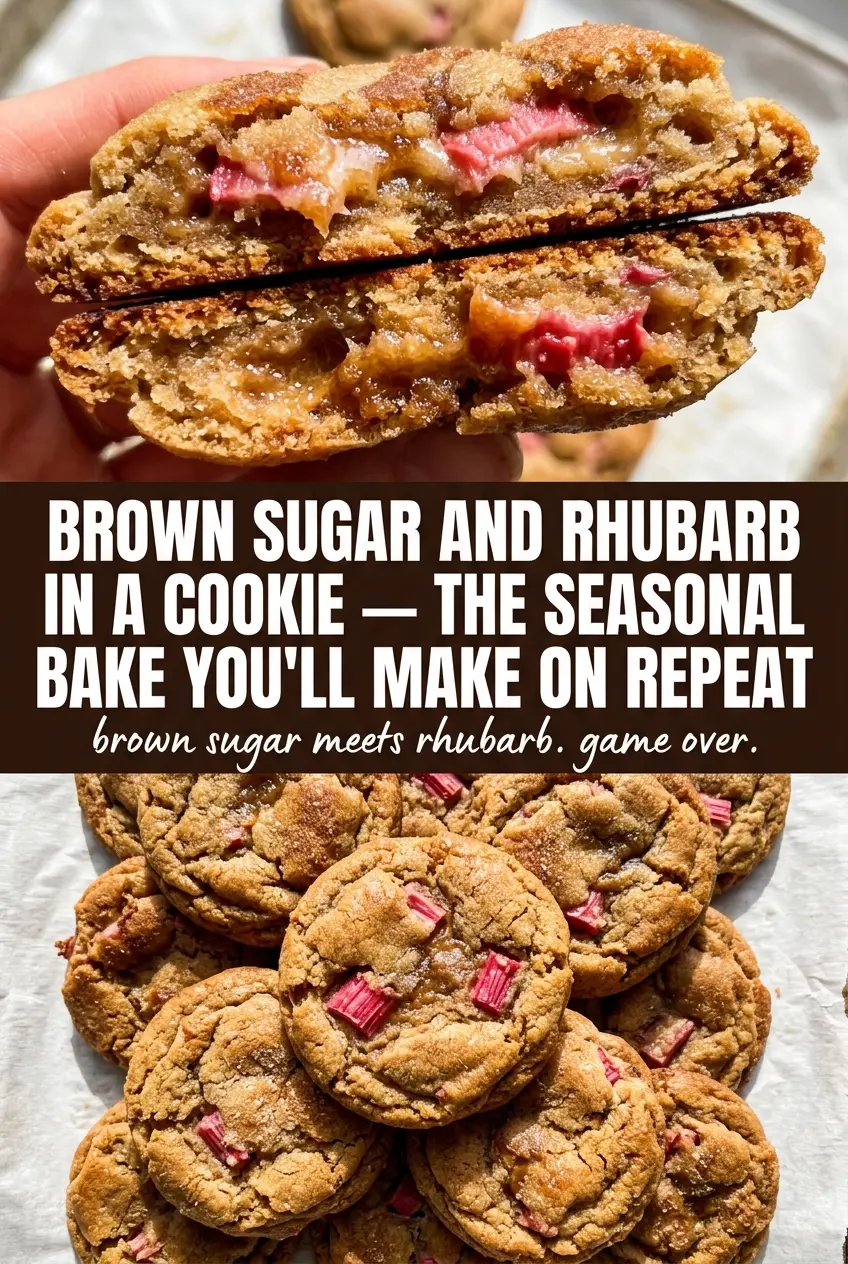
Brown Sugar Rhubarb Cookies
Ingredients
Equipment
Method
- Preheat the oven to 350°F and line baking sheets with parchment paper, leaving the parchment smooth for even spreading.
- Whisk together the all-purpose flour, baking soda, and salt until the mixture looks evenly speckled with no visible clumps.
- Cream the butter and brown sugar until fluffy, then beat in the eggs and vanilla extract until the mixture turns lighter in color and looks cohesive.
- Gradually mix in the dry ingredients until just combined, stopping when no dry streaks remain for a tender cookie texture.
- Fold in the diced fresh rhubarb and walnuts if using so the dough shows pink pieces throughout with minimal streaking.
- Drop rounded tablespoons of dough onto the prepared baking sheets, spacing them about 2 inches apart so they bake without merging.
- Bake at 350°F for 10 to 12 minutes, until the edges are lightly golden and the centers are set but still look soft.
- Cool the cookies on the baking sheet for 5 minutes, then transfer to a wire rack so the bottoms stop cooking.