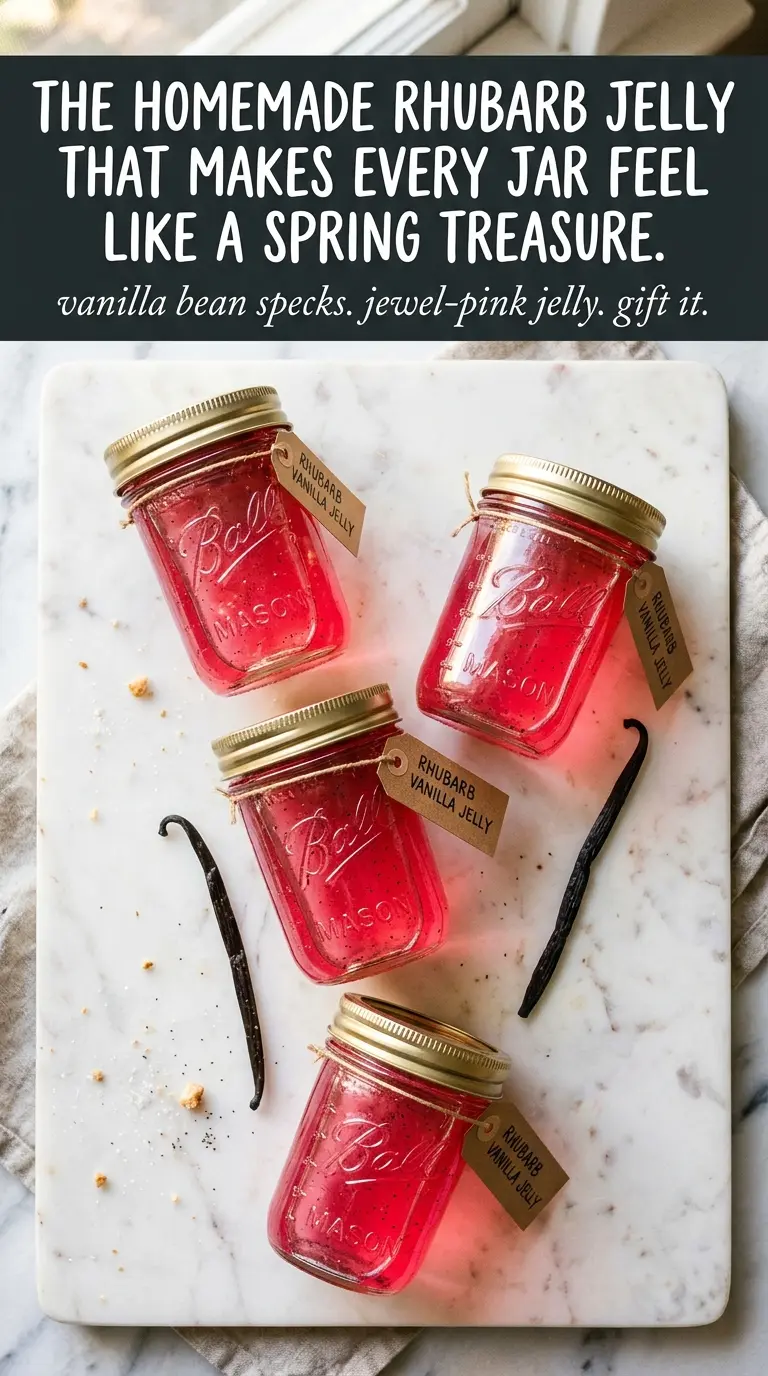
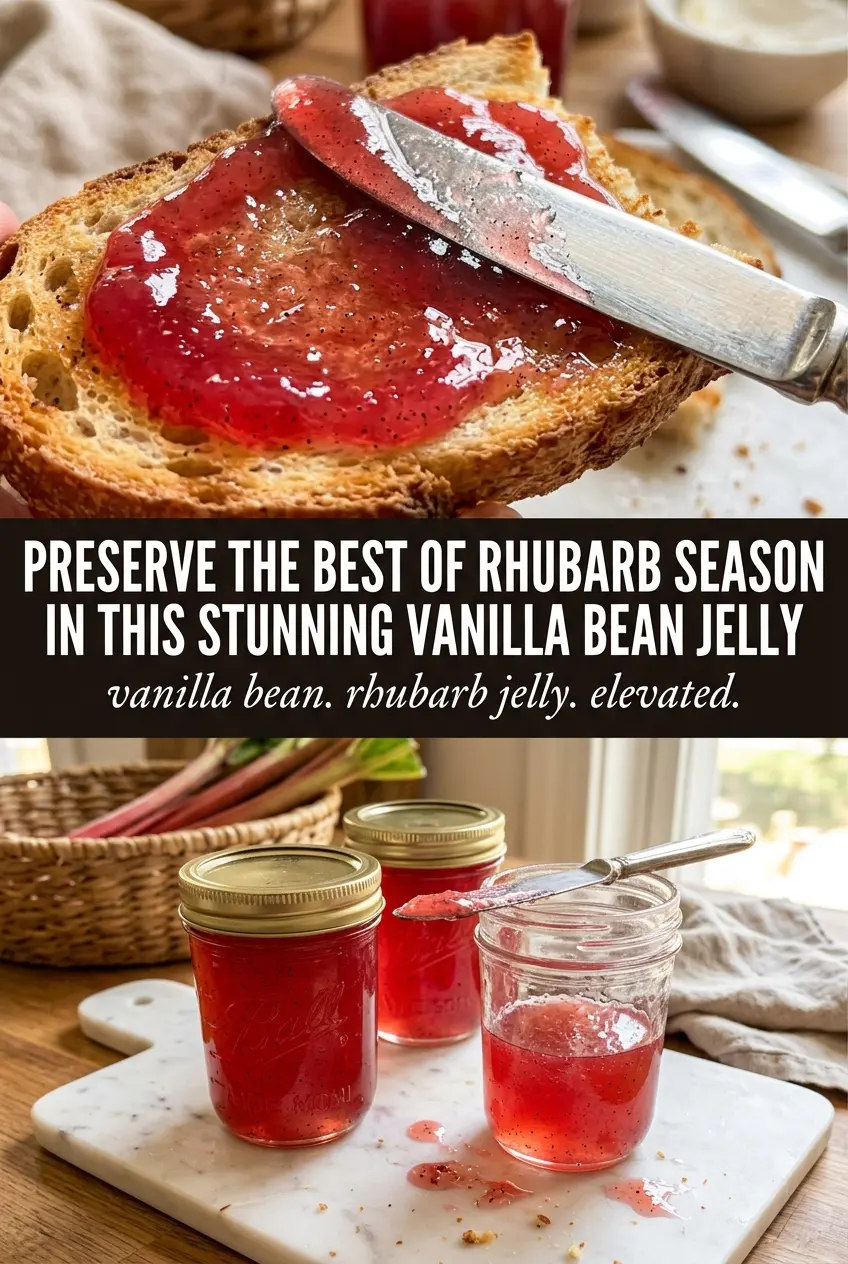
Ruby-pink rhubarb jelly turns glossy, clear, and bright when it’s cooked and strained the right way, and the vanilla bean makes it taste like something far more special than a standard fruit spread. The texture is the payoff here: clean enough to glow in the jar, firm enough to hold on toast, and delicate enough to show off the rhubarb instead of burying it in sweetness.
This version works because the rhubarb is simmered just long enough to give up its color and tart juice, then strained before the pectin goes in. That keeps the jelly smooth and lets the vanilla read as a warm background note instead of a speckled distraction. Adding the sugar all at once after the boil matters too; it helps the batch return to a hard boil quickly, which is what pectin needs to set properly.
Below, I’ve included the cue I watch for when the jelly is ready to jar, plus a few swaps and storage notes that matter once you’ve got a pantry full of jars cooling on the counter.
The jelly set up beautifully and stayed crystal clear after straining. The vanilla bean made it taste layered, not just sweet, and the 1-minute hard boil gave me jars that firmed up perfectly by the next day.
Save this rhubarb vanilla bean jelly for the jars that need a clear set, a tart finish, and those pretty vanilla specks.
The Boil That Decides Whether This Jelly Sets
The difference between a spoonable syrup and proper jelly comes down to two things: enough extracted juice and a true hard boil after the sugar goes in. Rhubarb is naturally high in water and low in natural pectin, so the juice has to be concentrated before the powdered pectin enters the pot. If you rush the boil or keep the heat too gentle after adding sugar, the batch can stay loose even if it tastes perfect.
The other mistake is overcooking the fruit before straining it dry. You want the rhubarb softened just enough to collapse and perfume the liquid, not cooked down into mush that clogs the strainer. A clean strain gives you a brighter jelly and helps the set stay even from jar to jar.
- Rhubarb — Fresh stalks give the best color and a clean tart edge. Frozen rhubarb works too, but it can release a little more water, so don’t skip the full simmer and strain.
- Powdered pectin — This is what gives the jelly its lift. Regular substitution with low-sugar pectin changes the set behavior, so use the type called for unless you’re following a tested low-sugar formula.
- Lemon juice — It sharpens the flavor and helps the pectin do its job. Bottled lemon juice is fine here because the acidity matters more than freshness.
- Vanilla bean — The pod and seeds both matter. The seeds add the flecks, while the pod perfumes the juice as it simmers; vanilla extract won’t give the same depth in a cooked jelly.
What Each Ingredient Is Actually Doing in This Rhubarb Jelly
- Rhubarb juice (strained well) — The juice needs to be clear and free of pulp for the jelly to set properly. Strain it through cheesecloth if needed.
- Sugar (correct amount for the juice) — Use equal parts juice and sugar by weight. Too much sugar makes the jelly candy-like; too little and it won’t set.
- Lemon juice (prevents cloudiness) — The acid helps prevent the jelly from clouding as it sets. It also helps activate the natural pectin in the rhubarb.
- Pectin (natural or added) or high juice acidity — Rhubarb has some natural pectin, but you might need to add liquid pectin or use the high-pectin method. This is what makes the jelly set.
- High heat for rolling boil — The jelly needs to reach the soft-ball stage (around 220°F / 104°C) to set properly. A rolling boil ensures you reach and maintain this temperature.
- Boiling time until setting point is reached — Test by dropping a small amount on a cold plate. It should wrinkle when pushed with your finger.
- Skimming foam off the top — This foam is what makes the jelly cloudy. Remove it as it forms during cooking.
- Proper jars and sealing method — Hot, sterilized jars and proper sealing ensure the jelly sets correctly and keeps well. Cool jars won’t set the jelly properly.
Straining, Boiling, and Jarring Without Losing the Set
Softening the Rhubarb Enough to Release Its Juice
Combine the rhubarb, water, and split vanilla bean in a large pot and simmer until the fruit is fully collapsed and the liquid is tinted pink, about 15 minutes. The goal is soft fruit and aromatic juice, not a heavy reduction. If the pot is barely bubbling, the rhubarb won’t surrender enough flavor; if it boils hard the whole time, you can drive off too much liquid before straining.
Pulling a Clean Juice Through the Strainer
Strain the mixture through cheesecloth or a fine mesh strainer and press firmly to extract the juice. You’re aiming for about 3 1/2 cups, and that yield matters because pectin sets best when the liquid ratio stays close. Don’t mash so hard that a lot of pulp sneaks through, since cloudy solids can make the jelly less clear and can sometimes interfere with a smooth set.
Building the Gel Before the Sugar Goes In
Return the strained juice to the pot and stir in the pectin and lemon juice before heating it back up. Bring it to a rolling boil first, then add the sugar all at once and return it to a hard boil for exactly 1 minute while stirring constantly. The hard boil is the moment that activates the set; if the boil softens when the sugar goes in, the clock doesn’t really start until it’s back at a full boil.
Filling the Jars and Letting Time Finish the Job
Remove the vanilla pod, skim off any foam, and ladle the hot jelly into sterilized jars with 1/4-inch headspace. Process the jars in a boiling water bath for 10 minutes, then leave them alone on the counter for 24 hours. Resist the urge to tilt or tighten lids while they cool; that movement can interfere with sealing and make a still-soft jelly look prematurely set or uneven.
Swap in frozen rhubarb when fresh stalks are gone
Frozen rhubarb works well, but it usually releases more liquid as it thaws and cooks. Keep an eye on the measured juice after straining, and don’t move forward until you have the full amount the recipe expects. The flavor stays bright, though the color can be a touch softer than with fresh stalks.
Make it dairy-free without changing a thing
This jelly is naturally dairy-free, so there’s nothing to adjust for that diet. That’s one reason it’s such a useful pantry preserve: the set comes from pectin and acidity, not butter, cream, or any tricky add-ins.
Use vanilla extract only in a pinch
If you don’t have a vanilla bean, a small amount of pure vanilla extract can stand in, but add it after cooking so the flavor doesn’t fade. You’ll lose the pretty specks and some of the rounded vanilla depth, but the jelly will still taste good with the rhubarb.
Storage and Reheating
- Refrigerator: Unsealed jars or opened jelly keep for about 3 weeks refrigerated. The set may tighten a little more after chilling.
- Freezer: Properly canned jars are best stored in the pantry, not frozen. If you want to freeze a portion, use freezer-safe containers and leave headspace for expansion.
- Reheating: Jelly isn’t usually reheated, but if you want it looser for drizzling or glazing, warm only the amount you need over low heat. High heat can scorch the sugar and make the texture sticky instead of glossy.
Questions I Get Asked About This Recipe
Rhubarb Vanilla Bean Jelly
Ingredients
Equipment
Method
- Combine chopped rhubarb, water, and vanilla bean (pod and seeds) in a large pot and simmer at 200°F (93°C) for 15 minutes, watching for steady bubbling. The rhubarb should soften and release a rosy color.
- Strain the mixture through cheesecloth or a fine mesh strainer, pressing to extract all liquid, until you collect about 3 1/2 cups of rhubarb juice. You should see a bright ruby-pink juice with very little pulp left.
- Return the rhubarb juice to the pot and stir in powdered pectin and lemon juice. Mix until the powders dissolve and no dry streaks remain.
- Bring the mixture to a rolling boil at 212°F (100°C), then add sugar all at once and stir to fully combine. Stop only when the boil returns immediately.
- Return to a hard boil at 212°F (100°C) for 1 minute, stirring constantly so it does not scorch. It should look thick and actively bubbling across the surface.
- Remove from heat, skim off any foam, and stir briefly to even out the texture. The jelly should look glossy, with fewer bubbles on top.
- Remove the vanilla bean pod from the hot jelly. The speckled seeds should remain suspended throughout.
- Ladle hot jelly into sterilized jars, leaving 1/4-inch headspace, keeping rims clean for a good seal. The jelly should fill nearly to the top with a ruby-pink sheen.
- Process jars in a boiling water bath for 10 minutes at a full boil. Use a visible, vigorous boil throughout the entire time.
- Let jars sit undisturbed for 24 hours to set completely. The jelly should become translucent and firm enough to hold its shape when tilted.