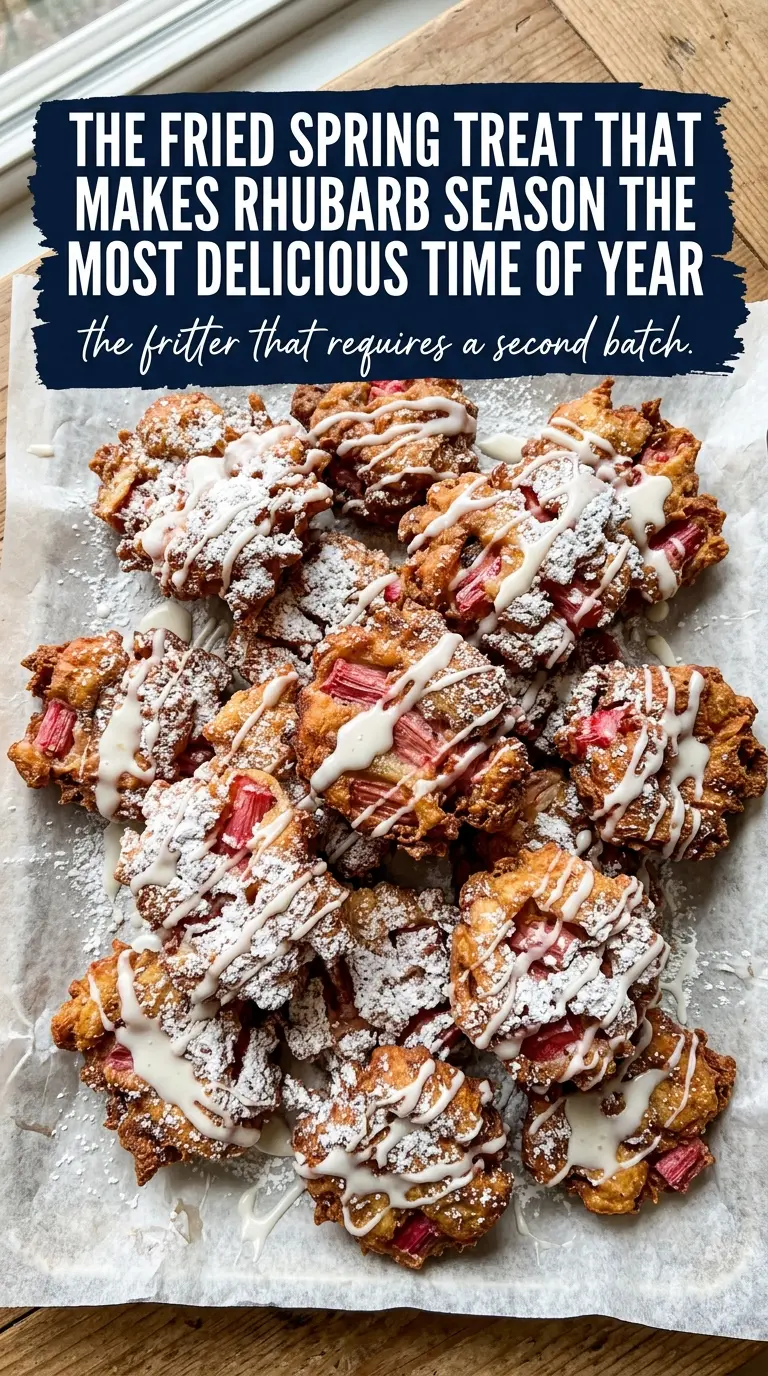
Sweet & tangy rhubarb fritters are the kind of thing that disappear the minute they hit the plate. The outside fries up crisp and shattery, the inside stays tender, and those bright little rhubarb pieces keep every bite from tasting flat or overly sweet. Powdered sugar on top gives them that bakery finish, but the real win is the contrast between the warm dough and the sharp fruit.
This version keeps the batter simple on purpose. Rhubarb throws off a little moisture as it cooks, so the batter needs enough structure to hold the fruit without turning heavy. A quick mix keeps the fritters light; overworking the flour makes them bready. The oil temperature matters too. Too cool and they soak up grease. Too hot and the outside browns before the center cooks through.
Below, I’ve included the small details that make a batch of fritters turn out evenly: how fine to dice the rhubarb, what the batter should look like before it hits the oil, and how to keep the sugar dusting from disappearing the second it lands.
The batter puffed up beautifully and the rhubarb stayed in little bright bites instead of disappearing. I’ve never had fritters fry this evenly.
Save these sweet & tangy rhubarb fritters for the next morning you want a crisp fried treat with tart fruit and powdered sugar on top.
The Part That Keeps Rhubarb Fritters Crisp Instead of Greasy
Fritters fail for one of two reasons: the batter gets overmixed, or the oil never gets hot enough. Rhubarb adds moisture, and if the batter is worked like bread dough, the flour tightens up and you lose that airy, tender center. Mix only until the dry spots disappear, then fold in the rhubarb at the end so the fruit stays suspended instead of sinking into a dense paste.
The other issue is heat. At 375°F, the outside sets fast enough to hold its shape while the inside cooks through in just a few minutes. If the oil drops much below that, the fritters start drinking it up. If you see them darkening in under a minute, pull the heat down a notch; burnt sugar and raw batter can happen in the same batch when the pot runs too hot.
What Each Ingredient Is Actually Doing in Crispy Rhubarb Fritters
- Rhubarb prepared (drained well) — Fresh rhubarb releases moisture. Pat it dry or let it drain on paper towels so it doesn’t add water to the batter.
- Batter (flour, eggs, milk) — The batter should be thick enough to coat the rhubarb and fry crispy. Thin batter creates greasy, heavy fritters.
- Eggs — These help bind the batter and create lift. They also help the outside crisp while the inside stays tender.
- Baking powder (if in the batter) — This creates tiny air bubbles that make the fritters light and crispy. Don’t skip it.
- Oil for frying (high heat oil like vegetable or peanut) — The oil needs to be hot enough (around 350°F) to crisp the outside before the inside overcooks. Too cool and the fritters absorb oil and turn greasy.
- Temperature control — Oil that’s too hot burns the outside before cooking the inside. Too cool leaves them greasy. Use a thermometer for best results.
- Draining after frying — Pat the fritters on paper towels to remove excess oil. Do this immediately so they don’t stay greasy.
- Serving immediately — Fritters are best eaten right away when they’re still crispy. Sitting too long makes them soft and greasy.
What the Rhubarb Is Doing Here, and Why It Needs the Right Cut
- Fresh rhubarb — Finely dicing the rhubarb is what keeps these fritters balanced. Big chunks stay too firm and can tear the batter when you bite in. Fresh is best here because frozen rhubarb tends to release extra liquid and can make the batter loose and patchy.
- All-purpose flour — This gives the fritters enough structure to puff in the oil without turning cakey. Cake flour makes them too fragile, and bread flour makes them tougher than they should be.
- Baking powder — This is the lift. It helps the batter open up in the fryer, which keeps the texture light instead of leaden. Old baking powder is a common reason fritters come out flat.
- Milk and eggs — They build the batter’s body and help it brown evenly. Whole milk gives a richer result, but any milk works as long as the batter stays thick enough to mound on a spoon.
The Short Window When These Fritters Turn Golden
Mixing the Batter Without Toughening It
Whisk the dry ingredients first so the baking powder is evenly distributed, then stir in the wet mixture just until the flour disappears. The batter should look thick and a little lumpy, not smooth like pancake batter. If you keep stirring after that point, the fritters lose their light texture and fry up heavier than they should. Fold in the rhubarb last so it stays evenly scattered through the batter.
Frying at the Right Temperature
Heat about 2 inches of oil in a deep pot until it reaches 375°F. If you don’t have a thermometer, drop in a tiny bit of batter; it should sizzle immediately and rise to the surface within seconds. Use a tablespoon to portion the batter so the fritters cook evenly and don’t crowd the pot. Too many at once drops the temperature fast and gives you oily fritters instead of crisp ones.
Finishing the Fry and Dusting at Once
Turn each fritter when the first side is deeply golden and the edges look set, usually after 2 to 3 minutes. The second side cooks a little faster, so watch the color instead of the clock once they’re flipped. Drain them on paper towels for a minute, then dust with powdered sugar while they’re still warm so the sugar clings instead of sliding off.
How to Adapt These Rhubarb Fritters Without Losing the Crisp Edge
Make Them Dairy-Free
Swap the milk for an unsweetened non-dairy milk and use melted dairy-free butter or neutral oil in its place. The fritters still fry up crisp, but the flavor will be a little less rich and the batter may need a quick stir before scooping because some plant milks thin out differently.
Use Apples or Strawberries Instead of Rhubarb
If rhubarb isn’t in season, diced tart apple or chopped strawberries can work, but the flavor shifts from sharp and tangy to sweeter and softer. Apples hold their shape better; strawberries release more juice, so the batter may need an extra spoonful of flour to stay scoopable.
Gluten-Free Version
Use a cup-for-cup gluten-free flour blend with xanthan gum already included. The fritters will still brown and puff, but they may be a little more delicate when you turn them, so keep the scoops small and don’t rush the first side.
Make Them Smaller for a Brunch Tray
Use half-tablespoon scoops for bite-size fritters. They cook faster and stay crisp longer, which makes them better for serving a crowd. Just watch them closely, because the smaller pieces go from pale gold to deep brown fast.
Storage and Reheating
- Refrigerator: Store leftovers in an airtight container for up to 2 days. The exterior softens, but they still taste good.
- Freezer: They freeze better before dusting with sugar. Freeze in a single layer, then reheat from frozen in a 350°F oven until hot and crisp.
- Reheating: Use the oven or an air fryer to bring back the crust. Microwaving makes the fritters soggy fast, which is the one mistake that wipes out the best part of the texture.
Questions I Get Asked About This Recipe
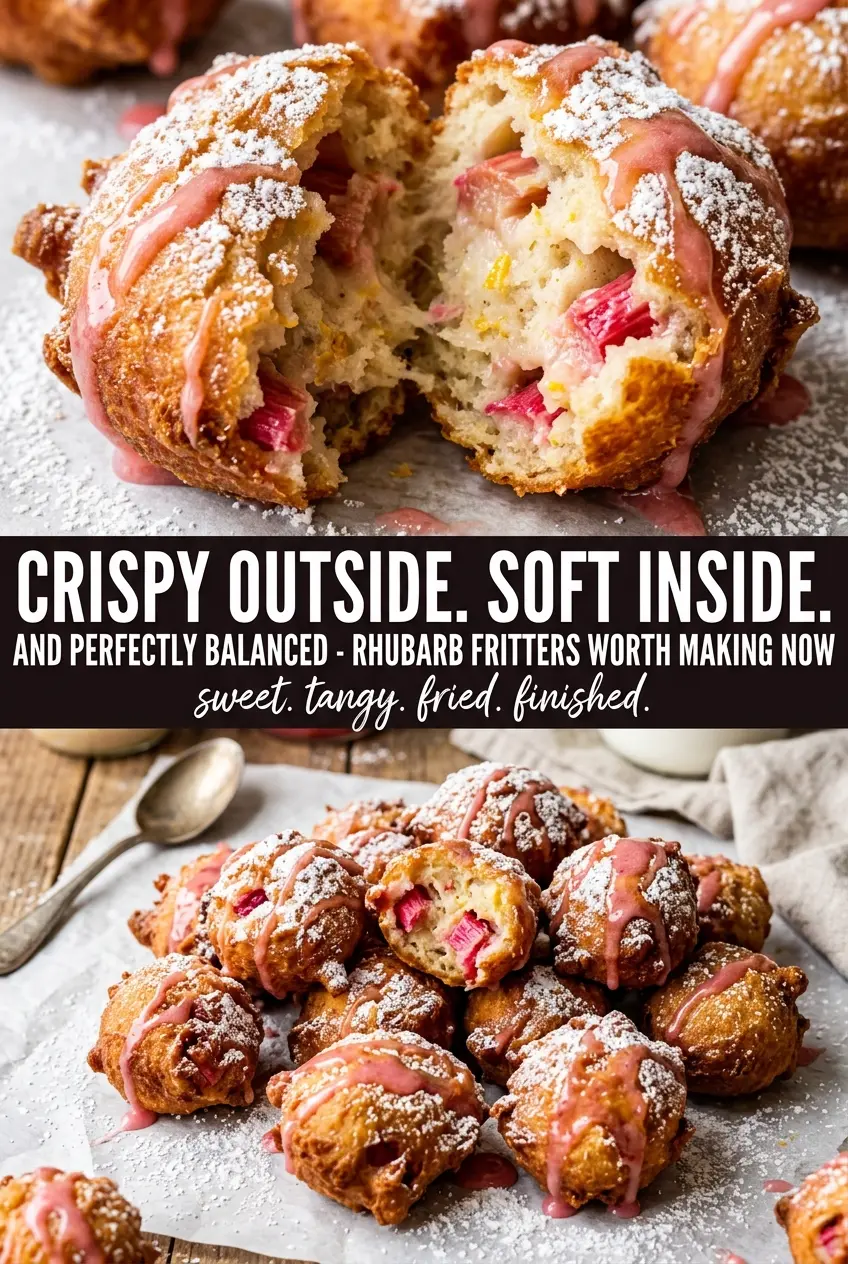
Sweet & Tangy Rhubarb Fritters
Ingredients
Equipment
Method
- Whisk together all-purpose flour, sugar, baking powder, and salt in a large bowl until evenly combined.
- In a separate bowl, beat eggs, milk, and melted butter until smooth and fully combined.
- Pour the wet ingredients into the dry ingredients and stir until just mixed, then fold in the finely diced rhubarb.
- Heat 2 inches of vegetable oil in a deep pot to 375°F.
- Drop batter by tablespoonfuls into the hot oil and fry for 2-3 minutes per side until golden brown.
- Drain the fritters on paper towels, then immediately dust with powdered sugar while warm.
- Serve warm for the crispiest exterior and best texture.