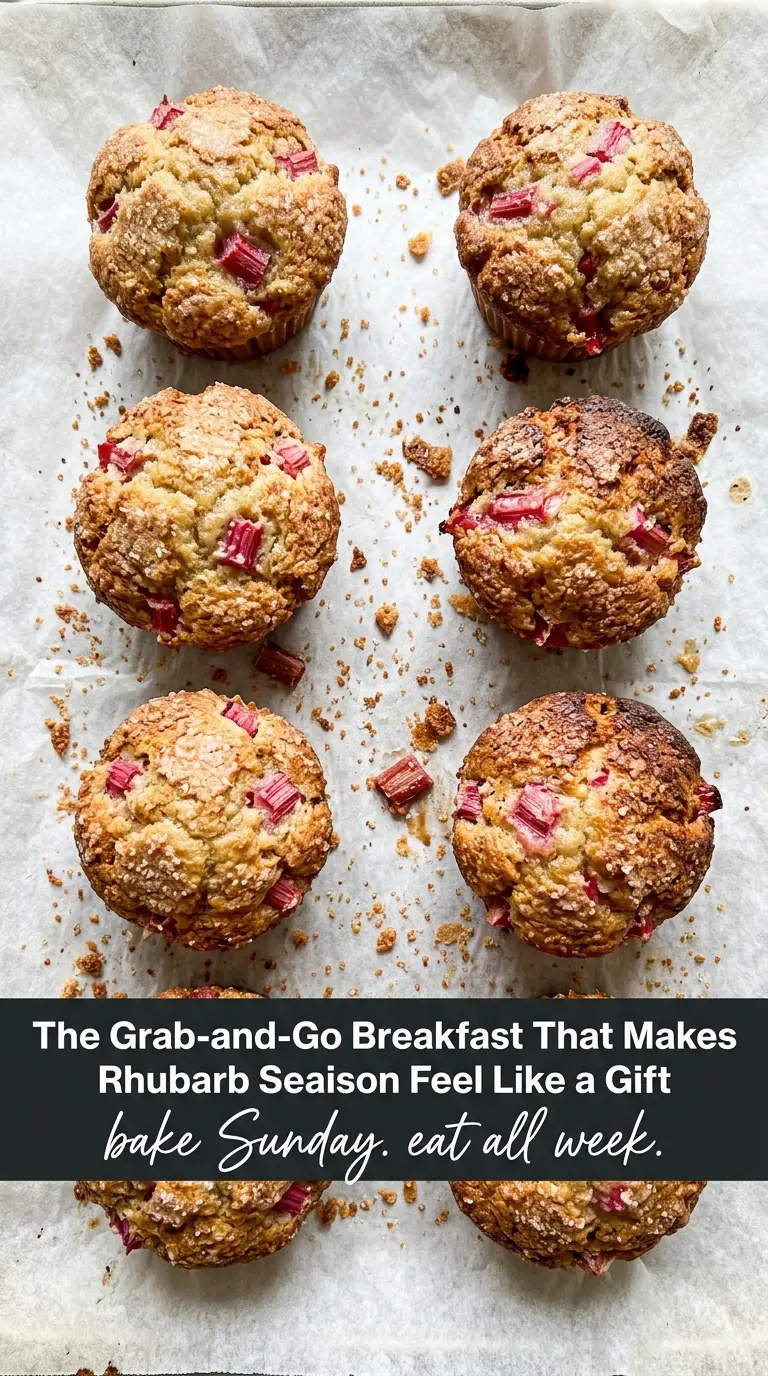
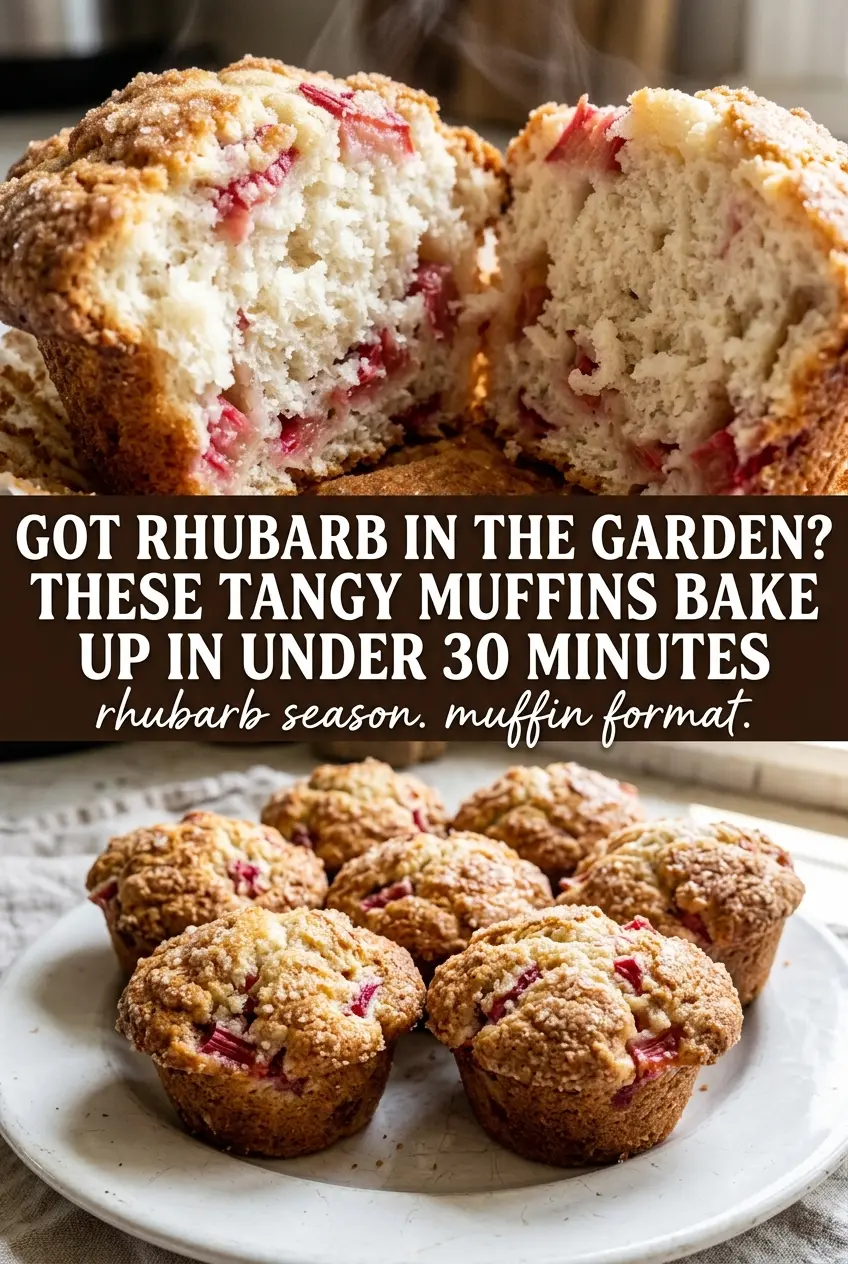
These rhubarb muffins bake up with tall, golden domes, a soft crumb, and little bursts of tart fruit in every bite. The cinnamon sugar on top gives them a light crunch that plays against the tender middle, which is exactly what you want in a breakfast muffin: not dry, not dense, just moist and balanced enough to disappear fast.
The trick is keeping the batter barely mixed. Once the flour disappears, stop stirring and fold in the rhubarb gently so the fruit stays evenly distributed instead of bleeding into the batter. Dicing the rhubarb small also matters here; it softens just enough in the oven without turning the muffins wet or stringy.
Below you’ll find the simple method, the ingredient details that matter most, and a few smart ways to adjust the recipe if your rhubarb is extra tart or you want to prep these ahead. If you’ve ever had muffins turn out tough or soggy around the fruit, this version fixes both problems.
The muffins rose beautifully and the rhubarb stayed in little tender pockets instead of sinking to the bottom. I loved the cinnamon sugar top — it gave just enough crunch without covering up the tart fruit.
Save these rhubarb muffins for the mornings when you want a tender, tart-sweet breakfast bake with a cinnamon sugar crown.
The Reason These Muffins Stay Tender Instead of Tough
Muffins usually go wrong in one of two ways: they get overmixed and bake up chewy, or they get flooded with fruit and turn damp around the edges. This recipe avoids both by using oil for softness and folding in the rhubarb at the very end. Oil keeps the crumb moist even after the muffins cool, while butter would set up firmer and can read drier the next day.
The other key is the bake temperature. Starting at 400°F gives the muffins a fast lift, which helps create those domed tops before the crumb has time to spread out and flatten. If your muffins tend to come out pale and squat, the oven is usually the issue, not the batter.
- Fresh rhubarb — Dice it finely so it softens evenly and doesn’t leave big wet pockets in the crumb. Frozen rhubarb can work, but don’t thaw it first or it will leak too much juice into the batter.
- Vegetable oil — This is what keeps the muffins soft after they cool. Neutral oil gives you a tender texture without competing with the tart rhubarb.
- Milk — Whole milk gives the best richness here, but 2% still works. Non-dairy milk is fine too as long as it’s unsweetened and plain.
- Cinnamon sugar topping — It adds a little crunch and rounds out the tartness. Skip it only if you want a simpler muffin, not because it changes the structure.
Building the Batter So the Rhubarb Stays Evenly Suspended
- Flour, sugar, baking powder, and salt — Whisk these together well so the leavening distributes evenly. If you see little streaks of baking powder in the baked muffins, the dry ingredients weren’t mixed thoroughly enough.
- Egg, milk, oil, and vanilla — Beat these just until combined. You don’t need foam, just a smooth mixture that helps the batter come together without overworking the flour.
- Rhubarb — Fold it in last and stop as soon as it looks evenly scattered. The batter should be thick enough to hold the fruit in place; if it turns loose and glossy, it usually means the batter was overmixed or the fruit was too wet.
The Mix-Just-Enough Method That Keeps the Crumb Light
Whisk the Dry Base
Start by whisking the flour, sugar, baking powder, and salt in a large bowl until the mixture looks uniform and slightly fluffy. This step matters more than it seems, because baking powder that isn’t distributed evenly can leave you with muffins that rise unevenly or taste a little metallic in one bite. If you rush this part, the rest of the batter won’t save it.
Combine the Wet Ingredients
In a separate bowl, beat the egg, milk, oil, and vanilla until the mixture looks smooth and fully blended. Don’t overbeat here; you’re not trying to add air, just emulsify the oil so it mixes into the batter instead of streaking through it. A few tiny bubbles are fine.
Fold, Don’t Stir
Pour the wet mixture into the dry ingredients and stir only until you stop seeing dry flour. The batter should still look a little rough. Add the rhubarb and fold it in with a few deliberate turns; if you keep mixing past that point, the gluten tightens and the muffins bake up dense instead of tender.
Bake Until the Tops Spring Back
Divide the batter among the lined muffin cups, filling each about two-thirds full, then sprinkle the tops with cinnamon sugar. Bake for 18 to 20 minutes, until the tops are golden and a toothpick comes out clean or with a few moist crumbs. If the centers still look wet while the tops are already browned, the muffins need another minute or two; pull them only when the middle springs back lightly to the touch.
How to Adjust These Muffins When Your Rhubarb Is Extra Tart or You Need a Different Finish
Add a Little More Sugar for Sharper Rhubarb
If your rhubarb is very tart, increase the sugar by 2 to 3 tablespoons. That softens the edge without making the muffins taste candy-sweet, and it works better than trying to fix the tartness after baking.
Make Them Dairy-Free
Use an unsweetened non-dairy milk like almond, oat, or soy. The texture stays soft because the oil carries the richness, so you don’t lose much by skipping dairy here.
Swap in Strawberries for Part of the Rhubarb
Replace up to half the rhubarb with finely diced strawberries for a softer, sweeter muffin. The berries add more moisture, so keep the fruit pieces small and expect a slightly more delicate crumb.
Freeze for Later Breakfasts
These muffins freeze well after they cool completely. Wrap them individually and thaw at room temperature, or warm straight from frozen for a quick breakfast that still tastes freshly baked.
Storage and Reheating
- Refrigerator: Store in an airtight container for up to 4 days. The crumb stays moist, but the cinnamon sugar top softens a little after the first day.
- Freezer: Freeze for up to 2 months after cooling completely. Wrap each muffin well so the fruit doesn’t pick up freezer flavors.
- Reheating: Warm at 300°F for about 8 minutes or microwave for 15 to 20 seconds. The common mistake is overheating, which dries out the crumb and makes the rhubarb stringy.
Answers to the Questions Worth Asking
Rhubarb Muffins
Ingredients
Equipment
Method
- Preheat the oven to 400°F and line a 12-cup muffin tin with paper liners.
- Whisk together the all-purpose flour, sugar, baking powder, and salt in a large bowl.
- In a separate bowl, beat the egg, milk, vegetable oil, and vanilla extract until combined.
- Pour the wet ingredients into the dry ingredients and stir until just moistened.
- Gently fold in the fresh rhubarb, finely diced so pink pieces stay intact.
- Divide the batter among the muffin cups, filling each about 2/3 full, then sprinkle with cinnamon sugar for topping.
- Bake for 18-20 minutes at 400°F until golden and a toothpick comes out clean.
- Cool in the pan for 5 minutes before transferring the muffins to a wire rack.