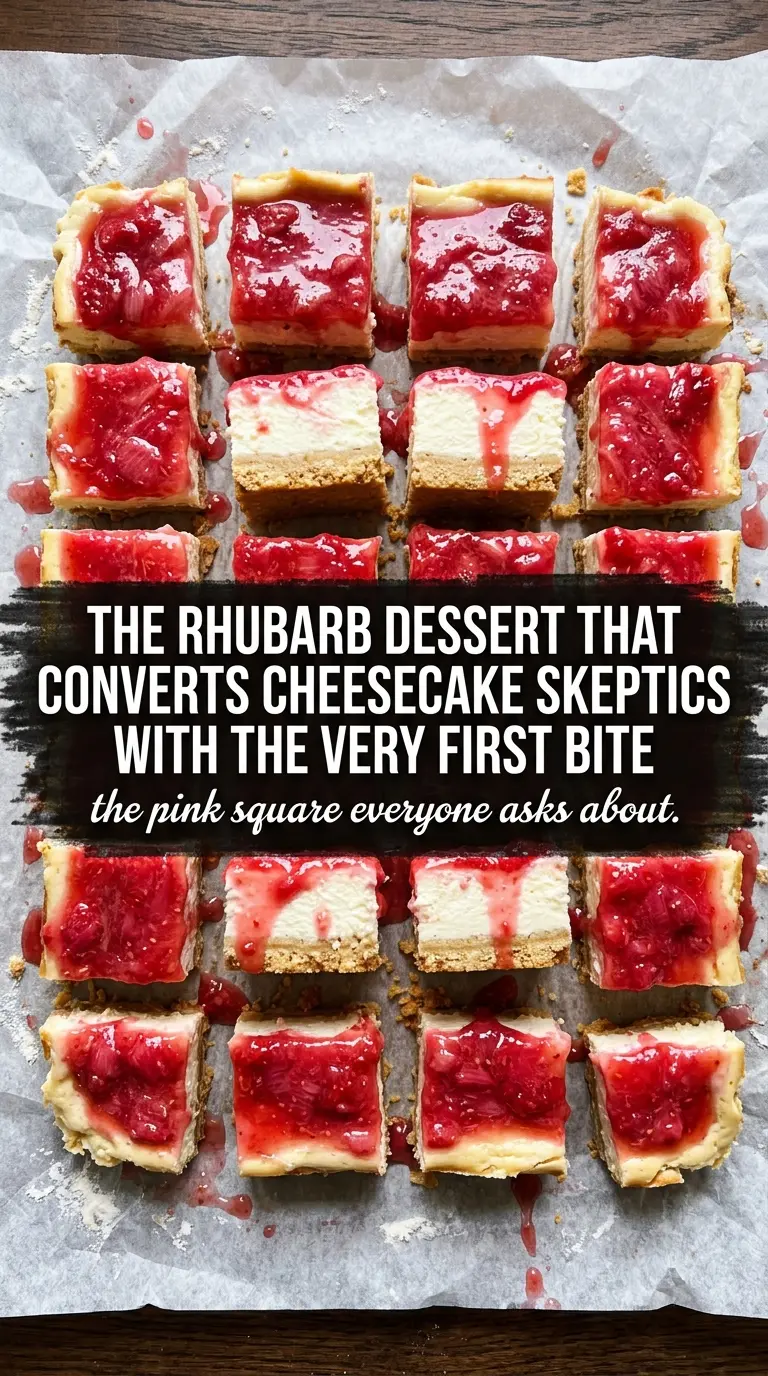
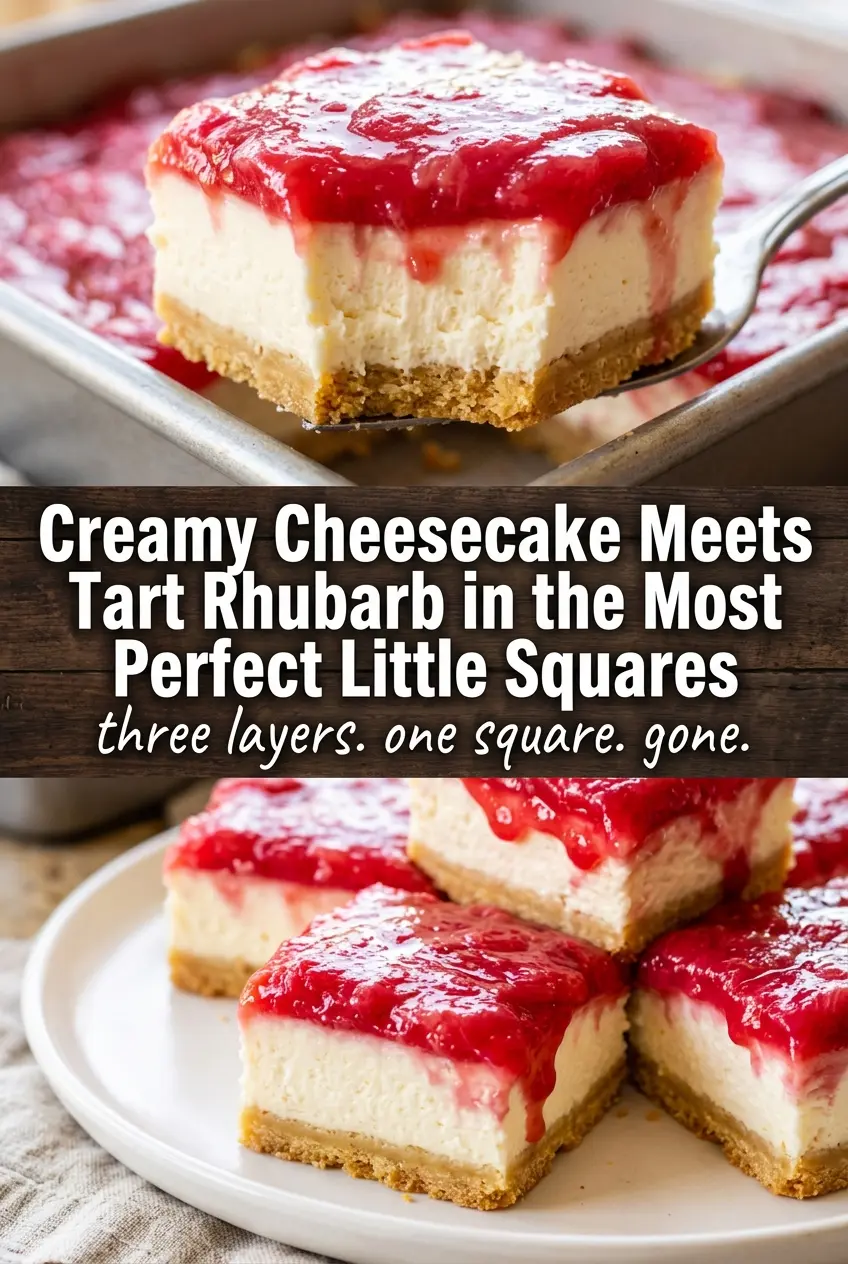
Rhubarb cheesecake squares hit that sweet spot between creamy, tart, and sturdy enough to slice cleanly after a long chill. The graham cracker crust stays crisp under a thick cheesecake layer, and the glossy rhubarb topping gives each bar a sharp pink finish that tastes as good as it looks. These are the kind of dessert bars people reach for twice because one square never feels like enough.
What makes this version work is the balance. The crust gets a short bake before the filling goes in, which keeps it from turning soggy under the cheesecake. The rhubarb topping is cooked with cornstarch after the fruit softens, so it sets into a spoonable compote instead of running off the top when you cut the bars. That extra cooling time matters too; if you rush the chill, the layers smear instead of stacking cleanly.
Below, you’ll find the small details that keep the cheesecake smooth, the topping thick, and the squares neat enough for a tray or dessert plate. There’s also a few practical swaps and storage notes, because this is one of those recipes that rewards a little planning.
The cheesecake layer baked up smooth and the rhubarb topping set just enough that the squares held their shape. I chilled them overnight and they sliced like bakery bars.
Love the creamy cheesecake layer and pink rhubarb topping? Save these rhubarb cheesecake squares for the dessert table.
The Trick to Keeping the Layers Clean Instead of Muddy
The biggest mistake with bar-style cheesecake desserts is treating every layer like it can be rushed. It can’t. The crust needs that brief bake so the butter sets and the crumbs firm up. The cheesecake layer needs to bake until the center is just set, not puffed and browned, or it can crack and slump once the topping goes on.
The rhubarb layer is another place where timing matters. Rhubarb softens fast, but the cornstarch won’t thicken properly until the mixture comes to a gentle simmer after it’s dissolved. If you dump dry starch straight into hot fruit, you’ll get little gummy streaks. Stir it into a slurry first, then cook until the filling goes from cloudy to glossy and thick enough to mound on a spoon.
What Each Layer Is Doing in These Squares
- Graham cracker crumbs — These give you a buttery, slightly sandy base that supports the cheesecake without stealing the show. Fine crumbs pack more tightly and slice cleaner than coarse crumbs, so pulse or crush them well.
- Butter — Melted butter is what turns dry crumbs into a crust that holds together after chilling. If you cut the butter back, the base will crumble when you lift the bars from the pan.
- Cream cheese — Use full-fat cream cheese for the smoothest texture. Neufchâtel can work, but the filling will be a little softer and less rich, which matters in a bar that needs to cut neatly.
- Fresh rhubarb — Fresh rhubarb gives the topping its sharp flavor and that pretty pink finish. Frozen rhubarb works in a pinch, but it releases more water, so expect a longer cook and a slightly softer set.
- Cornstarch — This is what gives the topping enough body to sit on top of the cheesecake instead of slipping around. Whisk it into a little cold water first so it disperses evenly before it hits the heat.
Building the Bars So They Slice Like Bakery Squares
Pressing and Prebaking the Crust
Mix the crumbs, melted butter, and sugar until every bit looks evenly damp, then press it firmly into the pan. Use the bottom of a measuring cup to pack it down; loose spots turn into crumbly edges later. Bake it just until it smells toasted and the surface looks set. If it goes too far, the crust turns hard instead of snappy.
Whipping the Cheesecake Layer Smooth
Beat the cream cheese and sugar until the mixture looks completely smooth before the eggs go in. Cold cream cheese leaves little lumps that never fully disappear, so let it soften on the counter first. Add the eggs one at a time and stop mixing as soon as the batter is uniform. Overbeating adds air, and air is what makes the filling puff, crack, and then fall as it cools.
Cooking the Rhubarb Topping Until It Piles on a Spoon
Simmer the rhubarb, sugar, and water until the pieces break down and the mixture looks juicy and loose. Stir in the cornstarch slurry and keep it moving over heat until the topping turns thick and glossy. It should coat the back of a spoon, not pour like syrup. Let it cool for a bit before spreading, or it can soften the cheesecake layer beneath it.
Chilling Before You Cut
Put the pan in the fridge for at least four hours, but overnight is even better if you want tidy squares. Cold cheesecake cuts cleanly; warm cheesecake drags and smears. Lift the bars out using the parchment, wipe your knife between cuts, and use a long, straight slice for the sharpest edges.
How to Adapt These Rhubarb Cheesecake Squares
Make Them Gluten-Free
Swap the graham crackers for certified gluten-free graham-style crumbs or a gluten-free cookie crumb. The texture stays close to the original as long as the crumbs are fine and you press the crust firmly before baking.
Use Frozen Rhubarb When Fresh Isn’t Available
Frozen rhubarb works, but don’t thaw it first or it will flood the pan with extra liquid. Cook it straight from frozen and expect a slightly looser topping that needs a minute or two more on the stove to thicken.
Cut the Sugar a Little for a Sharper Finish
If you like rhubarb’s tart edge to come forward, reduce the sugar in the topping by a couple tablespoons. Don’t cut it too far, though, or the rhubarb can taste aggressively sour and the topping won’t have the same glossy balance.
Lighten the Cheesecake Layer a Bit
You can use reduced-fat cream cheese, but the filling won’t be as velvety and the bars may soften a little more at room temperature. For the cleanest slices and the richest texture, full-fat cream cheese still wins.
Storage and Reheating
- Refrigerator: Store covered for up to 5 days. The crust softens slightly on day two, but the bars still hold their shape well.
- Freezer: These freeze nicely. Wrap individual squares tightly and freeze for up to 2 months, then thaw in the refrigerator overnight.
- Reheating: Don’t reheat these bars. Serve them chilled for the cleanest texture; warming them will loosen the cheesecake layer and make the topping slide.
Questions I Get Asked About This Recipe
Rhubarb Cheesecake Squares
Ingredients
Equipment
Method
- Preheat the oven to 350°F and line a 9x13-inch pan with parchment paper, leaving overhang for easy lifting.
- Mix graham cracker crumbs, melted butter, and sugar, then press the mixture into the bottom of the pan.
- Bake for 10 minutes at 350°F until fragrant, then remove and let the crust sit briefly.
- Beat cream cheese and sugar until smooth, scraping the sides to remove lumps.
- Add eggs and vanilla extract, mixing just until combined and glossy.
- Pour the cheesecake batter over the crust and bake for 25-30 minutes at 350°F until set with a slight jiggle in the center.
- Cool completely before topping to prevent the rhubarb layer from melting or loosening.
- Simmer diced rhubarb, sugar, and water over medium heat until tender.
- Stir cornstarch mixed with a little water into the simmering rhubarb and cook until thickened and glossy.
- Cool the rhubarb mixture slightly, then spread it over the cheesecake layer.
- Refrigerate for at least 4 hours until firm before cutting into squares.