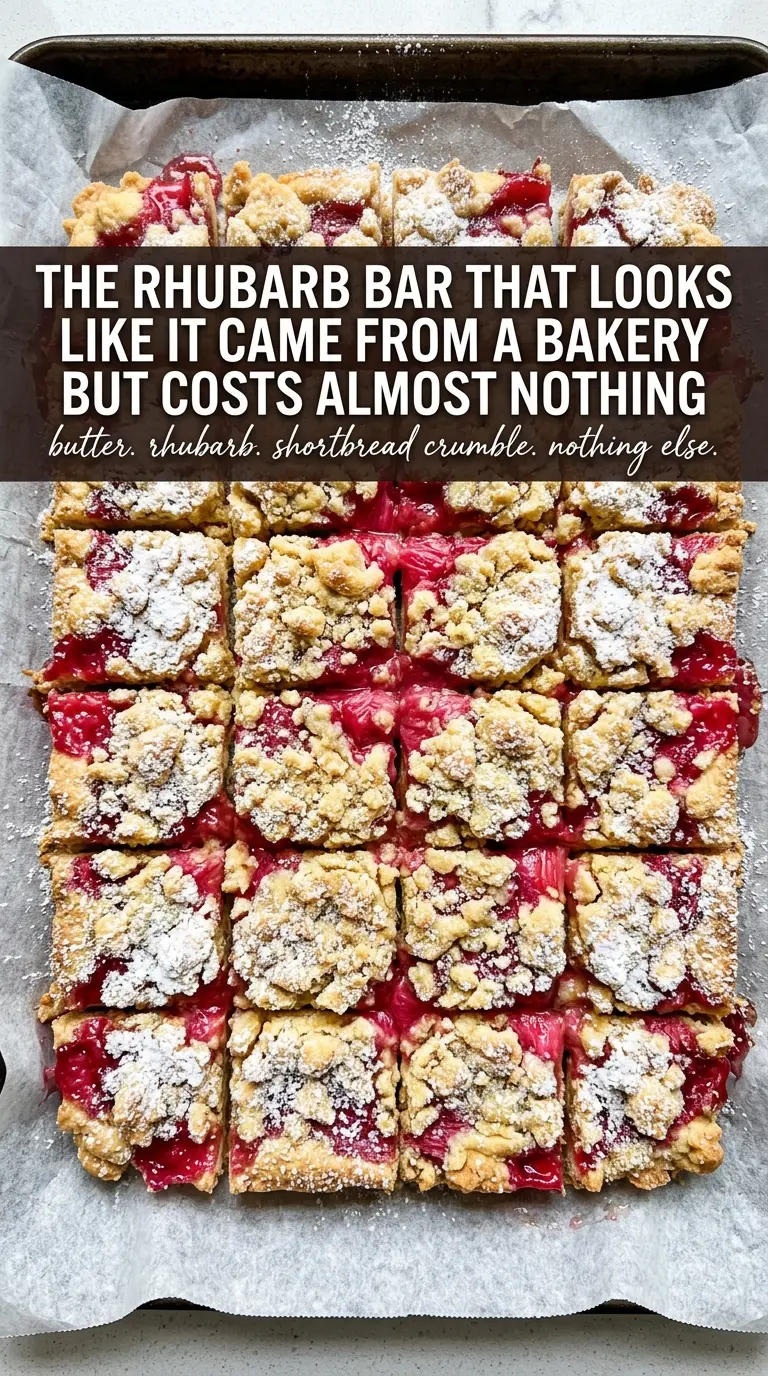
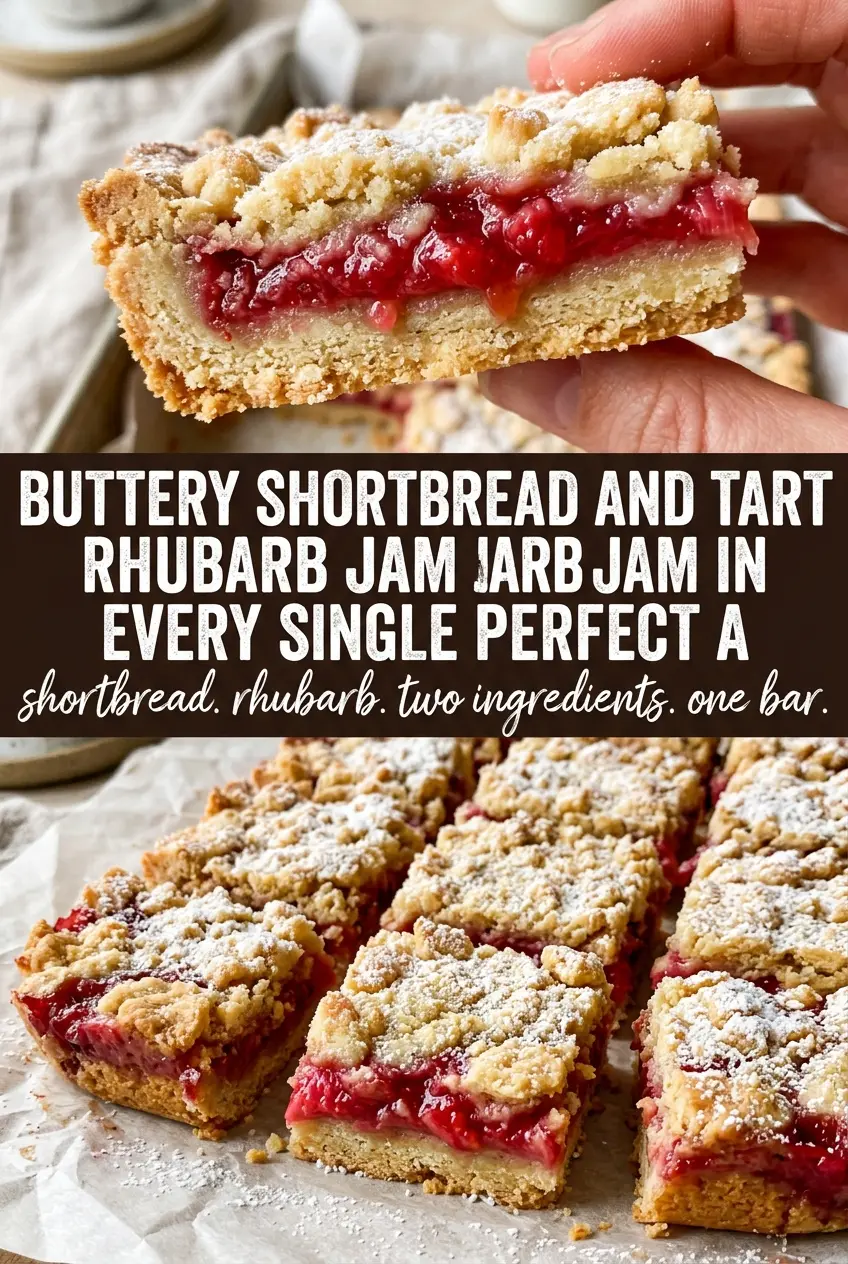
Thick rhubarb bars with a buttery shortbread base hit that sweet-tart middle ground that keeps people reaching for a second square. The crust stays tender but sturdy, the filling sets up glossy and jammy, and the powdered sugar on top gives each bar a clean, bakery-style finish. They slice neatly once chilled, which makes them one of those desserts that looks fancier than the effort it takes.
What makes this version work is the balance between the crumbly shortbread and the cooked rhubarb layer. The crust goes in first and gets a head start in the oven, so it stays crisp instead of dissolving under the filling. The rhubarb is cooked down before it ever hits the pan, which keeps the bars from weeping and gives the filling enough body to cut cleanly after cooling.
Below, you’ll find the little details that matter here: how to tell when the rhubarb mixture is thick enough, why cold butter gives the shortbread its best texture, and how to store the bars so the bottom stays firm instead of damp.
The rhubarb layer set up beautifully after chilling, and the shortbread base stayed crisp even under the filling. I dusted them with powdered sugar before slicing and they looked like they came from a bakery.
Save these rhubarb shortbread bars for the kind of dessert that bakes into a buttery base and a thick, sliceable jam layer.
The Trick to Keeping the Shortbread Crisp Under a Juicy Fruit Layer
Bars like this fail when the filling goes on too wet or the crust goes in underbaked. Rhubarb releases a lot of liquid as it cooks, and if you spread a loose mixture over the base, the bottom turns soft before the bars ever get a chance to set. Cooking the rhubarb on the stove first solves that problem. You want it thick enough to mound on a spoon and hold its shape for a moment before settling.
The other piece that matters is the par-baked crust. The shortbread should look set and pale gold at the edges before the rhubarb goes on top. If it still looks raw or pasty, it won’t have enough structure to stay crisp once the fruit layer bakes again. Cold butter helps here too, because it creates a short, tender crumb instead of a greasy base.
What the Butter, Rhubarb, and Cornstarch Are Each Doing Here
- Cold butter — This is what gives the shortbread its sandy, tender texture. If you swap in softened butter, the dough turns paste-like and bakes up denser, less crisp. Keep it cold and cut it in until the mixture looks like coarse crumbs with a few slightly larger bits.
- Powdered sugar — It dissolves into the crust more smoothly than granulated sugar, which keeps the shortbread delicate instead of gritty. If you only have granulated sugar, the base will still work, but the crumb won’t be quite as fine.
- Fresh rhubarb — Fresh stalks give the filling the cleanest tart flavor and the best texture after simmering. Frozen rhubarb can work, but it releases more water, so you’ll need to cook it down longer before adding the cornstarch.
- Cornstarch — This is what turns the cooked fruit into a proper bar filling instead of a spoonable compote. Stir it in once the rhubarb has softened, then keep cooking until the mixture looks glossy and thick enough to drag slowly across the pan.
Building the Bars So They Slice Cleanly
Make the Shortbread Base First
Mix the flour, powdered sugar, and salt, then cut in the cold butter until the mixture looks crumbly but still holds together when pinched. Press it firmly and evenly into a parchment-lined 9×13-inch pan, getting into the corners so the bars bake uniformly. Bake until the surface looks matte and the edges are just starting to color. If you underpress the dough, the base can crumble when you cut the bars later.
Cook the Rhubarb Until It Holds Its Shape
Simmer the diced rhubarb with sugar and water until the fruit breaks down and the mixture turns thick and glossy. Add the cornstarch slurry and keep stirring as it bubbles; that’s what activates the starch and keeps the filling from turning runny in the pan. You’re looking for a filling that spreads slowly, not one that pours. If it still looks loose, give it another minute or two on the heat before moving on.
Layer, Bake, and Cool Without Rushing It
Spread the hot rhubarb mixture over the warm crust, then return the pan to the oven until the filling looks set around the edges and no longer looks wet on top. Let the bars cool completely before refrigerating, because cutting them warm gives you a sloppy middle and a broken crust. The final chill is what makes the clean squares possible, and it also deepens the buttery texture of the shortbread.
How to Adapt These Rhubarb Bars Without Losing the Texture
Make Them Gluten-Free
Use a good 1:1 gluten-free flour blend in the shortbread. The crust will be a touch more delicate, so press it firmly into the pan and let it cool completely before slicing. The filling doesn’t need any changes.
Use Frozen Rhubarb
Frozen rhubarb works, but thaw it first and drain off the extra liquid if it seems watery. If you skip that step, you’ll need more cooking time on the stove and the bars may set more softly. The flavor stays bright, but the texture needs a little more attention.
Add a Citrus Edge
A little lemon zest in the filling sharpens the rhubarb and keeps the sweetness from feeling flat. Don’t add a lot of juice unless you cook the filling longer, since extra liquid can loosen the set. Zest gives you the aroma without making the bars soupy.
Storage and Reheating
- Refrigerator: Store covered for up to 5 days. The bars actually cut better after a day in the fridge, though the shortbread softens slightly near the filling.
- Freezer: These freeze well. Wrap the cut bars tightly and freeze in a single layer before moving them to a container. Thaw in the fridge so the top doesn’t weep.
- Reheating: These are best served chilled or at cool room temperature, not warmed. Heating softens the filling and can make the crust lose its snap.
Answers to the Questions Worth Asking
Rhubarb Shortbread Bars
Ingredients
Equipment
Method
- Preheat the oven to 350°F and line a 9x13-inch pan with parchment paper.
- Mix all-purpose flour, powdered sugar, and salt, then cut in cold butter until the mixture looks crumbly.
- Press the shortbread dough into the lined pan to form an even crust layer.
- Bake at 350°F for 25 minutes, until lightly golden.
- Simmer fresh rhubarb with sugar and water until very soft and thick, about 15 minutes.
- Mix cornstarch with a little water, then stir it into the rhubarb.
- Continue cooking until the rhubarb mixture is very thick.
- Spread the thick rhubarb mixture over the hot shortbread crust.
- Bake again at 350°F for 15-20 minutes, until the top is set.
- Cool completely at room temperature before refrigerating.
- Refrigerate for 2 hours to firm the bars.
- Dust with powdered sugar, then cut into bars for serving.