Pasta salad gets dull fast when the dressing is thin, the vegetables are watery, and the feta disappears into the bowl. This Greek version stays bright and satisfying because the pasta is cooled before it meets the dressing, the cucumbers and tomatoes are cut for a clean bite, and the olives bring enough salt and depth that every forkful tastes finished. It’s the kind of side dish that holds its own next to grilled chicken, pita sandwiches, or anything coming off the grill.
The key is balance. Red wine vinegar and lemon juice keep the dressing sharp, olive oil gives it body, and oregano pulls everything toward that classic Greek salad flavor without turning the bowl heavy. Rinsing the pasta after cooking might seem like a small step, but it stops the noodles from soaking up all the dressing while they’re still hot. That’s what keeps the salad from going dry an hour later.
Below, I’ve broken down the parts that matter most: how to keep the pasta from turning soft, which ingredients are worth buying well, and how to adapt it when you want to change the balance a little without losing the bright, salty edge that makes it work.
The dressing soaked in after an hour and the pasta stayed firm instead of getting mushy. I used the full amount of feta on top at the end and it made every bite taste fresher.
Save this Greek Pasta Salad with Feta Cheese for the days when you want a cold, salty, bright side that still eats like a full meal.
The Shortcut That Keeps Pasta Salad From Turning Soft
Most pasta salads fail because the noodles keep drinking after the dressing goes on. Warm pasta acts like a sponge, and by the time the bowl hits the table, the dressing has vanished into the center of the pasta instead of coating the outside. Rinsing the pasta under cold water stops that absorption and cools the noodles fast enough that the vegetables stay crisp instead of getting wilted.
The other thing that matters here is shape. Penne and rotini both grab the dressing and hold onto bits of feta, cucumber, and onion in the ridges and curves. Long, slippery pasta doesn’t do that as well. You want a noodle that gives you texture in every bite, not a bowl of ingredients sliding apart.
What Each Ingredient Is Actually Doing in This Salad
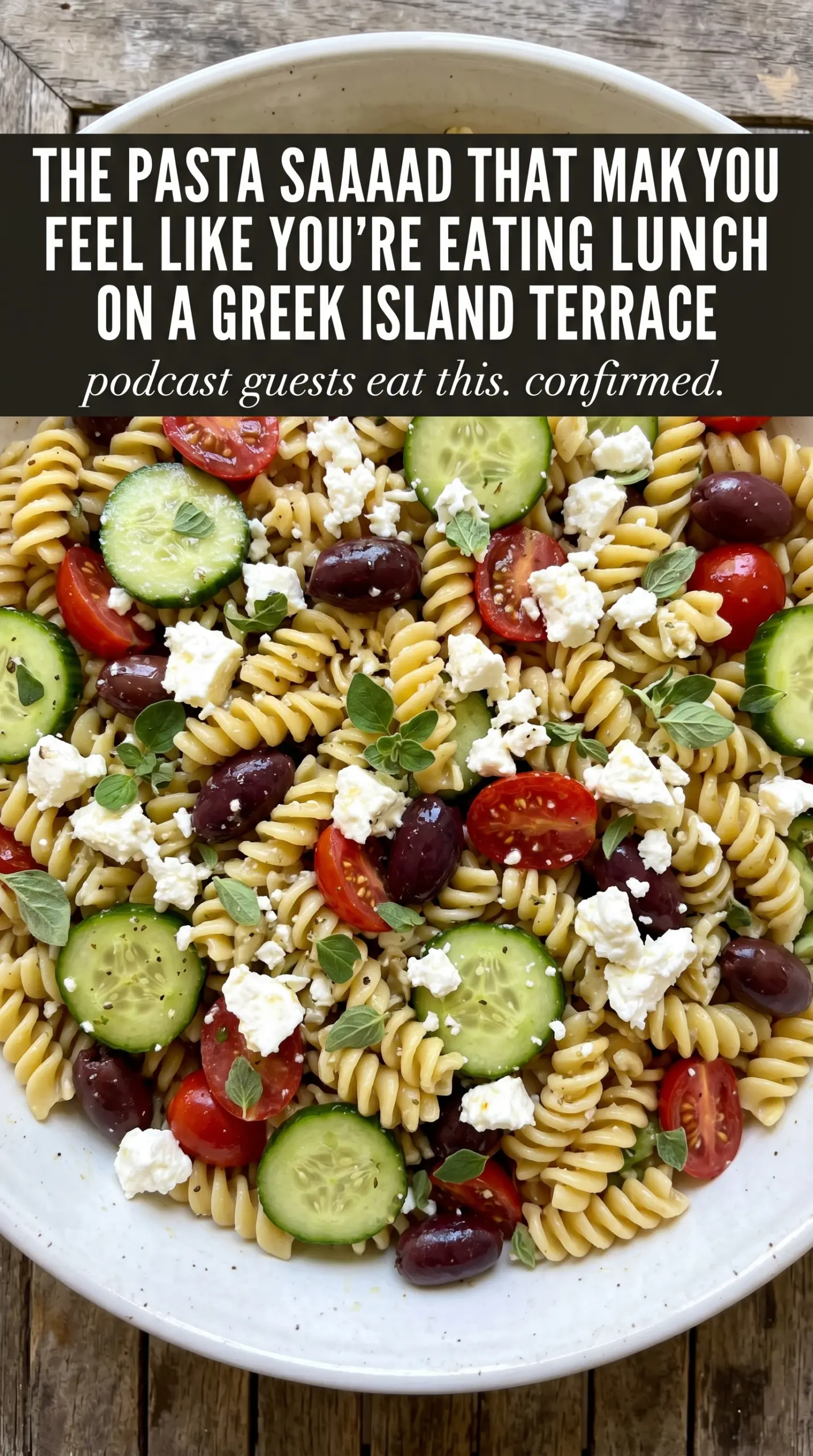
- Penne or rotini pasta — This is the base that carries the dressing. Rotini gives the most grip, but penne holds up well if that’s what you have. Don’t overcook it, because soft pasta turns mushy once it chills.
- Cherry tomatoes — They bring sweetness and juice without flooding the bowl. Halving them gives you enough surface area for the dressing to cling, but not so much that they collapse into the salad.
- Cucumber — Use a firm cucumber and dice it small enough to match the pasta. If the seeds are very watery, scoop them out first so the salad doesn’t get diluted as it sits.
- Kalamata olives — These give the salad its salty, briny backbone. Black olives won’t taste wrong, but Kalamatas have a deeper flavor that stands up to the feta and vinegar.
- Feta cheese — Buy a block if you can and crumble it yourself. Pre-crumbled feta is drier and can taste flat, while block feta stays creamier and more tangy. Save some for the top so the salad looks fresh when it’s served.
- Red wine vinegar and lemon juice — Together they keep the dressing sharp and bright. Vinegar alone can taste blunt; lemon alone can fade. The combination gives you a cleaner finish.
Building the Bowl So the Dressing Stays Bright
Cooking and Cooling the Pasta
Cook the pasta until it’s just tender, then drain it and rinse it under cold water until it feels cool to the touch. If it’s still warm, it will pull the dressing in too aggressively and the salad will taste underdressed later. Shake off the excess water well so you don’t water down the vinaigrette.
Whisking the Greek Dressing
Whisk the olive oil, vinegar, lemon juice, garlic, oregano, salt, and pepper until the dressing looks slightly thickened and the garlic is evenly distributed. You don’t need to emulsify it into a creamy sauce; you just want it blended enough that every spoonful tastes balanced. If the garlic is too coarse, it can hit harsh, so mince it finely.
Tossing and Chilling
Combine the pasta, tomatoes, cucumber, olives, onion, and most of the feta in a large bowl, then pour the dressing over the top and toss gently. The first toss should coat everything without smashing the tomatoes or breaking the pasta. Chill it for at least an hour so the flavors settle together, then add the remaining feta right before serving for the cleanest look and the freshest texture.
How to Adapt This for Different Tables and Tastes
Make It Gluten-Free Without Losing the Bite
Use a sturdy gluten-free pasta shape that holds its shape after chilling, not a delicate one that softens fast. Cook it just to tender, rinse it cold, and give it a little extra time in the fridge before serving so the texture settles. Some gluten-free pastas absorb dressing faster, so keep a spoonful of dressing back and add it right before serving if needed.
Dairy-Free Version With the Same Brightness
Skip the feta and add extra olives plus a little more salt to keep the salad from tasting thin. For more richness, stir in a handful of chopped roasted red peppers or a spoonful of capers. You’ll lose the creamy, tangy feta bite, but the salad still stays punchy and satisfying.
How to Make It Ahead for a Party
Mix the dressing and chop the vegetables up to a day ahead, but hold the pasta and feta until a few hours before serving if you want the freshest texture. If the whole salad sits overnight, it will still taste good, but the cucumbers soften and the pasta drinks more of the dressing. A quick stir and an extra sprinkle of feta before serving brings it back to life.
Storage and Reheating
- Refrigerator: Store for up to 4 days in a covered container. The pasta softens a little and the vegetables release more moisture as it sits.
- Freezer: Don’t freeze this salad. The cucumbers and tomatoes lose their texture, and the feta turns crumbly in a bad way after thawing.
- Reheating: This salad is meant to be served cold or cool. If it has been in the fridge, let it sit at room temperature for 15 to 20 minutes and stir it well before serving. If it looks dry, add a small drizzle of olive oil or a squeeze of lemon instead of heating it.
Answers to the Questions Worth Asking
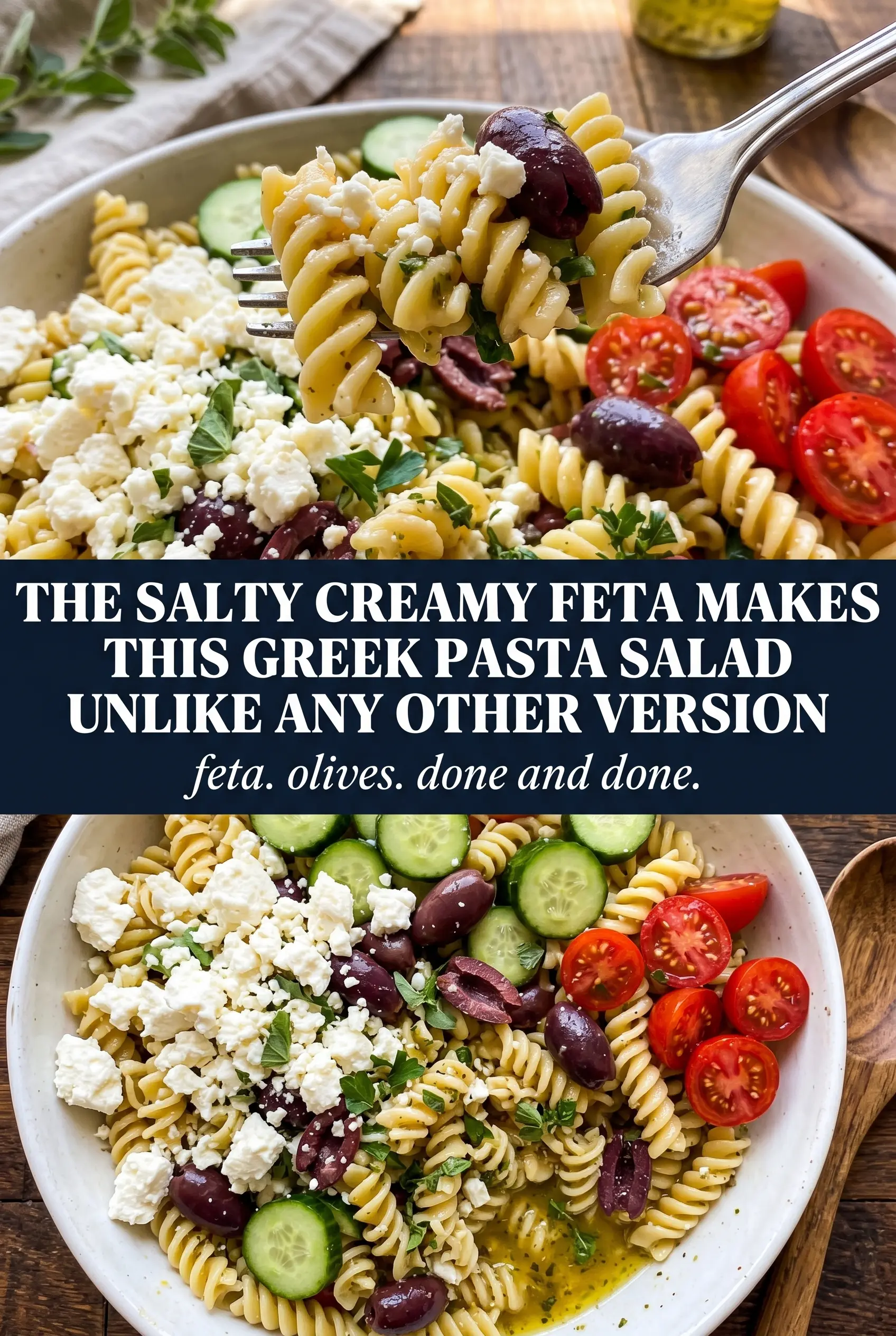
Greek Pasta Salad with Feta Cheese
Ingredients
Equipment
Method
- Bring a large pot of water to a boil and cook penne or rotini pasta according to the package directions. Cook until just tender, then drain.
- Rinse the hot pasta with cold water until cooled. This stops the cooking and keeps the pasta from turning mushy.
- Halve the cherry tomatoes, dice the cucumber, pit and halve the Kalamata olives, and thinly slice the red onion. Keep the vegetables ready for quick mixing.
- Mince the garlic and crumble the feta cheese. Set aside a portion of feta for topping right before serving.
- Whisk olive oil, red wine vinegar, lemon juice, minced garlic, dried oregano, salt, and pepper until combined. Whisking evenly disperses the garlic and herbs.
- In a large bowl, combine the cooled pasta, cherry tomatoes, cucumber, Kalamata olives, and red onion, along with most of the feta. Toss just until everything is evenly distributed.
- Pour the dressing over the salad and toss gently. Keep tossing to coat without breaking up the pasta.
- Refrigerate the Greek pasta salad for at least 1 hour. Chill time lets the flavors meld while the pasta remains firm.
- Before serving, top with the remaining feta. Serve cold for the best creamy-tangy contrast.